

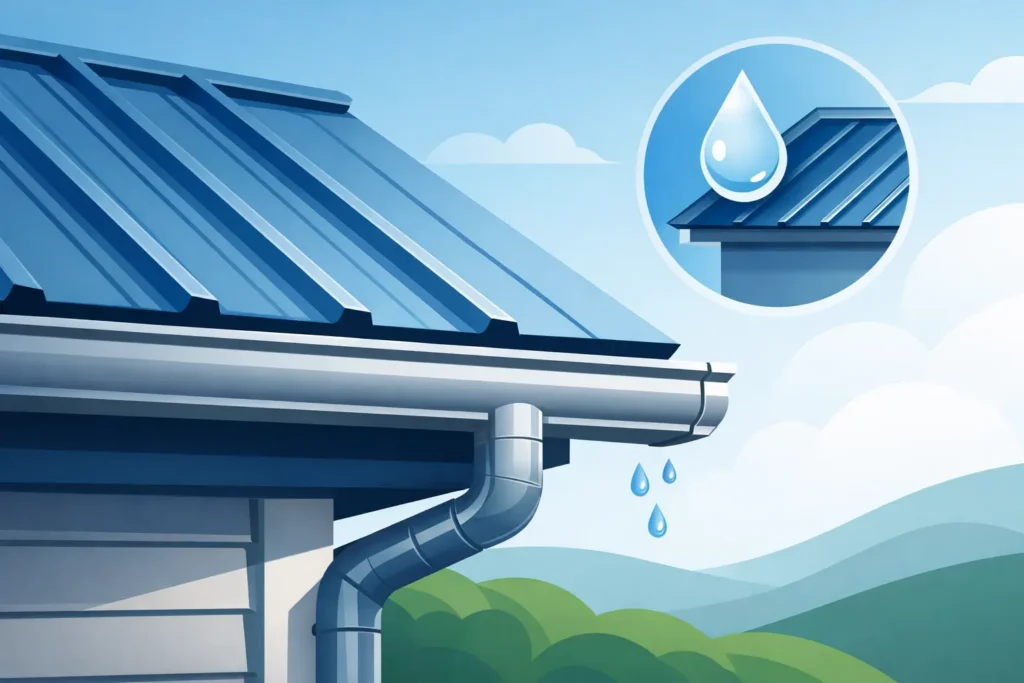
A metal roof can move water fast – much faster than many homeowners expect the first time they see a hard rain roll off the edge. That is exactly why seamless gutters for metal roofs deserve a closer look. When the roof sheds water efficiently but the gutter system is undersized, poorly pitched, or loosely attached, runoff can overshoot the trough, back up at the fascia, or dump too much water near the foundation.
For homeowners in places like Richmond, Muncie, Dayton, Greenville, and nearby communities, the issue is not whether metal roofing is a good product. It usually is. The real question is whether the gutter system under it is built to handle that roof’s speed and volume of water. A good-looking gutter is not enough. It has to manage runoff reliably in everyday storms and heavy seasonal weather.
Why seamless gutters for metal roofs are often the better choice
Metal roofs and sectional gutters can work together, but the weak points are easy to spot. Sectional systems have more joints, and every joint is a place where leaks, clogs, and separation can start over time. On a roof that moves water quickly, those weaknesses tend to show up sooner.
A custom-fit gutter with fewer seams gives water fewer places to escape before it reaches the downspouts. That matters around soffits, fascia boards, siding, flower beds, and foundation walls. It also helps with long-term maintenance. Fewer joints usually means fewer trouble spots to reseal or repair.
There is also a practical appearance benefit. Metal roofs already give a home a cleaner, sharper line. Gutters formed on-site to fit the home tend to look more finished than pieced-together sections from a shelf. For many homeowners, that matters almost as much as performance.
Still, seamless does not mean trouble-free by itself. If the size is wrong, the slope is off, or the downspout layout is poor, a one-piece gutter can still struggle. The system has to be designed for the roof, not just attached to it.
What makes metal roof runoff different
A metal roof is smooth, slick, and efficient at shedding water. That is one of its strengths, but it changes what the gutter system has to do. Asphalt roofs often slow water down a bit because their surface is rougher. Metal does not offer much resistance, so runoff reaches the gutter edge with more speed.
That creates a few common issues. First, water can shoot past a gutter that is too narrow or set too low. Second, heavy runoff can overwhelm too few downspouts. Third, if snow and ice are part of the local weather pattern, sliding snow from a metal roof can put extra strain on the gutter attachment.
This is why installation details matter more than many people realize. The right placement along the drip edge, solid fastening, correct pitch, and proper capacity all work together. If one part is off, the entire system can underperform.
Size matters more than homeowners expect
On some homes, standard 5-inch gutters are enough. On others, especially homes with large roof planes or steeper roof sections, 6-inch gutters make more sense. The same goes for downspouts. A bigger gutter opening does not help much if water bottlenecks because the downspouts are too small or too few.
This is one of those areas where it depends on the home. Roof area, pitch, valley layout, local rainfall intensity, and where the water concentrates all affect the right recommendation. A contractor should inspect the house rather than guessing from the street.
Placement is just as important as the gutter itself
With metal roofing, placement can make or break performance. If the gutter sits too far from the roof edge, fast-moving runoff may skip over it. If it is tucked too tightly without proper alignment, water can behave unpredictably during heavy rain.
The goal is simple – catch the water cleanly and move it away from the home without overflow. That requires attention to the roof edge detail and how the gutter lines up beneath it.
Installation details that protect your home
A gutter system should do more than collect rain. It should protect the parts of the home that are expensive to repair. Overflowing or leaking gutters can stain siding, rot fascia, erode landscaping, and let water collect near the foundation. On homes with basements or crawlspaces, that risk gets even more serious.
That is why attachment strength matters. Metal roofs can shed snow in sheets, and even without snow load, the gutter still has to stand up to storms, debris, and seasonal expansion and contraction. A stronger support system helps the gutter stay aligned and hold its shape over time.
For homeowners who want less maintenance, leaf protection is worth discussing at the same time as installation. A premium guard system can reduce the buildup that causes backup and overflow, especially in neighborhoods with mature trees. It is not a promise that gutters will never need attention again, but it can cut down on routine cleaning and help water move more consistently.
Common problems with gutters on metal roofs
Most gutter failures on metal-roofed homes are not caused by the roof material itself. They come from poor planning, aging components, or shortcuts during installation.
One common problem is overflow at roof valleys. Valleys collect and concentrate water, and that surge can be too much for a smaller gutter section. Another is loose or failing fasteners, especially on older systems that were not installed with long-term load in mind. You may also see standing water in the gutter if the pitch is off, which leads to debris buildup and extra strain on the system.
Homeowners sometimes assume dripping means the gutter needs to be replaced immediately. Sometimes that is true. Other times, the fix is more targeted – resecuring sections, correcting slope, replacing damaged downspouts, or adding protection to reduce clogs. An honest inspection should separate what truly needs replacement from what can be repaired.
How to know if your home is a good candidate
If you already have a metal roof and your current gutters overflow in hard rain, pull away from the fascia, leak at the joints, or need constant cleaning, it may be time to upgrade. If you are installing a new metal roof, that is also the right moment to evaluate the gutters instead of treating them as an afterthought.
Homes with longer roof runs, steep pitches, frequent leaf buildup, or visible signs of water pooling near the foundation are strong candidates for a better-designed system. The same goes for homeowners who are simply tired of patching the same problem every season.
A good estimate process should feel straightforward. You should know what size is being recommended, where the downspouts will go, whether guards are part of the proposal, and what the final price includes. Detailed, itemized quotes matter because they let you compare real scope instead of vague promises.
What to ask before you hire anyone
Before moving forward, ask how the gutter size was chosen for your roof area and pitch. Ask whether the installer has experience with metal roof runoff specifically, not just general gutter work. Ask how the system will be supported, how water will be directed away from the house, and whether existing drainage problems at the foundation or landscaping level need to be addressed too.
It is also fair to ask what happens if only part of the system needs work. Not every home needs a full replacement. Sometimes a section repair, a capacity upgrade in problem areas, or new gutter guards will solve the issue. A contractor who is looking out for the homeowner should be willing to explain the trade-offs clearly.
That kind of clarity is what homeowners usually want most. They do not want surprises, vague pricing, or a recommendation that sounds bigger than the problem. They want a solution that protects the home and makes sense for the budget.
For many homes, seamless gutters for metal roofs are the right move because they reduce leak points, improve water handling, and give the home a cleaner finished look. But the real value comes from getting the design and installation right. If you are weighing your options, start with a thorough inspection and a detailed quote so you can make the decision with confidence, not guesswork.