

A gutter can look perfectly fine from the ground and still be draining the wrong way.
That is what makes gutter pitch tricky for homeowners. You may not notice a problem until you see water spilling over the edge, mulch washing out, or a damp spot showing up near the foundation. By that point, the issue is not just the gutter. It is what the water is doing to the rest of your home.
If you are trying to figure out how to tell if gutters are pitched correctly, the good news is that there are a few clear signs you can check without guessing. Some are easy to spot during a rainstorm. Others show up after the storm has passed.
How to tell if gutters are pitched correctly
A properly pitched gutter should guide water toward the downspout without letting it sit in the trough. Most residential gutters are installed with a slight slope – enough to move water, but not so steep that it looks uneven from the ground.
In practical terms, that means you should not see standing water sitting in sections of the gutter for long after rain stops. You also should not see water flowing away from the downspout or collecting in the middle of a run.
From the ground, a correct pitch is usually subtle. If a gutter looks dramatically slanted, that can be a red flag too. Good gutter pitch is about function first, but it should still look clean and intentional.
The easiest signs your gutter pitch is off
The most obvious clue is standing water. If you can safely look into the gutter after a rain and see water pooling in one area, the pitch may be too flat or sloped the wrong way. Even a small amount of standing water matters because it adds weight, attracts debris, and shortens the life of the system.
Another sign is overflow during normal rain. If the gutter is clear but water still spills over the front edge, the problem may not be a clog. It could be that water is not reaching the downspout fast enough.
You may also notice water marks or dirt lines. Gutters that hold water often leave a stain where debris settles and moisture lingers. Rust spots in steel systems or low areas where algae forms can point to the same issue.
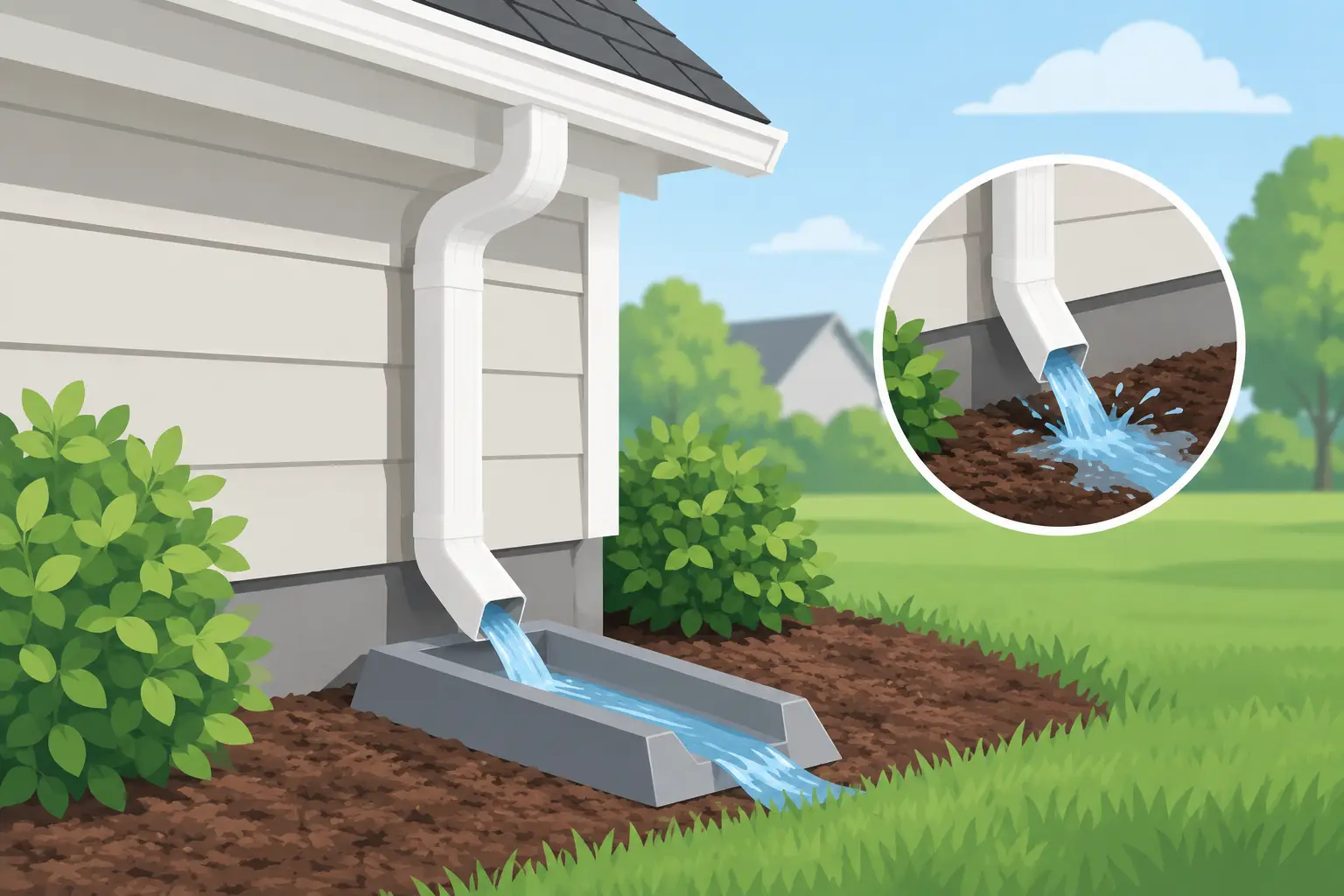
Outside the gutter itself, look at the areas below it. Washed-out flower beds, muddy trenches, peeling paint, and wet soil near the foundation can all suggest that runoff is not being carried where it should go.
What a simple rain test can tell you
If you want the clearest answer, watch the gutters during a steady rain. This is often the fastest way to see whether water is moving correctly.
Pay attention to how the water behaves along the run. It should enter the gutter, move steadily toward the downspout, and exit without backing up. If you see water sitting still while more water is entering the gutter, that section may be sagging or improperly pitched.
Also watch the downspouts. If one downspout barely has any flow while another is overwhelmed, the pitch may be sending too much water to one end or failing to direct water where intended.
A rain test is helpful because it shows live performance, not just appearance. A gutter can look straight and still drain poorly if the slope is slightly off in the wrong section.
How to check gutter slope without climbing on the roof
Most homeowners do not need to get on a ladder with a level to spot a pitch problem. In fact, if your home has multiple stories or uneven ground, it is better not to.
Instead, step back and sight down the gutter line from one end of the house. You are looking for dips, low spots, or sections that appear to bow. A straight run with a gentle slope toward the downspout usually looks consistent. A troubled run often has a section that looks pulled down in the middle or tilted the wrong direction.
You can also check after rain ends. If the sun comes out and one section of gutter still has visible water 30 minutes later, that is a strong sign the water is not draining properly.
If you want a little more certainty from the ground, a pair of binoculars can help you see whether debris and water are collecting in one spot. That kind of buildup often follows the low point.
When the problem is pitch and when it is something else
Not every drainage problem means the gutter was installed with the wrong slope. Sometimes the issue is a clog, a loose hanger, or a downspout blockage.
Leaves and shingle grit can create a false low spot by damming water in one section. In that case, the pitch might be fine, but the gutter still acts like it is not. That is one reason cleaning matters. You want to rule out buildup before assuming the entire system needs adjustment.
Loose fasteners can also change the pitch over time. A gutter that was originally installed correctly may start sagging after years of heavy water load, debris weight, or ice. This is common on older systems or on gutters that do not have enough support.
There is also the capacity question. In a hard downpour, even a properly pitched gutter can overflow if it is undersized for the roof area. That is why the answer is sometimes not just re-pitching. It may involve a larger gutter, a better downspout layout, or a more durable hanger system.
How professionals confirm if gutters are pitched correctly
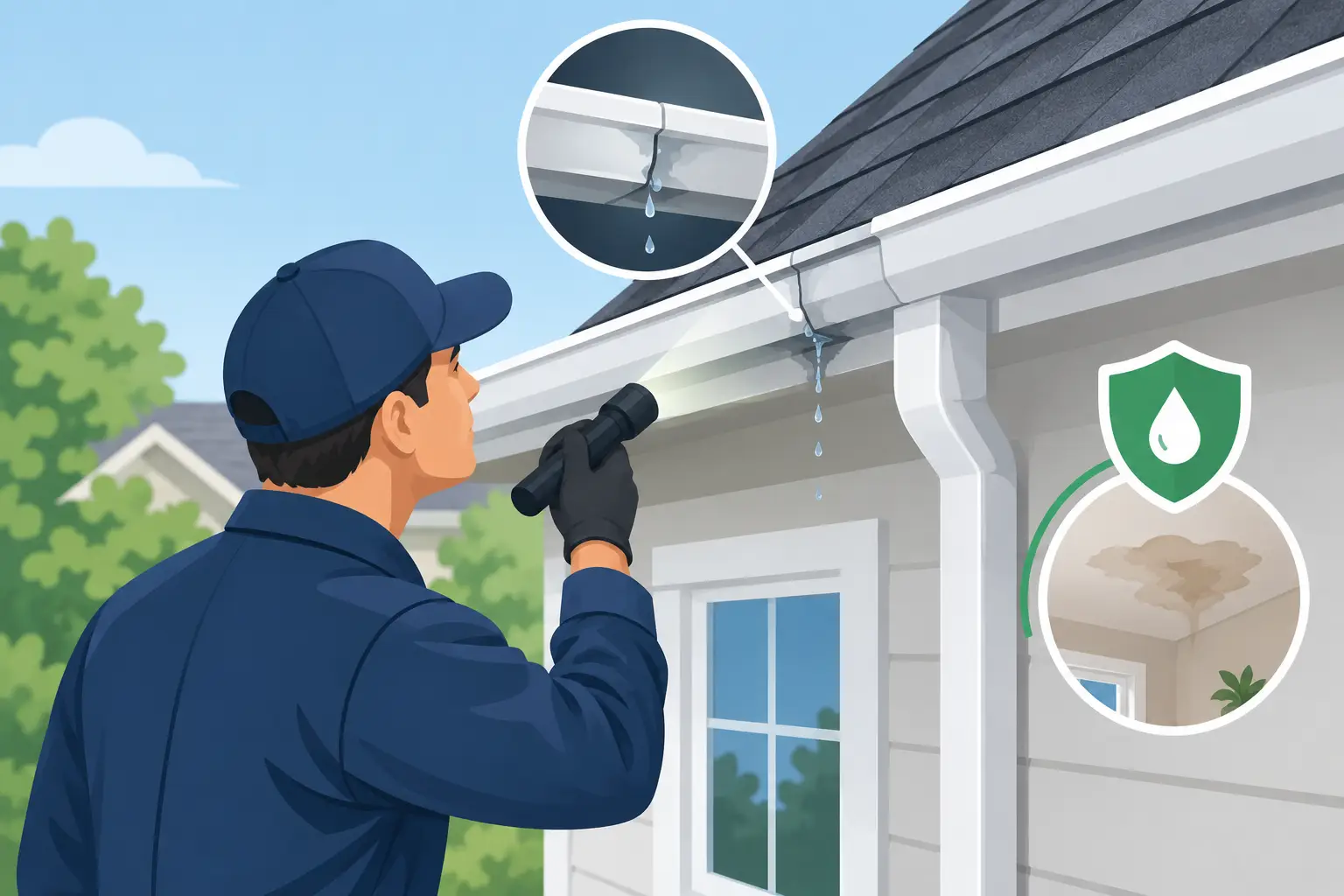
A professional inspection removes the guesswork. An installer or repair technician can check the actual slope across the run, inspect the hangers, and see whether the downspouts are placed well for the roofline.
This matters because pitch problems are not always uniform. One section may be fine while another section drops in the wrong place. On longer gutter runs, that detail is easy to miss from the ground.
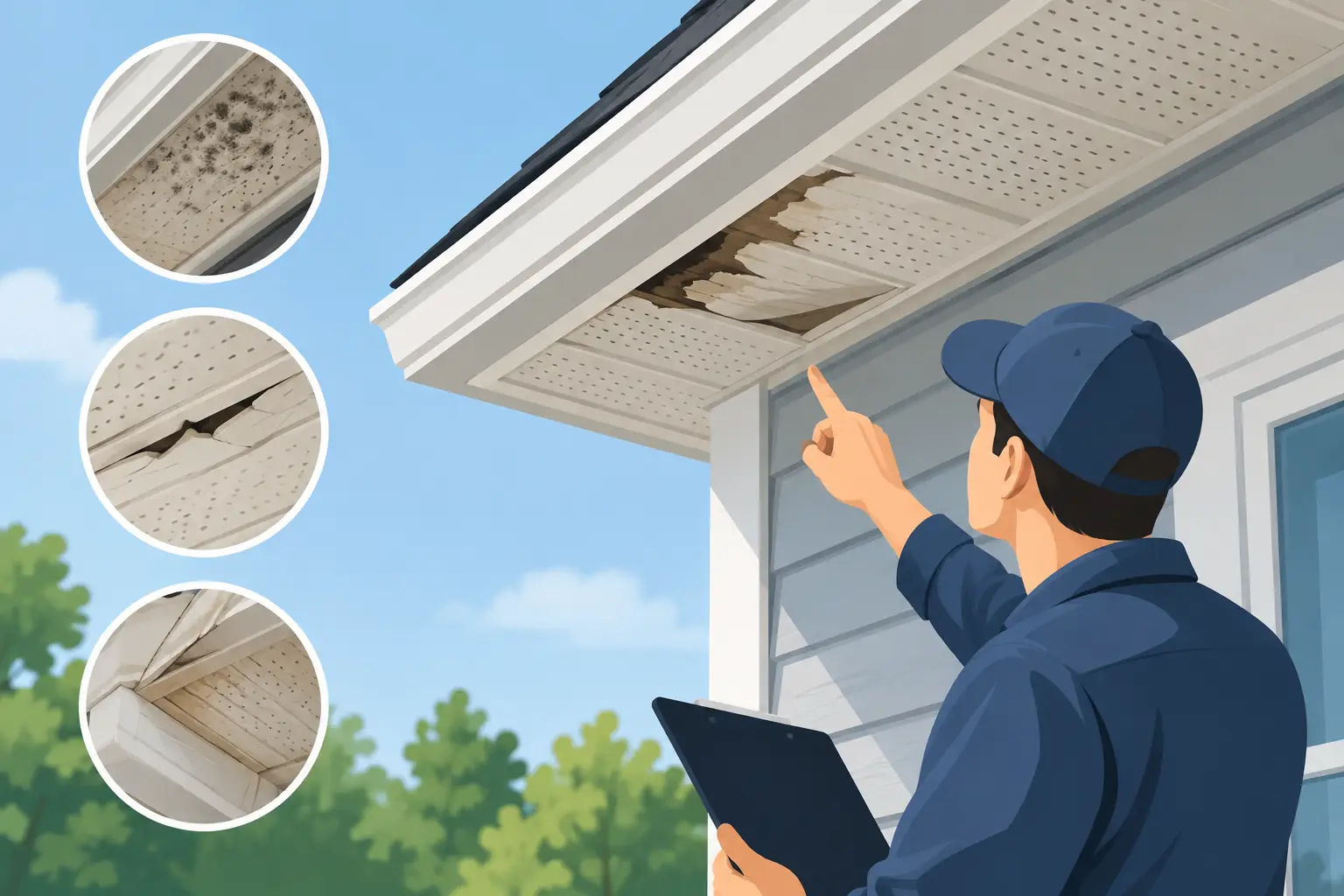
Professionals also look at the bigger picture. If the fascia is damaged, the gutter may never hold the correct pitch for long until the wood behind it is addressed. If the system is older and pulling away in several spots, a repair may become a temporary fix rather than a smart long-term one.
Repair or replace? It depends on the condition
If the gutter is relatively new and the issue is isolated, a repair may be enough. Re-securing hangers, adjusting slope, or correcting a section near the downspout can restore proper flow.
If the system has repeated standing water, separated seams, visible sagging, and chronic overflow, replacement may make more sense. This is especially true if you are dealing with older sectional gutters that already require frequent maintenance.
For many homeowners, this is where seamless gutters become the better value. Fewer joints mean fewer weak points, and a properly designed system can be pitched for better drainage from the start. If you are also tired of cleaning out leaf buildup, adding a premium guard system can reduce the debris that makes drainage problems worse.
Why gutter pitch matters more than it seems
A small slope issue can lead to bigger costs than most people expect. Water that does not drain well can damage fascia boards, stain siding, erode landscaping, and put extra moisture near the foundation. In colder weather, trapped water can freeze, adding weight and stress to the gutter system.
That is why this is not a cosmetic detail. Gutter pitch plays a direct role in protecting the parts of your home that are expensive to repair.
For homeowners in Eastern Indiana and Western Ohio, where steady rains, seasonal debris, and winter freeze-thaw cycles all come into play, a gutter system needs to do more than just look straight. It needs to move water reliably in real conditions.
When it is time to schedule an inspection
If you are seeing overflow, standing water, sagging sections, or signs of runoff near your home, it is worth having the system checked before the next heavy storm. A clear inspection can tell you whether you need a simple adjustment, a repair, or a full replacement.
At Seamless Gutter Solutions LLC, we keep that process straightforward with free inspections, free estimates, and detailed quotes with no hidden fees. Homeowners should be able to understand what is wrong, what it takes to fix it, and what it will cost before making a decision.
If your gutters are not draining the way they should, trust what the water is telling you. Catching a pitch problem early is a lot easier than repairing the damage it leaves behind.