
You usually notice your gutters are too small at the worst possible time – during a hard Midwest downpour when water sheets over the edge, pounds the landscaping, and finds every tiny crack near your foundation. At that point, the question is no longer “Do I need gutters?” It is “Do I have the right size?”
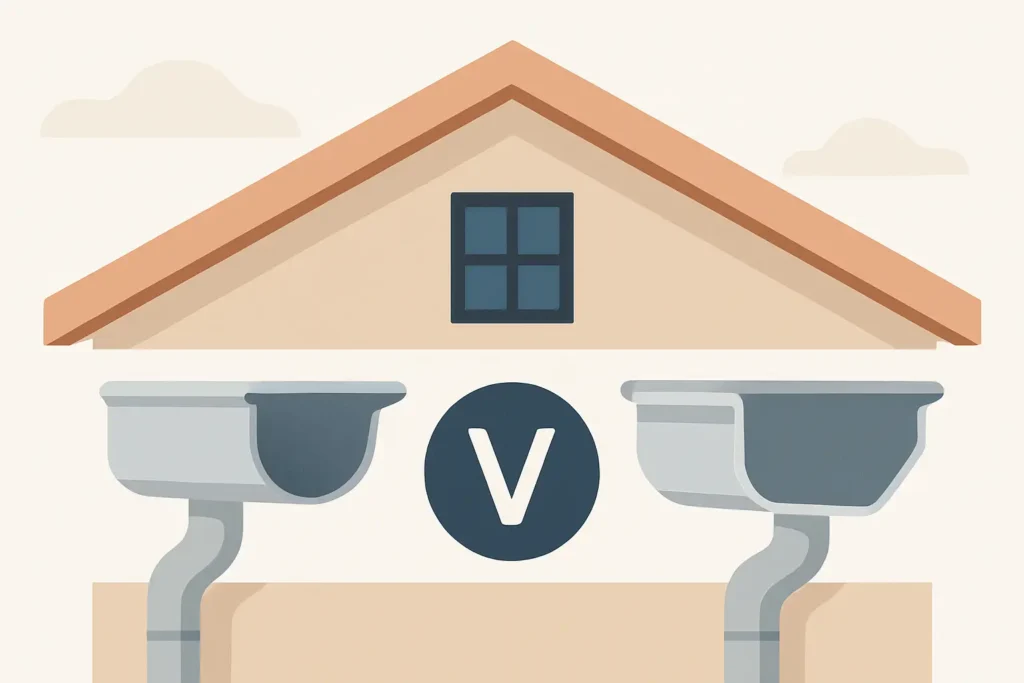
Most homeowners around Eastern Indiana and Western Ohio are choosing between two standard sizes: 5-inch and 6-inch K-style gutters. Both can work. The best choice depends on how your roof sheds water, how your home is built, and how much margin for error you want during heavy rain.
5 inch vs 6 inch gutters: what the numbers actually mean
The “5-inch” or “6-inch” measurement refers to the width of the gutter coil before it is formed into its final shape. It does not mean the opening is exactly 5 or 6 inches across.
In plain terms, 6-inch gutters are physically larger and can move more water before they overflow. The downspouts paired with them are also typically larger (often 3×4) compared to the more common 2×3 downspouts used with 5-inch systems. That downspout difference matters because a big gutter can still back up if the downspout is a bottleneck.
If you are comparing systems, think in “how much water can this handle during the worst 15 minutes of the year,” not “what size looks normal on my street.”
When 5-inch gutters are the right fit
A 5-inch system is the standard on many homes for a reason. On the right roof, it handles rain well, looks proportional, and keeps project costs reasonable.
You are often a good candidate for 5-inch gutters when your home has a smaller roof footprint, moderate roof pitches, shorter gutter runs, and plenty of well-placed downspouts. If your rooflines break up the flow – for example with multiple gables that split runoff – you may not be dumping huge volumes into one long stretch.
For homeowners who keep gutters clean and clear, 5-inch gutters can perform reliably for years. That “clean and clear” piece is the catch. If you have trees, clogged outlets, or sections that hold debris, the system effectively becomes smaller in a hurry.
When 6-inch gutters are the safer choice
If you have ever watched water jump over the front edge of your gutter during a storm, 6-inch gutters are worth a serious look. The extra capacity gives you breathing room when rainfall intensity spikes, when wind pushes water hard across the roof, or when a valley dumps a concentrated stream into one spot.
Homes that often benefit from 6-inch gutters include:
- Larger homes with long, uninterrupted roof edges
- Roofs with steep pitches that shed water fast
- Areas where multiple roof planes drain into one gutter run
- Homes with big valleys that funnel runoff
- Properties where water management is already a concern (basement moisture, washouts, foundation settling)
Even if your roof is not massive, a few “high-volume” zones can justify 6-inch gutters on specific runs. You do not always have to upsize the entire home to get the benefit.
The real-world difference: overflow is the enemy
Gutter sizing is not about perfection. It is about avoiding failure modes that cause expensive damage.
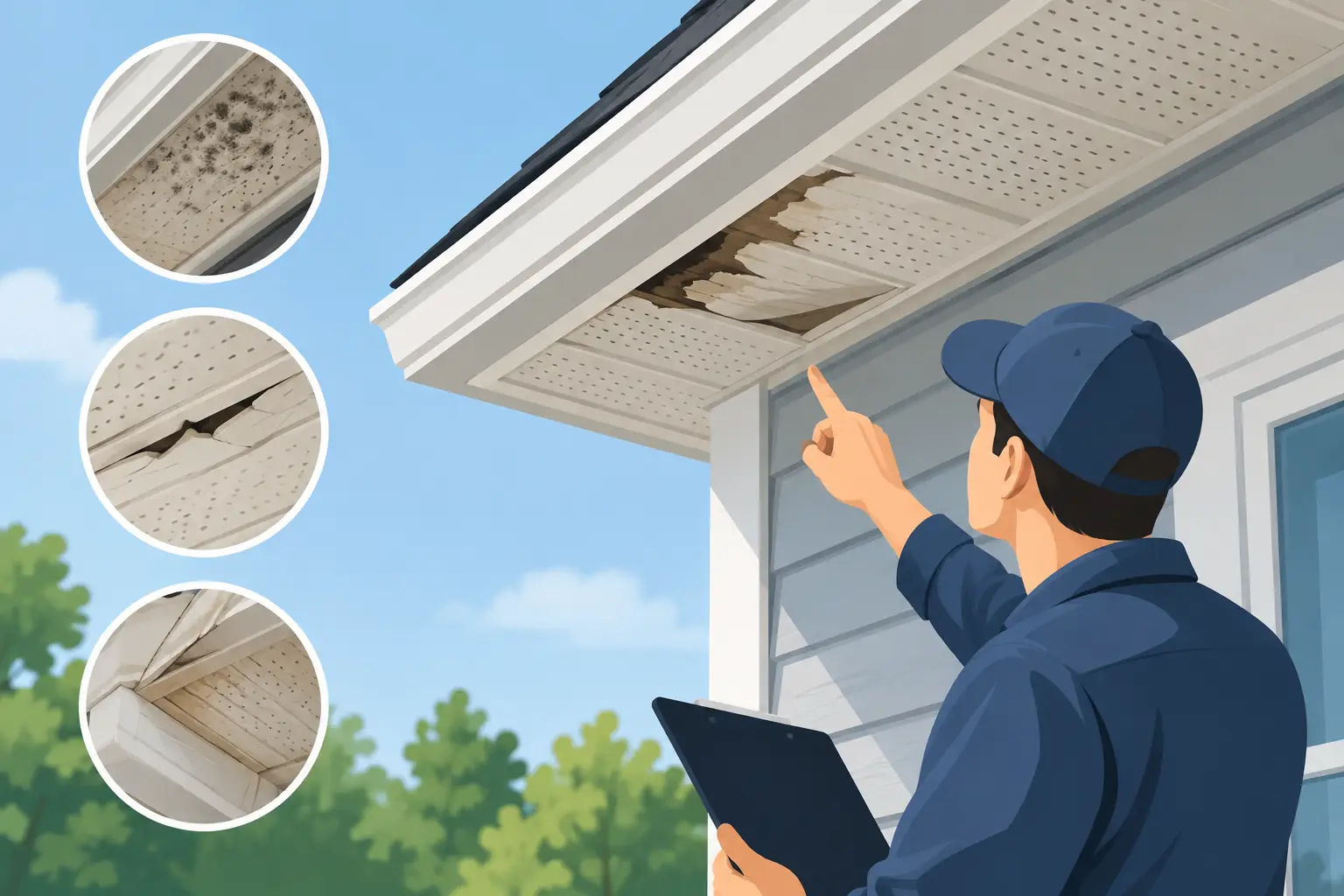
When a gutter overflows, the water does not politely fall straight down. It often hits the fascia and soffit, runs behind the gutter, stains siding, and lands right where you least want it – along the foundation line. Over time, that can mean cracked walkways, eroded beds, basement leaks, and rotted trim.
If you are already investing in new seamless gutters, it usually makes sense to choose a size that reduces the odds of overflow during peak events, not just the average rainfall.
Cost considerations (and what “cheap” can turn into)
Yes, 6-inch gutters typically cost more than 5-inch gutters. There is more material, the hangers and downspouts may be larger, and installation details can take more time.
But the cost comparison should be framed against what you are protecting. One episode of repeated overflow can destroy mulch beds, wash out stone, stain concrete, and contribute to foundation moisture. Those repairs can easily outpace the price difference between 5-inch and 6-inch gutters.
That said, upsizing when you do not need it can be unnecessary. If your home has small roof planes, many downspouts, and no history of overflow, a well-installed 5-inch system may be the best value.
Downspouts matter as much as gutter size
Homeowners often focus on the gutter and forget the vertical exit path. A gutter is only as effective as its ability to drain.
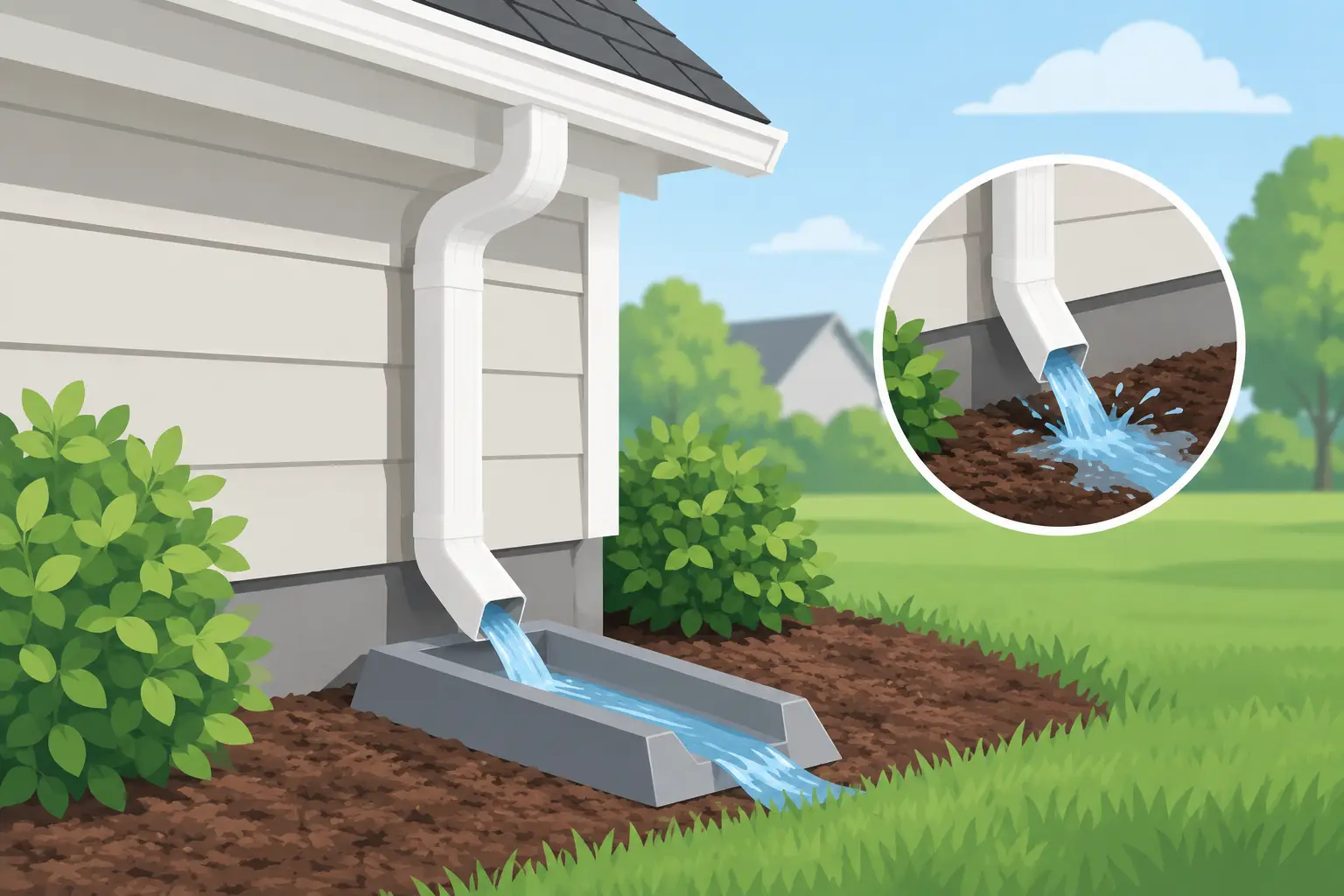
If your system has too few downspouts, water stacks up in the trough, slows down, and spills over during heavy flow. In those cases, the fix might be adding a downspout (or relocating one), not automatically jumping to a larger gutter.
On the other hand, if your roof has one or two high-volume dumping points, a larger gutter paired with a larger downspout can prevent backups at those stress zones.
A practical way to think about it is this: if your gutters overflow only near a valley or a specific corner, that is a design problem in that area. If they overflow along long stretches, that is often a capacity and drainage problem across the system.
How your roof design pushes you toward 5-inch or 6-inch
Two homes with the same square footage can need different gutter sizes because roof geometry changes everything.
A steep roof sheds water faster than a low-slope roof. Valleys concentrate flow. Long runs with a single downspout force water to travel farther before exiting.
If your home has a lot of roof area feeding into one section – common with certain two-story layouts, garages tied into main rooflines, and porch transitions – you are more likely to benefit from 6-inch gutters at least in that zone.
Conversely, a home with many roof breaks and frequent downspouts may be fine with 5-inch gutters because the load is distributed.
What about leaf guards and clogs?
Leaf protection does not change how much water your roof sheds, but it can keep your system operating at its designed capacity. A clogged 5-inch gutter does not behave like a 5-inch gutter. It behaves like a narrow channel with a blocked outlet.
If trees are part of your property, investing in a quality guard can reduce the “surprise overflow” that comes from hidden buildup. Not all guards perform the same, especially in heavy rain. The goal is to block debris while still allowing high volumes of water to enter and drain.
A continuous-hanger guard system can also add strength along the gutter run, which helps maintain proper pitch and reduces sagging over time. Sagging creates low spots where water sits, debris accumulates, and overflow starts.
A simple way to decide without guessing
If you are not sure which size you need, do not rely on what your neighbor has or what your home was built with. Many builders choose the default, not the best option for long-term drainage.
Instead, look at performance clues:
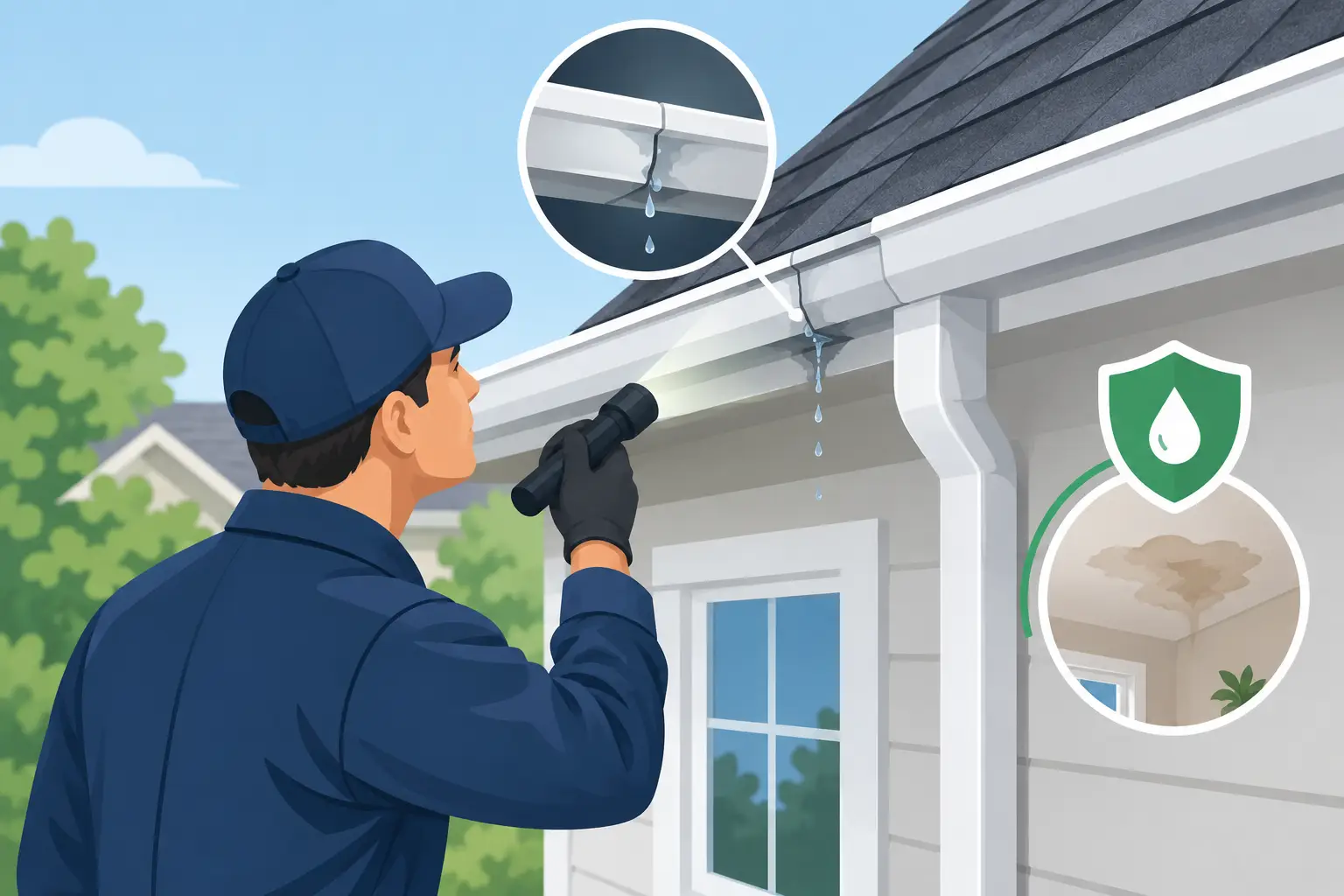
If you have visible overflow during heavy rain, washed-out mulch lines, water marks behind the gutter, or recurring basement dampness near downspout areas, you likely need more capacity, better drainage, or both.
If your gutters rarely overflow but you deal with frequent clogging, the size may be fine and the system may need improved leaf protection, better outlet flow, or more consistent cleaning.
And if you have ongoing issues at one or two concentrated dumping points, targeted upsizing or downspout changes can be a smart middle ground.
An on-site inspection is where this becomes clear, because roof pitch, valley placement, run length, and downspout routing are hard to judge from the ground.
Choosing an installer: sizing is part of the job
The most frustrating gutter problems are the ones that come from “close enough” design. Gutters are a water management system, not trim.
A proper quote should spell out what size is being installed, what downspouts are included, where they will be placed, and how water will be directed away from the home. It should also be clear about add-ons like splash blocks, extensions, leaf protection, and any wood repair discovered during installation.
If you are comparing estimates, ask one direct question: “What problem does this design solve for my house?” A good contractor should be able to point to the roof areas that drive the decision.
If you want a straightforward inspection and an itemized, no-surprises quote, Seamless Gutter Solutions LLC offers free inspections and estimates in the Richmond area and surrounding counties. You can start here: https://sgsrichmond.com.
The choice that protects your home best
For many homes, 5-inch gutters are perfectly adequate when they are sized, pitched, and drained correctly. For other homes – especially those with high-volume roof zones or a history of overflow – 6-inch gutters are the difference between “mostly fine” and “quietly dependable” during the storms that test everything.
If you are stuck between the two, choose the option that gives your home more forgiveness: enough capacity, enough downspout flow, and a design that keeps water moving away from the foundation every time it rains.