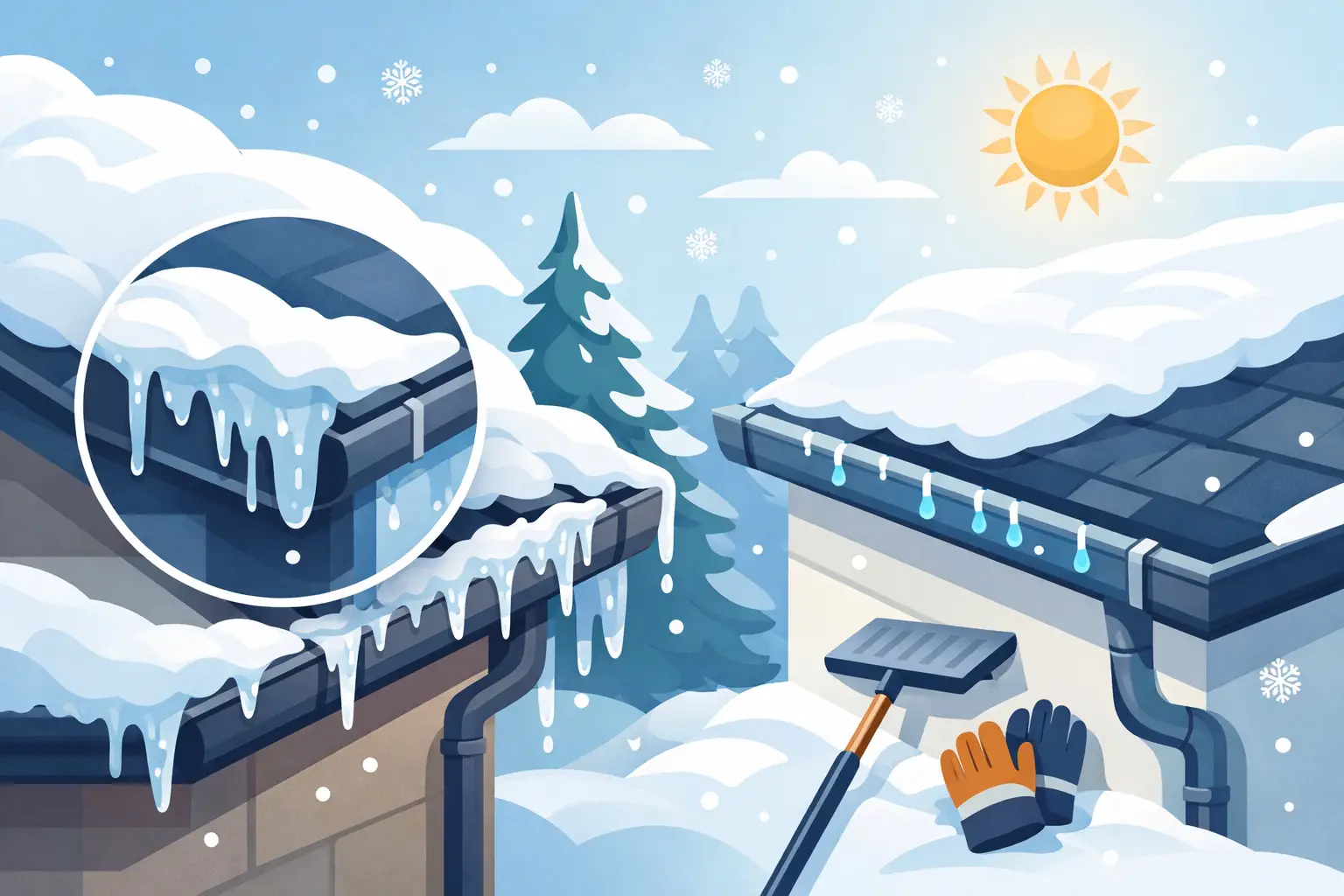

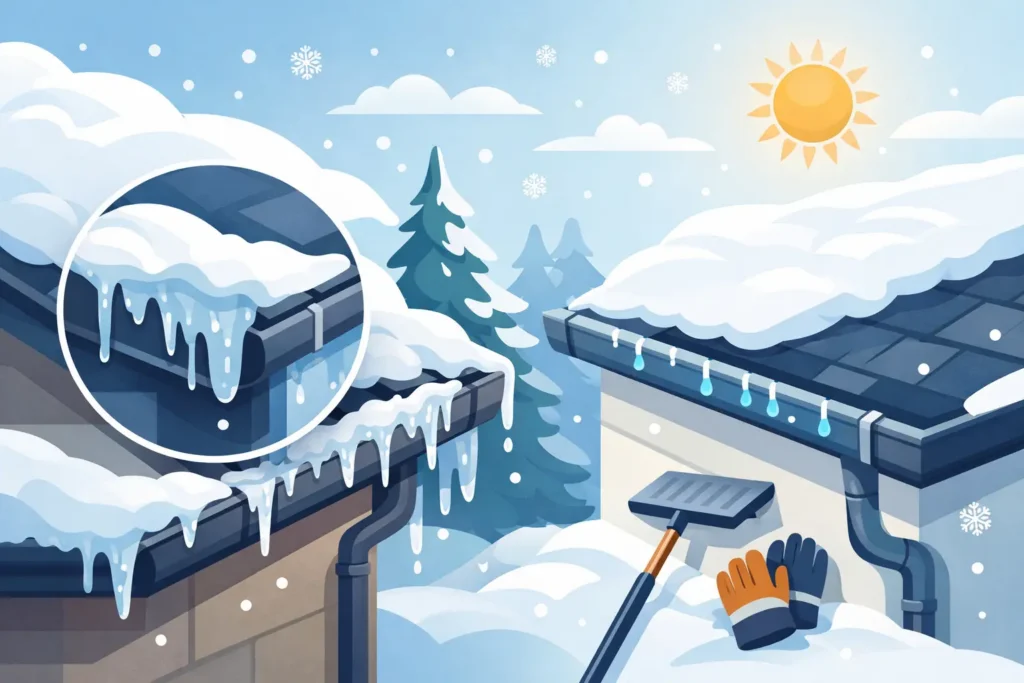
A row of icicles may look harmless from the driveway, but a thick ridge of ice along the roof edge can push melting snowmelt back under shingles. That is where expensive trouble starts: stained ceilings, damaged insulation, peeling paint, and wet roof decking. Knowing how to prevent ice dams in gutters starts with one key fact: gutters can contribute to the problem, but they are rarely the original cause.
For homeowners across Eastern Indiana and Western Ohio, freeze-thaw weather can turn a small drainage issue into a winter repair. The right approach is not simply chipping ice out of the gutter. It is controlling the heat loss and water flow that allow ice dams to form in the first place.
What Causes an Ice Dam?
An ice dam forms when snow on the upper part of a roof melts, usually because heat is escaping from the home into the attic. That water runs down the roof until it reaches the colder eaves, where it refreezes. As the ice ridge grows, new meltwater has nowhere to go. It can pool behind the dam and work its way beneath shingles.
This is why a home can have clean, properly installed gutters and still develop ice dams. The roof surface is warming unevenly. Gutters may then fill with ice after the dam has already begun, restricting drainage further and adding weight along the roofline.
A few large icicles do not automatically mean water is entering the house. However, ice buildup combined with interior leaks, a sagging gutter, or water spilling over the edge deserves prompt attention.
How to Prevent Ice Dams in Gutters and Along the Roofline
The most dependable prevention plan addresses the roof, attic, and gutter system together. Each part has a different job: the attic should stay cold and dry, the roof should shed snowmelt predictably, and the gutters should be clear enough to handle water when temperatures rise.
Start with attic air sealing and insulation
Warm air leaking into the attic is often the biggest driver of ice dams. Common leakage points include gaps around plumbing vents, electrical fixtures, attic hatches, chimneys, and unsealed ductwork. Even small openings can allow enough warm air upward to create hot spots on the roof.
Air sealing should come before adding insulation. Insulation slows heat transfer, but it cannot stop warm indoor air from moving through an open gap. Once major leaks are sealed, sufficient, evenly distributed attic insulation helps keep the roof deck closer to the outdoor temperature.
This is one area where the answer depends on the home. Older houses, additions, cathedral ceilings, and finished attic spaces may need a more detailed assessment. If you regularly see snow melt in stripes above certain rooms, that pattern can point to heat loss below.
Make sure attic ventilation is not blocked
Attic ventilation helps remove moisture and moderate attic temperatures. Soffit intake vents and ridge or roof exhaust vents need a clear path for airflow. Insulation stuffed tightly against the eaves can block soffit vents, leaving the attic unable to draw in cold outside air.
Ventilation is helpful, but it is not a substitute for air sealing and insulation. Adding more roof vents to an attic with major heat leaks will not solve the underlying issue. A qualified roofing or insulation professional can evaluate whether the ventilation layout is balanced and appropriate for the home.
Keep gutters and downspouts clean before winter
Leaves, twigs, roof grit, and nests reduce the room available for water in a gutter channel. When temperatures bounce above and below freezing, that trapped debris holds water in place and makes ice buildup more likely.
Schedule gutter cleaning after most leaves have fallen, especially if your property has mature trees. Check that downspouts are open and that water can exit at the bottom rather than backing up at an elbow. Extensions should carry water away from the foundation, not release it beside the house where it can refreeze on walkways or seep into the soil near the basement.
Cleaning is preventive maintenance, not a cure for attic heat loss. Still, a clean system gives meltwater the best available path out during a winter thaw.
Correct gutter pitch, sagging, and drainage problems
A gutter should have a slight, consistent slope toward the downspout. If sections sag or hold standing water after rain, they will hold it after snowmelt too. That water freezes, expands, and can pull fasteners loose or distort the gutter.
Look for overflow marks on the fascia, separated seams, downspouts that drain slowly, and sections that appear lower in the middle. These are signs that repair may be needed before winter weather arrives. Seamless gutters reduce the number of joints where leaks can develop, but they still need correct installation, secure hangers, and reliable drainage.
Consider leaf protection for year-round flow
A quality gutter guard can keep large debris out of the gutter while allowing water to enter. For homeowners tired of repeated cleanings, a continuous-hanger guard system can also add support along the gutter edge.
However, guards are not an ice-dam solution by themselves. No gutter guard can fix a warm roof deck or an underinsulated attic. In some conditions, snow and ice can sit on top of a guard just as they can on an open gutter. The value is reducing debris-related clogs so the system is better prepared when water begins flowing.
Remove roof snow carefully when conditions allow
After a heavy snowfall, a roof rake can reduce the amount of snow available to melt and refreeze near the eaves. Work from the ground with a rake designed for roofing, and remove the lower portion of snow rather than trying to scrape the roof bare.
Do not climb onto an icy roof, chop at ice with a shovel, or use sharp tools against shingles. Those shortcuts can damage roofing materials and put you at real risk of a fall. If snow is deep, ice is extensive, or the roof is steep, professional removal is the safer choice.
What Not to Do When Gutters Are Frozen
Avoid breaking ice out of gutters with hammers, axes, or metal tools. Aluminum gutters bend easily, seams can split, and damaged shingles may not be obvious until the next rainstorm. Do not pour hot water on frozen gutters either. It can refreeze quickly, create a dangerous icy surface below, and cause sudden temperature stress on materials.
Electric heat cables are sometimes used in targeted locations, but they are not a first-line fix for recurring ice dams. Poor installation can create electrical and roofing concerns, and cables often mask an attic insulation or air-leak problem that still needs correction. If a professional recommends them, use them as one part of a broader plan.
Know When to Call for Help
Call for an inspection if you notice water stains on ceilings or exterior walls, wet attic insulation, peeling paint near the roofline, bowed gutters, or ice repeatedly building in the same area. Those clues can help identify whether the primary issue is roofing, attic heat loss, gutter drainage, or several factors working together.
For gutters that are loose, leaking, undersized, or chronically clogged, a detailed inspection can clarify the repair or replacement options before winter makes the work more difficult. Seamless Gutter Solutions LLC provides free inspections and estimates with clear, itemized pricing, so homeowners can understand what their drainage system needs without surprise charges.
Winter weather will always bring snow, ice, and changing temperatures. The goal is not a perfectly icicle-free roof every day. It is a home where heat stays where it belongs, snowmelt has a clear route away, and small warning signs are handled before water finds its way inside.