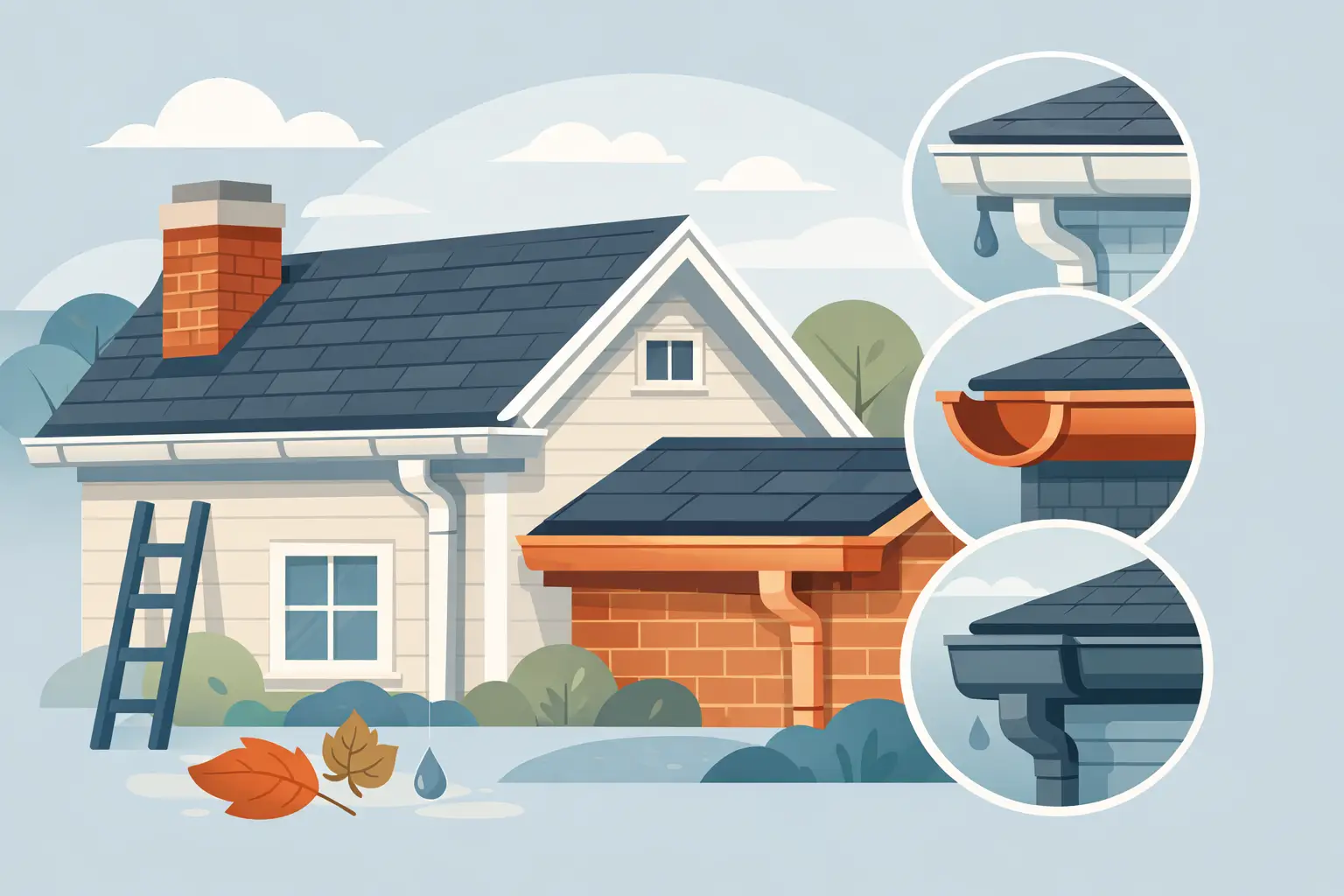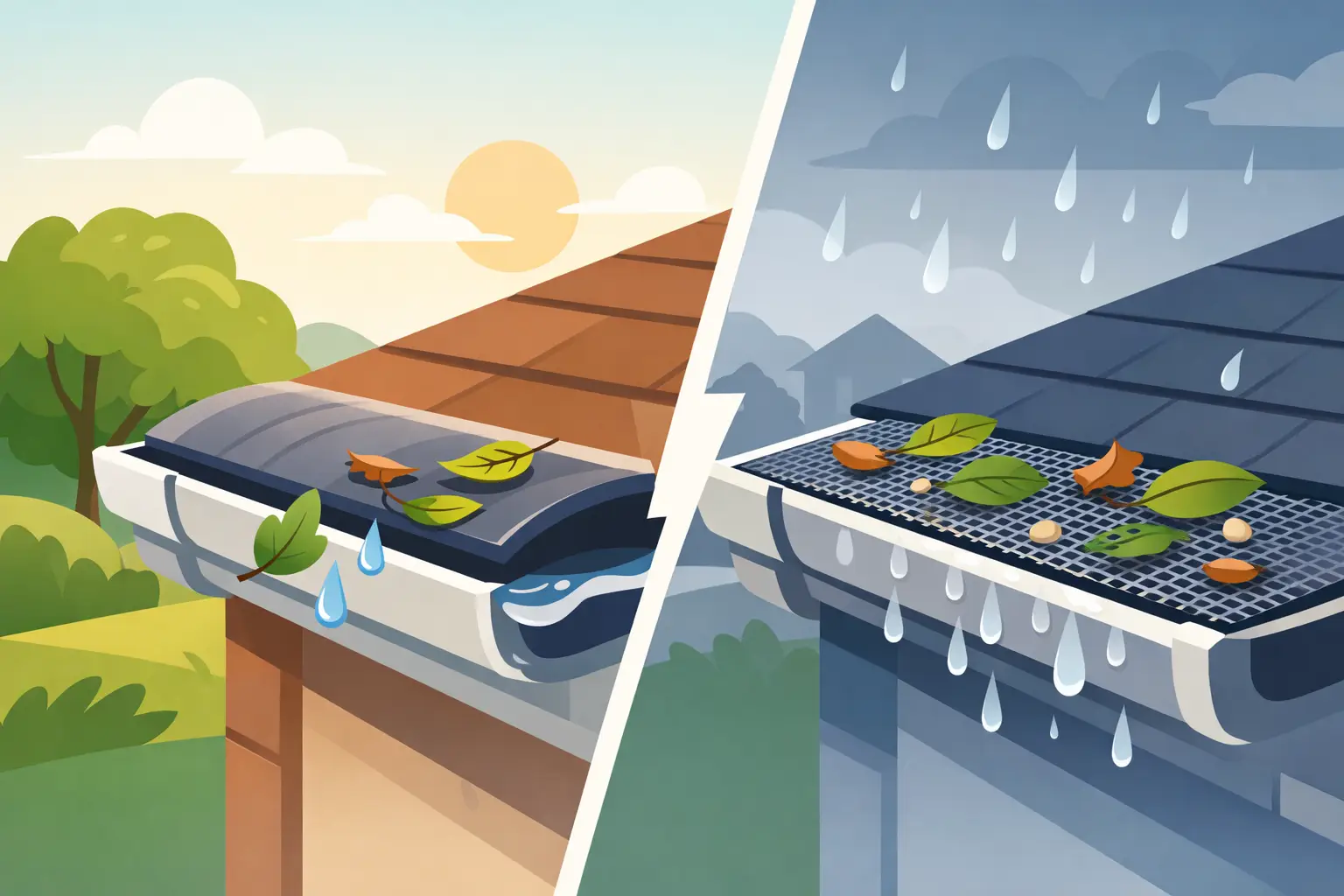

A gutter can look clean from the ground and still be one hard rain away from overflowing. In Eastern Indiana and Western Ohio, falling leaves, maple seeds, pine needles, roof grit, and storm debris can build up quickly. This leaf guards versus screens comparison helps homeowners understand what they are actually buying: a barrier over the gutter, or a system designed to keep water moving while reducing debris buildup.
The right choice depends on your roof, nearby trees, gutter condition, and how much maintenance you want to handle over time. A low upfront price may be appealing, but protection that shifts, clogs at the surface, or makes cleaning harder can cost more in frustration and repairs later.
What Is the Difference Between Leaf Guards and Screens?
“Leaf guard” is a broad term. It can describe several products that sit over or inside a gutter to keep debris out while allowing rainwater to enter. Some guards use fine mesh. Others use a solid cover with a narrow water-entry opening. Premium systems may also strengthen the gutter installation itself.
A gutter screen is usually the simpler option. It is commonly made of aluminum, steel, or plastic mesh and rests on top of the gutter opening. The holes are meant to let water through while blocking larger leaves and twigs.
That basic distinction matters. Screens are generally a low-cost debris barrier. A well-designed leaf protection system is intended to do more: manage water flow, reduce clogs, stay secure through changing seasons, and, in some cases, support the gutter along its length.
Leaf Guards Versus Screens Comparison: Performance
The main question is not whether a product stops leaves. Most products can stop a large dry leaf under calm conditions. The real test is what happens during a heavy downpour, when wet debris lands on the surface, or when small particles collect over weeks and months.
Debris control
Screens do a reasonable job against large leaves, sticks, and roof debris. They can be a practical fit for a home with only a few deciduous trees and gutters that are easy to reach. However, the openings in many screens are large enough for small leaves, seed pods, shingle granules, and pine needles to enter. Fine mesh screens block smaller debris more effectively, but they can also collect debris on top.
Premium leaf guards are usually built to manage smaller debris more consistently. Their design directs water into the gutter while encouraging leaves and larger debris to shed off the roof edge. No system makes gutter maintenance disappear forever, especially around heavy pine coverage. Still, a quality guard can greatly reduce how often gutters need to be cleaned and how much material reaches the gutter channel.
Rain handling
Water capacity is where product quality becomes especially important. A flat screen can become covered with wet leaves or roof grit. Once that surface is blocked, rain may run over the front edge of the gutter instead of entering it. That overflow can soak landscaping, stain siding, and contribute to foundation moisture issues.
A properly installed guard is designed around water flow, not just debris blocking. The best choice must also match the size, pitch, and condition of the existing gutter system. If a gutter is undersized, poorly sloped, pulling away from the fascia, or draining into a clogged downspout, adding a cover alone will not solve the problem.
Wind and winter conditions
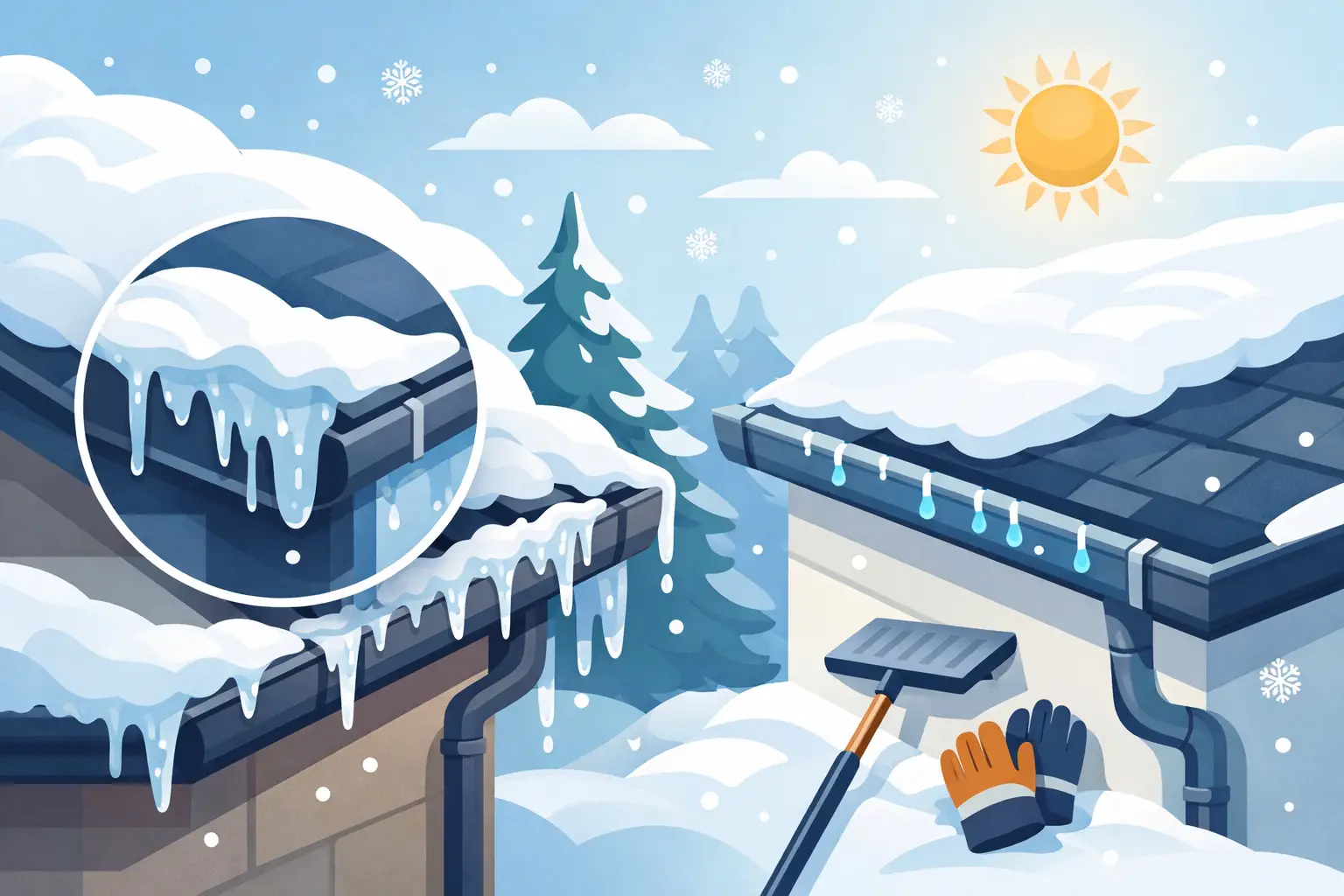
Eastern Indiana and Western Ohio homes see more than leaf season. Strong winds can lift poorly secured screens. Freeze-thaw cycles can expose weak fastening points, while snow and ice add weight to gutters already carrying debris.
Some basic screens snap into place or slide under shingles. These designs can be easy to install, but they may move, bow, or come loose over time. Guards that are professionally fastened and integrated with the gutter system generally offer better long-term stability. Installation quality matters as much as the product itself.
Cost: Upfront Price Versus Long-Term Value
Screens usually cost less at the start. Homeowners can find inexpensive screen materials at home improvement stores, and some products are simple enough for a confident do-it-yourself installer. That lower price can make sense when the home has light tree coverage and the owner is comfortable inspecting and maintaining the gutters.
The trade-off is that screens may still require regular cleaning. Debris can sit on top, slip through the openings, or catch at the screen edges. If they are not secured correctly, repairs or replacement may be needed sooner than expected.
Premium guards have a higher initial investment because the materials and installation are more involved. They are often a better value for homeowners who want fewer cleanings, stronger gutter support, and more dependable performance through changing weather. The right comparison is not simply guard price versus screen price. It is screen price plus ongoing cleaning, possible repairs, and the risk of water damage if the system fails during a storm.
When Screens Can Be the Right Choice
Screens are not automatically the wrong answer. They can be a sensible option when the gutters are in good shape, nearby tree coverage is limited, and the homeowner is willing to check the system regularly. They may also work as a short-term solution for a property that needs basic debris control before a larger gutter upgrade.
The key is setting realistic expectations. A screen is not a promise of maintenance-free gutters. Plan to inspect it after major storms and during the heaviest leaf drop. If water is spilling over the front edge or debris is collecting on top, the screen is not keeping up with the conditions around the home.
When a Premium Leaf Guard Makes More Sense
A premium system is usually the better fit for homes surrounded by mature trees, homes with steep or difficult-to-access rooflines, and homeowners who want to spend less time on ladders. It is also worth considering when the existing gutters need reinforcement or replacement.
Seamless Gutter Solutions installs DoublePro by Alu-Rex, a continuous-hanger gutter protection system. Unlike a basic cover placed on top of an existing gutter, this type of system is designed to support the gutter continuously while protecting the open channel from debris. That combination can be especially valuable where heavy rain, snow loads, and seasonal debris put extra stress on gutter fasteners.
A premium guard is not a substitute for proper drainage design. Downspouts still need to carry water away from the foundation, and the gutter run must be correctly sized and pitched. But when it is part of a well-installed system, it can reduce routine maintenance and help protect the roofline, siding, landscaping, and foundation from uncontrolled runoff.
Do Not Cover Up Existing Gutter Problems
Before choosing any screen or guard, look at the gutter system underneath it. Common warning signs include standing water in the trough, peeling paint on fascia boards, separated joints, sagging sections, overflow near one corner, and downspouts that discharge too close to the home.
Covering damaged or poorly installed gutters can make future repairs more complicated. A free inspection gives you a chance to identify whether the issue is simply debris or a larger drainage problem. A clear, itemized estimate should explain what needs attention, what product is recommended, and why – without surprise charges added later.
Choose Protection Based on Your Home, Not the Package
There is no single winner for every property. Screens can be an affordable, practical choice for light debris and homeowners who do not mind regular upkeep. Leaf guards are a stronger long-term option when debris is persistent, access is difficult, or you want protection that works alongside a professionally installed gutter system.
Before the next heavy rain tests your gutters, have the system inspected from the roofline to the downspout outlet. The best choice is the one that keeps water moving away from your home with the fewest avoidable surprises.