

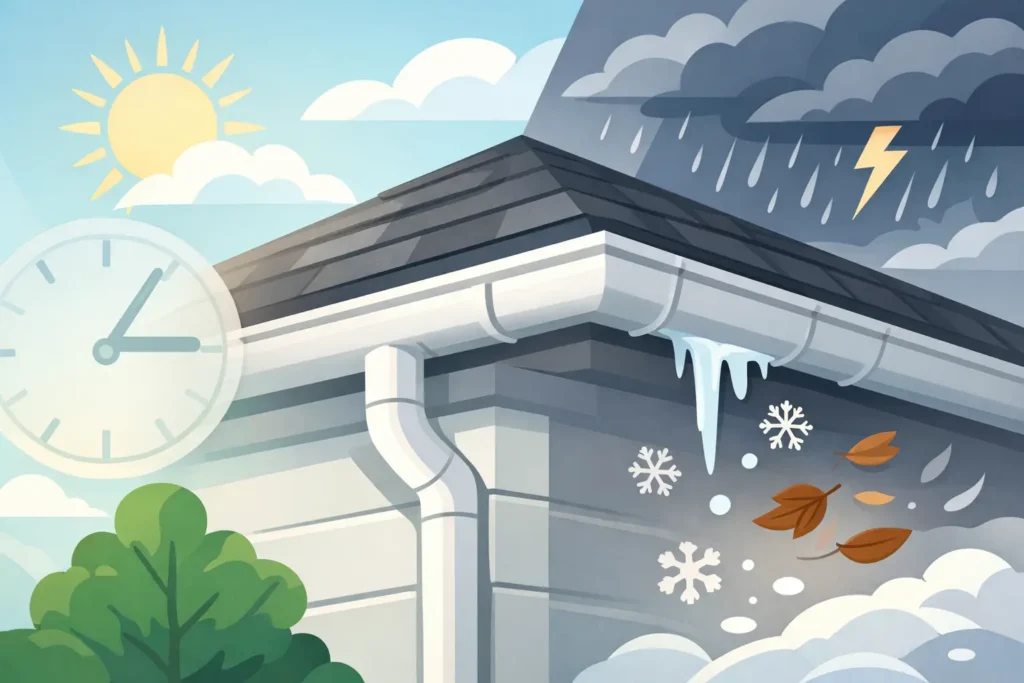
A gutter system usually does not fail all at once. It starts with a drip at a corner, a low spot that holds water, or a section pulling away after a heavy storm. That is why homeowners often ask, how long do seamless gutters last, before the damage becomes obvious. The short answer is that most seamless gutters last 20 to 30 years, but the real answer depends on the material, the installation, and how well the system is maintained over time.
For homeowners in Eastern Indiana and Western Ohio, lifespan is not just a number on paper. Gutters deal with spring downpours, summer storms, falling leaves, winter freeze-thaw cycles, and the occasional heavy snow load. A system that looks fine from the ground can still be wearing out in ways that put your fascia, foundation, siding, and landscaping at risk.
How long do seamless gutters last in real conditions?
If you are trying to plan for replacement or wondering whether an upgrade is worth it, here is the practical range. Aluminum seamless gutters, which are the most common choice for homes, often last around 20 years and can reach 30 with good care. Copper can last much longer, sometimes 50 years or more, but it comes with a much higher upfront cost. Steel tends to be strong, but if protective coatings wear down and rust begins, lifespan can shorten significantly.
That range matters because two homes built in the same year may have very different results. One system may still be performing well after two decades, while another needs major repair far earlier. The difference usually comes down to a few factors that homeowners can actually control.
What affects the lifespan of seamless gutters?
Material is the first piece of the puzzle, but it is not the only one. Aluminum remains popular because it gives homeowners a strong balance of durability, value, and rust resistance. For many properties, it is the most practical long-term option.
Installation quality matters just as much. Even a good material will wear out faster if the pitch is off, the hangers are spaced poorly, or the downspouts do not move water away from the home efficiently. Water that sits in the gutter instead of flowing through it creates extra strain on fasteners, seams at corners, and fascia boards.
Maintenance also changes the timeline. Gutters clogged with leaves, seed pods, and roof grit stay wet longer and get heavier. That extra weight can lead to sagging, overflow, and damage at attachment points. In areas with regular leaf drop, gutter protection can make a noticeable difference because it reduces blockage and helps water keep moving.
Weather exposure plays a role too. Homes surrounded by mature trees often deal with more debris and more moisture. Houses that take the full force of wind-driven storms may see faster wear on hangers and downspouts. In our region, freeze-thaw cycles can be especially hard on any gutter system that is already holding standing water.
Why seamless gutters usually outlast sectional systems
The biggest advantage of seamless gutters is right in the name. They are formed in long runs with far fewer joints than traditional sectional gutters. Fewer joints mean fewer points where leaks can develop, debris can catch, and sections can weaken over time.
That does not mean they are maintenance-free. Corners, end caps, and downspout connections still need attention. But compared with systems made from many shorter pieces, seamless gutters generally hold up better because they reduce the areas most likely to fail first.
This is one reason many homeowners upgrade to seamless gutters after dealing with repeated leaks in an older sectional setup. It is not only about appearance. It is about reducing weak points and lowering the chance of ongoing water problems around the house.
Signs your seamless gutters are nearing the end
Age is useful, but condition matters more. A 22-year-old gutter system that was professionally installed and maintained may still have life left in it. A 12-year-old system with poor drainage and recurring sagging may already be costing you more in repairs than it is worth.
Watch for visible separation from the fascia, recurring clogs in the same area, peeling paint near the gutter line, rust on metal parts, cracks at corners, and water pooling near the foundation after rain. You may also notice staining on siding or erosion in mulch beds below roof edges. Those are not always signs of total failure, but they are signs the system is no longer managing water the way it should.
If you are seeing these issues repeatedly, patching one area at a time may only delay the bigger decision. A full inspection gives you a clearer answer than guessing from the ground.
Repair or replace: what makes sense?
This is where homeowners often want a straight answer, and the truth is that it depends on how widespread the problem is. If one downspout is loose or one corner leaks, a repair may be the smart move. If the system has multiple low spots, fastener problems, overflow issues, and visible wear across long runs, replacement often makes better financial sense.
The key is not just the gutter itself. You also need to think about what failing gutters can damage next. Water spilling near the foundation, behind siding, or onto fascia boards can turn a manageable gutter issue into a much more expensive exterior repair.
A transparent inspection matters here. Homeowners should know whether they are paying for a targeted fix, extending the useful life of the system, or investing in a replacement that solves the underlying problem. Clear, itemized recommendations help take the guesswork out of that choice.
Can gutter guards help seamless gutters last longer?
In many cases, yes. Gutter guards do not make gutters permanent, but they can reduce the wear that comes from chronic clogging and trapped moisture. When water can move through the system instead of backing up behind leaves and debris, the gutter experiences less weight, less standing water, and less strain during storms.
That is especially helpful for homes with nearby trees. In those settings, the issue is not just cleaning frequency. It is the repeated cycle of debris buildup, overflow, added weight, and moisture exposure. A quality protection system can cut down on that cycle and help the gutter perform more consistently.
Not all guard products perform the same way, so homeowners should look at long-term function, not just marketing claims. A strong guard system should support drainage without creating new maintenance headaches.
How to get the longest life from your gutters
If you want your gutters to last closer to 30 years than 20, small decisions add up. Professional installation is the first one. Proper pitch, secure fastening, and correct downspout placement are not extras. They are what make the whole system work.
Regular cleaning or protection is next. Gutters do not need constant attention, but they do need to stay clear enough to drain properly. Inspections after major storms can also catch small issues before they become structural ones.
It also helps to pay attention to warning signs around the house, not just on the gutter. Soil washout, basement moisture, mildew on siding, and peeling exterior paint can all point back to drainage problems. Gutters are there to protect much more than the roof edge.
A better way to think about gutter lifespan
When people ask how long do seamless gutters last, they are often really asking something bigger: how long can I trust this system to protect my home? That is the better question. A gutter system is doing its job when it moves water away from the house reliably, season after season, without constant repairs or surprise failures.
For most homes, a well-installed aluminum seamless gutter system should provide decades of dependable performance. But the longest-lasting option is not always the most expensive material. It is the system that fits the home, handles local weather, and is installed and maintained with care.
If your gutters are showing their age, getting a clear inspection now is usually cheaper than waiting for water damage to make the decision for you. Companies like Seamless Gutter Solutions LLC build trust by keeping that process simple – free inspections, detailed quotes, and no hidden fees. That kind of clarity matters when you are trying to protect one of your biggest investments.
A good gutter system should give you confidence every time it rains, not another item on the worry list.