

A gutter problem usually shows up after the damage has already started. You notice water pooling by the foundation, streaks on the siding, washed-out mulch, or a section of gutter pulling away from the fascia. At that point, the big question is simple: seamless gutter repair vs replace – which one actually makes sense for your home?
For most homeowners, the right answer comes down to three things: how much of the system is failing, what caused the problem, and whether a repair will truly solve it or just buy a little time. A quick patch can be the right call. It can also be a costly delay if the gutter system is already near the end of its useful life.
How to think about seamless gutter repair vs replace
The easiest mistake is focusing only on the visible problem. A leaking corner or sagging run may look minor, but gutters work as one system. If water is not moving properly from the roofline to the downspouts and away from the home, the issue is bigger than one drip.
Repair is usually the better option when the problem is isolated. Maybe a bracket came loose, a downspout connection separated, or a small section was damaged by a ladder or storm debris. If the rest of the gutter run is solid, properly pitched, and free from widespread corrosion or deformation, a targeted repair can restore performance without the cost of a full replacement.
Replacement makes more sense when the system has multiple weak points. If you have recurring leaks, long sections pulling away from the house, standing water from poor pitch, heavy debris buildup from design issues, or visible wear across several areas, patching one spot will not fix the larger failure. In that case, replacing the system is often the more protective and more cost-effective decision.
When repair is usually enough
A repair is worth considering when the gutter system still has good structure and the issue is clearly limited in scope. This is common after a storm, after impact damage, or when one connection simply wears loose over time.
Small leaks at seams or end caps
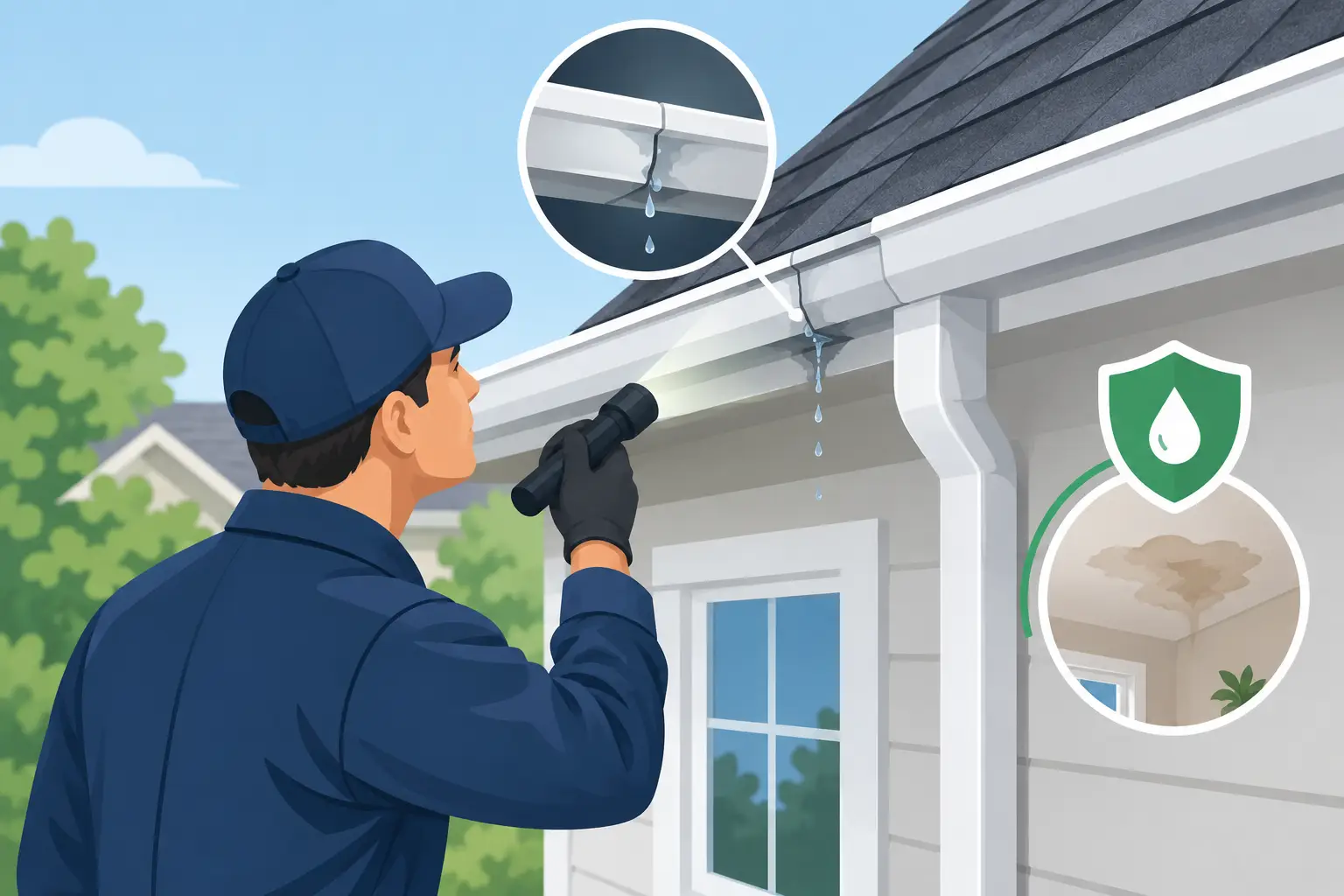
Even though seamless gutters reduce the number of joints, they still have connections at corners, downspout outlets, and end caps. Those points can develop leaks. If the metal itself is in good shape and the leak is confined to one area, resealing or reconnecting that section may be all that is needed.
Loose hangers or a short sagging section
Sometimes the gutter itself is fine, but the support hardware has loosened or failed. If the fascia board is still sound and the sagging has not distorted the entire run, re-securing the system can restore proper drainage.
Downspout issues
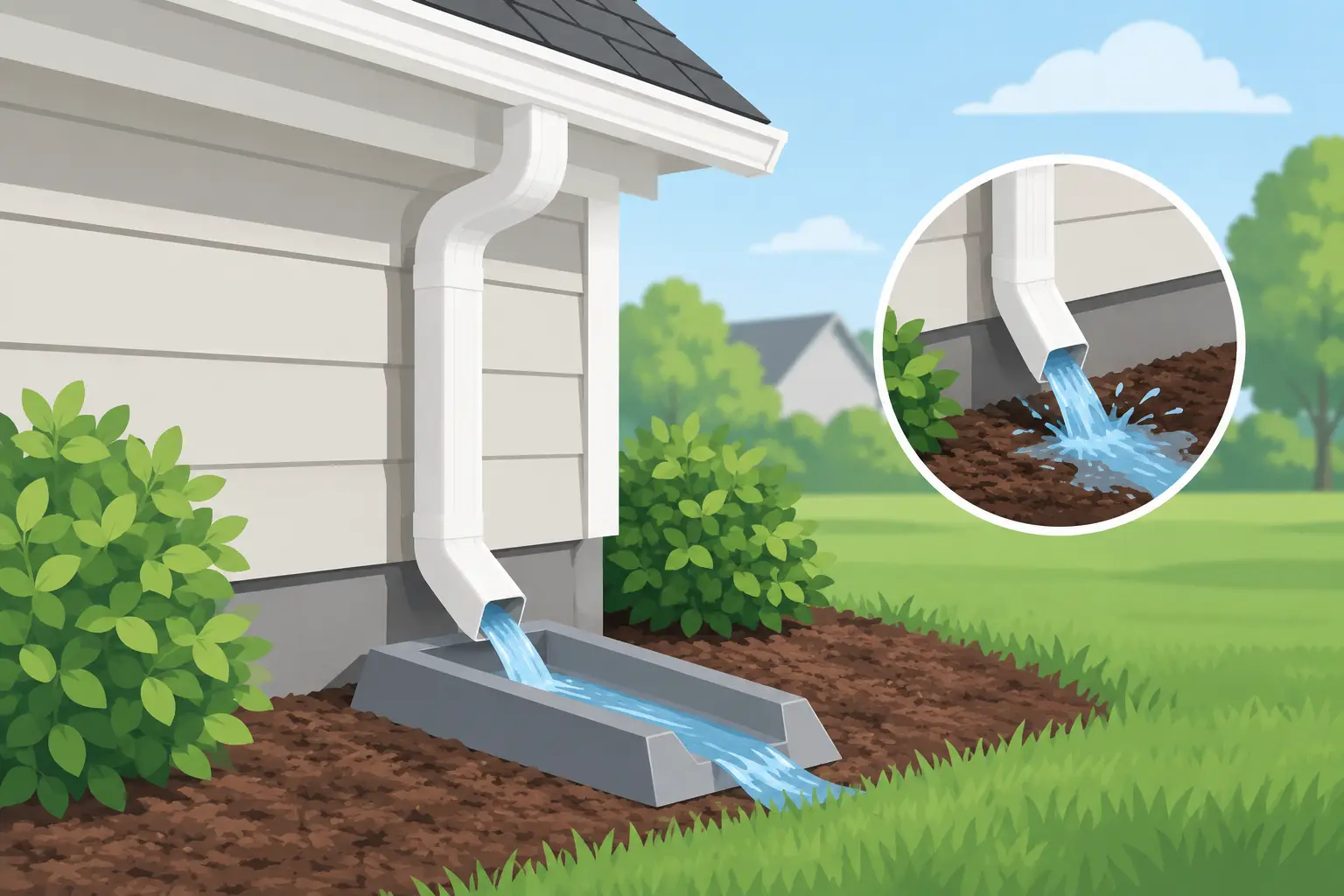
A clogged, crushed, disconnected, or poorly directed downspout can create overflow that looks like a gutter failure. In reality, the gutter may be doing its job, but the water has nowhere to go. Repairing or reworking the downspout may solve the problem.
Limited storm or ladder damage
One dented or bent area does not always justify a full replacement. If the damage is localized and the rest of the system is performing well, a professional repair can extend the life of the gutter system.
When replacement is the smarter move
Homeowners often try to stretch a failing gutter system for one more season. That can work for a while, but once gutter problems start affecting the roof edge, fascia, soffit, siding, or foundation, the math changes quickly.
The system has repeated leaks or frequent overflow
If you are repairing the same gutter more than once, the issue is probably not isolated. Repeated leaks often point to aging materials, poor installation, shifting pitch, or multiple failing connections. Overflow during ordinary rain can also signal that the design is undersized or that the system lacks proper protection from debris.
Long sections are pulling away
When large portions of the gutter are separating from the home, the problem may involve weakened fascia, failing fasteners, or gutters that have been overloaded for too long. A repair might hold temporarily, but it may not restore long-term reliability.
There is widespread rust, cracking, or warping
If the material itself is breaking down across the system, replacement is usually the safer call. Once wear is widespread, repairing individual spots becomes inefficient. You spend money on parts of a system that is still likely to fail elsewhere.
The pitch is wrong across multiple runs
Gutters need the right slope to move water to the downspouts. If several runs hold standing water, overflow at the wrong points, or back up near roof valleys, the original installation may be part of the problem. Re-pitching one piece will not always correct a layout issue across the whole house.
You want less maintenance and better long-term performance
Sometimes replacement is not about failure alone. It is also about upgrading. Older sectional systems and worn-out gutters often create more maintenance, more clogs, and more chances for leaks. A properly installed seamless system, especially when paired with a premium guard, can reduce those headaches and protect the home more consistently.
The hidden cost of choosing the wrong option
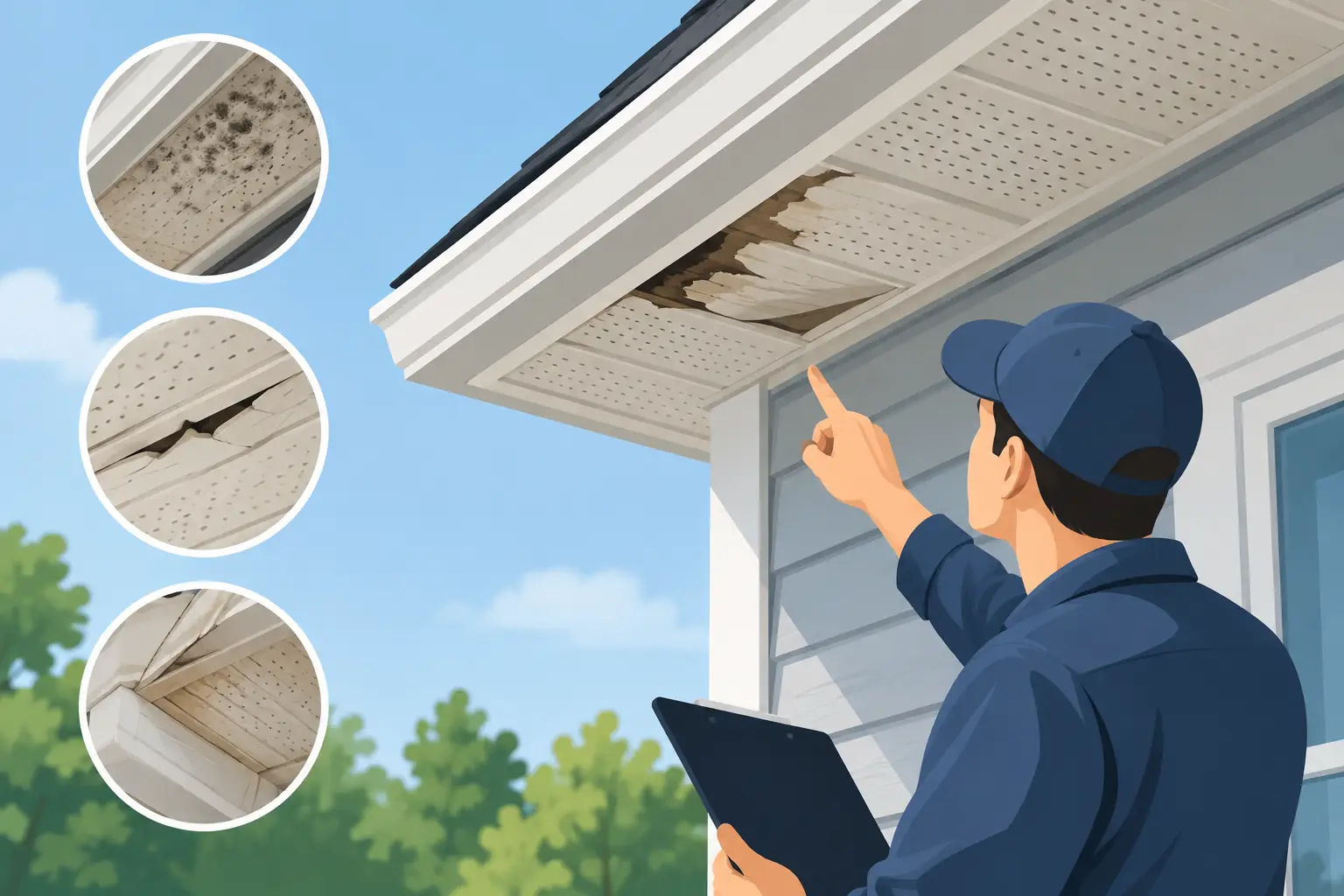
The reason this decision matters is simple: gutter problems rarely stay in the gutter. Water that spills in the wrong place can rot fascia boards, stain siding, erode landscaping, flood basements, and stress foundations over time.
That is why the cheapest short-term option is not always the least expensive path. A small repair bill feels better today, but if it delays a needed replacement and water keeps getting where it should not, the total cost climbs fast. On the other hand, replacing a system that only needed a minor fix is not a good use of your money either. The goal is not to upsell or undersell. It is to match the solution to the actual condition of the system.
What a professional inspection should look for
A real gutter inspection should go beyond a visual glance from the driveway. The important question is not just whether the gutter is attached. It is whether the full system is carrying water away from the house the way it should.
A thorough evaluation should check for slope, hanger condition, fascia integrity, seam and outlet leaks, downspout placement, signs of overflow, and evidence of water damage below the gutter line. It should also consider surrounding trees, roof valleys, and the volume of runoff the home produces.
For homeowners in Eastern Indiana and Western Ohio, those details matter. Heavy spring rains, summer storms, and fall leaf buildup can expose weak points quickly. A system that barely gets by in dry weather may fail when the next hard rain hits.
Why seamless systems change the equation
The phrase seamless gutter repair vs replace can be a little misleading because seamless gutters are already designed to reduce common failure points. Fewer joints mean fewer places for leaks to begin. That often makes repairs more worthwhile when the issue is truly isolated.
At the same time, if a seamless gutter system is failing in multiple places, it usually means the problem is not just one bad seam. It may be age, improper support, poor pitch, storm damage, or a broader installation issue. In those cases, replacement offers a cleaner and more dependable reset.
This is also where gutter guards can affect the decision. If clogs and overflow are a regular problem, replacing or upgrading the system with a high-performance protection product like Double Pro by Alurex may solve both the current issue and the reason it keeps coming back.
A practical way to decide
If your gutters have one problem in one area and the rest of the system is sound, start with repair. If the system has multiple issues, visible aging, recurring water control problems, or signs of damage to the home, replacement is more likely to protect your investment.
The most helpful next step is a clear inspection and an itemized estimate that shows what is repairable, what is not, and what each option would actually cost. That gives you something better than a guess. It gives you a decision based on the condition of your home.
At Seamless Gutter Solutions LLC, that is exactly how we approach it – with free inspections, detailed quotes, and no hidden fees, so you can see whether a repair will truly hold or whether replacement is the smarter long-term move.
If you are seeing leaks, sagging, overflow, or water collecting where it should not, do not wait for the next storm to answer the question for you. The best gutter decision is the one that stops the water before it reaches everything underneath it.