
A leaking corner, a section pulling away from the fascia, or overflow during a normal rain can put homeowners in a tough spot fast. This gutter repair versus replacement guide is here to make that decision simpler. In many cases, a targeted repair is the smart move. In others, replacing the system saves money, stress, and repeat damage to your roofline, siding, foundation, and landscaping.
The key is not guessing based on one symptom. Gutters fail in patterns. A small seam leak on an otherwise solid system is very different from widespread sagging, rust, standing water, and recurring clogs. If you know what to look for, you can make a practical decision before minor water issues turn into expensive exterior repairs.
How to Use This Gutter Repair Versus Replacement Guide
Start with the age and overall condition of the system, then compare that with the type of problem you are seeing. If the gutters are relatively new and the issue is isolated, repair is often reasonable. If problems show up in multiple areas at once, replacement is usually the more reliable long-term choice.
This is where homeowners can get tripped up. A cheap repair can feel like the safe option because the immediate price is lower. But if that repair only buys a few months before the next issue appears, the lower upfront cost stops being a bargain. The right decision is the one that protects the house, not just the one that postpones the bill.
When Gutter Repair Makes Sense
Repair is usually the right path when the gutter system is structurally sound and the damage is limited. That includes small leaks at joints, a loose downspout connection, a few missing hangers, or one section that has shifted slightly after a storm. These are localized problems, and they can often be corrected without rebuilding the whole system.
Minor slope issues can also sometimes be fixed. If a section is holding water because it is slightly out of pitch, an adjustment may restore drainage. The same goes for isolated fastening problems where a small area has pulled away from the home but the fascia behind it is still in good shape.
Repairs also make sense when the gutters are not that old. If the system still has years of service left and the material is in decent condition, it is usually worth fixing a single trouble spot. The important thing is making sure the repair addresses the real cause. If a corner leaks because the seam failed, sealing that seam may work. If it leaks because the gutter is twisting due to poor support, the repair needs to correct the support issue too.
Signs Replacement Is the Better Investment
Replacement becomes the better option when the problems are no longer isolated. If you are dealing with repeated leaks, frequent overflow, rust, separation at multiple joints, sagging runs, and visible wear across the system, you are not looking at one repair. You are looking at a failing gutter system.
Age matters here. Older sectional gutters often develop problems in stages, then all at once. One season it is a leak at the corner. Next season it is another seam, then a section starts pulling loose, then the downspout backs up because the alignment is off. At that point, ongoing repair costs start stacking up without solving the underlying issue.
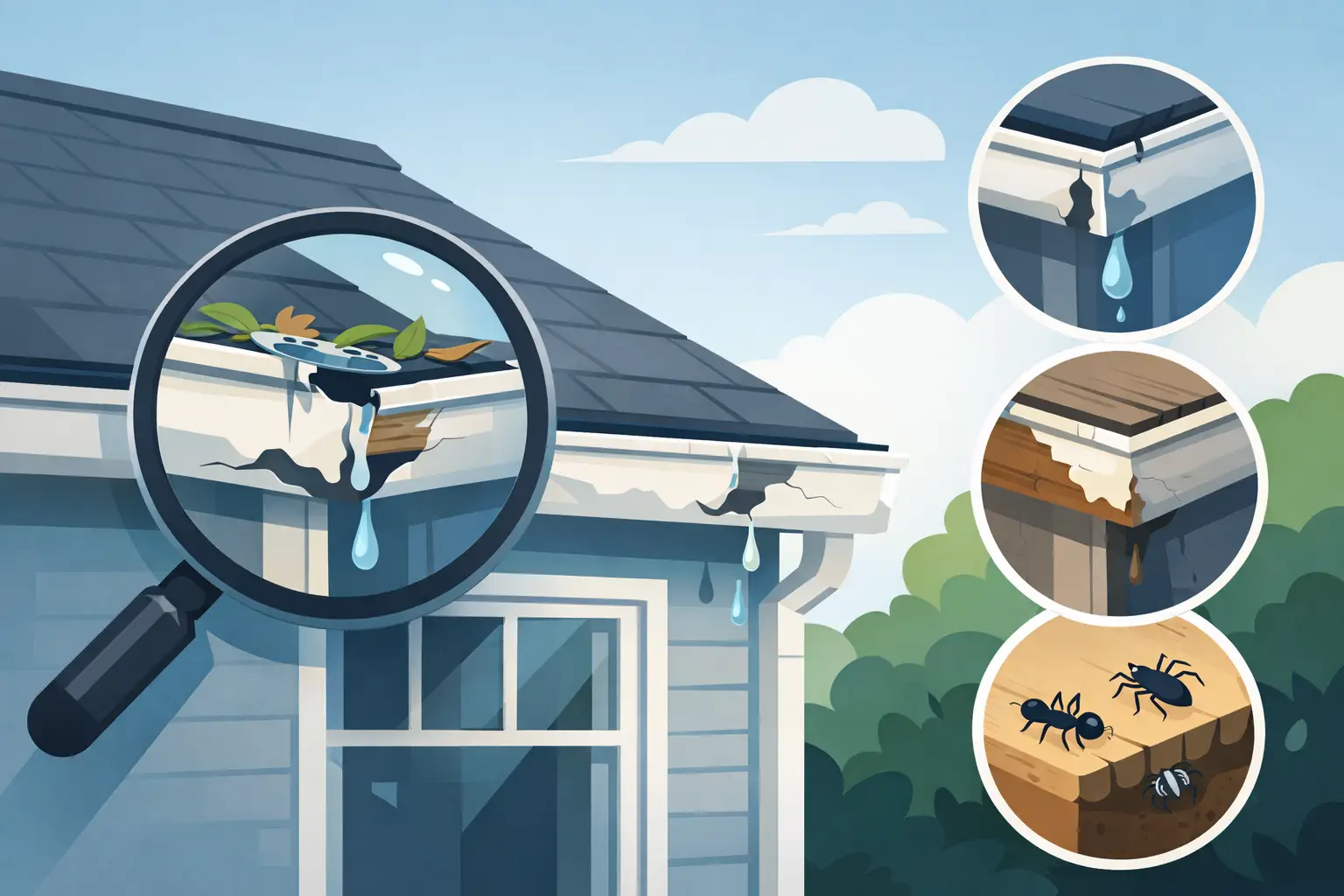
Replacement is also worth serious consideration if water is already affecting other parts of the house. Peeling paint near the roofline, soil erosion below the eaves, basement moisture, stained siding, or damaged fascia boards can all point to drainage failure. Once gutter problems start causing secondary damage, piecemeal fixes become riskier.
Another common reason to replace is poor system design. Sometimes the existing gutters were undersized, badly sloped, or installed with too few downspouts. In that situation, the system may technically be repairable, but it still may not perform well during heavy rain. A replacement gives you the chance to correct the design, not just patch the symptoms.
Repair vs. Replacement by Problem Type
Leaks are one of the most common concerns. If the leak is coming from one seam or end cap, repair may be enough. If leaks show up at several joints, especially on older sectional gutters, replacement often makes more sense because those seams will continue to be weak points.
Sagging can go either way. A short section sagging from a few loose hangers may be repairable. Widespread sagging usually points to structural wear, improper fastening, hidden wood rot, or a system that has taken on too much strain over time.
Rust and corrosion are harder to work around. Surface rust in a small area may be manageable for a while, but deep corrosion means the material itself is failing. Once metal thins out, sealing and patching become temporary at best.
Overflow is another issue that depends on cause. If the gutters overflow because they are clogged, cleaning and possibly adding gutter protection may solve it. If they overflow because the gutters are too small, pitched incorrectly, or poorly placed, replacement is the better fix.
Storm damage can fall on either side. If a branch bent one section and the rest of the system is in good condition, a repair or partial replacement may be enough. If the impact exposed broader weakness in an aging system, it may be smarter to start fresh.
The Seamless Advantage
One reason many homeowners move from repair to replacement is the performance gap between older sectional gutters and modern seamless systems. Traditional sectional gutters have multiple joints, and every joint is a potential leak point over time. That does not mean sectional gutters always fail quickly, but it does mean maintenance tends to increase as they age.
Seamless gutters reduce those connection points dramatically. Fewer seams generally means fewer leaks, cleaner lines, and less ongoing trouble. For homeowners who are tired of repeated patch jobs, replacement with seamless gutters is often less about appearance and more about predictability. You want the system to move water away from the house without becoming a regular project.
If leaves and debris are part of the problem, replacement can also be a chance to upgrade the system with better protection. A quality leaf guard can reduce clogs and lower how often the gutters need hands-on cleaning. That does not mean maintenance disappears completely, but it can make the system far easier to manage year-round.
Cost Is Important, but So Is Risk
Most homeowners start with the same question: which option costs less? In the short term, repair usually does. But the better question is what the home will cost if the gutters keep underperforming.
Water does not stay in one place. It runs behind siding, pools near the foundation, washes out mulch beds, weakens fascia, and creates problems that are much more expensive than the gutter work itself. A repair that works for two or three years can be a great value. A repair that lasts one storm season before more issues show up is not.
This is why clear inspections matter. You want to know whether you are paying for a true fix or just delaying replacement. A detailed, itemized estimate helps you compare those options honestly. It also helps you avoid the frustration of vague pricing that leaves out the real scope of work.
What a Homeowner Should Look for During an Inspection
A good inspection should go beyond the obvious leak or sag. The contractor should look at gutter pitch, fastening points, downspout placement, seam condition, signs of overflow, fascia condition, and drainage patterns around the home. The goal is to identify whether the visible issue is isolated or part of a bigger pattern.
This matters a lot for first-time homeowners. It is easy to see dripping water and assume the gutter itself is the only issue. Sometimes the bigger problem is poor runoff management, chronic clogging, or hidden wood damage where the gutter attaches to the house.
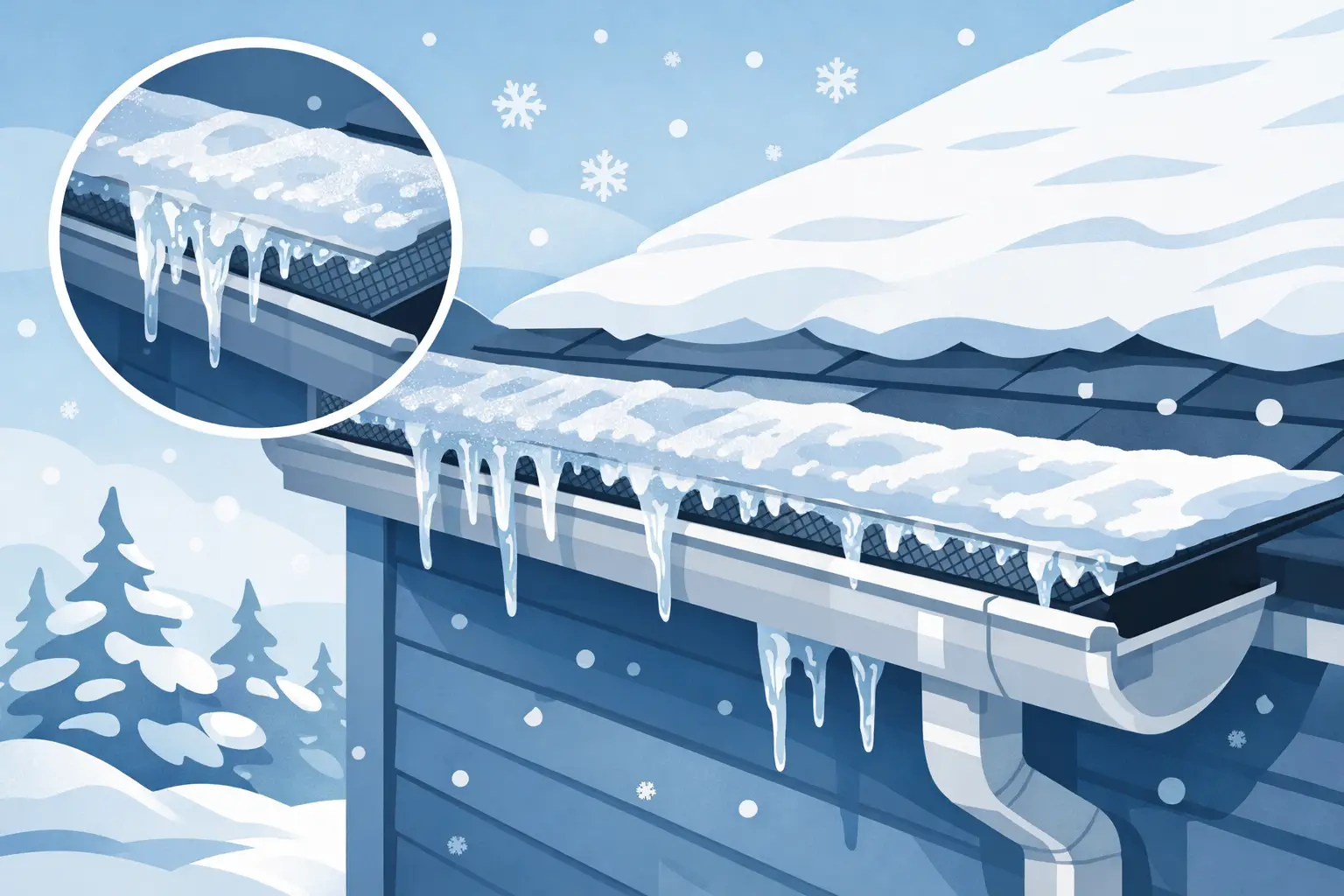
For homeowners in Eastern Indiana and Western Ohio, weather adds another layer. Freeze-thaw cycles, wind, heavy rain, and falling debris can speed up wear and expose weak points faster than expected. A system that barely worked last year may not hold up through another wet season.
Making the Right Call
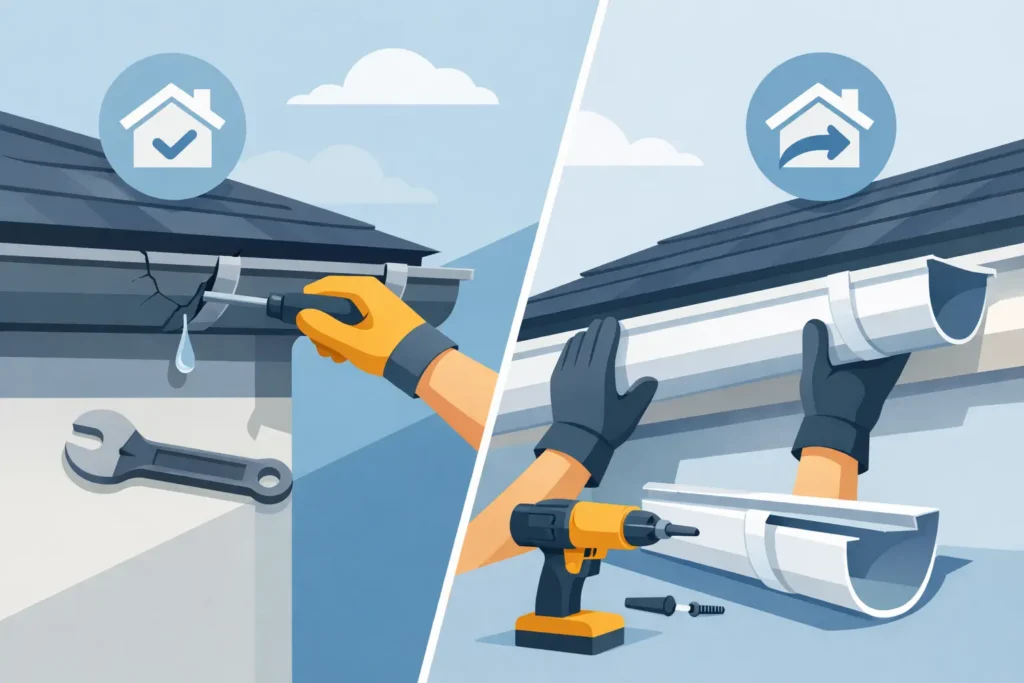
If your gutters have one or two isolated issues, are still in solid shape, and have been performing well overall, repair is often the practical answer. If the system is older, failing in multiple areas, or already contributing to water damage, replacement is usually the safer investment.
That is the real purpose of a gutter repair versus replacement guide. It is not to push every homeowner toward a full install. It is to help you make a decision based on the condition of the system, the risk to the home, and the value of fixing the problem once instead of chasing it over and over.
A trustworthy contractor should be able to explain that difference clearly, show you what they found, and give you a straightforward estimate without hidden fees or vague language. If you need one repair, you should hear that. If your home would be better protected by replacement, you should hear that too. The best next step is the one that keeps water moving away from your home with fewer surprises the next time it rains.