

A gutter system can look fine from the driveway while quietly sending water behind the siding, over the foundation, or onto walkways. That is why a practical guide to gutter maintenance schedule matters: regular checks catch small drainage problems before a hard Indiana or Ohio storm turns them into costly repairs.
For most homes in Eastern Indiana and Western Ohio, gutters need attention at least twice each year. Homes under mature trees, near pine needles, or with frequent leaf buildup may need service more often. The right schedule is not about doing unnecessary work. It is about matching maintenance to your roof, trees, weather, and the condition of your gutter system.
Your Guide to Gutter Maintenance Schedule
A reliable baseline is to inspect and clean gutters once in late spring and again in late fall. Late spring maintenance clears the seeds, blossoms, twigs, and storm debris that collect after winter. Late fall cleaning removes leaves before freezing temperatures can turn wet debris into a heavy, compacted blockage.
Those two appointments are a starting point, not a hard rule. A one-story home with few nearby trees may stay clear between seasonal cleanings. A home surrounded by maples, oaks, cottonwoods, or pines can need three or four visits per year. Pine needles are especially easy to miss because they can slip through some guards and collect at outlets and downspouts.
Rather than waiting until you see water pouring over the front edge, plan a quick visual check after major storms. You do not need to climb a ladder every time. From the ground, look for overflowing water, sagging sections, drips behind the gutter, loose downspouts, or mulch that has washed away near the foundation. These are signs that the system needs a closer look.
A Seasonal Gutter Care Plan
Late winter: Check for ice and storm damage
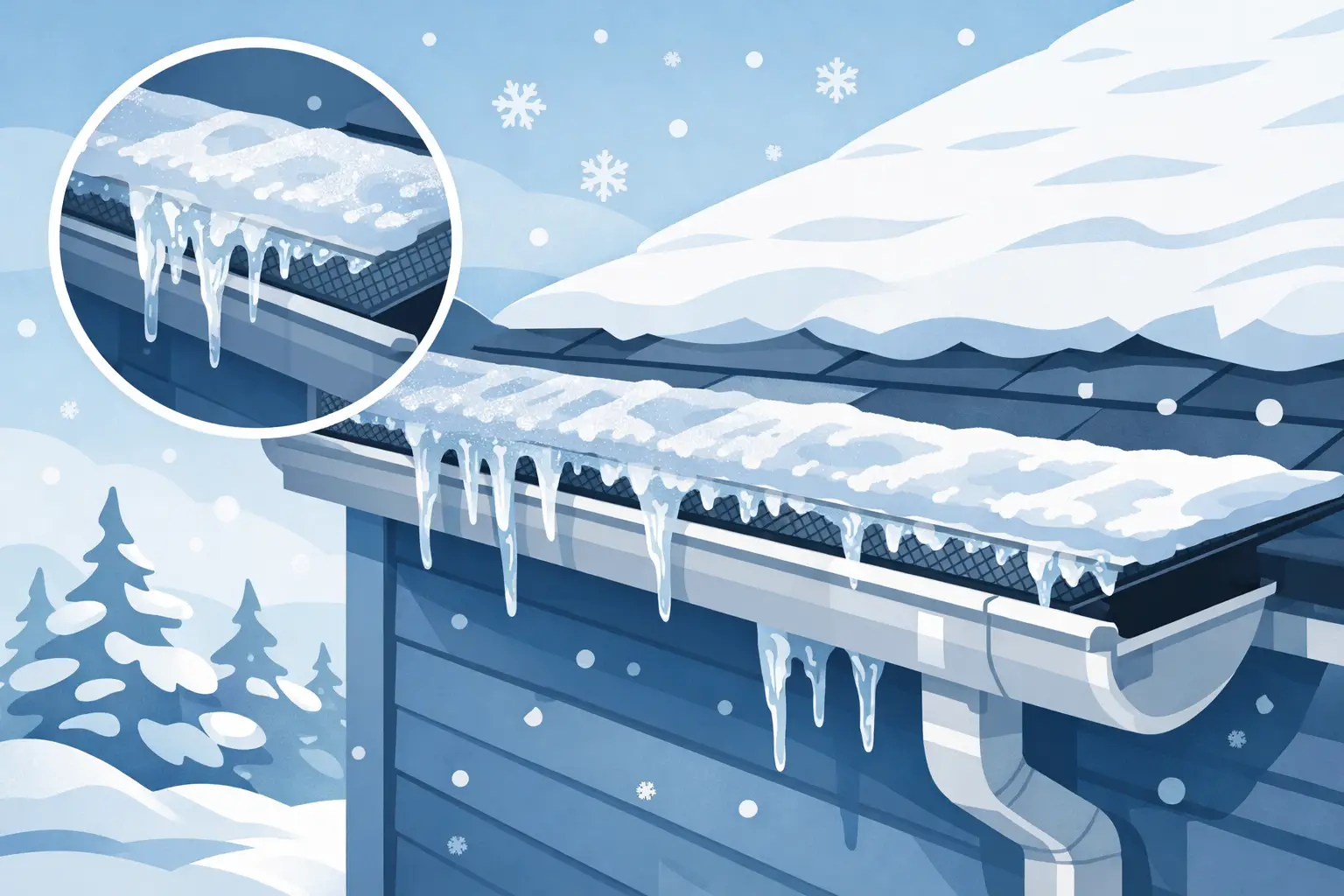
Late winter is not always the right time for a full cleaning. Snow, ice, and frozen ground make ladder work more dangerous, and frozen debris is difficult to remove without damaging the gutter. Instead, inspect from the ground after thaws and winter storms.
Watch for bent hangers, separated seams, downspouts pulled loose by ice, and water stains on fascia boards. Also look for long icicles that form repeatedly in the same location. Icicles can be normal after a freeze, but consistent buildup may point to a clogged outlet, poor drainage, or a roof ventilation issue that deserves professional evaluation.
Avoid chipping ice from gutters with sharp tools. It can puncture the gutter, damage the roof edge, or pull sections away from the fascia. If ice is causing visible damage or water is backing up toward the roof, schedule an inspection rather than forcing a temporary fix.
Spring: Clear seeds, twigs, and winter debris
Spring is the first major cleaning window. Winter winds leave behind twigs and shingle grit, while flowering trees add seed pods and blossoms that quickly form a mat when wet. Gutters may appear open at the top but still have blocked downspout outlets beneath the debris.
During a spring service, the gutters should be cleared, the downspouts checked for full flow, and the system flushed with water. This is also a good time to check that downspout extensions are still directing water away from the foundation. A downspout that ends too close to the house can send hundreds of gallons into the same soil area during a single storm.
Spring inspections are especially helpful for homes with basements, crawl spaces, or landscaping beds near the foundation. Early signs of drainage trouble can include damp basement walls, splash marks on siding, eroded mulch, or soil that stays saturated near downspout exits.
Summer: Inspect after heavy rain and wind
Summer maintenance is usually lighter, but summer storms can reveal problems that dry-weather inspections miss. After a hard rain, walk around the home and observe how the gutter system performs. Water should enter the gutter, travel to the downspouts, and discharge away from the structure without spilling over.
Look for a waterfall at one point along the gutter line. That may mean a clog, a low spot, or a gutter that has pulled away from the fascia. Water running down the exterior wall can indicate an overflow or a leak at a seam. If a downspout is draining slowly, there may be a compacted clog farther down the pipe.
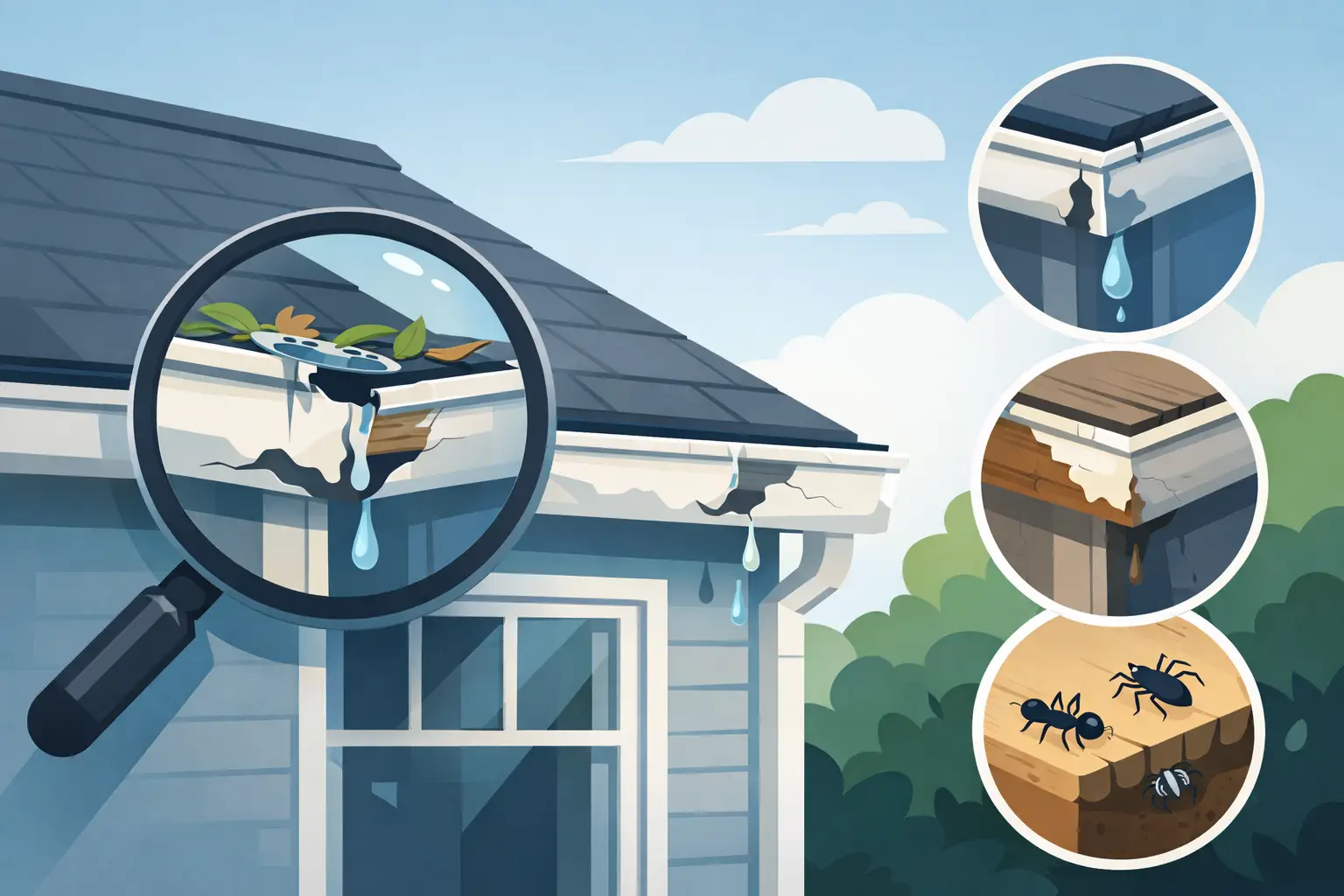
Summer is also a sensible time to address minor repairs. Tightening loose fasteners, correcting a poorly pitched section, or repairing a leaking seam is generally simpler before leaf season arrives. Putting off a small repair can allow water to damage fascia boards or create a larger sagging problem later.
Fall: Make this your priority cleaning
For many local homeowners, fall is the most important gutter maintenance season. Leaves can fill an open gutter quickly, and a clogged system going into winter is more likely to overflow, freeze, and pull away under added weight.
Schedule cleaning after the majority of leaves have fallen, not just after the first cool weekend. If your property has several large trees, one early fall visit and one late fall visit may be more realistic. Waiting until every last leaf is down can leave your system clogged during the rainy part of the season.
A proper fall appointment should include clearing gutters and downspouts, confirming water flow, checking hangers, and looking for signs of deterioration. It is also the right time to assess whether repeated cleaning is becoming more expensive and frustrating than adding leaf protection.
What Changes the Schedule for Your Home?
Tree coverage is the biggest factor, but it is not the only one. Roof design, gutter size, the number of downspouts, and past drainage issues all affect how often service is needed. Valleys where two roof sections meet can dump concentrated debris into one gutter area. Low-slope roofs may release more shingle grit. Homes with long gutter runs may need additional downspouts to keep water moving during intense rainfall.
Gutter guards can reduce the amount of debris inside the gutter, but they do not make every system maintenance-free. Some surface debris may still need to be brushed away, and downspouts should still be checked. The benefit is reduced cleaning frequency and better protection against packed leaf clogs, particularly when the guard is installed as part of a properly supported gutter system.
For homeowners who are tired of repeated ladder work, a continuous-hanger guard such as Double Pro by Alurex can also strengthen the gutter along the roofline while helping keep leaves out. Whether a guard is a good fit depends on the roof edge, existing gutter condition, tree types, and how well the current system handles rainfall.
When to Call for Professional Gutter Service
Cleaning gutters can be a manageable task on a low, single-story home with safe ground conditions and the right equipment. It is not a good do-it-yourself project when the roof is steep, the ground is uneven, power lines are nearby, or gutters are visibly loose. The risk of a fall is not worth saving a service call.
Professional service is also the better choice when water continues to overflow after cleaning, gutters pull away from the home, seams leak, or the fascia shows rot. Those symptoms may mean the issue is not simply debris. The gutter may be undersized, improperly pitched, poorly supported, or missing enough downspout capacity for the roof area.
A clear inspection should explain what is causing the problem and what work is actually needed. Homeowners should not have to guess whether they are paying for a cleaning, a repair, or a replacement. Seamless Gutter Solutions LLC provides free inspections and detailed estimates so you can see the recommended work before making a decision, with no hidden fees.
Keep a Simple Record Between Visits
A basic maintenance record helps you spot patterns. Note when gutters were cleaned, where clogs appeared, whether water overflowed during a storm, and any repairs completed. If the same downspout blocks every season or the same gutter section overflows, that information makes the next inspection more useful.
The goal is not to spend every weekend thinking about gutters. It is to give rainwater one dependable path away from your roof, walls, foundation, and landscaping. Put your seasonal checks on the calendar, pay attention after major storms, and arrange service before small drainage warnings become water damage.