

A gutter can look fine from the driveway while the wood behind it is quietly absorbing water. That is what makes gutter fascia damage signs worth taking seriously. Fascia damage often starts at the roofline, out of sight and easy to dismiss, but it can lead to loose gutters, roof-edge rot, siding stains, and water reaching places it should not.
For homeowners in Eastern Indiana and Western Ohio, freeze-thaw weather, heavy spring rain, falling leaves, and ice can all put added pressure on a gutter system. Catching a small problem early is usually far less disruptive than waiting until gutters pull away from the house or water enters the roof structure.
What Fascia Does for Your Gutter System
Fascia is the long, horizontal board attached along the lower edge of your roof. It creates a finished appearance at the roofline, supports the lower edge of the roof, and provides the solid surface where gutters are fastened.
A gutter is only as secure as the fascia behind it. When fascia remains dry and sound, gutter hangers can hold the system at the correct slope so water moves toward the downspouts. When the board softens, cracks, or rots, the hangers can loosen. The gutter may sag, tilt, or separate from the house, allowing rainwater to spill directly against the siding and foundation.
Fascia is not always wood. Some homes have aluminum- or vinyl-wrapped fascia, which can hide deteriorated wood underneath. That is why a clean-looking exterior does not automatically mean the roofline is in good condition.
The Most Common Gutter Fascia Damage Signs
You do not need to climb a ladder to spot many early warning signs. Start with a walk around your home after rainfall, then look again on a dry day when stains and surface changes are easier to see.
Gutters That Sag, Pull Away, or Look Uneven
A gutter should follow a clean, straight line along the roof edge, with only a slight slope toward the downspout. If a section dips, leans outward, or has a visible gap between the gutter and fascia, the issue may be more than a loose fastener.
Water-soaked fascia loses the strength needed to hold gutter hangers. Reattaching the gutter without addressing the damaged board may offer a temporary improvement, but the same section can fail again under the weight of rain, debris, snow, or ice.
Peeling Paint, Dark Stains, or Bubbling at the Roofline
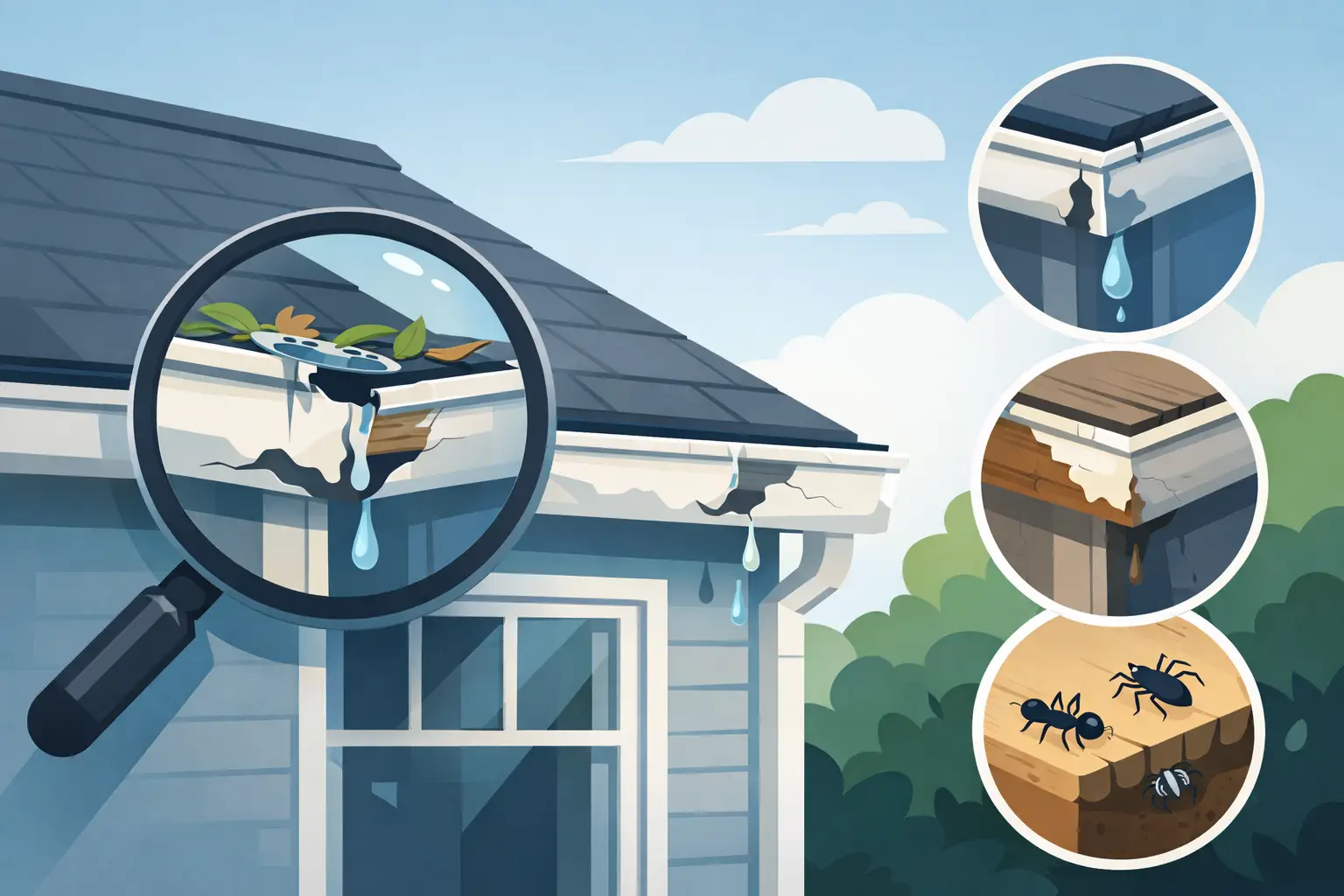
Paint is often the first visible layer to react when fascia has repeated water exposure. Peeling paint, blistering, dark streaks, or discolored areas near the gutter line can indicate moisture is getting behind or over the gutter.
Staining alone does not always mean the board is rotten. A one-time overflow during a major storm can leave a mark. But recurring stains, especially in the same area, point to a drainage issue that deserves inspection.
Soft, Crumbly, or Split Wood
If exposed fascia feels soft when gently pressed from a safe position, flakes apart, shows deep cracks, or has visible holes, moisture damage is likely already established. Wood rot does not repair itself. Once the material has lost structural strength, it needs to be evaluated for repair or replacement.
Avoid poking aggressively at suspect areas or leaning a ladder against a compromised gutter. A soft board can give way unexpectedly, and a gutter is not designed to support ladder weight.
Water Behind the Gutter or Dripping From the Roof Edge
Rainwater should run off the roof, enter the gutter, and travel through downspouts away from the home. Water flowing behind the gutter is a clear sign something is wrong. The cause might be a clogged gutter, a gutter that has pulled loose, improper slope, damaged flashing, or an issue with the drip edge.
The drip edge is a piece of metal flashing that guides roof runoff into the gutter. If it is missing, bent, or installed incorrectly, water can travel behind the gutter and soak the fascia every time it rains. This is a roofline detail that can be missed when homeowners focus only on gutter cleaning.
Rusted Fasteners, Loose Hangers, and Repeated Repairs
One loose screw does not necessarily mean the fascia is failing. Hardware can loosen with age and temperature changes. However, if hangers repeatedly pull out, screws no longer grip, or multiple sections need frequent tightening, the board behind them may no longer be sound.
An experienced inspection can separate a simple hardware repair from a problem involving fascia condition, gutter pitch, and water flow. That distinction matters because fixing only the visible symptom can leave the source of the damage in place.
Mold, Mildew, or Insect Activity Near the Eaves
Persistent moisture creates conditions that mold, mildew, and wood-damaging insects prefer. Look for dark organic growth near the soffit, a musty odor around an attic edge, or insect activity where fascia boards meet the roofline.
These signs do not prove fascia rot on their own, but they are reasons to investigate further. Moisture at the eaves can also affect soffit ventilation and nearby roof decking if left unresolved.
Why Fascia Damage Happens
Overflowing gutters are a common cause. Leaves, seed pods, shingle grit, and nests can block the channel or downspout, turning a routine rainstorm into a waterfall over the gutter edge. Repeated overflow saturates the fascia and can stain siding below.
Poor installation can create similar results. Gutters need enough slope to drain, enough hangers to carry their load, properly sized downspouts, and secure connections to sound material. A system that is undersized or incorrectly pitched may overflow even when it is clean.
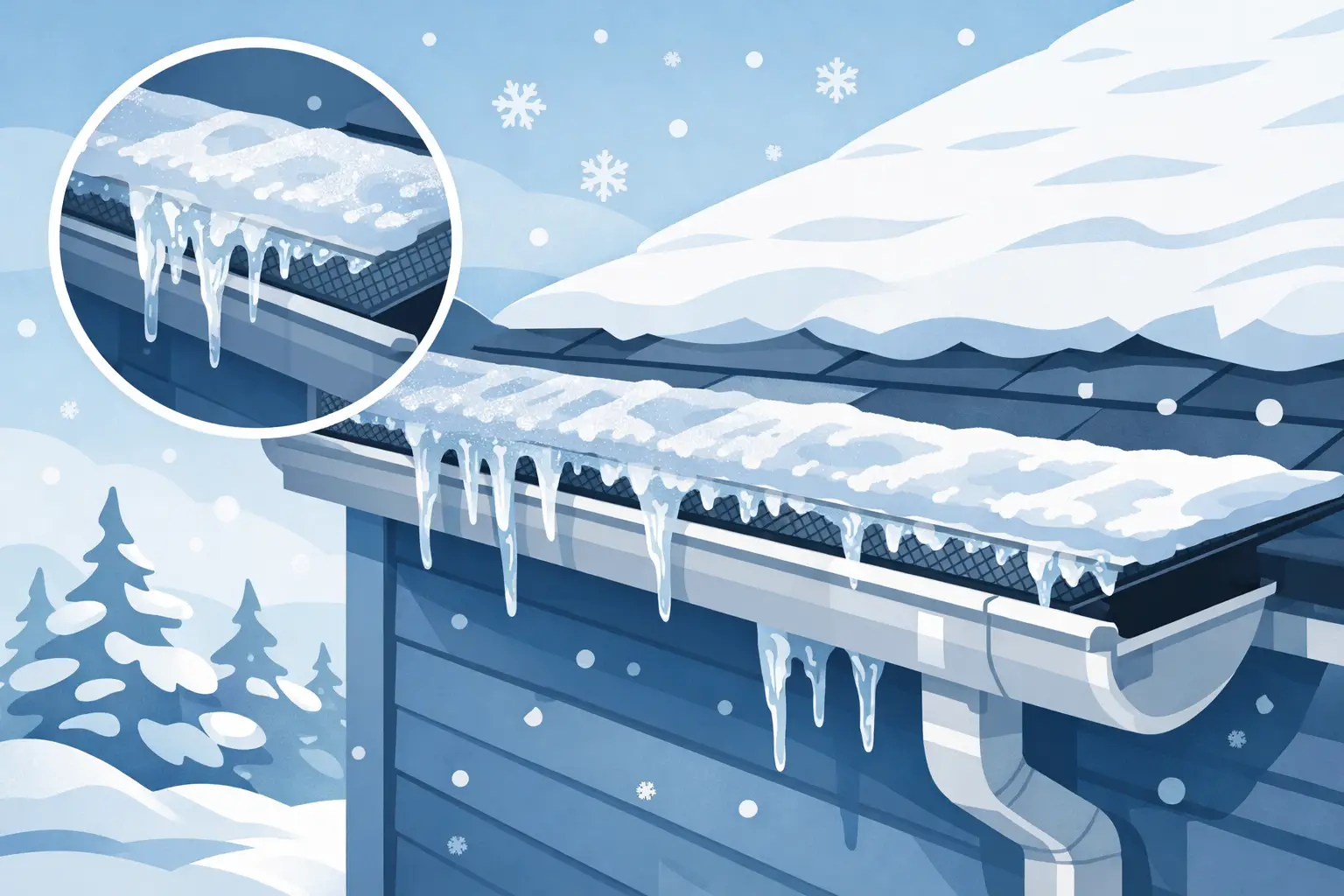
Ice can add another layer of stress. During winter, trapped water can freeze inside a clogged or poorly draining gutter. The added weight can bend hangers, pull on fascia, and widen existing gaps. In homes surrounded by mature trees, seasonal debris makes regular maintenance and effective leaf protection especially valuable.
What to Do When You Spot a Problem
First, watch where water goes during the next moderate rain. Note whether it spills over the front of the gutter, flows behind it, leaks at a joint, or misses the gutter entirely. These observations help identify whether the issue is clogging, gutter alignment, roof runoff, or fascia failure.
Next, have the gutter system and roofline inspected before attempting a cosmetic fix. Painting over stained or soft fascia may improve the appearance for a short time, but it will not correct an active overflow or damaged drip edge. Likewise, adding screws to a sagging gutter will not create a reliable attachment if the wood has deteriorated.
The right repair depends on the extent of the damage. A localized problem may only require cleaning, resecuring a section, replacing a small amount of fascia, or correcting gutter slope. Widespread rot, severely loose gutters, multiple leaking seams, or an aging sectional system may make replacement the more practical long-term choice.
This is also a good time to consider how much maintenance your property needs. Premium continuous-hanger gutter guards can help reduce debris buildup while adding support along the gutter system. They are not a substitute for proper installation or occasional inspection, but they can be a strong fit for homes that collect heavy leaf debris.
Protecting the Fascia Before Damage Spreads
A few routine habits can reduce the chance of water reaching the fascia. Keep gutters and downspouts clear, make sure downspout extensions carry water away from the foundation, and check the roofline after high winds or heavy storms. Look for fresh stains, detached sections, and water pooling around the home.
Do not assume a gutter that is still attached is working correctly. Water can overflow behind a gutter for months before obvious sagging appears. A professional inspection can evaluate drainage, hanger spacing, seams, downspouts, fascia condition, and whether the system is sized appropriately for the roof.
Seamless Gutter Solutions LLC provides free inspections and detailed, itemized estimates so homeowners can understand what needs attention before committing to a repair or replacement. Clear findings and no hidden fees make it easier to choose the repair that protects the home without paying for work that is not needed.
A stained board or a small gutter gap may seem minor today, but water problems at the roofline tend to grow with every storm. Addressing the cause while the repair is manageable helps keep your gutters secure, your fascia dry, and your home protected where it matters most.