
A downspout that dumps water right beside your house can undo a lot of good gutter work. If you are looking for the best downspout extensions for drainage, the right choice depends on your lot, your soil, your landscaping, and how far water needs to move before it can safely soak in or flow away.
For homeowners in places like Richmond, Muncie, Dayton, and the surrounding area, that question matters more than it seems. Heavy rain, freeze-thaw cycles, and clay-heavy soil can all turn a simple runoff issue into foundation staining, mulch washout, basement moisture, or slippery walkways. A downspout extension is not a glamorous upgrade, but it is one of the simplest ways to protect your home when it is matched to the property correctly.
What makes the best downspout extensions for drainage?
The best option is not always the longest or the cheapest. It is the one that moves water far enough from the house without creating a new problem somewhere else.
In most cases, you want runoff discharged at least 4 to 6 feet away from the foundation, and sometimes farther if the yard slopes back toward the home or holds water after storms. An extension also needs to stay in place, hold up to sun and weather, and avoid becoming a tripping hazard. If it clogs easily or gets crushed every time someone mows, it will not solve much.
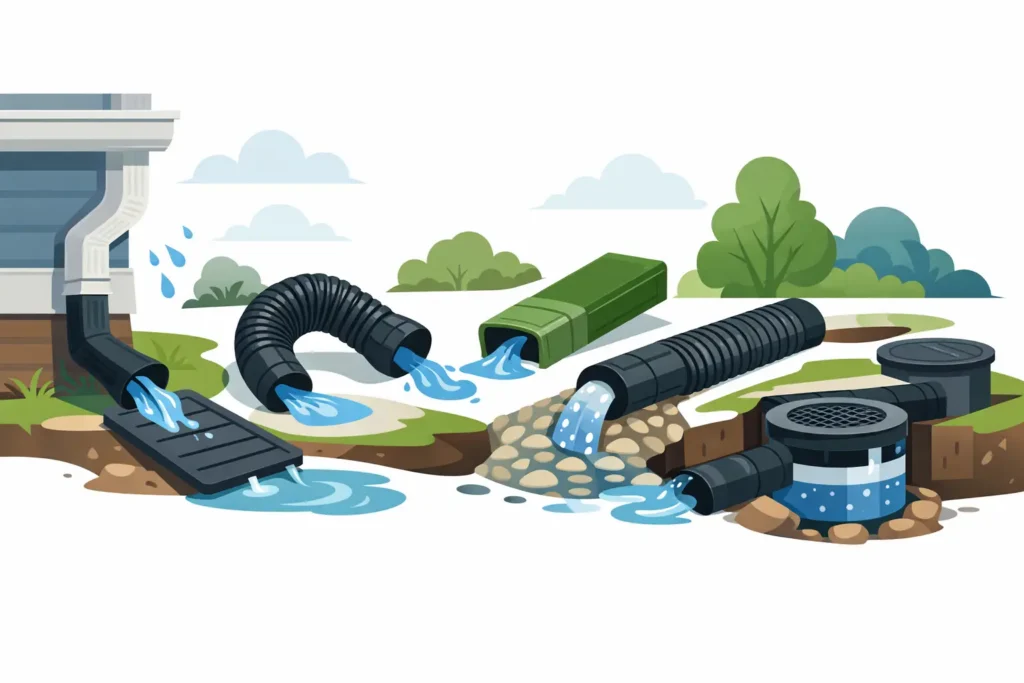
That is why homeowners usually end up choosing between above-ground flexibility and buried drainage performance. Above-ground options cost less and install faster. Buried options look cleaner and usually handle water better, but they require more planning and proper slope.
1. Flexible corrugated downspout extensions
This is the option most homeowners picture first. Flexible corrugated extensions attach to the bottom of the downspout and can be stretched out across the lawn to carry water away.
They are popular for a reason. They are affordable, easy to find, and simple to install. If you need a quick fix for a splash zone near the foundation, they can work well.
The trade-off is durability and appearance. Lower-cost corrugated plastic can crack in sun exposure, get knocked loose, or shift out of position after mowing or storms. They also tend to collect debris in the ridges, especially if the gutter system is already carrying shingle grit or leaf fragments. For a temporary or budget-conscious solution, they are fine. For a long-term clean look, many homeowners want something better.
2. Rigid vinyl downspout extensions
Rigid vinyl extensions are a step up in both appearance and performance. They hold their shape, connect more securely, and usually look neater against the house and lawn.
Because the interior is smoother, water flows more efficiently than it does through heavily ridged flexible tubing. That means less standing water and fewer spots for debris to hang up. They are still visible above ground, so they are not ideal for every front yard or walkway, but they are a strong choice when you want a straightforward fix that looks more finished.
This option works best where you have a clear discharge path and enough room to route water without creating a tripping issue.
3. Roll-out drain sleeves
A roll-out extension stays compact when dry and unrolls as water flows through it. Homeowners often like these because they are less noticeable between rain events.
In the right setting, they can be useful. They are lightweight, easy to move, and less visually intrusive than a long rigid extension stretched across the yard.
Still, they are not ideal for every property. They can shift, flatten unevenly, or wear out faster than more rigid products. If your drainage problem is minor and you mainly want to direct occasional runoff a short distance, they may be enough. If you have repeated pooling or strong water volume, a more solid solution makes more sense.
4. Splash blocks with short extensions
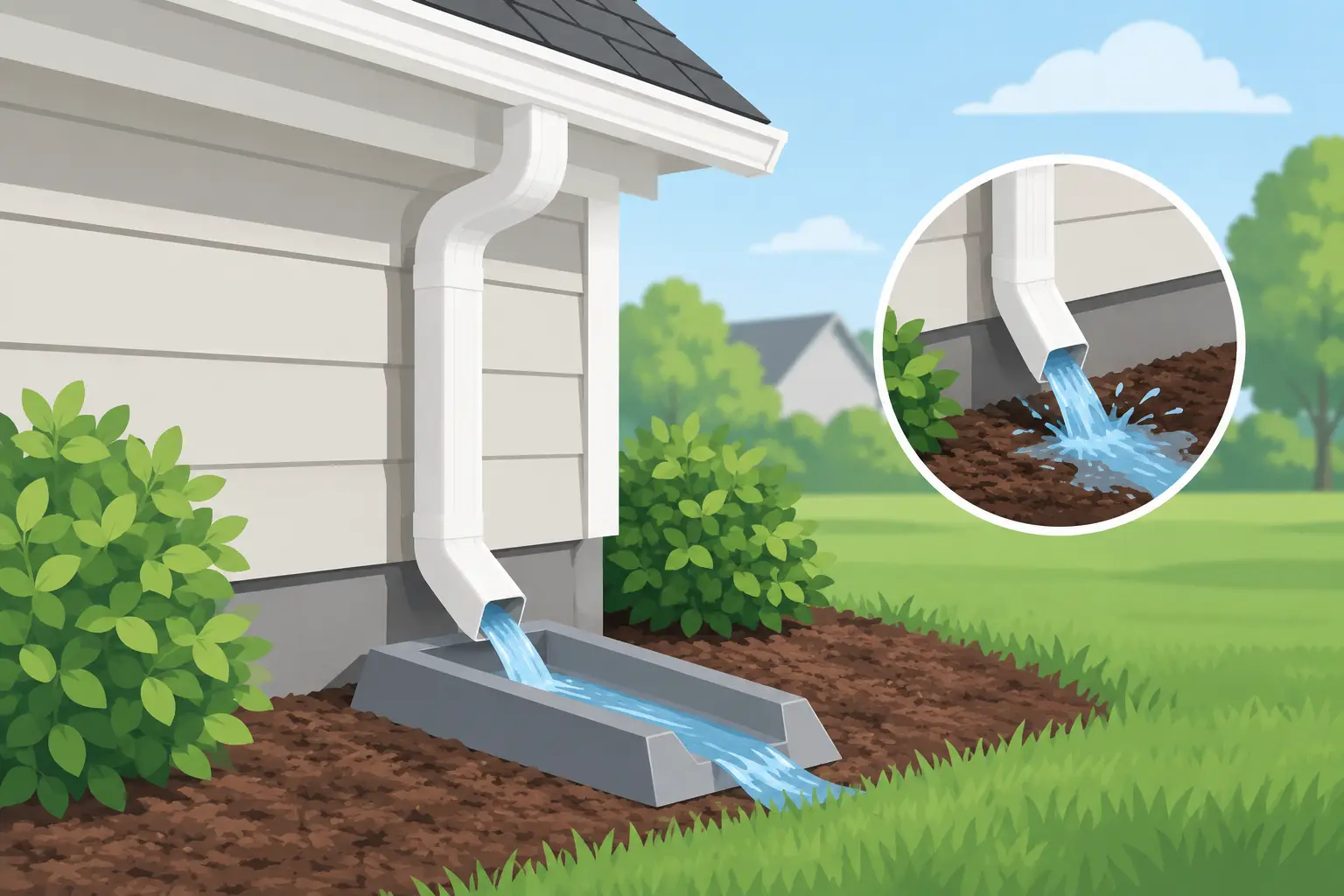
A splash block by itself is not always enough, but paired with a short downspout extension, it can improve discharge and reduce erosion at the outlet.
This setup is common on homes where the yard already slopes away well and the main goal is to prevent soil washout directly below the downspout. Concrete and plastic splash blocks are easy to maintain and do not clog internally because they are open.
The limitation is distance. A splash block helps spread water, but it does not carry it very far. If your foundation has moisture issues, your mulch beds flood, or your grade is flat, this should not be the entire plan.
5. Hinged or flip-up extensions
Hinged extensions are designed to lie down during rain and flip up when not in use, often with help from light yard traffic or mowing. They are especially useful near sidewalks, patios, or areas where a fixed extension would be annoying.
For many homeowners, this is one of the best compromises between drainage performance and everyday convenience. You still get the benefit of pushing water away from the home, but you are not left stepping over a rigid pipe all week.
The main issue is wear over time. Hinges and joints can loosen, and if the extension is not installed at the right angle, it may not drain fully. It is a practical choice, but quality matters.
6. Buried drain pipe extensions
For serious drainage control, buried pipe is often the best downspout extension for drainage. Instead of sending water across the surface, it carries runoff underground to a pop-up emitter, daylight outlet, or another approved discharge point.
This option looks cleaner, protects the lawn from constant washout, and removes the trip hazard that comes with above-ground extensions. It is especially useful on homes with heavy runoff, narrow side yards, or homeowners who want a more permanent fix.
But this is also the option where installation quality matters most. If the pipe does not have proper slope, if the outlet is poorly chosen, or if debris control is ignored, buried systems can back up and create hidden problems. On properties with lots of leaves or roof grit, pairing this setup with good gutter maintenance and effective leaf protection is a smart move.
7. Catch basin and drain pipe combinations
When one area of the yard stays wet no matter what the downspout does, a catch basin system may be worth considering. This setup collects both downspout runoff and surface water, then channels it away through buried pipe.
It is not the simplest solution, but it can solve a broader drainage problem rather than just extending one outlet. This is often the better route when water pools near corners of the home, low patio edges, or basement stairwells.
The catch is that it needs proper planning. A basin placed in the wrong spot or without adequate discharge will not fix the issue. This is one of those cases where guessing can cost more than doing it right the first time.
8. Decorative downspout drainage channels
Some homeowners want drainage improvements without the look of standard plastic extensions. Decorative channels made from stone-look materials, metal, or low-profile trough designs can guide water away while blending in better with landscaping.
These can work well in visible front-yard areas where curb appeal matters. They are not always the most cost-effective option, and they may not carry as much water as a buried pipe system, but they can be a good fit where appearance is part of the decision.
How to choose the right extension for your home
Start with the water, not the product. Ask where the runoff goes now, how much volume comes off that roof section, and what happens after a heavy rain. If water sits near the house for hours, kills grass, pushes mulch around, or finds its way into the basement, you likely need more than a basic add-on.
Next, look at your grading. A solid extension still will not help much if the yard pitches back toward the foundation. In that case, drainage improvements may need to be paired with grading corrections or a more complete runoff plan.
Then think about maintenance. If your gutters fill with leaves, twigs, or roof debris, any extension can become part of the problem. Clean flow from the roofline down matters just as much as what happens at the bottom. That is one reason homeowners often find that drainage works best when gutters, downspouts, and leaf protection are treated as one system instead of separate parts.
Common mistakes to avoid
One common mistake is choosing an extension that is too short. Water may leave the downspout, but if it still empties near the foundation, the problem is only moved a foot or two.
Another is sending water into an area that cannot absorb it. A flower bed, a property line, or the edge of a driveway may seem convenient, but it can create erosion, ice, or neighbor disputes.
The last big mistake is focusing only on the extension when the gutter system itself is undersized, clogged, or poorly pitched. If overflow is happening above, the downspout outlet is only part of the story.
For many homes, the best answer is not the fanciest product. It is a drainage setup that fits the property, moves water far enough away, and keeps working without constant attention. If you are unsure which route makes sense, a professional inspection can save you from spending money on a fix that only looks good for one rainstorm.
At Seamless Gutter Solutions LLC, that is the standard we believe in – clear recommendations, detailed quotes, and solutions built to protect the home, not just check a box. When runoff is managed correctly, you notice it less, and that is exactly the point.