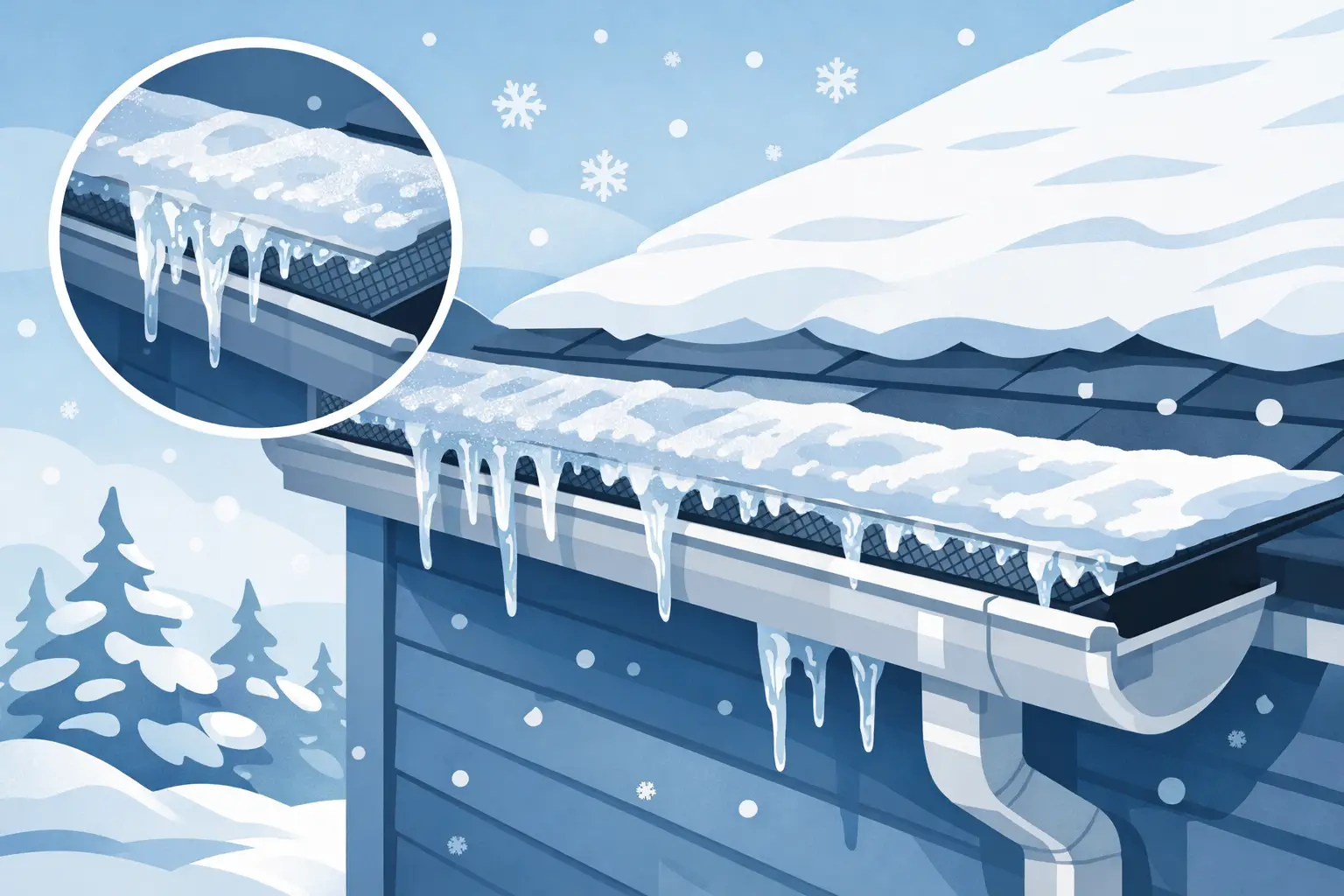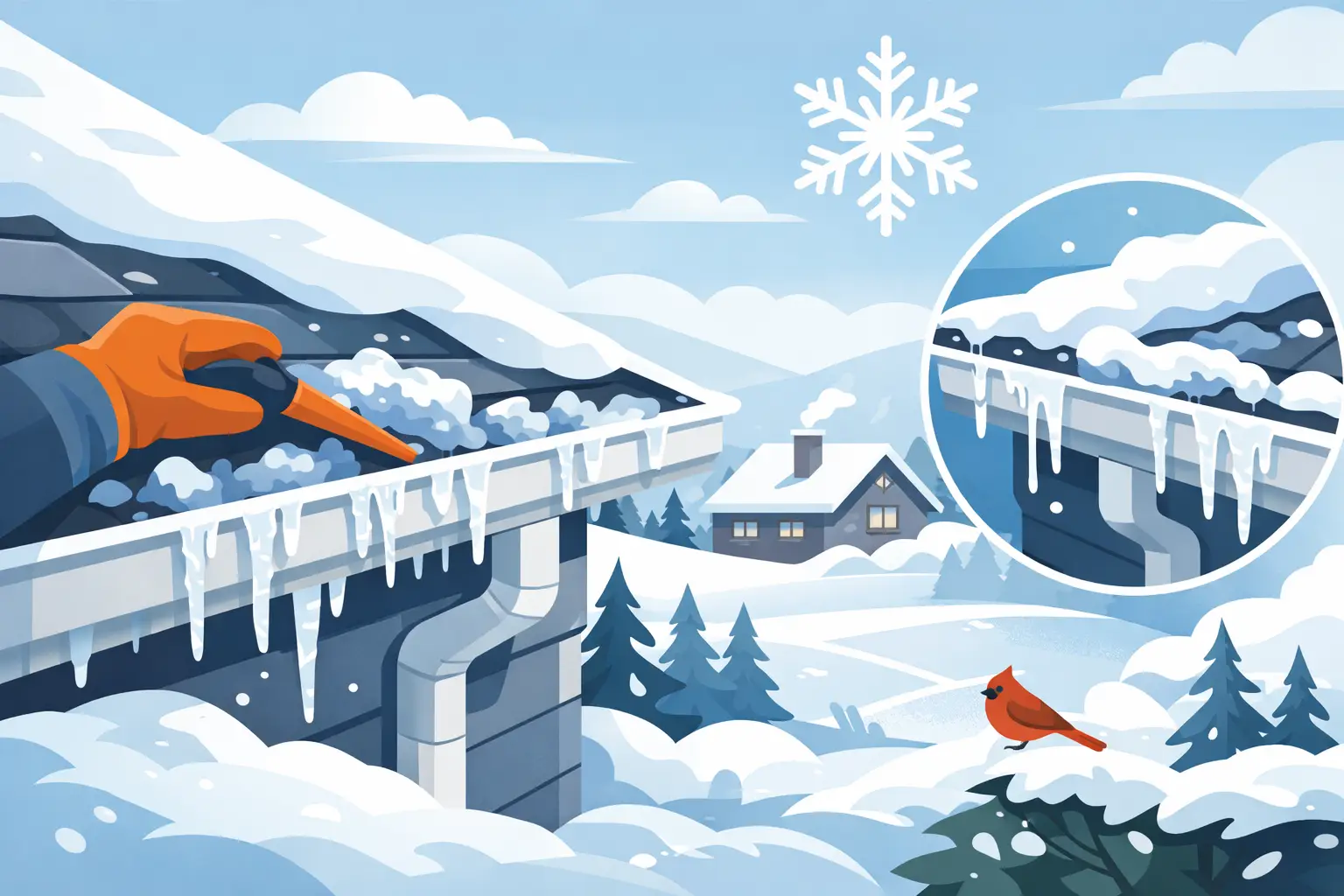

A hard freeze after a wet Ohio or Indiana snowfall can leave a row of ice sitting along the roof edge. It is natural to ask, do gutter guards freeze? Yes, ice can form on and around gutter guards. But the guard itself is rarely the real problem. In most cases, frozen gutters point to a combination of snowmelt, cold temperatures, roof heat loss, drainage conditions, and the amount of debris already in the system.
A quality gutter guard is designed to keep leaves, twigs, and roofing debris out of the gutter while allowing water to enter. It does not make gutters immune to winter weather. Understanding the difference between normal frost and a damaging ice buildup can help you protect your roofline, siding, and foundation before spring thaw arrives.
Do Gutter Guards Freeze in Winter?
Gutter guards can collect frost, snow, and ice when moisture reaches a freezing surface. This is especially common during the temperature swings we see across Eastern Indiana and Western Ohio, where daytime snowmelt may refreeze overnight.
The key question is not whether a little ice is present. A light coating of frost or a temporary layer of ice after a storm is usually not cause for alarm. Concern begins when ice repeatedly blocks water from entering the gutter, forms thick ridges at the roof edge, bends the gutter, pulls on fasteners, or sends water behind the gutter and onto the fascia.
Guards with small openings may temporarily bridge over with ice during certain weather conditions. Open-style guards can allow snow into the gutter, where it can freeze if the gutter is holding standing water. No guard design can change the basic fact that water expands when it freezes. What a well-installed guard can do is reduce the debris clogs that make winter drainage problems worse.
Why Ice Forms Around Gutter Guards
Ice at the gutters generally starts with water. That water may come from melting snow on the roof, rain followed by a freeze, or a gutter that has not fully drained after a storm.
The most common cause is uneven roof temperature. Heat escaping through the attic warms the upper section of the roof and melts snow. As that water runs toward the colder eaves, it refreezes. This can create an ice dam, which is a ridge of ice at the roof edge that prevents later meltwater from draining away.
Ice dams are often blamed on the gutter or guard because that is where the ice becomes visible. In reality, the source may be inadequate attic insulation, air leaks around light fixtures or exhaust vents, poor attic ventilation, or a combination of these issues. Replacing a gutter guard alone will not solve an ice dam caused by heat loss from the home.
Drainage issues can also contribute. A gutter that is improperly pitched, undersized for the roof area, clogged at the downspout outlet, or sagging between hangers may hold water. When temperatures drop, that standing water freezes. The added weight can strain the gutter, loosen it from the fascia, and cause it to pull away from the roofline.
A Gutter Guard Can Help, but It Has Limits
The primary job of a gutter guard is debris management. By keeping the gutter channel clearer, it gives rain and snowmelt a better path to the downspouts. That matters in winter because wet leaves and compacted debris can create a dam inside the gutter even when the rest of the system is properly installed.
A premium continuous-hanger system, such as Double Pro by Alurex, also supports the gutter along its full length rather than relying only on widely spaced hangers. That added support can be valuable under normal seasonal loads. Still, it is not a license to ignore heavy ice accumulation or roof-level drainage problems. A guard is one part of a complete water-management system, not a cure for every winter condition.
There is also a trade-off to keep in mind. Guards reduce the need for routine gutter cleaning, but they do not eliminate all maintenance. Fine debris, roof grit, seed pods, and windblown material can settle on top of some guard styles. Homeowners should still inspect the roof edge and downspout discharge areas, especially after major storms.
Signs Frozen Gutters Need Professional Attention
A single cold night is different from a recurring pattern that puts the home at risk. Watch for thick, heavy ice that remains at the eaves for days, gutters that appear bowed or separated from the fascia, or icicles that are growing unusually large.
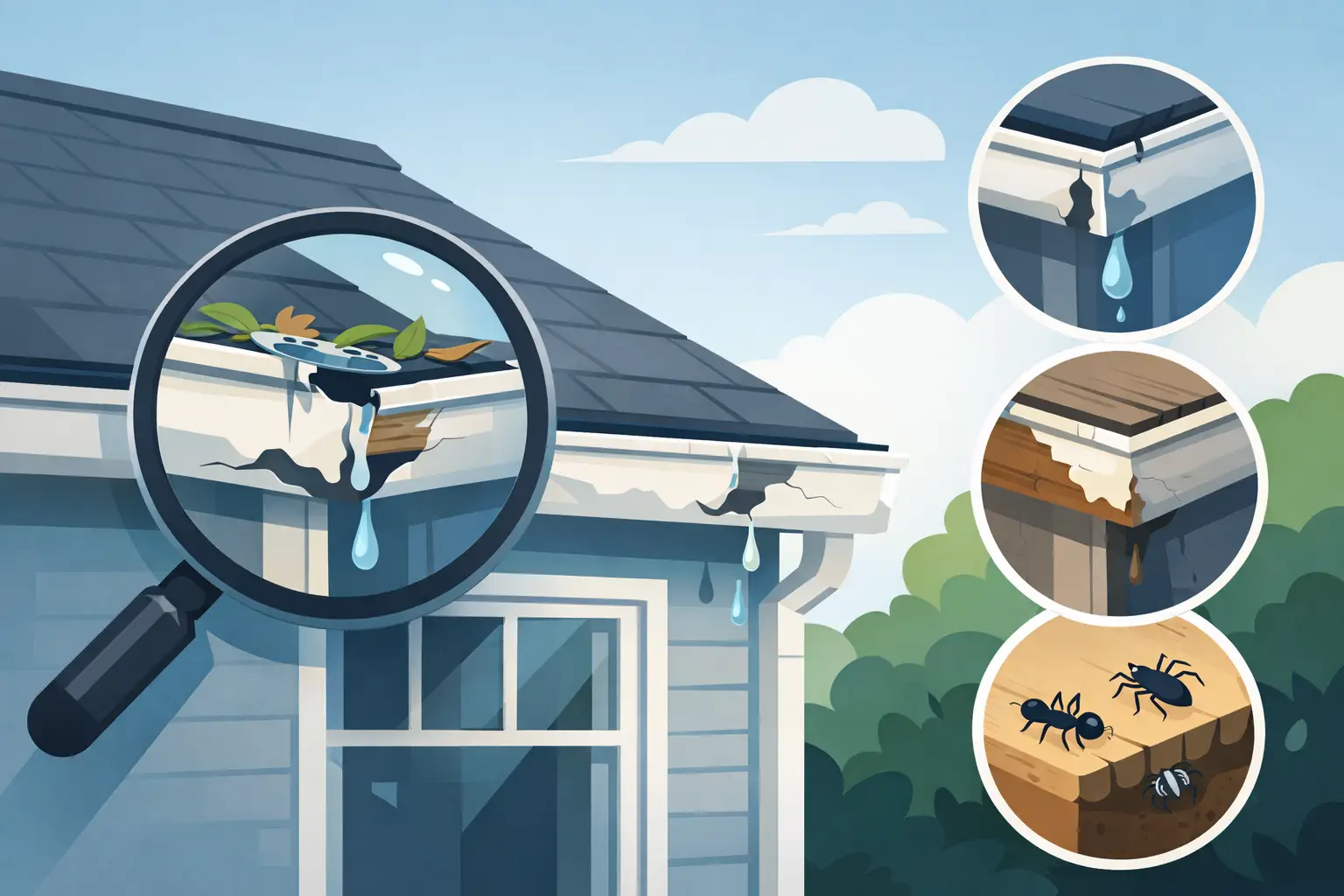
Water stains on the soffit, siding, or interior ceiling deserve prompt attention. So does water spilling over the front of the gutter during a thaw. That overflow can saturate landscaping near the foundation, create slippery walkways, and expose siding and trim to repeated moisture.
You may also notice a section of gutter that stays icy while other sections drain. This can suggest a low spot, poor pitch, a blocked downspout, or an outlet issue. A professional inspection can identify whether the problem is in the gutter system, the roof and attic, or both.
How to Reduce Winter Ice Buildup
The safest approach begins before winter. Gutters need the correct slope so water moves toward the downspouts rather than pooling in the channel. Downspouts should be clear, securely connected, and directed far enough away from the foundation to prevent meltwater from returning toward the house.
Keep the roof edge and gutter system free of heavy debris in fall. Even homes with guards benefit from a visual check after leaf season. If debris is collecting at valleys, on top of the guard, or around downspout outlets, address it before freezing weather turns a small blockage into a solid ice plug.
Inside the home, consider an attic evaluation if ice dams happen repeatedly. Air sealing and insulation improvements can reduce the heat loss that causes uneven snowmelt. Bathroom fans and other vents should exhaust outdoors, not into the attic, where moisture and heat can contribute to roof problems.
During winter, avoid striking ice with a hammer, shovel, or sharp tool. It is easy to puncture the gutter, damage the guard, loosen fasteners, or harm shingles while trying to chip away frozen material. Climbing a ladder near ice is also hazardous. If ice is heavy, persistent, or causing water to back up under shingles, call a qualified exterior professional and address the conditions creating the buildup.
Installation Details Matter More Than Most Homeowners Realize
A gutter guard performs best when the entire system is designed correctly. That includes properly sized seamless gutters, secure attachment to sound fascia, the right number and placement of downspouts, correct pitch, and a guard that fits the roofline without interfering with normal water flow.
This is why a quick add-on guard installation is not always the best answer. If existing gutters are loose, dented, improperly sloped, or undersized, covering them can leave the underlying problem in place. A detailed inspection should look at the full drainage path – from the roof edge through the gutter and downspout to the discharge area.
For homeowners dealing with recurring winter concerns, Seamless Gutter Solutions LLC can provide a free inspection and a clear, itemized estimate with no hidden fees. That gives you a practical way to determine whether you need cleaning, repair, improved drainage, new seamless gutters, or leaf protection.
A little winter ice on a gutter guard is normal. Repeated ice buildup, overflow, sagging, or leaks are your home’s way of asking for a closer look. Addressing the cause before the next freeze can spare you from a larger repair when the snow finally melts.