
A gutter can look fine from the driveway and still create a serious winter problem. A hidden clog, loose downspout, or section that holds standing water can freeze after the first hard cold snap. This winter gutter guide explains what homeowners in Eastern Indiana and Western Ohio should check before, during, and after freezing weather – and when it makes sense to call a professional.
Why Gutters Need Attention Before Winter
Your gutter system has one job: move roof runoff away from the house in a controlled path. Winter makes that job harder. Leaves, twigs, and roofing grit can block the trough or downspout, while freezing temperatures turn trapped water into ice. The result may be overflowing gutters, heavy ice buildup, water against siding, or runoff collecting near the foundation.
In Richmond, Muncie, Connersville, Greenville, Dayton, and surrounding communities, winter weather often changes quickly. A mild, wet day can be followed by a hard freeze overnight. That repeated thaw-and-freeze cycle exposes small drainage issues that may have gone unnoticed during fall.
A clean gutter will not solve every winter roofing concern. Ice dams, for example, are often tied to heat loss and uneven roof temperatures as well as drainage. But a gutter system that is clear, securely fastened, correctly pitched, and connected to working downspouts gives meltwater a better path away from your home.
Winter Gutter Guide: What to Check Before the First Freeze
The best time to prepare is after most leaves have fallen but before consistent freezing temperatures arrive. If your property has mature trees, one late-fall cleaning may not be enough. Leaves can continue dropping after an early cleaning, particularly during windy weeks.
Start by looking for visible debris in the gutters and at every downspout opening. Even a small amount of packed material can slow water enough for it to freeze. Check the ground-level outlet as well. If a downspout extension is crushed, disconnected, buried, or pointed back toward the house, the system may be moving water out of the gutter but not far enough from the foundation.
Next, look at the gutter line from several angles. Sagging sections can hold water instead of directing it toward the downspout. Gutters pulling away from the fascia, open seams, and loose hangers deserve attention before snow and ice add extra weight. A minor repair is usually simpler than addressing a section that has pulled loose under winter conditions.
Pay attention to the areas below the gutters, too. Mulch washout, soil erosion, puddles near the foundation, or water marks on siding can point to a drainage problem. These signs do not always mean the gutters are the only cause, but they are worth investigating before winter rain and snowmelt make them worse.
Make Sure Downspouts Can Drain
A clean gutter cannot perform if the downspout is blocked. Water should travel freely through the vertical downspout and exit away from the home. During a mild day, a controlled water test can help identify slow drainage or leaks at elbows and joints.
Avoid forcing water into a frozen downspout or striking it with tools to break up ice. That can damage seams, loosen connections, or dent the material. If you suspect a blockage and temperatures are already below freezing, professional inspection is the safer choice.
Check the Roof Edge Safely From the Ground
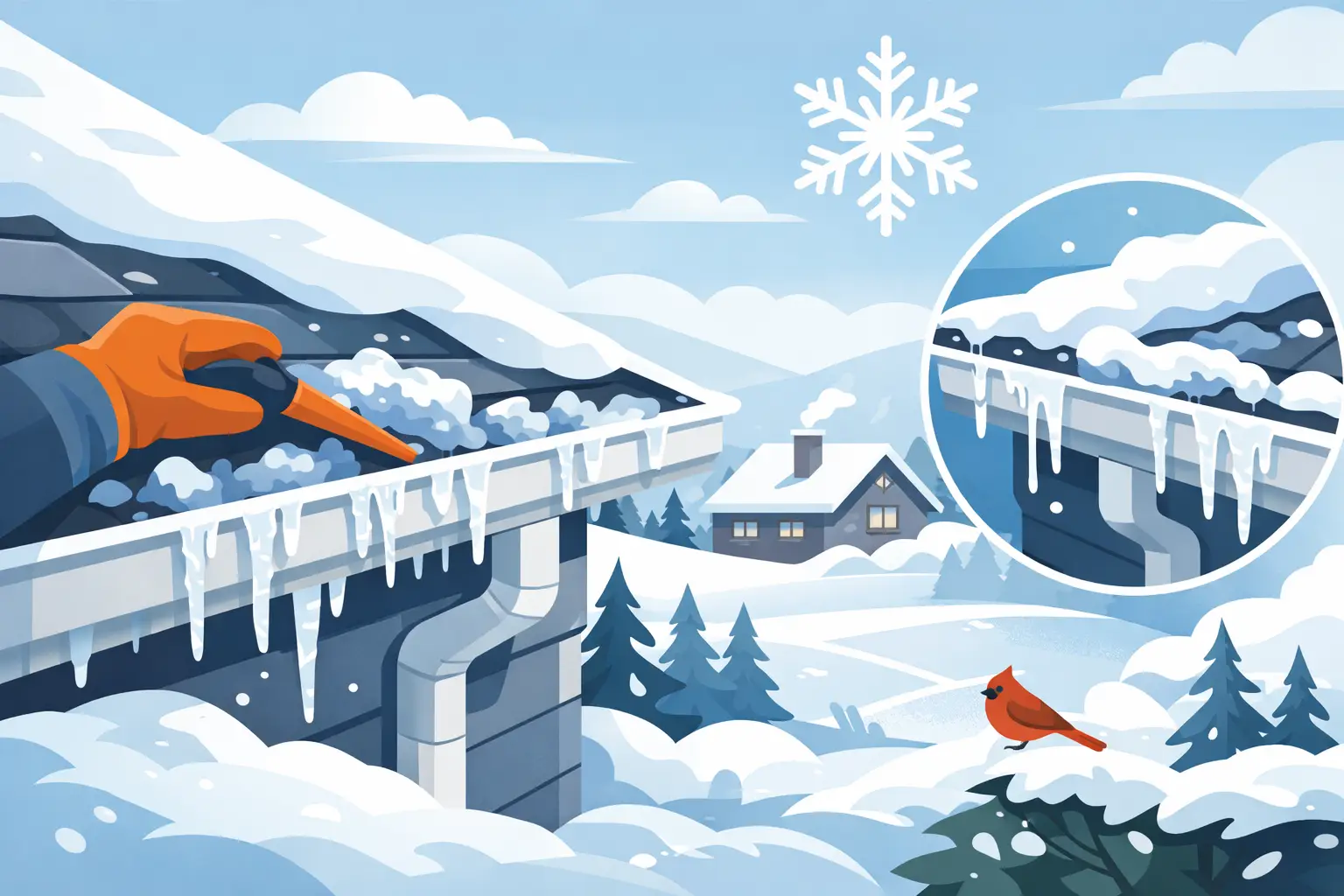
You do not need to climb onto the roof to spot potential concerns. From the ground, look for large icicles, ice accumulating at the gutter edge, shingles that appear lifted, or water staining beneath the eaves. Take photos if you notice changes after a storm. They can help document the issue and make an inspection more productive.
Never stand on an icy ladder, walk on a snowy roof, or chip ice from gutters with sharp tools. The risk of a fall or accidental damage to the roof, gutter, or siding is not worth it.
Common Winter Gutter Problems and What They Mean
Overflowing Gutters
When water spills over the front or back of a gutter, a clog is a likely cause. The blockage may be in the gutter channel, at the downspout outlet, or underground if the system drains into a buried line. Overflow can also happen when gutters are improperly pitched or undersized for a roof area.
The concern is not just the visible spill. Water can saturate the soil near the home, damage landscaping, stain siding, and freeze on walkways. If overflow occurs during a winter thaw, address it promptly rather than waiting for spring.
Heavy Ice or Large Icicles
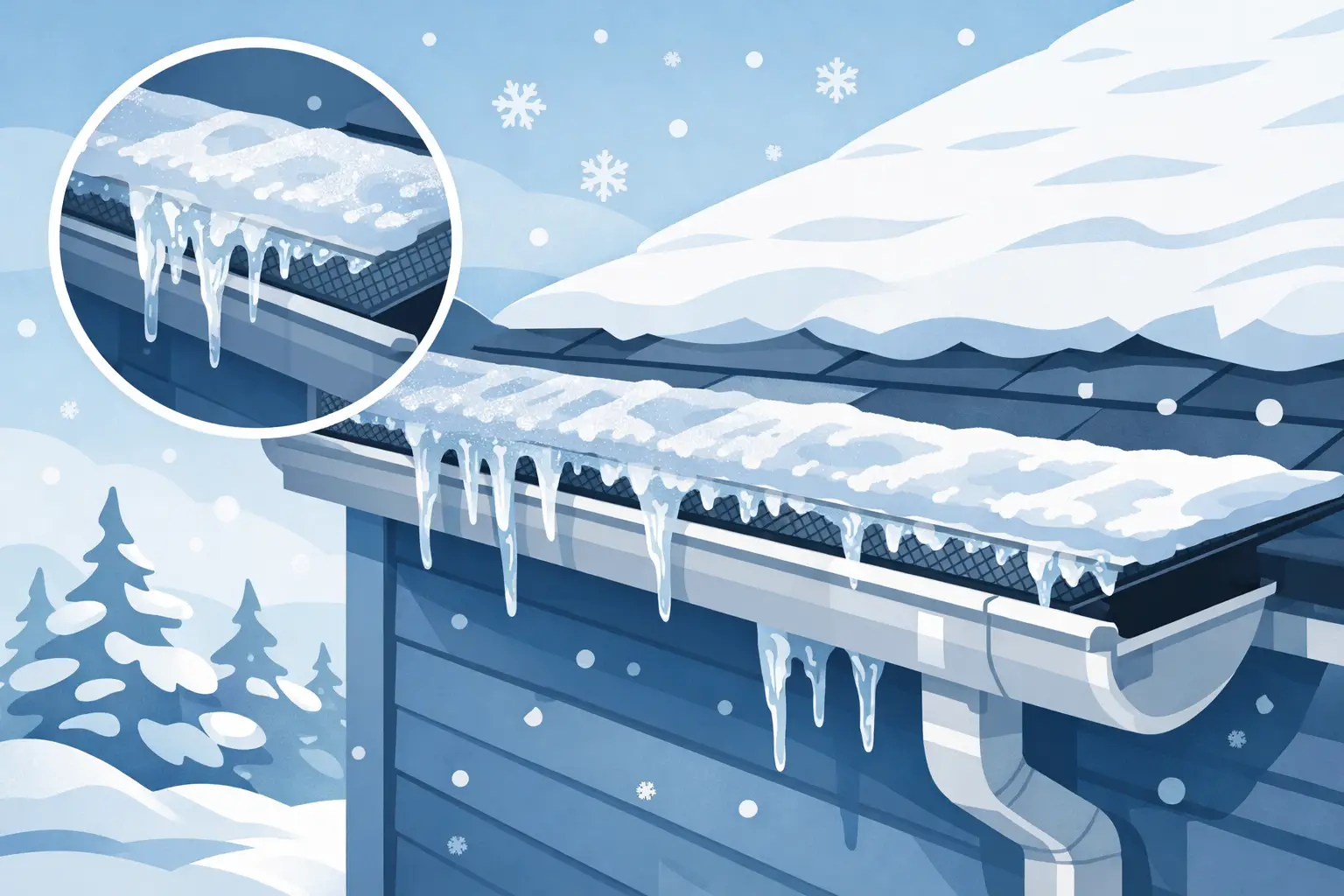
Icicles can be a warning sign, though their presence alone does not diagnose the issue. They may form when water escapes over a gutter edge, when a downspout is frozen, or when warm areas of the roof melt snow that refreezes at the colder eaves.
Do not rely on gutter guards as a cure for ice dams. Quality leaf protection can reduce debris buildup and make seasonal cleaning easier, but roof ventilation, insulation, attic air sealing, and weather conditions all affect ice formation. A qualified professional can help distinguish a gutter drainage issue from a broader roof or attic concern.
Gutters Pulling Away From the House
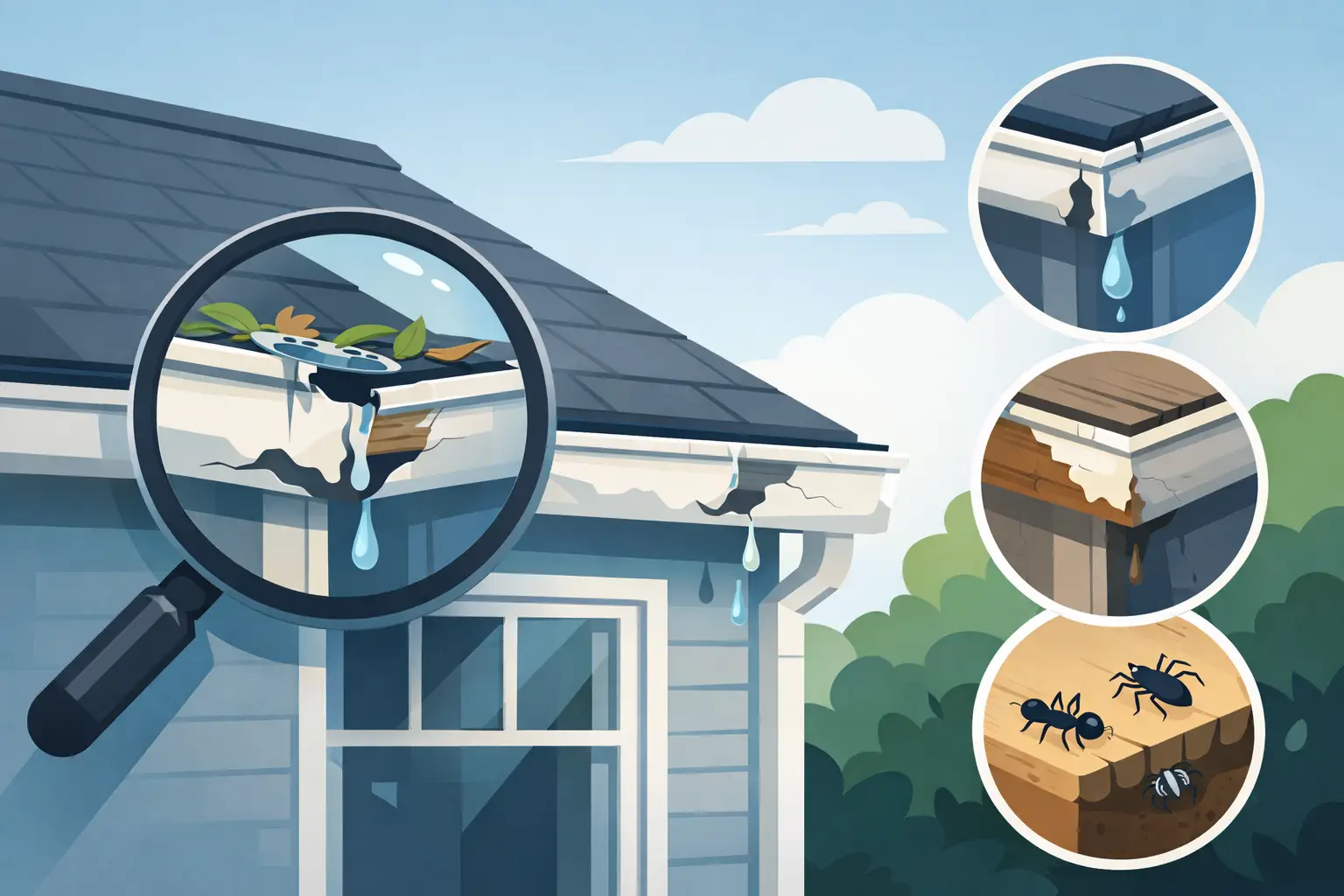
Ice is heavy. When gutters are already loose, the added load can pull fasteners out of the fascia or distort the gutter channel. Watch for separation between the gutter and roofline, visible sagging, or brackets that appear bent.
This is a repair issue, not something to ignore until warmer weather. A failing gutter section can redirect water behind the gutter, where it may affect fascia boards, soffits, and siding.
Should You Clean Gutters in Winter?
It depends on the weather, the condition of the system, and safe access. A dry, above-freezing day may be suitable for professional cleaning if debris is causing immediate drainage problems. But when gutters, ladders, or roofs are icy, waiting for safer conditions is often the responsible decision.
For homeowners, winter maintenance is usually less about climbing a ladder and more about observing performance. Watch where water goes during a thaw. Confirm that downspout outlets remain clear of snow piles. Keep extensions directed away from the house, and remove snow buildup around discharge points when it can be done safely from the ground.
If a gutter is overflowing, detached, leaking heavily, or creating ice near an entry or walkway, schedule an inspection. Prompt repair can reduce the chance of more expensive exterior damage later.
When Leaf Protection Makes Sense
Homeowners with nearby trees often get tired of the same cycle: clean gutters in fall, find another clog after a windy week, then worry about winter freeze-ups. Leaf protection can reduce the amount of debris entering the gutter and support more consistent drainage throughout the year.
The right product and installation method matter. A guard should work with the gutter system, maintain proper water flow, and be securely installed without creating new weak points. Premium continuous-hanger options, such as Double Pro by Alurex, can provide both debris protection and added gutter support when they are matched to the home and installed correctly.
There is still no product that eliminates every maintenance need forever. Fine debris, roof grit, and material around outlets may occasionally need attention. The practical goal is fewer clogs, safer maintenance, and a system that continues directing water where it belongs.
A Simple Plan for the Rest of Winter
After each major storm or midwinter thaw, take a few minutes to walk around your home. Look for overflowing sections, unusual ice, downspouts discharging near the foundation, and slippery areas near doors or driveways. Small observations can prevent a problem from becoming an emergency.
If you are unsure whether your gutters need cleaning, repair, replacement, or leaf protection, start with a clear inspection and an itemized estimate. Seamless Gutter Solutions LLC provides free inspections and estimates with no hidden fees, so homeowners can understand the condition of their system before deciding what work makes sense.
Your home does not need perfect weather to stay protected. It needs a drainage system that is ready for the weather you actually get. Addressing one loose section, blocked outlet, or neglected gutter line now can make the next thaw far less stressful.