
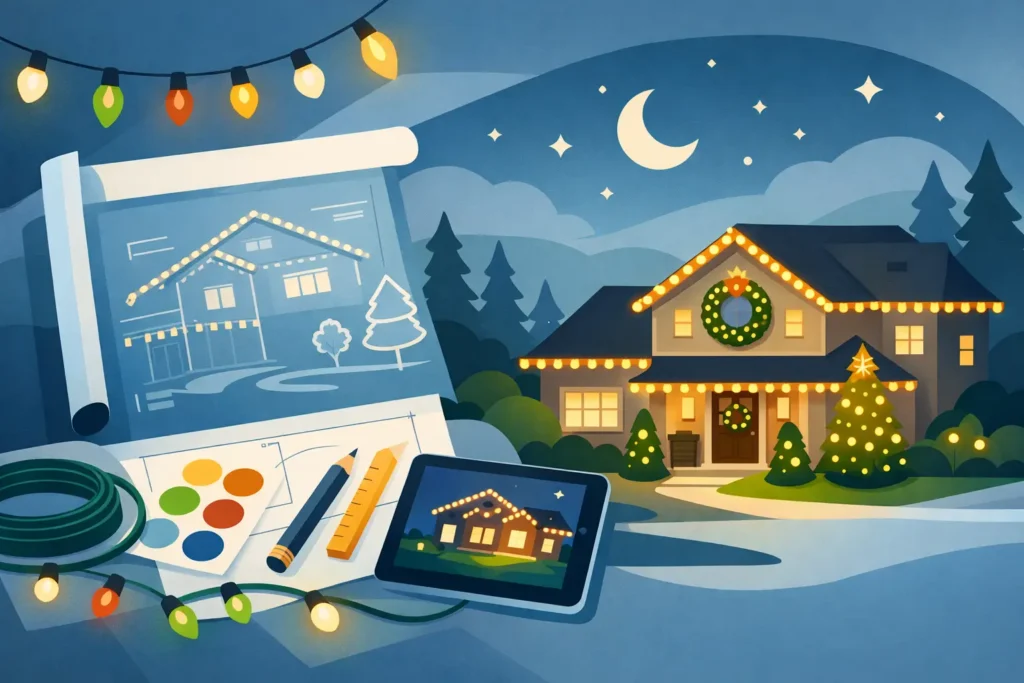
A great holiday display should make your home feel welcoming from the street, not leave you balancing on a ladder in freezing weather or sorting out tangled cords in the dark. A custom Christmas light installation design starts with the home itself: its rooflines, entryway, landscaping, power access, and the features you want people to notice.
For homeowners in Eastern Indiana and Western Ohio, the best design is not always the biggest one. It is the one that looks intentional, operates safely through winter weather, and comes down without leaving damage behind. That takes a plan, quality materials, and a clear understanding of what is included before installation day.
Start With the Parts of Your Home That Matter Most
Every property has a few architectural details that naturally carry a holiday display. On many homes, the main roofline is the visual anchor. A clean line of lights along the eaves gives the house a finished look even when the rest of the display stays simple.
From there, consider the front entry. Doors, columns, porch railings, and window outlines can add warmth and dimension, especially on homes set back from the road. Mature trees and shrubs can also make an impact, but they should support the design rather than compete with it.
The right scope depends on your home and your priorities. A ranch home with a prominent front roofline may look excellent with a crisp roofline display and a lit entryway. A larger two-story home may need lighting on multiple peaks or gables to avoid looking unbalanced. A professional should assess the home from the street as well as up close before recommending a layout.
Think in Layers, Not Just Strands
A balanced display usually has three layers: the roofline or upper façade, the front entry, and landscape accents. You do not need all three, but thinking this way helps prevent a common mistake: putting lights everywhere without a visual plan.
For example, warm white roofline lights paired with a wreath and soft-lit shrubs create a classic, polished look. Multicolor lights may better fit a more playful family style, particularly when used consistently across the roofline and landscaping. Mixing bulb sizes, colors, and styles can work, but only when it is deliberate. Otherwise, the display can look uneven from the curb.
Choose a Custom Christmas Light Installation Design That Fits Your Style
The strongest holiday lighting designs reflect the homeowner’s preferences while respecting the architecture of the house. Traditional homes often look best with evenly spaced warm white bulbs, symmetrical wreaths, and restrained greenery. Homes with modern lines may suit clean white lighting, straight roofline runs, and minimal landscape lighting.
Color is one of the first decisions to make. Warm white creates a classic, inviting appearance. Cool white has a brighter, icier look that can work well with contemporary homes. Red, green, blue, and multicolor displays feel festive, but they require more coordination to keep the finished result cohesive.
Bulb style matters, too. Larger faceted bulbs are visible from the street and create the familiar holiday roofline look many homeowners want. Smaller lights offer more subtle detail for bushes, railings, and trees. The goal is not to use every available option. It is to select a combination that looks purposeful both during the day and after dark.
A thoughtful design also accounts for where guests arrive. If family members and visitors use the front door, the entry should receive more attention than a side yard. If your home sits on a busy road, a clear roofline and front-facing landscaping may offer the best visibility without expanding the project unnecessarily.
Protect Your Roofline, Gutters, and Exterior
Holiday lights should add to your home’s appearance, not create repair work when the season ends. That is why attachment methods matter. Lights should be secured with appropriate clips designed for gutters, shingles, or trim, rather than nails, staples, or fasteners that can damage roofing materials, siding, or fascia.
Gutters deserve special attention. They are designed to direct water away from the foundation, siding, and landscaping. Improperly placed lighting can interfere with drainage or put unnecessary stress on sections of the gutter system. If your home has gutter guards, the installer should understand how to work around them without compromising their function.
This is especially relevant after leaf season. Before lights go up, it is smart to make sure gutters are free of debris and ready for winter precipitation. A display can look great on the outside while a clogged gutter is quietly causing water to overflow near the home. Seasonal decorating and exterior protection should work together.
At Seamless Gutter Solutions LLC, that homeowner-protective approach carries into holiday lighting: the goal is a display that complements the home while respecting the exterior systems that protect it.
Safety Is Part of the Design
A custom layout needs to consider more than appearance. Power access, cord routing, timer placement, and weather exposure all affect how safely the display operates. Outdoor-rated products and properly protected connections help reduce avoidable problems during rain, snow, and wind.
Cords should not cross walkways where they can create a tripping hazard. Connections should be kept out of standing water, and electrical loads should be planned rather than added one strand at a time. A professional installation can address these details from the start, instead of trying to correct them after the display is already in place.
Ladder safety is another reason many homeowners choose professional help. Roof edges can be slippery, frozen ground can be unstable, and high peaks require more than a standard extension ladder. The risk is rarely worth it for a task that can be planned and handled by an experienced crew.
Set a Budget Around the Features You Value
Holiday lighting costs vary because homes and designs vary. The length and height of rooflines, number of peaks, access challenges, landscaping, color selections, and installation complexity all affect the final price. A straightforward one-story roofline display will typically require less labor and material than a multi-level design with wrapped trees, columns, and multiple entry features.
The best way to control cost is to decide where the display needs to make its biggest impression. For some homeowners, that means focusing on the main front roofline and doorway. For others, the priority may be a large tree, a wraparound porch, or a home that hosts frequent holiday gatherings.
Ask for a detailed, itemized quote that explains the scope of the design, installation, maintenance expectations, removal, and any storage arrangement if offered. Clear pricing helps you compare options without guessing what may be added later. A no-hidden-fees approach is particularly valuable during the holidays, when budgets often have competing demands.
Plan for Maintenance, Removal, and Next Year
A holiday display should not become another December chore. Even quality lighting can be affected by wind, snow, animals, or a failed connection. Before installation, ask what happens if part of the display stops working or becomes loose during the season. Knowing who to call and what service is available provides real peace of mind.
Removal deserves the same care as installation. Taking lights down promptly after the season helps protect materials and keeps your exterior looking neat. It also prevents clips, cords, and decorations from being exposed to months of changing weather.
If you plan to decorate year after year, keep notes on what worked. A photo of the finished display, the colors used, and the areas you wish had more or less light can make next season’s design easier. Over time, a custom plan can evolve with your home, your landscaping, and your holiday traditions.
Before the first lights go up, walk outside at dusk and look at your home from the street. The best starting point is usually already there: the roofline, doorway, or landscape feature that makes your house feel most like home.