

A gutter that spills over in a hard rain is not just annoying. It is a warning sign that water is no longer moving where it should, and that is how siding stains, foundation issues, roof edge rot, and washed-out landscaping start. If you are wondering how to stop gutter water overflow, the right answer depends on why it is happening in the first place.
Sometimes the fix is simple, like clearing a packed downspout. Other times, overflow is your gutter system telling you it is undersized, poorly pitched, or pulling away from the house. The goal is not just to stop the mess during the next storm. It is to protect the parts of your home that are expensive to repair once water starts getting behind the gutter line.
Why gutters overflow in the first place
Most homeowners assume overflow means the gutters are full of leaves. That is common, but it is not the only cause. Water can pour over the front edge even when the trough looks partly open from the ground.
One reason is blockage. Leaves, shingle grit, twigs, and roofing debris can collect in the gutter channel or clog the downspout opening. Water backs up, rises, and spills over the edge.
Another reason is poor pitch. Gutters should carry water steadily toward the downspouts. If a section is too flat or pitched the wrong way, water pools in the middle and can overtop during heavy rain.
Capacity matters too. Some homes shed a lot of water fast, especially on long roof runs or steep rooflines. If the gutters are too small, they may overflow even when they are clean.
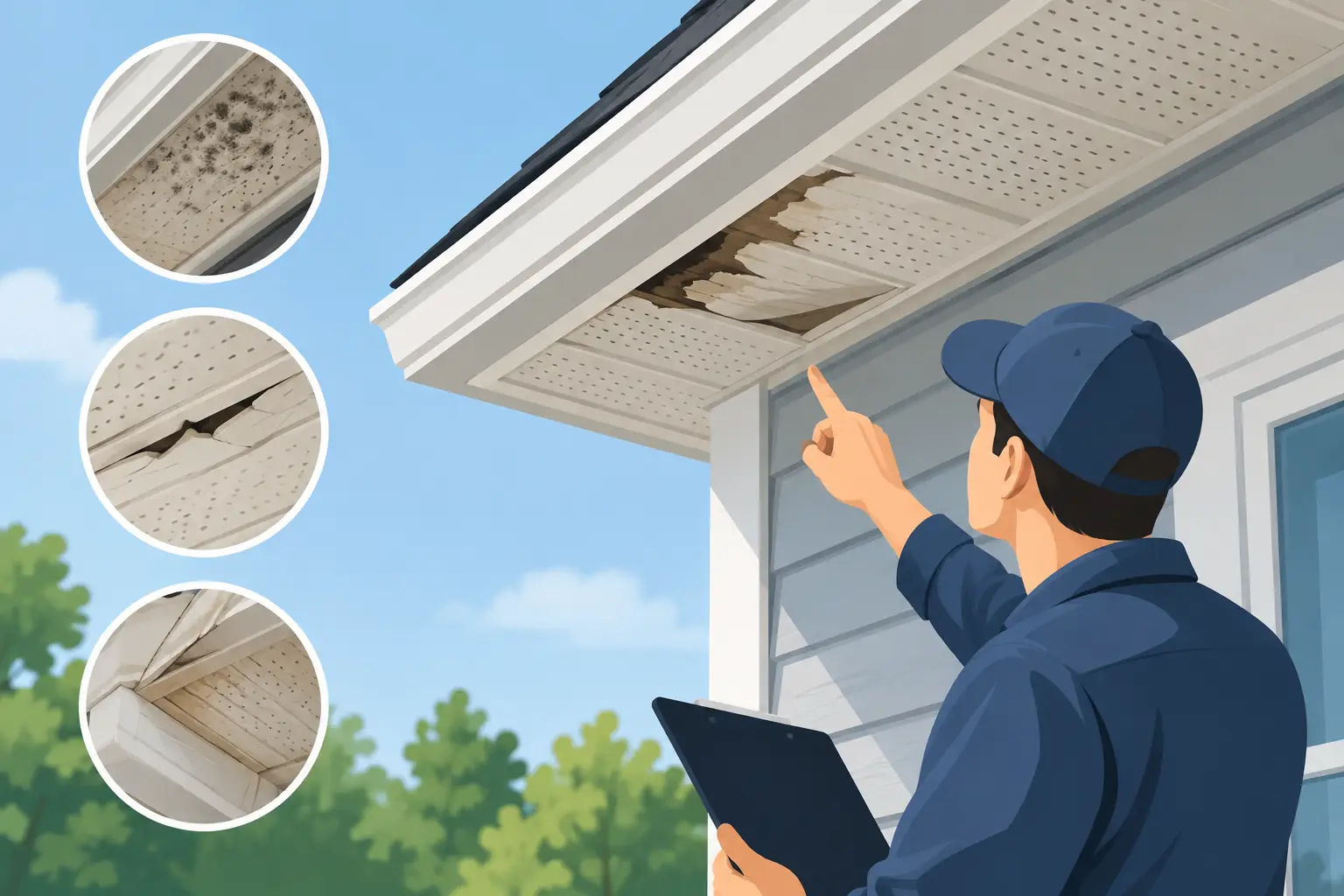
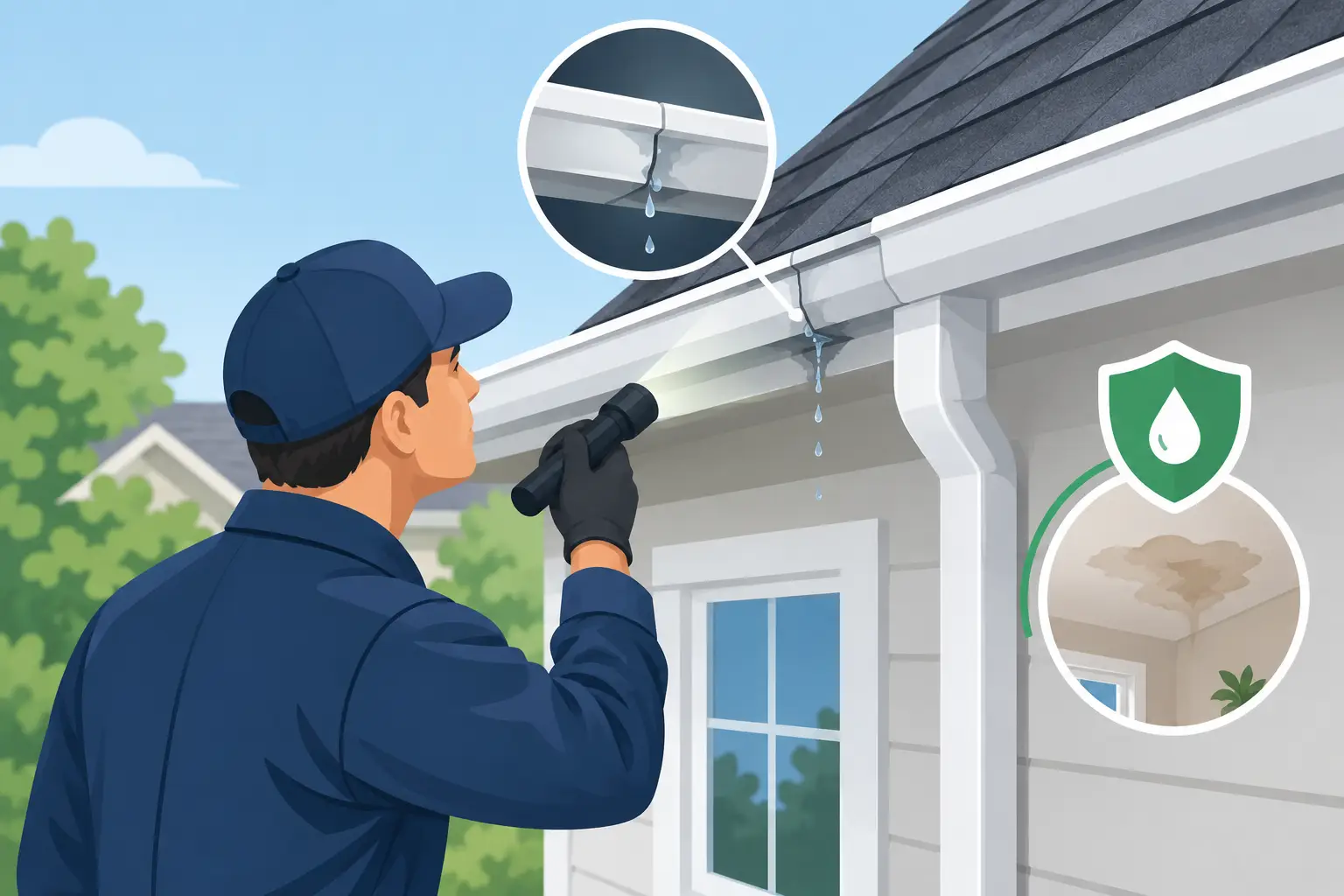
Then there is the condition of the system itself. Loose fasteners, sagging sections, separated seams, and damaged fascia can all change how water moves. In cold weather, old damage from ice can make the problem worse.
How to stop gutter water overflow by finding the real cause
The best way to stop gutter water overflow is to watch what happens during a steady rain, if it is safe to do so from the ground. Look for where the water first escapes. That location usually points to the actual problem.
If water shoots over the front edge near a downspout, the downspout may be clogged. If it spills out in the middle of a long run, you may have sagging or poor pitch. If overflow happens at roof valleys, the volume of water may simply be too much for that section of gutter.
You should also look for secondary signs after the storm passes. These include streaking on the gutter face, mud splash near the foundation, peeling paint, damp fascia boards, and mulch that has shifted out of place. Those clues help confirm where water has been escaping and for how long.
Start with cleaning, but do not stop there
Cleaning is the first step because debris is one of the most common causes of overflow. Gutters need to be cleared of leaves, seed pods, sticks, and sludge. Downspouts need to be checked too, because a system can look clean at the top and still be blocked below.
After cleaning, run water through the system with a hose. This is where many homeowners find out the issue is bigger than debris. If water still pools or rushes over the side, the gutter likely needs repair or adjustment.
There is also a timing issue here. If you are cleaning several times a year and still getting overflow, maintenance alone is probably not solving the root problem. That is usually when an upgrade starts making more sense than another short-term cleanup.
Check for sagging and wrong pitch
A gutter does not need to fall dramatically to fail. A slight sag can be enough to trap water, especially in a long section. Over time, standing water adds weight, which causes more sagging, which creates more standing water. It is a cycle that usually gets worse.
If fasteners are loose or the gutter is pulling away from the fascia, water may run behind the gutter instead of into it. Homeowners often describe this as overflow, but it is really a mounting problem. Either way, your house is still taking the hit.
Pitch adjustments and re-securing the system can often solve this if the gutter material is still in good shape. If the metal is warped, cracked, or repeatedly separating at seams, repair may only buy a little time.
When the gutter is simply too small
Not every overflow problem is a maintenance issue. Some gutter systems were undersized from the start, especially on homes with larger roof planes or heavy runoff concentrated in valleys.
A basic sectional system may not be able to keep up during Indiana and Ohio downpours. In those cases, the fix may involve larger gutters, additional downspouts, or redesigning problem areas so water is collected and moved more efficiently.
This is one reason seamless gutters are often a better long-term solution. Fewer joints mean fewer weak points, fewer leak opportunities, and a cleaner path for water. A properly sized seamless system is built around how your roof actually sheds water, not just what was easiest to install at some point in the past.
Gutter guards can help, but only if the base system is right
Homeowners often ask if guards will stop overflow. Sometimes yes, sometimes no. Guards help by reducing the buildup of leaves and debris, which keeps water flowing more consistently. That can be a major improvement, especially if your home is surrounded by trees.
But guards are not a cure for bad pitch, loose gutters, or undersized sections. If the system itself is failing, covering it does not fix the failure.
That said, a high-quality guard system can reduce the maintenance burden and improve year-round performance when installed on a sound gutter system. Products like Double Pro by Alurex are designed not only to block debris, but also to support the gutter continuously. That matters because strength and water control go together. A guard should do more than sit on top. It should contribute to the durability of the system underneath.
Repair or replace? It depends on what you are seeing
If your gutters overflow because of isolated clogs, a minor pitch issue, or a small section pulling loose, repair is often the practical move. It is faster, less expensive upfront, and can restore proper drainage if the rest of the system is still solid.
Replacement makes more sense when problems keep returning, when seams leak in multiple places, or when the gutter layout no longer matches the roof’s runoff demands. If you are paying for repeated cleanings and spot repairs while still seeing overflow, replacement may be the more cost-effective decision over time.
This is where a clear inspection matters. Homeowners should not have to guess whether they need a cleaning, a repair, or a full replacement. A detailed, itemized estimate takes the pressure out of that decision because you can see what is actually wrong and what each solution is meant to solve.
What to do before the next heavy rain
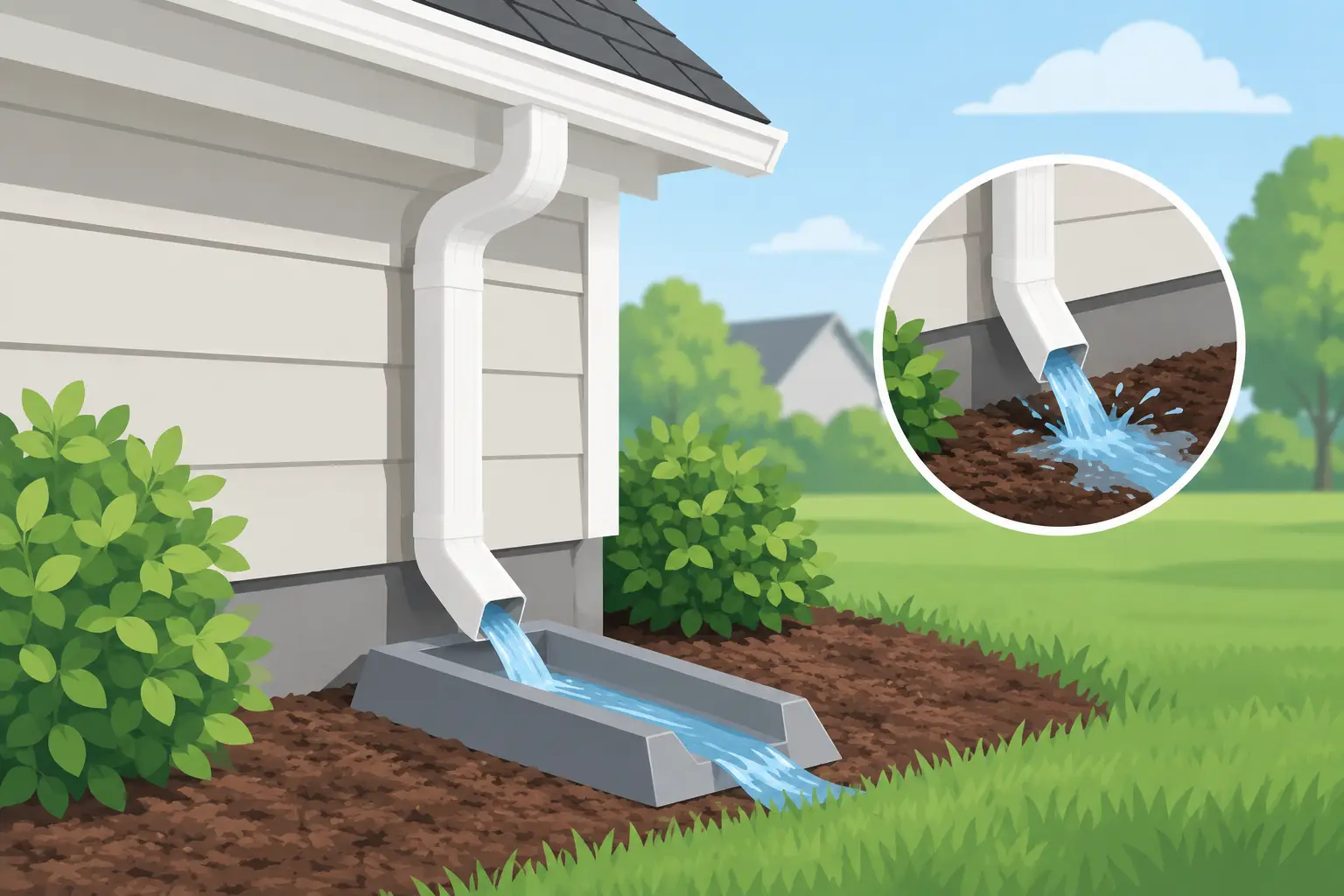
If you need a practical plan, focus on the highest-impact steps first. Make sure gutters and downspouts are cleaned, inspect for sagging or separation, and watch for overflow at valleys and corners where water volume is highest. If water is landing near the foundation, add or correct downspout extensions so runoff is carried farther away from the house.
Do not ignore small signs because they tend to become structural problems. A little overflow at the roof edge can turn into fascia rot. Water dropping at the base of the house can settle into basement and foundation issues. What starts as a gutter problem rarely stays a gutter problem.
For homeowners in Richmond, Muncie, Dayton, Greenville, and surrounding areas, storm patterns can put a lot of demand on a drainage system in a short window. That is why recurring overflow deserves a professional look, especially if you have already tried cleaning and the problem keeps coming back. At Seamless Gutter Solutions LLC, the goal is simple – give homeowners a clear inspection, a detailed quote, and a fix that matches the problem without hidden fees or guesswork.
A good gutter system should disappear into the background of homeownership. When it does its job, you do not think about it. When it overflows, it is asking for attention before water finds a more expensive path.