

If you have ever walked outside during a hard Midwest rain and noticed water pouring off the edge of your gutters like a waterfall, that is not “just a heavy storm.” That is your home telling you the drainage system is not moving water the way it should.
Gutters are simple on purpose: catch roof runoff, move it to downspouts, send it away from the foundation. When that path gets blocked by leaves, grit from shingles, seeds, and roof debris, the water finds another route. Usually that “other route” is your fascia, siding, landscaping, basement walls, or foundation.
Below are the most common signs you need gutter cleaning, what each one typically means, and when it’s smart to stop guessing and get eyes on the system.
The clearest signs you need gutter cleaning
1) Water spilling over the edge during rain
Overflow is the classic symptom. In a properly functioning system, water stays inside the trough and heads to the downspouts. When it spills over the front, you are usually dealing with a clog in the gutter run, a clogged downspout, or a pitch issue made worse by debris.
It depends on the rainfall, of course. A truly extreme downpour can overwhelm almost any system for a few minutes. The red flag is when overflow happens in normal rain or it consistently dumps in the same spot.
2) Drips and “water curtains” behind the gutter
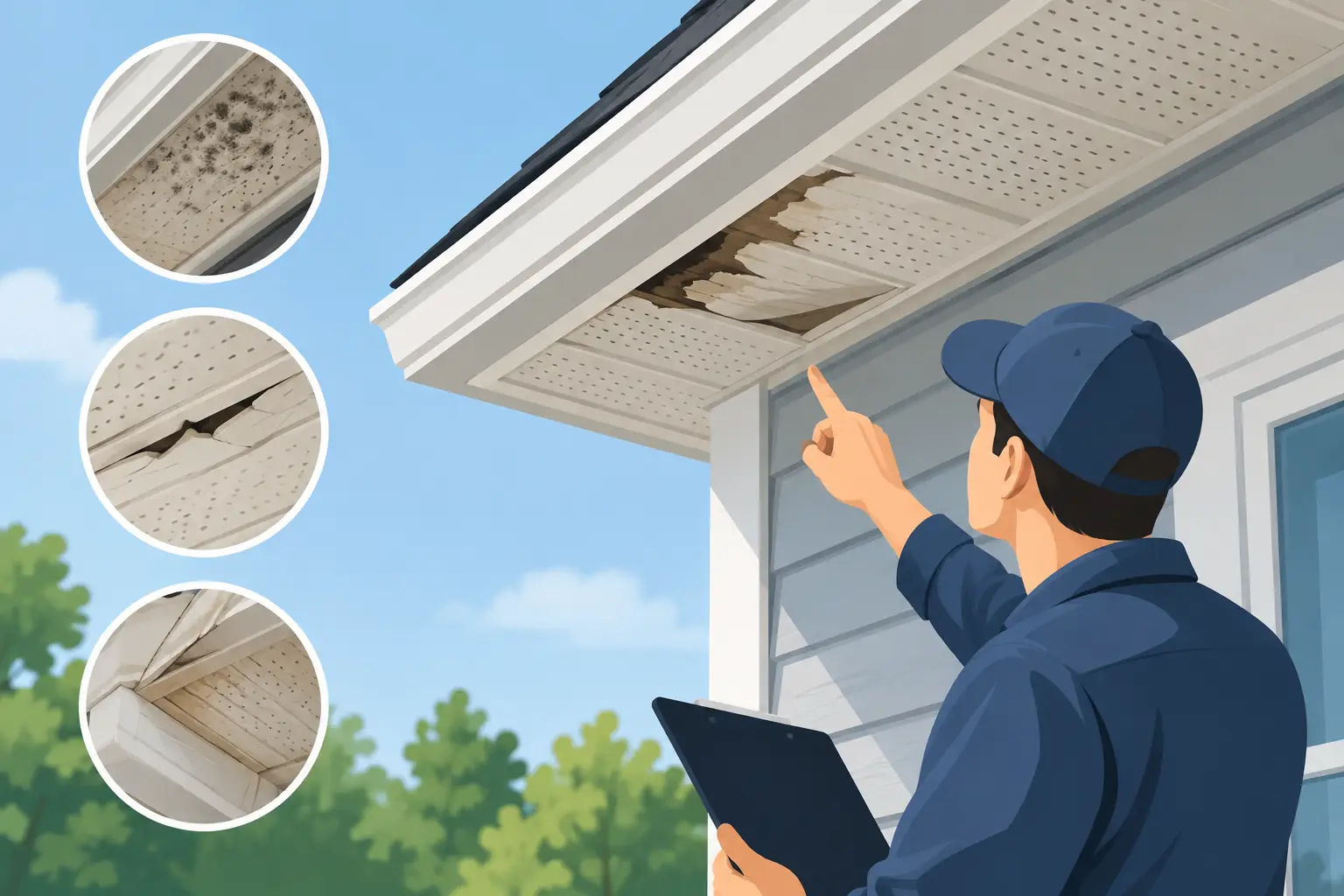
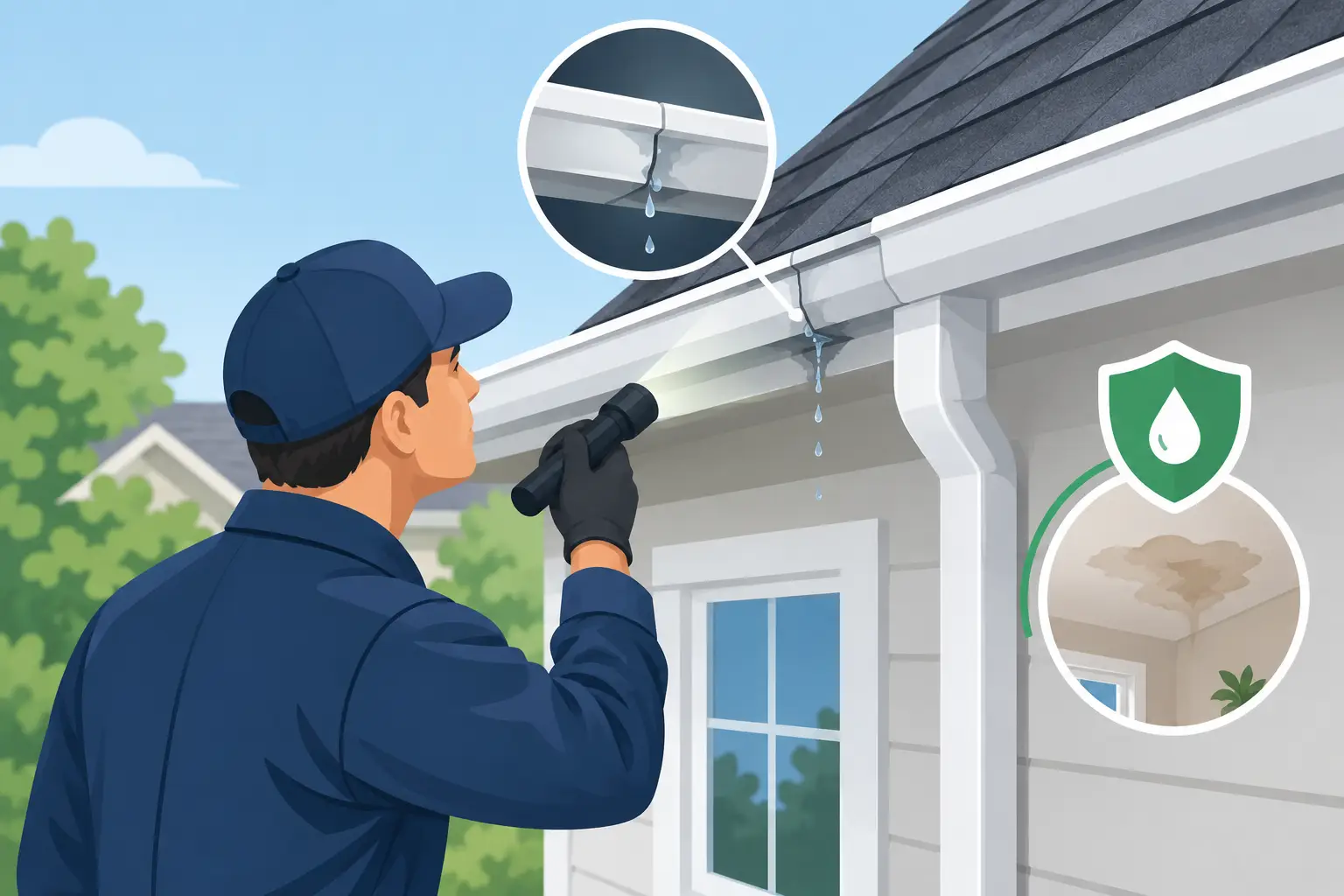
Homeowners often notice water running between the gutter and the fascia board. That usually means the gutter is packed enough that water is backing up and rolling behind the metal. It can also happen when the gutter has pulled away from the fascia or the drip edge is not directing water correctly – but debris is the first thing to rule out.
This matters because the back side overflow is what quietly rots wood and can lead to hidden repairs.
3) Plants growing out of the gutter
If you see green growth, you do not have “a little debris.” You have soil. Seeds land in wet leaf sludge, and the gutter turns into a planter.
At that point, water flow is already restricted. The added weight also stresses hangers and can start pulling sections out of alignment.
4) You can see a layer of shingle grit and sludge
Even if you do not have trees directly overhead, roofs shed granules and fine debris. Over time it builds into a heavy, damp layer that blocks outlets and downspouts.
A thin dusting is normal. A thick, muddy bed that holds water is not. Standing water accelerates rust on fasteners, shortens the life of sealants at joints, and attracts insects.
5) Downspouts are barely draining (or not draining at all)
During a rain, downspouts should discharge a steady stream. If you only see a trickle, hear gurgling, or notice water “burping” out of seams, the downspout or outlet is likely restricted.
A key nuance: the gutter trough can look fine from the ground while the downspout is clogged. One tennis ball-size blockage near the outlet can turn an entire run into a backup.
6) Stains or streaks on siding and fascia
Dark lines or vertical streaking under the gutter line are often caused by dirty overflow. The water picks up tannins from leaves and fine roof grit, then washes it down the face of your home.
Staining does not always mean the system is clogged, but paired with any overflow symptom, it is a strong indicator that cleaning is overdue.
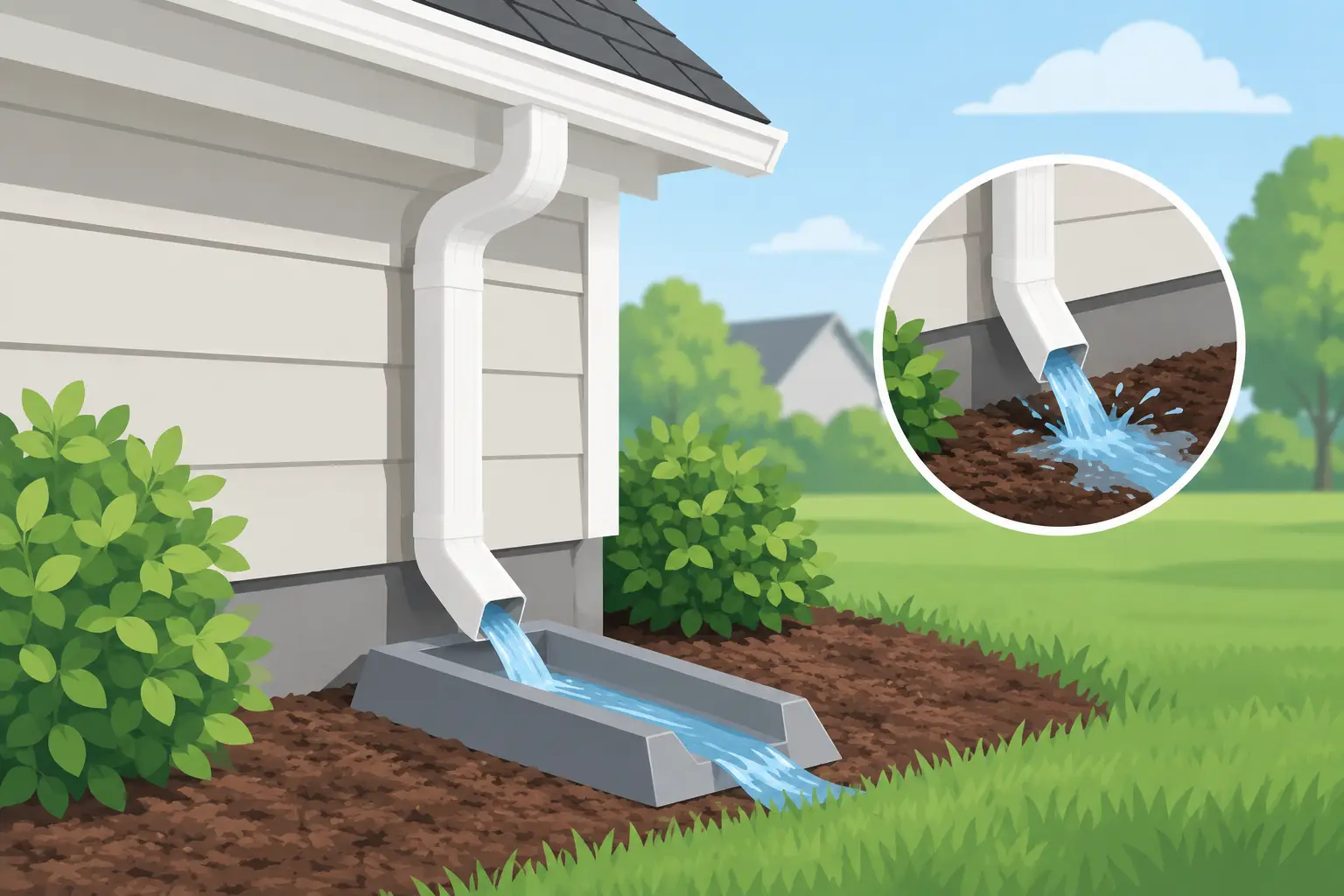
7) Mulch washouts and trenches under the eaves
If you notice grooves in the soil, displaced mulch, or splatter marks along the foundation landscaping, look up. Concentrated overflow from one spot can dig channels surprisingly fast.
This is one of those “expensive later” problems. Replacing mulch is annoying, but repeated erosion changes grade and can encourage water to collect near the foundation.
8) Basement dampness or water near the foundation
Not every basement leak is caused by gutters, but a clogged system is one of the easiest contributors to fix. When gutters overflow, they dump roof water right next to the home. In Eastern Indiana and Western Ohio, that repeated saturation can push moisture through foundation walls or into crawl spaces, especially during spring storms and freeze-thaw cycles.
If you are seeing damp spots, musty odors, or water after rain, take a quick walk outside while it is raining. Your gutters may be showing you exactly where the water is landing.
9) Mosquitoes and pests hanging around the gutter line
Standing water is a breeding ground for mosquitoes. Wet debris also attracts ants and other insects, and in some cases birds or rodents start using the gutter as a shelter.
If you notice increased pests around the eaves, it is not just a comfort issue. It is a sign water is sitting where it should not.
10) Sagging gutters or visible dips
Gutters are designed to carry water, not heavy wet leaves. When debris builds up, sections can sag, pull away from the fascia, or develop low spots that hold water.
Sometimes a sag is purely structural – a loose hanger or a section that needs repair. But even then, cleaning is usually step one so the true condition is visible.
11) You see ice dams or thick icicles along the gutter edge
Winter adds a twist: clogged gutters hold water, and that water freezes. You may see thick icicles, ice bulges, or sheets of ice along the gutter line.
To be fair, icicles can happen even with clean gutters if attic insulation and ventilation are issues. But debris and standing water make freezing more likely and more damaging. If you see recurring ice buildup, it is worth addressing both drainage and roof/attic conditions.
Why these signs matter (and what they can turn into)
Most homeowners do not schedule gutter cleaning because it is exciting. They do it because water damage is expensive and disruptive.
When gutters fail, the first casualties are often the fascia and soffit. Wet wood swells, paint fails, and rot starts where you cannot easily see it. Next comes stained siding and damaged landscaping. Over time, repeated overflow can contribute to foundation saturation, basement moisture, and even cracked or heaved walkways if water repeatedly soaks and freezes near concrete.
There is also the roof edge to consider. Backed-up water can creep under shingles at the eave line during wind-driven rain, especially if the gutter is full and water has nowhere to go. That is not the most common outcome, but it is a real one – and it is why “it’s just a little overflow” is worth taking seriously.
How often should gutters be cleaned in our area?
Around Richmond, Muncie, Connersville, New Castle, Greenville, Oxford, and the greater Dayton area, the schedule depends on tree cover and roof conditions.
If you have mature trees (maples, oaks, pines), many homes need cleaning at least twice a year: late spring after seed drop and late fall after leaves. If your roof sheds a lot of granules or you have valleys that funnel debris, you may need spot checks between those cleanings.
If you already have a quality leaf protection system, your frequency can drop – but “lower maintenance” is not the same as “no maintenance.” Guards can keep out larger debris while fine grit still accumulates over time, especially near downspout outlets.
When a clog is not the only problem
Sometimes homeowners clean the gutters and still see issues. That usually points to one of three things: the gutter pitch is off, the downspout capacity is undersized for the roof section, or the system has loose hangers/seams that leak.
This is where a straightforward inspection helps. You want someone to show you what is happening – where water is entering, where it is slowing down, and where it is exiting – and then explain options with clear pricing. If you are in Eastern Indiana or Western Ohio and want that kind of no-pressure clarity, Seamless Gutter Solutions LLC offers free inspections and detailed, itemized estimates with no hidden fees.
A quick homeowner check you can do safely
You do not need to climb a ladder to gather useful information. Walk the perimeter during a rain and look for overflow points, splatter patterns, and downspout discharge. On a dry day, look for stains, sagging, and vegetation at the gutter edge.
If you do use a ladder, use common-sense safety: level ground, stable footing, and never overreach. If the ground is soft, the roof is steep, or you are not comfortable, it is not worth the risk.
The most homeowner-protective mindset here is simple: gutters are not cosmetic trim. They are part of your home’s water control system. When they show signs of trouble, the right move is to respond early – before the “small issue” turns into wood repair, drainage work, or interior water cleanup.
A clean gutter does not just look better. It keeps water doing what it is supposed to do: move away from the home and stay out of the places you actually live.