

If your gutters are pulling away from the house, sagging in the middle, or showing nail heads backing out, the question usually comes up fast: continuous hangers vs spikes – which one should you trust on your home? It is a fair question, because the support system behind your gutters affects more than appearance. It can change how well water moves, how often repairs are needed, and how much stress ends up on your fascia, soffit, roof edge, and foundation.
For many homeowners, spikes are what they already have. Continuous hangers are what they hear about when they start looking for a stronger replacement. The difference matters most in places like Eastern Indiana and Western Ohio, where heavy rain, wet leaves, snow load, and freeze-thaw cycles can expose weak points pretty quickly.
Continuous hangers vs spikes: the basic difference
Spikes are the older attachment method. A long metal spike is driven through the front of the gutter and into the fascia board, usually with a ferrule or sleeve inside the gutter to hold its shape. It is a simple system, and for years it was a common standard.
Continuous hangers work differently. Instead of relying on spaced-out spikes to hold the gutter in place, a continuous hanger system supports the gutter more evenly along the run. That creates a stronger connection and helps reduce movement, especially when the gutter is carrying a lot of water or debris.
That difference in support is the real issue. A gutter is not just a channel hanging on the edge of your roof. It is managing a large volume of water during storms, and all that weight has to be carried somewhere.
Why spikes tend to fail over time
Spikes do not always fail right away. In fact, many homes still have them after years of service. The problem is that they often loosen gradually, and homeowners usually notice the symptoms before they understand the cause.
One common issue is spike pull-out. As temperatures shift and gutters expand and contract, the fastener can begin to work loose from the fascia. Add the weight of standing water, trapped leaves, or winter ice, and the stress increases. Once one area loosens, the gutter can start to pitch incorrectly, which leads to overflow, sagging, and more strain on the remaining fasteners.
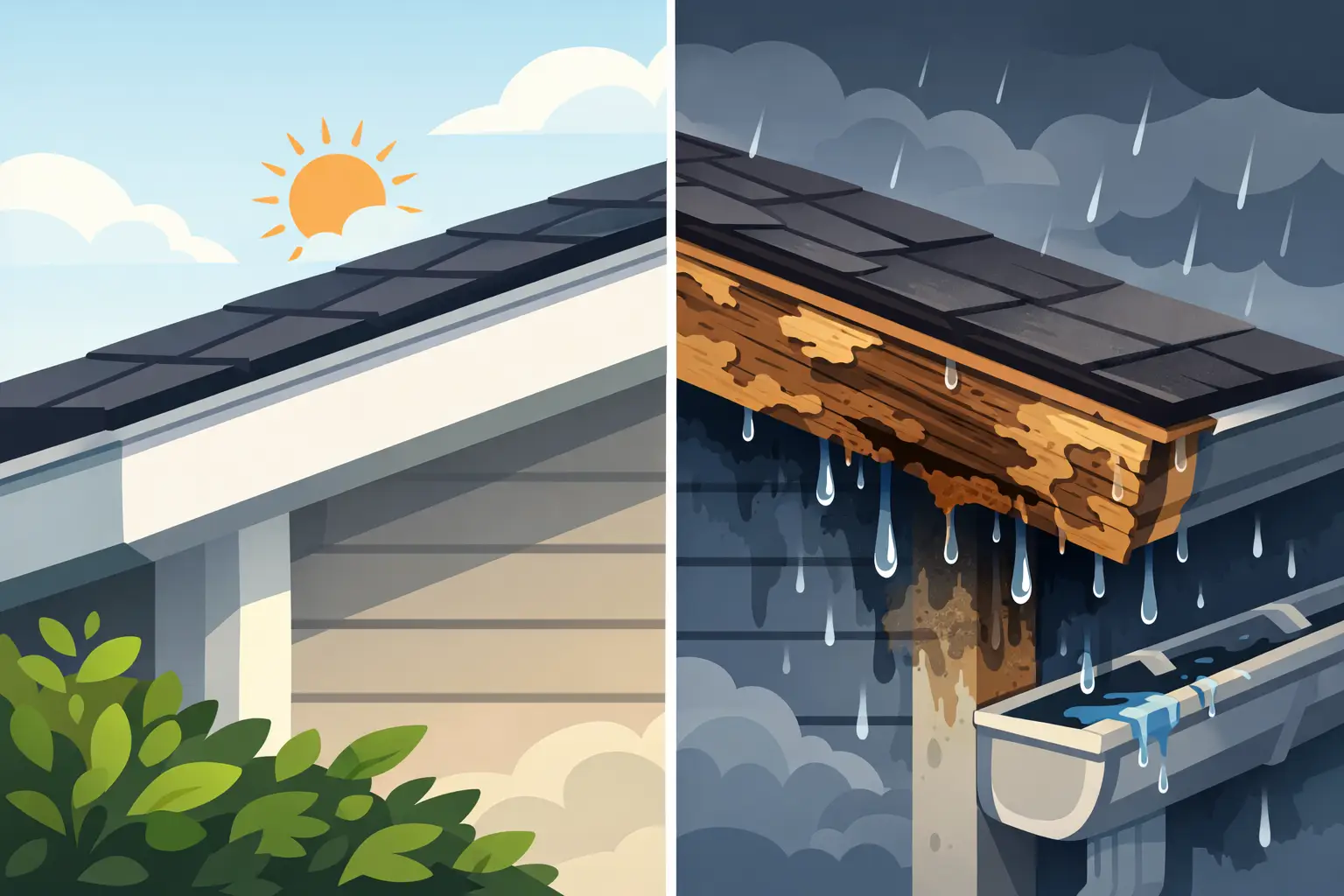
The fascia board matters too. If wood has already taken on moisture or started to soften, spikes may not hold well for long. In that case, a repair that looks simple from the ground may actually point to a larger problem at the roofline.
That does not mean every spiked gutter system is automatically bad. If the gutters are relatively light-duty, the fascia is sound, and the system has not been overloaded, spikes can still be functional. But they generally offer less long-term stability than modern hanger systems.
Why continuous hangers are usually the stronger choice
When homeowners ask what holds up better, continuous hangers usually come out ahead. The reason is straightforward: they spread support more consistently and reduce the weak points created by wider fastener spacing.
That added support helps gutters keep their shape and stay tight to the house. It also makes them better suited for handling the real-world conditions gutters face – downpours, leaf buildup, wind, and seasonal expansion and contraction.
For homeowners who want fewer call-backs for loose gutters or recurring alignment issues, that matters. A stronger attachment system helps preserve the slope of the gutter, which improves drainage and reduces the chance of standing water. Standing water is not a small issue. It adds weight, attracts debris, and can shorten the life of the whole system.
There is also a practical maintenance advantage. When gutters are firmly supported, they are less likely to twist or separate during cleaning or under debris load. That can be especially important if you are also considering a premium leaf protection system that depends on a solid gutter structure underneath.
Continuous hangers vs spikes for repairs
If you are dealing with a few loose sections, the right answer depends on the condition of the existing system. Sometimes a localized repair can buy time. Other times, patching a failing support method only delays a larger replacement.
If the gutter itself is still in good shape, the fascia is solid, and the issue is limited to a small section, a repair may make sense. But if spikes are backing out in multiple spots, the gutter is misaligned, or the fascia has signs of rot, it is worth stepping back and looking at the full picture.
This is where homeowners often spend more than they need to by treating symptoms one at a time. A gutter can be resecured today and still keep giving trouble because the underlying support method is past its useful life. A clear inspection should tell you whether the system is worth saving or whether an upgrade is the more cost-effective move.
What this means for new gutter installation
On a new system, the question gets easier. If you are already investing in new gutters, it usually makes sense to choose the stronger support method from the start. The labor is already part of the installation process, and better attachment can improve the performance and lifespan of the whole system.
This is one reason many professional installers prefer seamless gutters paired with modern hanger systems. A seamless gutter already reduces leak points compared to sectional gutters. Adding stronger support helps that system stay properly pitched and firmly attached over time.
For homeowners focused on long-term value, this is usually the smarter route. You are not just buying gutters. You are buying drainage performance, structural stability, and fewer repair headaches after the next hard season.
Cost matters, but so does the repair cycle
Spikes may seem like the cheaper option at first, especially if you are comparing a quick repair to a full upgrade. But lower upfront cost does not always mean lower ownership cost.
If a spiked system keeps loosening, sagging, or pulling away from the fascia, those service calls add up. So does the risk of water spilling behind the gutter and damaging wood trim, flower beds, siding, or the foundation area below. By the time repeated repairs and water-related damage enter the picture, the cheaper choice may not be cheaper anymore.
Continuous hangers typically make more sense when you are thinking beyond this season. They are built for better holding power, and that often translates to fewer recurring issues. For a homeowner trying to avoid surprise expenses, that predictability is worth something.
The gutter guard factor
If you are planning to add gutter protection, support strength becomes even more important. A gutter guard can help reduce debris buildup, but it does not remove the weight of moving water or eliminate the need for a stable gutter system.
In fact, premium protection products perform best when they are installed on gutters that are secure and correctly pitched. A continuous-hanger style setup is often a better fit for that kind of upgrade because the underlying structure is stronger and more consistent.
That matters if your goal is lower maintenance instead of just changing one part of the problem. A good guard on a weak gutter system is still a weak gutter system.
So which one should you choose?
If you want the short answer, continuous hangers are usually the better choice for strength, durability, and long-term performance. They hold gutters more securely, resist common failure points better than spikes, and support the kind of drainage system most homeowners actually need.
The main exception is when an existing spiked system only needs a limited repair and the rest of the gutter setup is still in solid condition. In that case, a targeted fix may be reasonable. But for homes with repeated pull-outs, sagging runs, aging gutters, or plans for gutter replacement, continuous hangers are generally the better investment.
That is especially true if you are trying to protect more than the gutter itself. Water does not stay politely at the roof edge when a system fails. It finds the fascia, the siding, the landscaping, and eventually the foundation. A stronger support method helps stop those problems upstream.
At Seamless Gutter Solutions LLC, that is the kind of decision we try to make simple: clear inspection, clear quote, no hidden fees, and a recommendation based on what protects the home best. If you are looking at loose gutters and wondering whether to repair, reinforce, or replace, the right answer starts with seeing exactly what is happening at the roofline.
The best gutter system is the one you do not have to worry about every time a hard rain moves in.