
A lot of foundation problems start quietly. There is no dramatic crack overnight, no sudden collapse, just water spilling over the edge of clogged gutters every time it rains and soaking the ground next to your home. If you have ever asked, can clogged gutters damage foundation, the short answer is yes – and the damage can build faster than many homeowners expect.
Gutters are supposed to move rainwater away from the house in a controlled way. When they are blocked with leaves, shingle grit, seed pods, and debris, that system stops doing its job. Instead of channeling water toward downspouts and away from the structure, the gutter overflows right at the roofline and along the foundation perimeter.
How clogged gutters can damage foundation
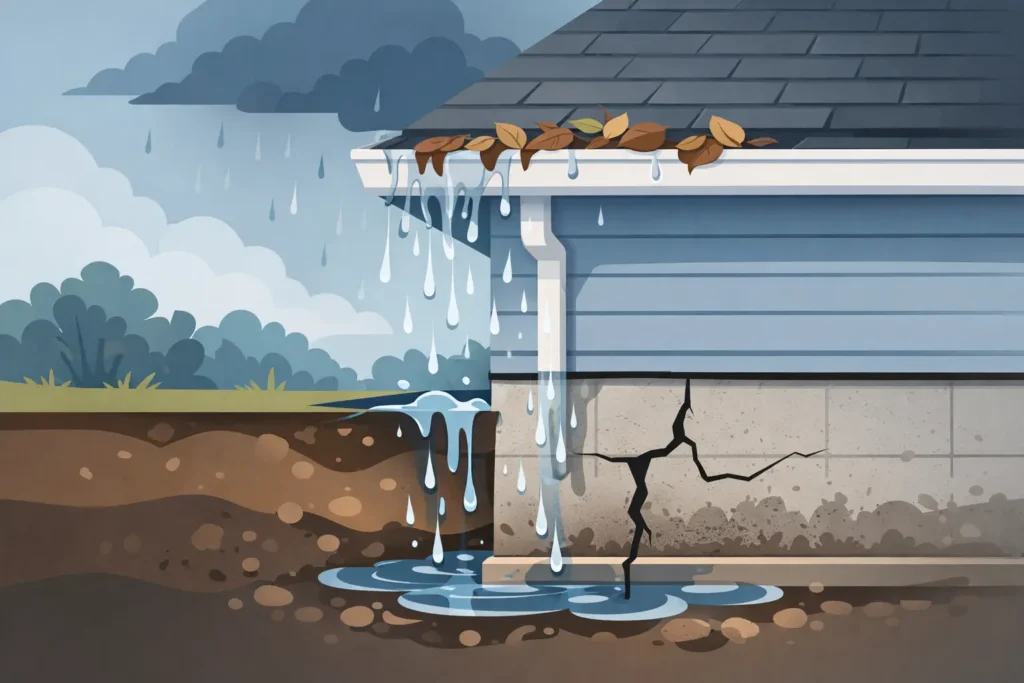
The basic problem is simple. Water falls off the roof, lands too close to the house, and saturates the soil around the foundation. Once that happens repeatedly, you can start seeing several issues at once.
First, wet soil expands. During drier periods, it contracts. That constant movement puts pressure on foundation walls and footings. In some homes, especially where drainage is already poor or the soil holds water, that cycle can contribute to cracks, shifting, or settling.
Second, standing water near the base of the home can find its way into small gaps. Even a well-built foundation is not meant to have water pooling against it over and over. If there are existing hairline cracks or weak points, moisture can work its way into crawl spaces or basements.
Third, clogged gutters often create concentrated runoff in just a few spots. Instead of water being distributed through properly functioning downspouts, it pours over one section of gutter and pounds the same area of ground. That can erode soil and expose parts of the foundation over time.
This is why the answer to can clogged gutters damage foundation is not just theoretical. It is a real drainage issue with real structural consequences.
Why the damage gets worse over time
One heavy rainstorm usually does not destroy a foundation. The bigger issue is repetition.
When gutters stay clogged through spring storms, summer downpours, and fall leaf drop, the home experiences the same overflow pattern again and again. Each storm adds more moisture to the same area. Each wet-dry cycle puts a little more stress on the soil. Each freeze-thaw event can make that movement more aggressive in colder months.
That is also why many homeowners miss the warning signs early. The gutter problem is visible, but the foundation damage develops gradually. By the time interior cracks show up or basement moisture becomes obvious, the drainage issue may have been happening for months or years.
Signs your gutters may be putting the foundation at risk
You do not need to wait for major structural symptoms to take this seriously. There are often clues outside the home first.
If you see water spilling over the front edge of the gutter during rain, that is one of the clearest warnings. You may also notice muddy trenches below the roofline, mulch washing away, or landscaping that looks beaten down in the same spots after each storm.
Inside or around the house, foundation-related signs can include small wall cracks, uneven floors, sticking doors, basement dampness, or a musty smell in lower levels. None of these automatically means gutters are the only cause. Foundation issues can have more than one source. But clogged gutters are a common and preventable contributor.
It depends on your home, lot, and drainage setup
Not every house faces the same level of risk. Some properties shed water naturally because of their grading, soil type, and lot layout. Others are much less forgiving.
Homes with poor slope around the foundation are more vulnerable because water already wants to sit near the structure. Clay-heavy soils can also make the problem worse because they expand when wet and shrink when dry. Older homes may have more settled areas, aging drainage systems, or previous foundation cracks that make water intrusion easier.
The gutter design matters too. Even if the gutters are not fully packed with debris, undersized systems, loose sections, or poorly placed downspouts can still leave too much water close to the house. In other words, a foundation problem is rarely just about one clog. It is usually about how the full drainage system performs under real weather conditions.
Clogs do more than cause overflow
Overflow is the most obvious issue, but it is not the only one.
When gutters hold wet debris, they also hold weight. That extra weight can pull gutters away from the fascia, change the slope, and create low spots where more water collects. Once that happens, even light debris can keep trapping water in the wrong places.
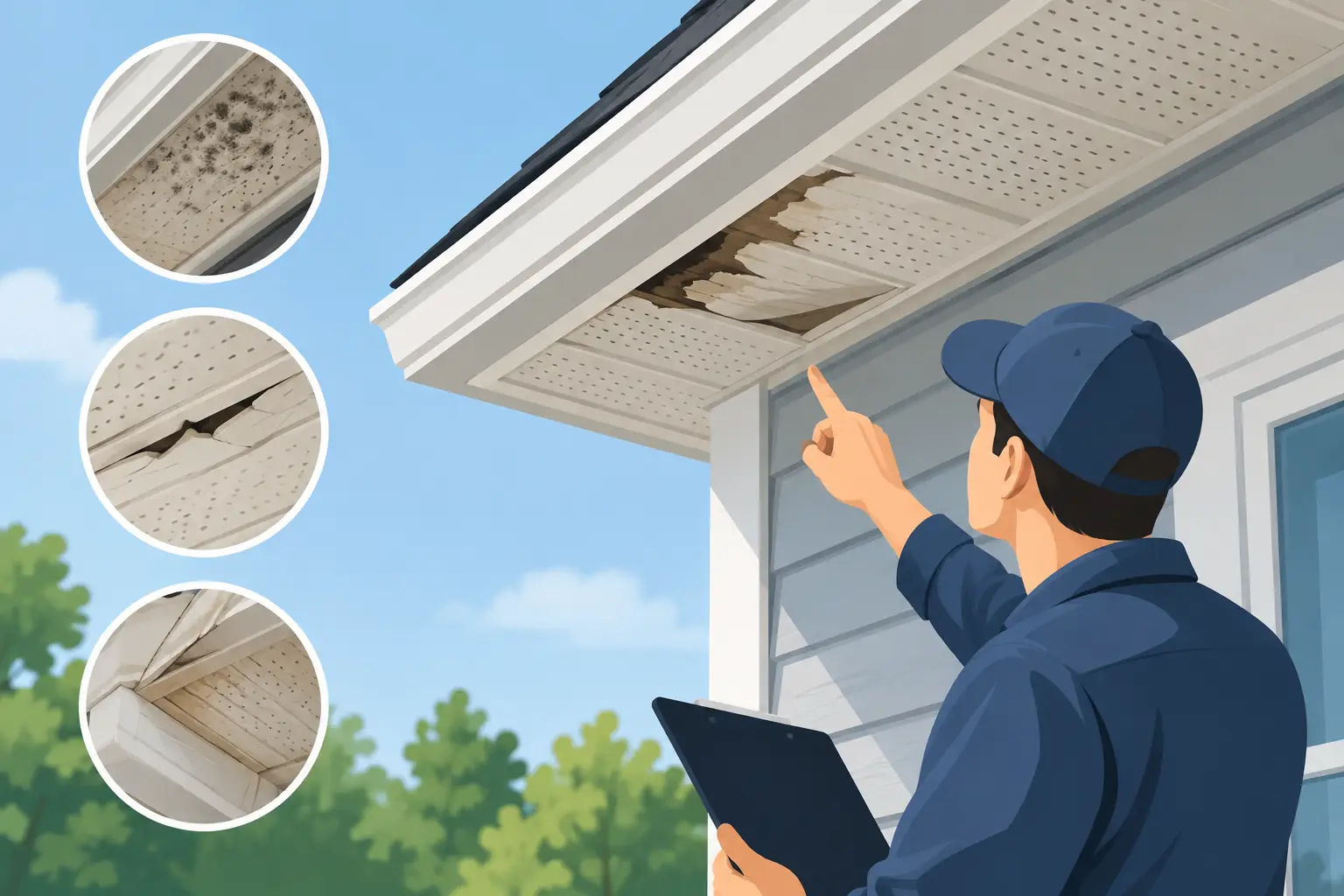
Blocked gutters can also send water behind the gutter instead of through it. That can affect fascia boards, soffits, and roof edges before the runoff ever reaches the ground. So while foundation protection is the main concern here, the same clog may also be setting up wood rot, staining, and exterior repair costs elsewhere.
What homeowners should do first
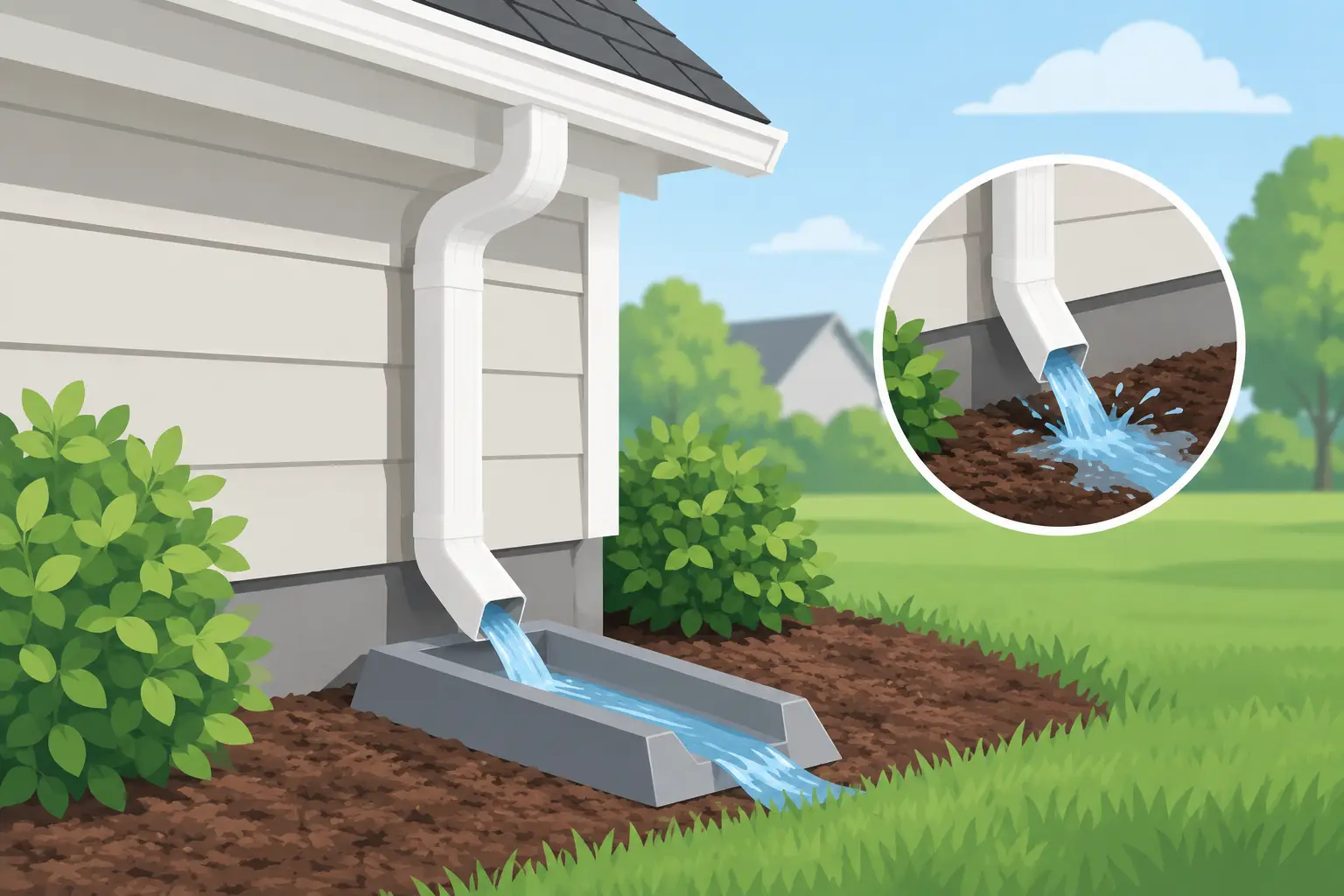
If you suspect your gutters are overflowing, start with observation during or right after a rain. Look for places where water pours over the side, runs behind the gutter, or pools near the foundation. Check whether downspouts are actually carrying water away from the home rather than dumping it at the base.
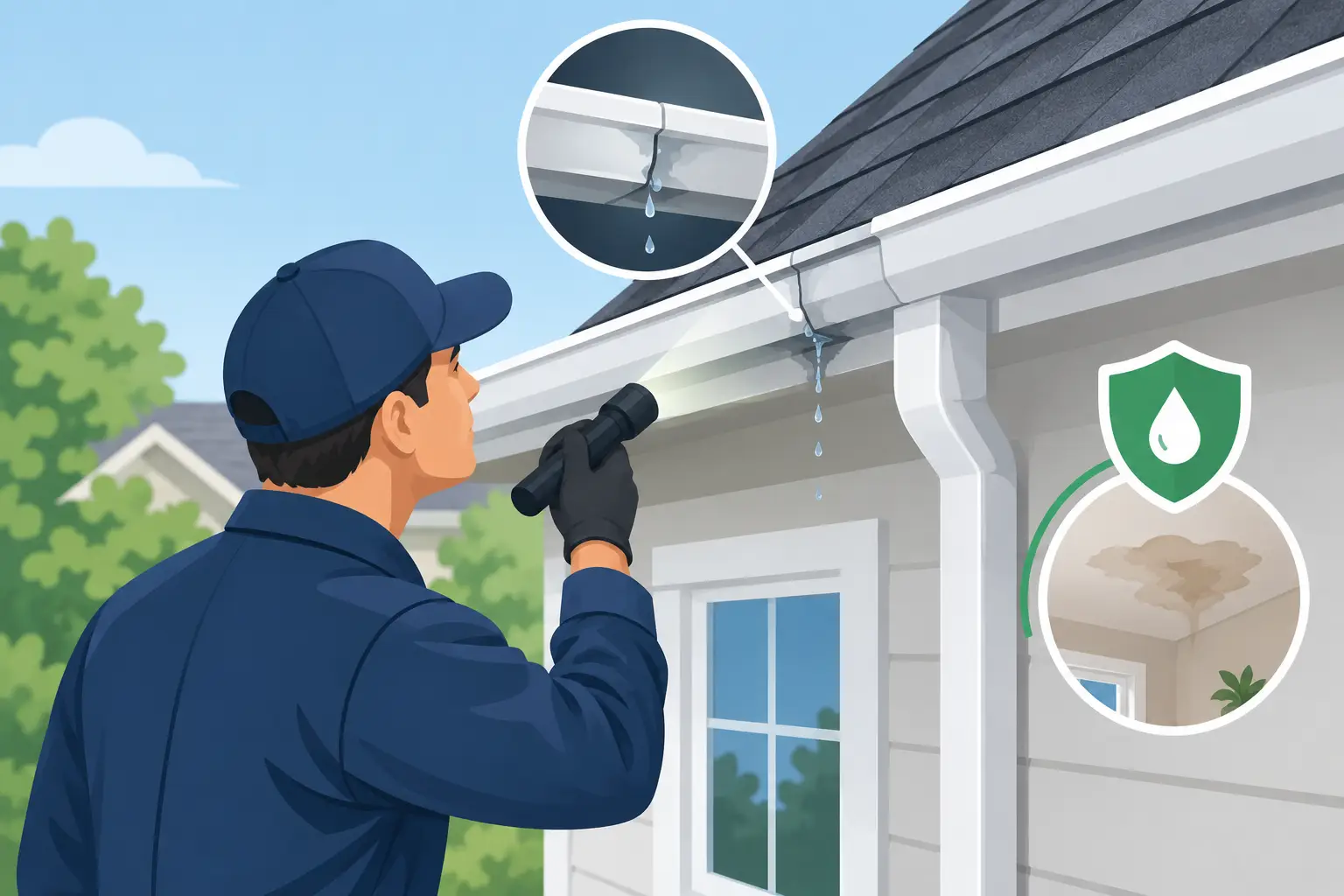
If it is safe to inspect from the ground, look for visible debris buildup, sagging sections, separated joints, and signs that water is washing out soil below. For many homeowners, that is enough to confirm there is a drainage problem worth addressing.
The next step is to fix the cause, not just the symptom. Cleaning clogged gutters is often the first move, but it may not be the last one. If the gutters are damaged, pitched incorrectly, or undersized for the roof area, cleaning alone will not fully solve the issue.
Prevention is usually cheaper than repair
Foundation repairs can be expensive, disruptive, and stressful. By comparison, regular gutter maintenance is a much simpler way to protect the home.
That may mean scheduled cleaning, especially in areas with heavy tree cover. It may mean repairing loose sections, improving downspout placement, or replacing older sectional gutters with seamless gutters that reduce leak points and improve flow. For some homes, a quality leaf protection system makes sense because it cuts down on debris buildup and lowers the chance of recurring clogs.
There is a trade-off here. Guards are not a magic fix for every property, and not every home needs the same setup. But if your gutters clog several times a year, repeated cleaning costs and water risk can add up quickly. In that case, investing in a better long-term solution can make financial sense.
When to get a professional inspection
If you are seeing overflow, erosion, basement moisture, or early signs of settlement, it is smart to have the gutter system checked before the problem grows. A professional inspection can tell you whether the issue is simple debris buildup or a larger drainage design problem.
For homeowners in Eastern Indiana and Western Ohio, especially in places like Richmond, Muncie, Connersville, New Castle, Greenville, Oxford, Dayton, Huber Heights, Middletown, and Hamilton, the mix of seasonal storms, falling leaves, and freeze-thaw cycles can be hard on gutter systems. That makes routine inspection more than just upkeep. It is part of protecting one of your biggest investments.
At Seamless Gutter Solutions LLC, that inspection process is meant to be straightforward – clear findings, detailed quotes, and no hidden fees. That matters when you are trying to make a practical decision for your home instead of guessing at what needs to be done.
Can clogged gutters damage foundation? Yes, and the risk is avoidable
The good news is that this is one of the more preventable causes of water-related foundation trouble. Most homes do not need complicated solutions first. They need gutters that are clean, properly installed, correctly pitched, and able to move water away from the house every time it rains.
If your gutters are overflowing now, do not wait for interior damage to confirm the problem. Water rarely gets less aggressive with time. A simple inspection today can spare you from a much bigger repair later.