
If paint is peeling near your roofline, the wood behind your gutters feels soft, or you notice staining at the eaves, you may already need a guide to fascia board water damage. Fascia problems often start small, but they rarely stay small for long. What looks like a little discoloration can turn into wood rot, pest access, gutter failure, and more expensive repairs to the roof edge.
The good news is that fascia board damage is usually visible before it becomes a major structural issue. The key is knowing what you are looking at, what caused it, and whether the fix is a small repair or a sign that your gutter system is no longer protecting the home the way it should.
What fascia boards do and why water damage matters
The fascia board is the long, straight board mounted along the roof edge. It closes off the ends of the rafters and gives the gutter system a solid surface for attachment. In many homes, it also helps create a clean finished look at the eaves.
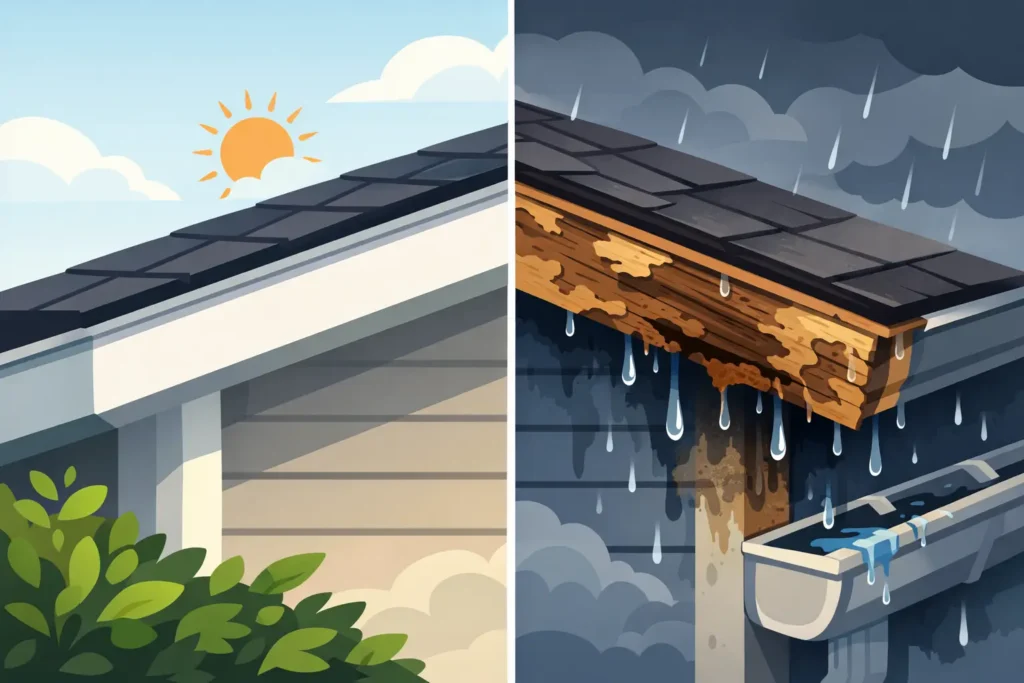
Because fascia sits directly behind the gutters, it is one of the first areas to suffer when water is not draining correctly. Overflowing gutters, leaking seams, clogs, poor pitch, and ice buildup can all keep water against the wood longer than it was designed to handle. Over time, moisture gets past paint and surface coatings, and the board begins to swell, soften, or rot.
That matters for more than appearance. Once fascia weakens, gutters can start to pull away from the house. Then runoff spills closer to the foundation, siding, soffits, and landscaping. A fascia problem often starts at the roofline but does not stay there.
Guide to fascia board water damage: the signs to watch for
Some warning signs are obvious, and others are easy to miss from the ground. If you are walking around your home after a storm or while cleaning gutters, pay attention to the roof edge.
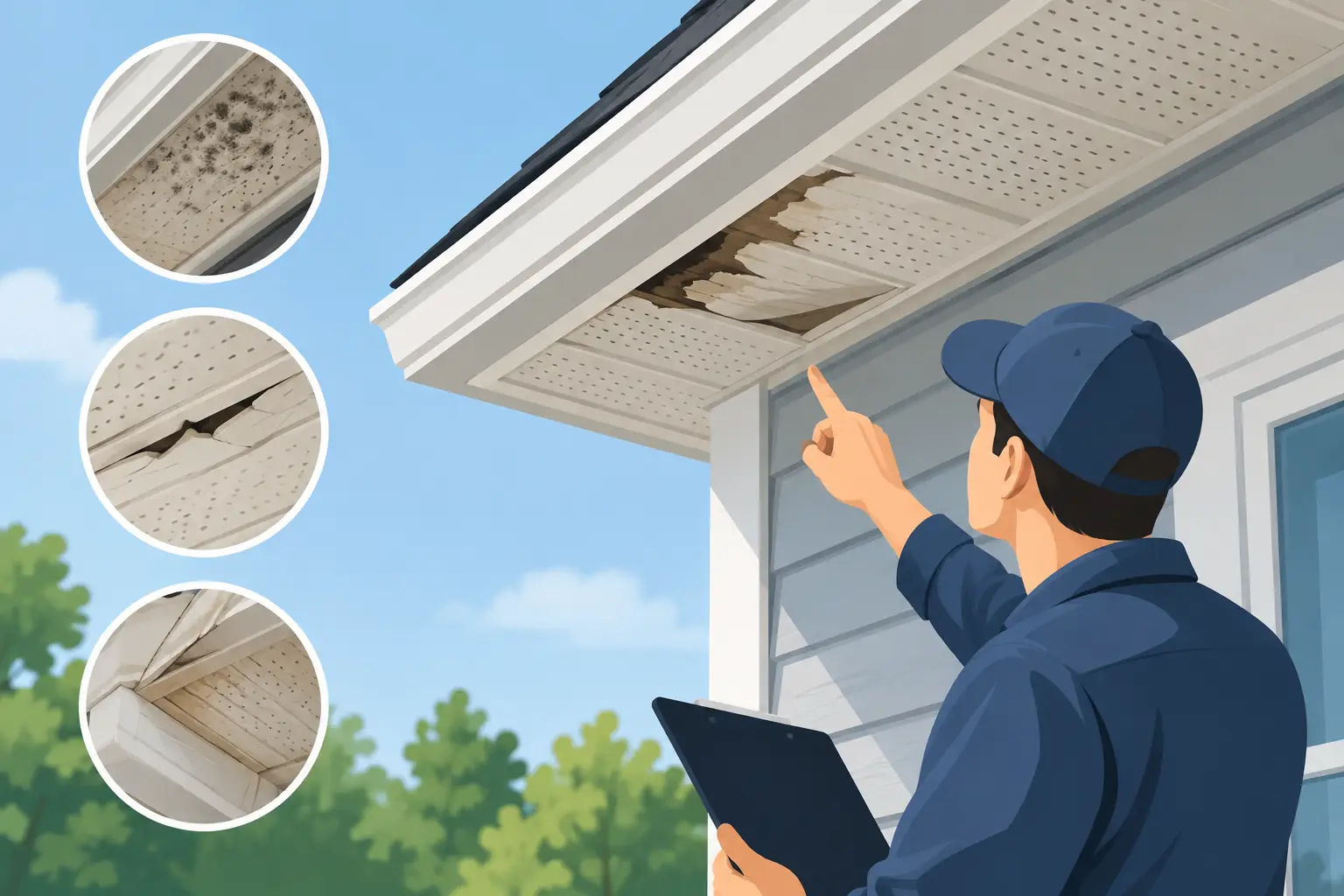
Peeling paint is a common early sign. So are dark streaks, water stains, and bubbling on the trim behind the gutter. If the wood looks swollen or uneven, moisture may already be trapped inside. In more advanced cases, the board may feel soft when pressed, or you may see sections that are cracked, crumbling, or visibly rotted.
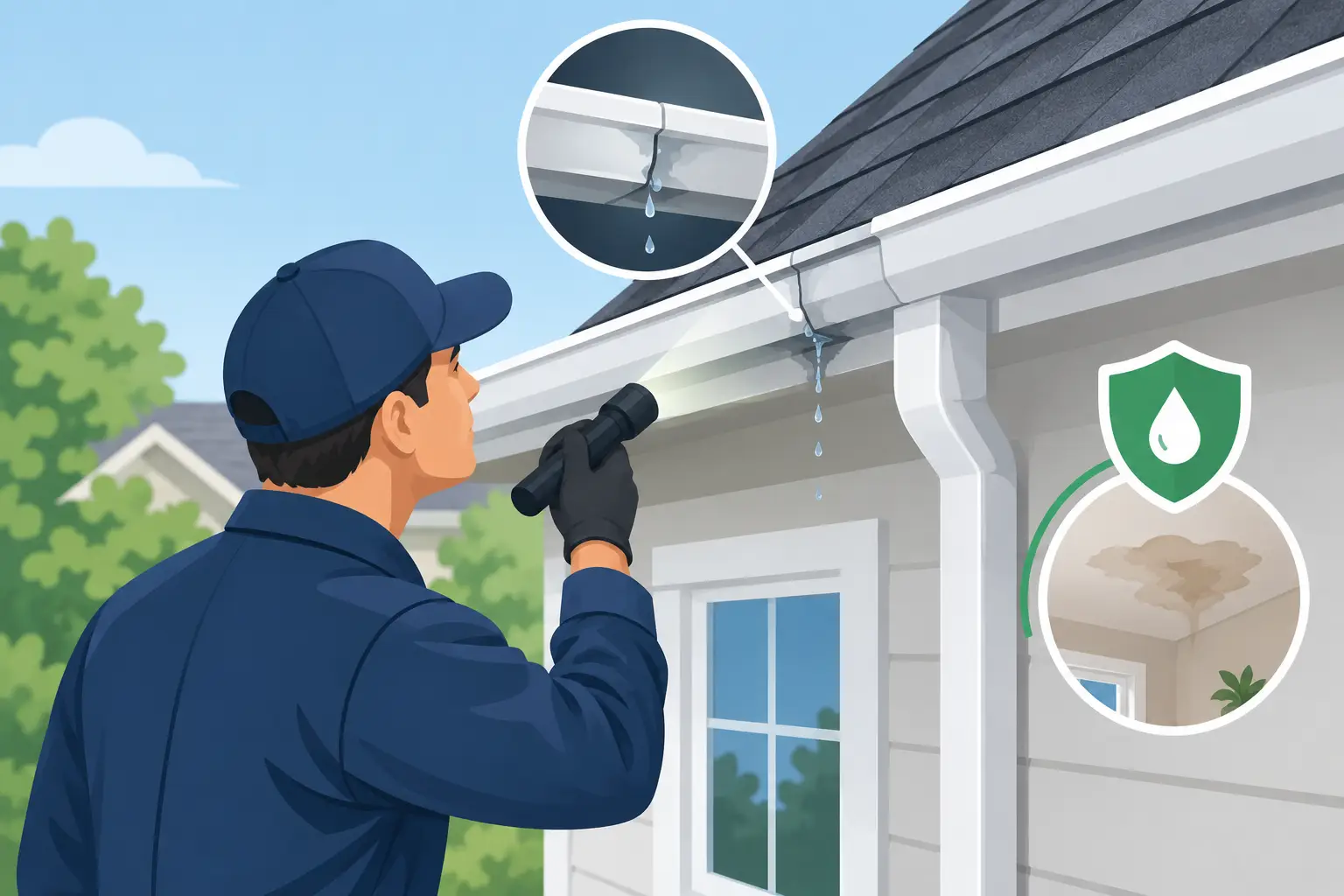
Gutters pulling loose are another clue. Homeowners sometimes assume the gutter hardware failed first, but the real issue may be the wood no longer holding the fasteners securely. You may also notice drips behind the gutter instead of from the front edge, which usually points to water getting where it should not.
Inside the home, the signs can be less direct. Damp attic edges, mold near soffits, or unexplained moisture near exterior walls can all connect back to fascia damage. It depends on how long the problem has been active and how far the water has traveled.
The most common causes
In most cases, fascia board water damage is not caused by one big event. It comes from repeated exposure.
Clogged gutters are one of the biggest causes. When leaves, shingle grit, and debris block flow, water backs up and sits against the fascia. During heavy rain, it spills over the front and rear edges. If it is overflowing behind the gutter, the fascia board takes the hit every time it rains.
Leaking gutter seams and corners can do the same thing, especially on older sectional systems. Even a small leak in the wrong spot can keep one section of fascia wet for months. Improper gutter pitch is another frequent issue. If water cannot move efficiently to the downspouts, it pools and increases the chance of overflow.
Roof problems can also play a role. Damaged drip edge, missing shingles near the eaves, or poor flashing details may let water run behind the gutter system. In colder weather, ice dams can push melting water back under roofing materials and toward the fascia.
Sometimes the issue is simply age. Wood trim and older gutter systems wear down over time. Paint breaks down, sealants fail, and repeated wet-dry cycles slowly weaken the material.
When it is a small repair and when it is a bigger job
Not every fascia problem means full replacement, but not every soft spot should be patched and forgotten either. The right fix depends on how much damage is present and what caused it.
If the damage is limited to a small area and the wood is still mostly solid, a localized repair may be enough. That could mean removing the affected section, replacing it, sealing the area properly, and correcting the water source that caused it. If the gutter is in good shape and the issue came from a one-off leak, the repair can be fairly contained.
If the wood is rotted along a longer stretch, if multiple sections are soft, or if the gutter is sagging or loose in several places, replacement is usually the better investment. Patching over widespread deterioration often delays the real repair and can create more cost later.
This is where a thorough inspection matters. The visible stain is not always the full story. Water can travel along the roof edge, and what looks minor from the yard may involve hidden damage behind the gutter or along the soffit.
How gutters affect fascia board lifespan
A properly designed gutter system protects fascia. A failing one shortens its life.
Seamless gutters help reduce leak points because they have fewer joints than sectional systems. That does not make them maintenance-free, but it does reduce one of the common causes of persistent dripping onto fascia boards. Correct sizing matters too. If gutters are too small for the roof area or local rainfall, overflow is more likely during strong storms.
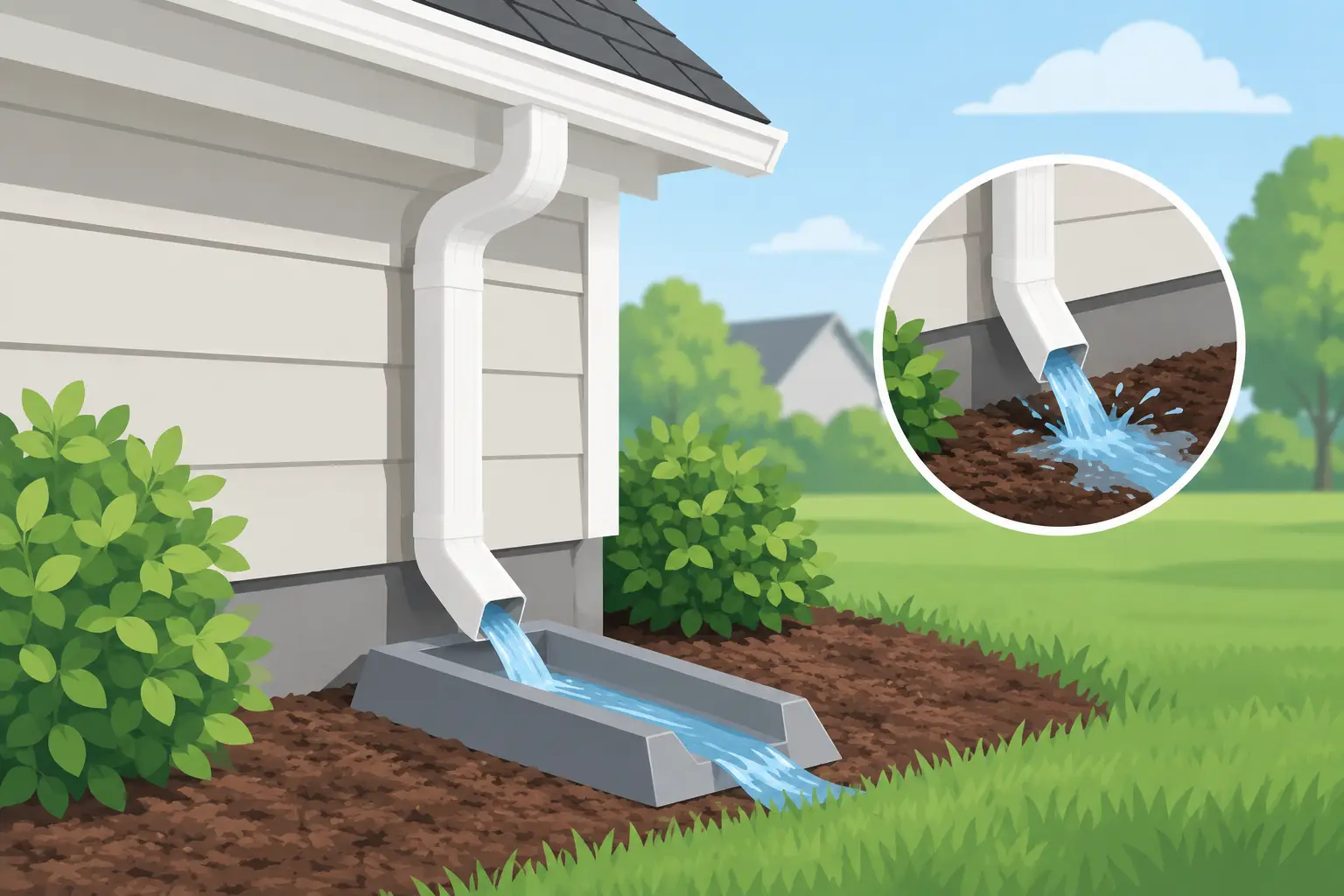
Downspout placement and capacity also matter. Water needs a clear path away from the roofline. If too much water is forced through too few outlets, the gutter can back up even when it is technically clean.
Leaf protection can make a major difference for homes surrounded by trees. If gutters fill repeatedly with leaves and seed pods, homeowners often end up in a cycle of overflow, cleaning, and more overflow. A quality gutter guard system helps keep water moving while reducing the debris load that causes backups in the first place.
Preventing fascia board water damage
The best prevention is not complicated, but it does require consistency. Gutters should be inspected, cleaned, and repaired before small drainage issues become wood rot.
Start with regular visual checks after heavy rain. If you see water pouring over gutter edges, dripping behind the gutter, or spilling near corners and end caps, that is worth addressing quickly. Look for loose fasteners, sagging runs, and staining on the trim below the roof edge.
Keep gutters clear, especially in the fall and spring. If your home deals with constant debris, guards may be more cost-effective than repeated cleanings and water damage repairs. It also helps to make sure downspouts discharge far enough from the home so water is not cycling back toward the structure.
Painted wood trim should be maintained as well, but paint alone is not a moisture solution. If water is consistently getting behind the gutter, repainting the fascia without fixing the drainage problem is only a short-term cosmetic step.
What homeowners should do next
If you suspect fascia damage, the smartest next move is to have the roof edge and gutter system inspected together. Treating fascia as a trim-only issue can miss the root cause. The board may be damaged because the gutter is clogged, undersized, loose, leaking, or simply at the end of its service life.
For homeowners in Eastern Indiana and Western Ohio, this is one of those repairs that benefits from a clear, itemized evaluation. You want to know whether you are dealing with minor wood replacement, gutter repair, gutter replacement, or a combination of issues. You also want to know what will stop the problem from coming back.
That is why a straightforward inspection matters. A trustworthy contractor should be able to show you where water is getting in, explain whether the fascia can be repaired or needs replacement, and give you a detailed quote without vague allowances or surprise add-ons. At Seamless Gutter Solutions, that kind of transparency is part of the process because homeowners should be able to make a confident decision without guessing.
Fascia damage rarely fixes itself, and waiting usually gives water more time to spread. If your roofline is showing signs of trouble, a prompt inspection can protect a lot more than one board behind the gutter.