

You do not usually notice your gutters until they stop doing their job. Then it shows up as a wet basement corner, a mysteriously eroding flower bed, or a drip line that stains your siding after every rain. The frustrating part is that clogged gutters rarely fail all at once – they slowly lose capacity, and the first “symptom” is often water going somewhere you cannot easily see.
If you are asking how often should gutters be cleaned, you are already thinking the right way: gutters are not a cosmetic add-on. They are part of your home’s water-management system, and in Eastern Indiana and Western Ohio, we get plenty of chances to test that system each year.
How often should gutters be cleaned in this region?
For most homeowners around Richmond, Muncie, Connersville, New Castle, Greenville, Oxford, Dayton, and surrounding counties, a reliable baseline is twice a year: once in late spring and once in late fall after the leaves are down.
That twice-a-year schedule fits a lot of homes because it matches the two most common clogging seasons here. Spring brings seed pods, blossoms, shingle grit, and storm debris. Fall brings leaves – and in many neighborhoods, that means volume. Cleaning before winter also matters because clogs that hold water can contribute to ice buildup and heavier loads on the gutter system.
That said, “twice a year” is a starting point, not a promise. Some homes truly can go longer. Others need attention more often to avoid overflow and hidden water damage.
The real answer depends on four practical factors
1) How many trees can reach your roofline
If you have mature maples, oaks, sycamores, pines, or sweet gums close enough to drop onto your roof, your gutters are in a high-debris zone. Homes with heavy tree cover often need cleaning three to four times per year, especially during a wet fall when leaves mat down and turn into sludge.
If your roof is relatively open, with only a few trees nearby, you might get by with once a year. Just remember that one surprise storm can change the math quickly.
2) Roof pitch and valleys
Steeper roofs tend to shed debris faster, which sounds good, but it usually means more of that debris ends up in the gutters. Roof valleys are another hotspot. Valleys concentrate water and debris, so the nearest downspout is more likely to clog first.
If you have a complex roofline with multiple valleys, plan on checking gutters more frequently, even if you clean less frequently.
3) Your gutter and downspout design
A gutter can look “fine” from the ground and still be failing at the downspout. Downspouts and elbows are where clogs love to form because the pathway narrows and turns.
If you have smaller gutters, long runs with only one downspout, or underground drains, maintenance becomes less forgiving. A partial blockage can create overflow that you might not notice until it has already been washing out soil near the foundation.
4) What you consider an acceptable risk
Some homeowners are fine with a little overflow as long as nothing dramatic happens. Others want to protect finished basements, landscaping, and siding at all costs.
If you are in the second group, the safest approach is simple: clean on a schedule and check after major storms. It is cheaper than repairing rot, mold issues, fascia damage, or foundation drainage problems later.
A practical cleaning schedule you can actually follow
If you want a schedule that feels realistic, here is how we advise homeowners to think about it.
Low-debris homes: once per year, plus a quick mid-fall check
If your home has minimal tree cover and you rarely see debris collecting on the roof, one full cleaning per year can be enough. Many homeowners choose late fall so they go into winter clear.
The trade-off is that you need to be willing to do a quick visual check mid-fall. If you see overflow during rain or notice plants growing from the gutter edge, do not wait.
Typical neighborhoods: twice per year
For most homes, especially those with a mix of trees in the yard or neighborhood, twice per year is the sweet spot. Late spring and late fall keep the system working through the heaviest seasons.
This schedule is also easier to remember. Homeowners who tie it to other routines – like HVAC service or seasonal yard cleanup – tend to stick with it.
Heavy tree cover: three to four times per year
If leaves blanket your roof every fall, or pine needles steadily drop year-round, plan on three to four cleanings. You are not doing it “because gutters are fussy.” You are doing it because your gutters are being asked to handle a constant supply of debris, and the cost of ignoring it shows up as overflow and wood rot.
After big storms: check no matter what
Even if you cleaned last month, a windstorm can dump branches, seed pods, and granules into a single valley and clog one downspout. If you notice a waterfall effect at a corner, water shooting over the gutter edge, or staining below the eaves, treat it like a maintenance alert.
Signs you should clean sooner, not later
You do not need to guess. Gutters tell you when they are falling behind.
Overflow during rain is the most obvious sign, but it is not the only one. If you see gutters pulling away, that can be the weight of trapped water and debris. If you see dark streaks on siding, that often means water is running where it should not. Mosquitoes near the house can also be a clue – standing water in clogged gutters is a breeding spot.
Inside the home, watch for basement dampness, musty smells, or water appearing after heavy rain. Those issues can have multiple causes, but clogged gutters are a common and fixable contributor.
What happens if you stretch the schedule too far
Skipping cleanings usually does not cause one dramatic failure. It causes slow, expensive ones.
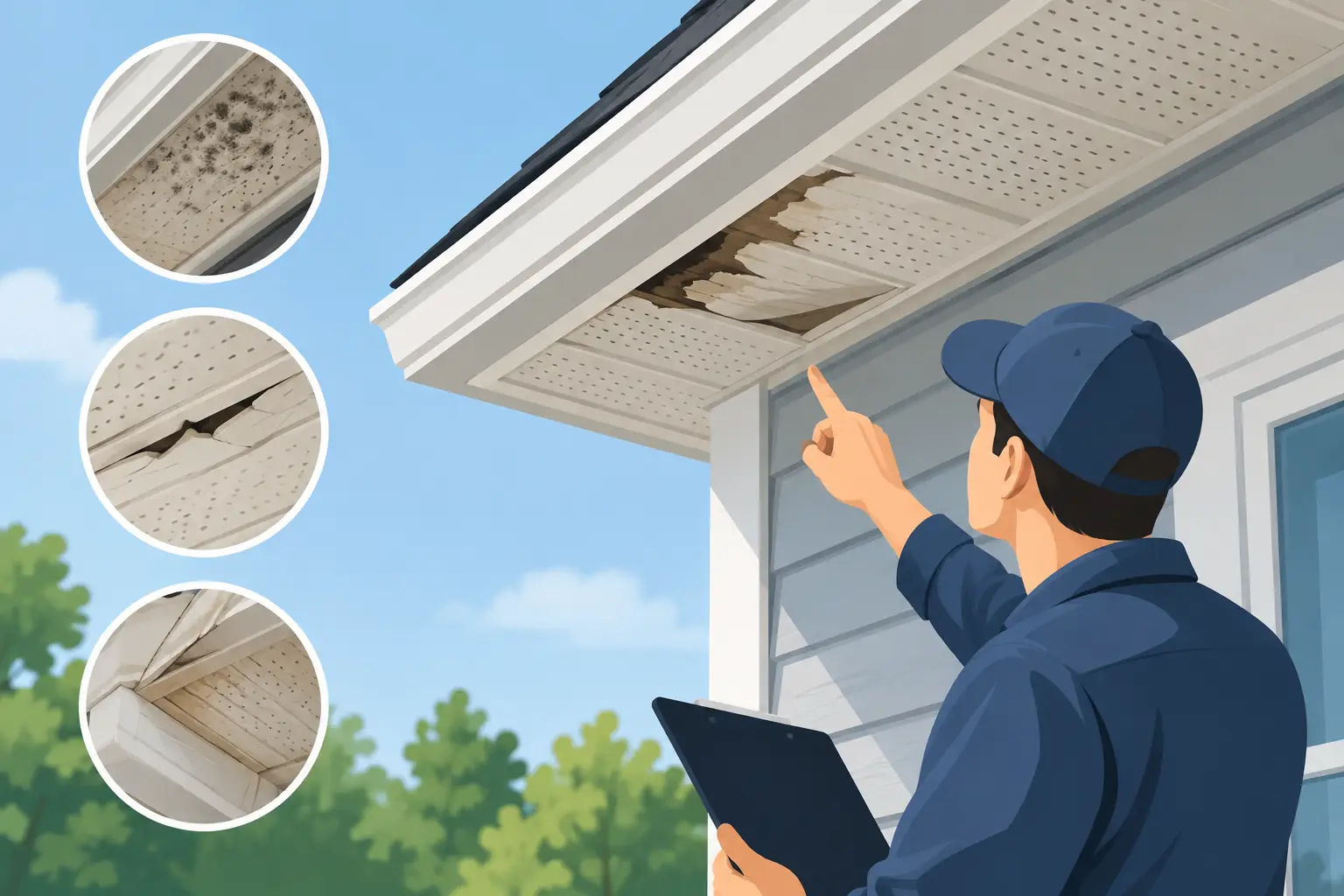
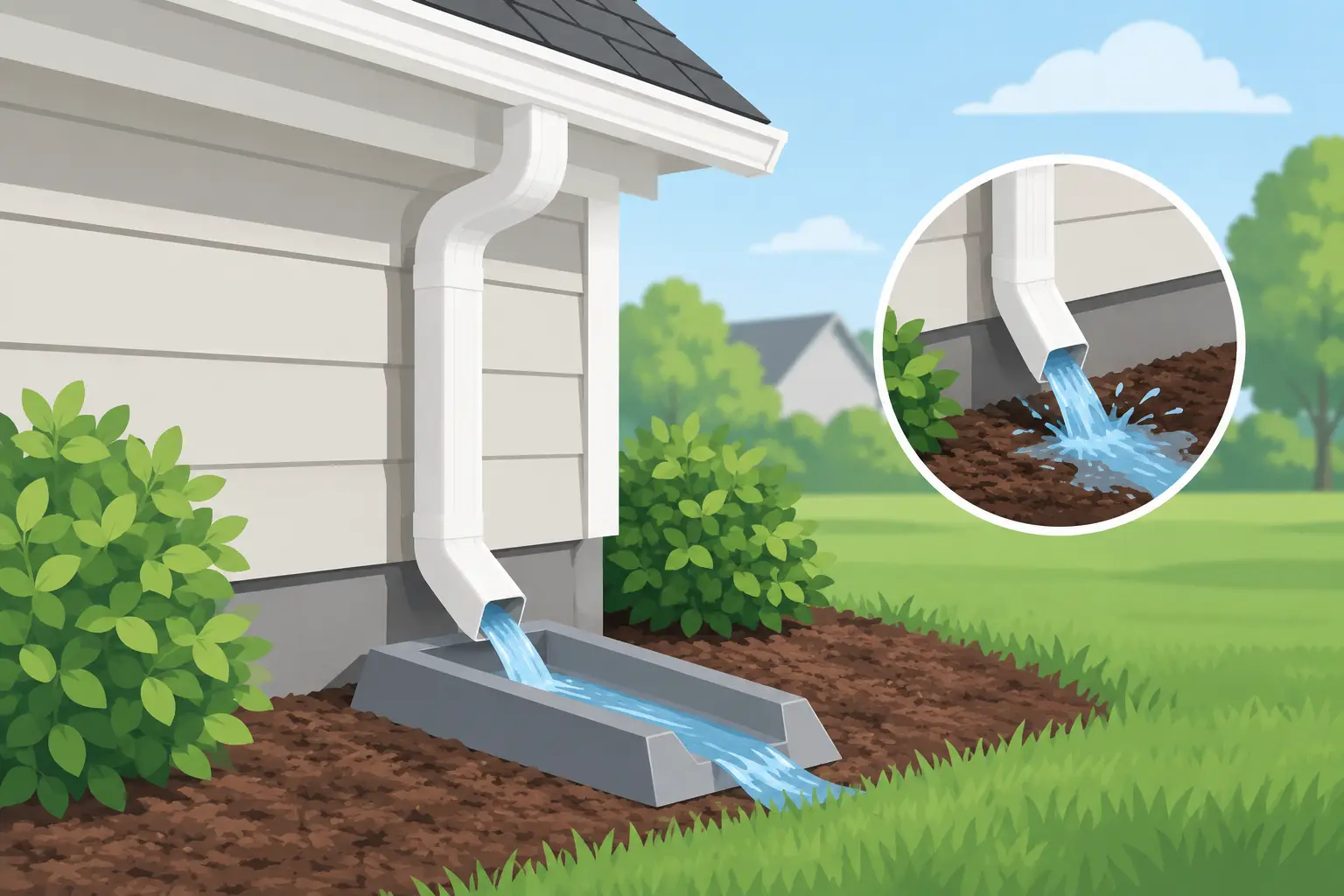
When gutters clog, water backs up and spills over the front edge. That runoff lands next to the foundation, compacts soil, and can find its way into cracks or basement walls. It can also soak fascia boards and the roof edge, contributing to rot.
In winter, trapped water can freeze. Ice adds weight and can stress hangers and seams. Even seamless gutters are not designed to hold a gutter-shaped block of ice for long periods.
DIY cleaning vs professional cleaning: the honest trade-offs
Many homeowners can clean gutters themselves if they are comfortable on a ladder and the roofline is simple. The benefit is cost control and quick timing. The downside is safety and missed problem spots.
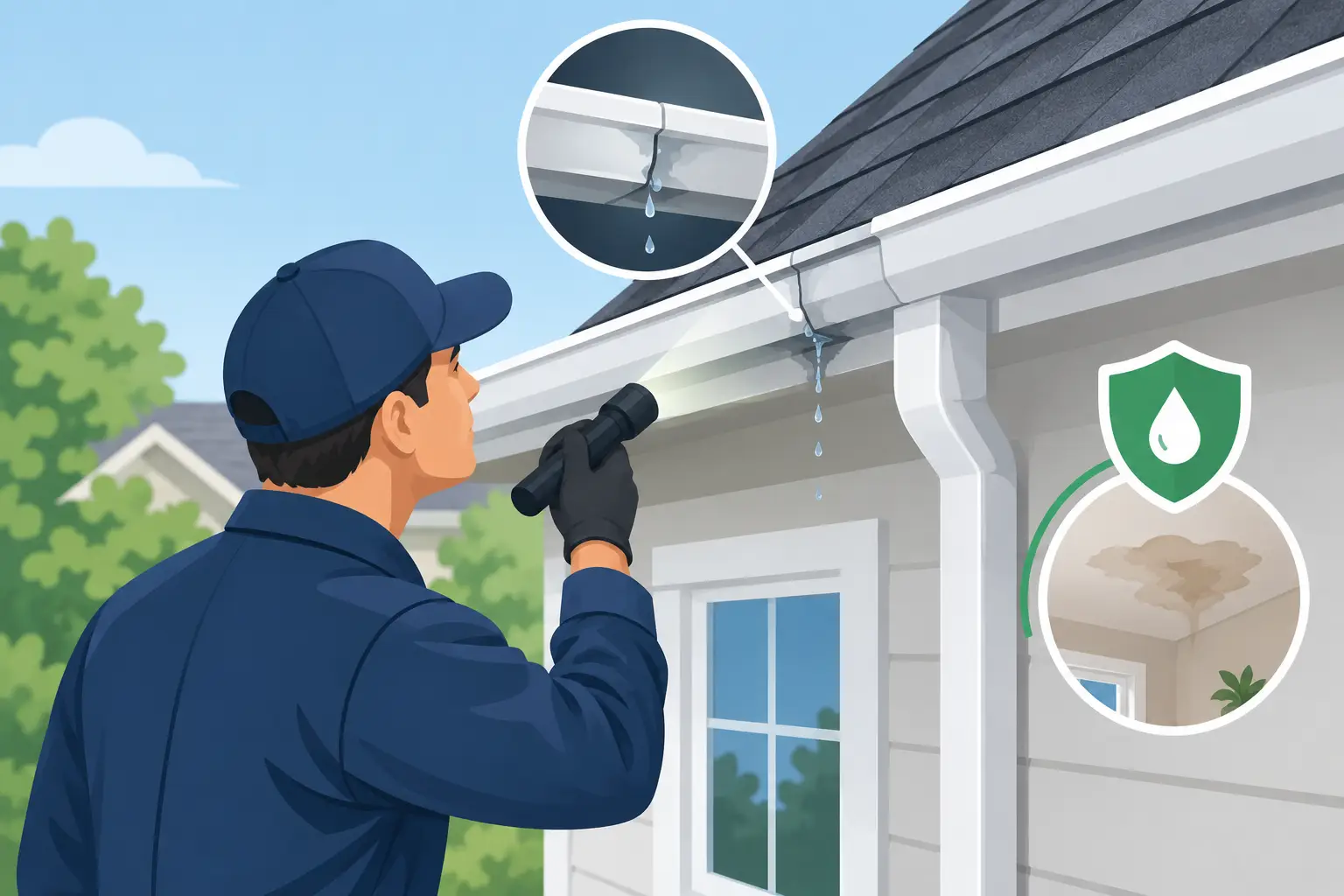
Most gutter issues that lead to damage start in places you might not notice from a ladder – a slow downspout clog, a section that is back-pitched, a hidden leak at an end cap, or a loose hanger that lets water run behind the gutter instead of into it.
If you hire a professional, you are not just paying for debris removal. You are paying for a set of trained eyes that can flag problems early and keep you from finding out the hard way during the next downpour.
Do gutter guards change how often you need to clean?
Gutter guards can reduce how often you need a full clean-out, but they do not eliminate maintenance.
Even premium guards can collect fine debris over time, and roof granules can build up in ways you do not see from the ground. Some systems handle heavy leaf loads better than others, and the quality of installation matters. A guard that is not secured correctly can create gaps, encourage overflow, or make future service harder.
For homeowners who want to reduce ladder time and lower the chance of clogs, a well-installed leaf protection system is often worth considering – especially in heavily wooded areas. You still want an occasional inspection, but the day-to-day clog risk is typically much lower than open gutters.
If you want the lowest-stress plan, do this
Pick a baseline schedule that matches your property, then build in one habit: watch your gutters during the first hard rain after leaves start falling.
If water hugs the gutter line and disappears cleanly into the downspouts, your system is doing its job. If you see spillover, or water running behind the gutter, that is your cue to act now instead of adding “mystery water problem” to your winter checklist.
If you would rather not guess, a free inspection can take the uncertainty out of it. Homeowners in our service area often use Seamless Gutter Solutions LLC for straightforward inspections, detailed estimates, and a no-hidden-fees approach to cleaning, repairs, seamless gutter installation, and premium leaf protection.
Your home only gets one foundation and one roof edge. Keep the water moving where it is supposed to go, and you will sleep better the next time the forecast turns ugly.