
A hard rain can reveal problems that stay hidden on a dry day: water spilling over gutter edges, mulch washing out, puddles beside the foundation, or a downspout emptying directly onto a walkway. This residential rainwater drainage planning guide helps homeowners make practical decisions before runoff turns into siding damage, basement moisture, erosion, or expensive repairs.
For homes across Eastern Indiana and Western Ohio, drainage planning has to account for heavy seasonal rain, leaves, snow, ice, and soil that may stay saturated long after a storm. The goal is simple: collect water at the roofline, move it through the gutter system without overflow, and discharge it far enough from the home that it cannot work its way back toward the foundation.
Start With Where Water Is Going Now
Before choosing new gutters, guards, or drainage extensions, walk around the home during rain if it is safe to do so. If the weather is dry, look for evidence of where water has been traveling. Dark staining on siding, bare soil beneath roof edges, washed-out landscaping, algae near the foundation, and damp spots in a basement or crawl space can all point to a runoff issue.
Pay close attention to roof valleys. A valley concentrates water from two roof planes into one area, which can overwhelm an undersized gutter or a single downspout. Porch roofs, second-story rooflines that drain onto lower roofs, and areas below large trees also deserve a closer look.
Water problems are not always caused by a bad gutter. The ground may slope toward the house, a buried drain line may be blocked, or a downspout may discharge into a small area that cannot absorb the volume. Good planning identifies the full path of water rather than treating one visible symptom.
Residential Rainwater Drainage Planning Guide: The Core Plan
A dependable drainage plan follows water from the roof to its final discharge point. Each part needs to work with the next. A quality gutter cannot perform as intended if it has too few downspouts, and a properly placed downspout still creates trouble if it releases water at the foundation.
Match gutters to the roof and rainfall load
Gutter sizing depends on the roof area draining into each section, roof pitch, valley locations, and local rainfall intensity. A small, simple ranch home may need far less capacity than a two-story home with steep roof sections and multiple valleys. Installing a larger gutter where the water load is high can prevent overflow, but bigger is not automatically better everywhere. The system needs the right outlet capacity and secure attachment as well.
Seamless gutters are often a strong choice because they are formed to the length of the home, reducing the number of joints where leaks commonly develop. Proper pitch matters too. Gutters need a gradual slope toward their downspouts so water moves steadily without standing in the trough.
Put downspouts where they can do their job
Downspouts move collected water out of the gutter. Their number and placement should reflect the roof layout, not just the appearance of the front of the house. Long gutter runs, large roof planes, and valleys may need additional outlets to avoid backup during intense rain.
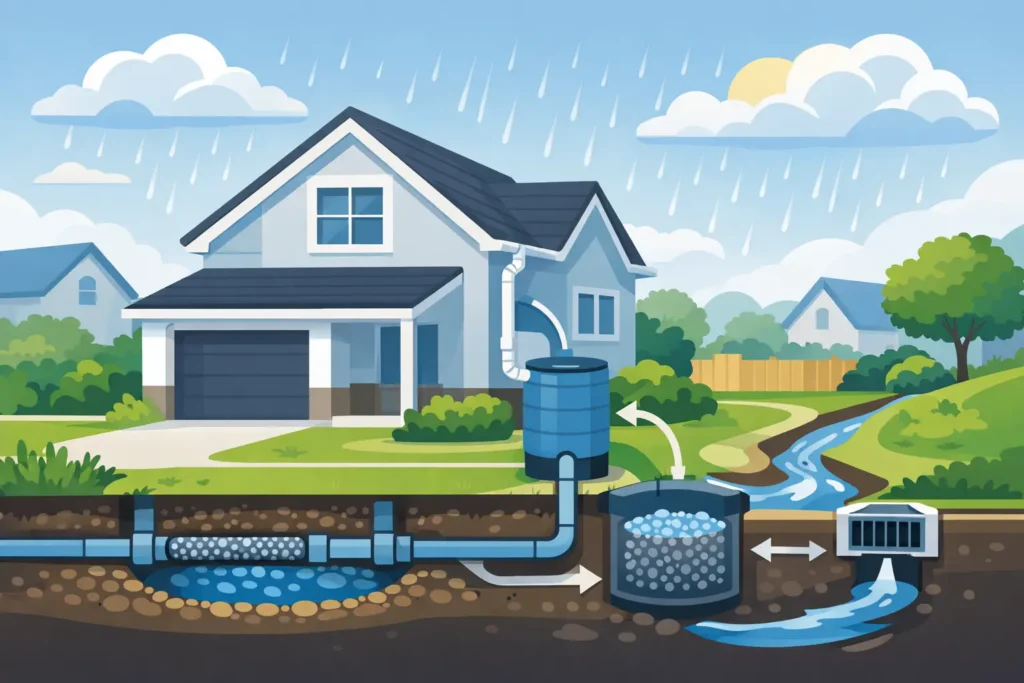
Whenever possible, place downspouts where extensions can direct water into a safe discharge area. That may be toward a lower part of the yard, a landscape drainage feature, or an approved underground drainage route. Avoid sending water across driveways and sidewalks where it can freeze in winter, or toward a neighbor’s property where it may create a separate problem.
Carry runoff away from the foundation
A downspout ending at the base of the wall is not a complete drainage plan. Extensions should carry water away from the home and release it where the ground slopes away. The exact distance depends on the grade, soil, landscaping, and local conditions, but the principle stays the same: do not let roof runoff collect beside the foundation.
Above-ground extensions are easy to inspect and clean, while buried drain lines can create a cleaner look and keep water away from traffic areas. Buried systems need careful installation, adequate slope, and an accessible cleanout. If a buried line clogs or freezes, the water still needs a safe place to go. In some yards, a visible extension is the more practical and lower-maintenance choice.
Check the Grade Around Your Home
Gutters manage roof runoff, but they cannot correct a yard that funnels water back toward the house. Soil should generally slope away from the foundation so surface water drains outward instead of pooling next to basement walls.
Look for low spots under downspouts, settled mulch beds, and hardscaping that directs water toward the home. A patio, driveway, or sidewalk can change how runoff behaves. Even a well-installed gutter system may struggle if a concrete surface redirects water to the same corner of the foundation after every storm.
Regrading can be a larger project, but small corrections sometimes make a meaningful difference. Filling a shallow depression, rebuilding a planting bed, or adjusting a downspout outlet can reduce repeated saturation near the home. For major grading, drainage easements, or connections to a municipal storm system, check local requirements before work begins.
Plan for Leaves, Ice, and Maintenance Access
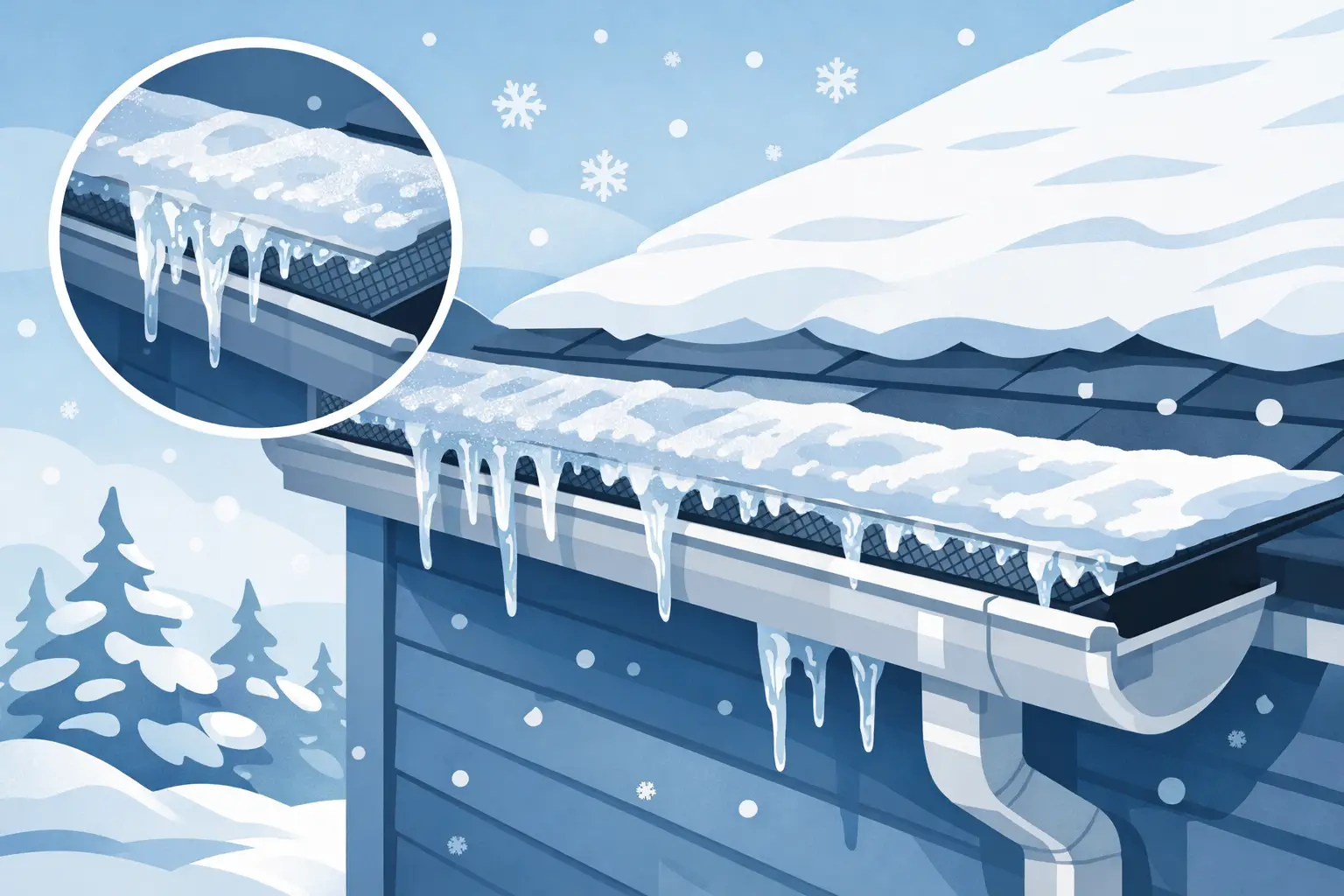
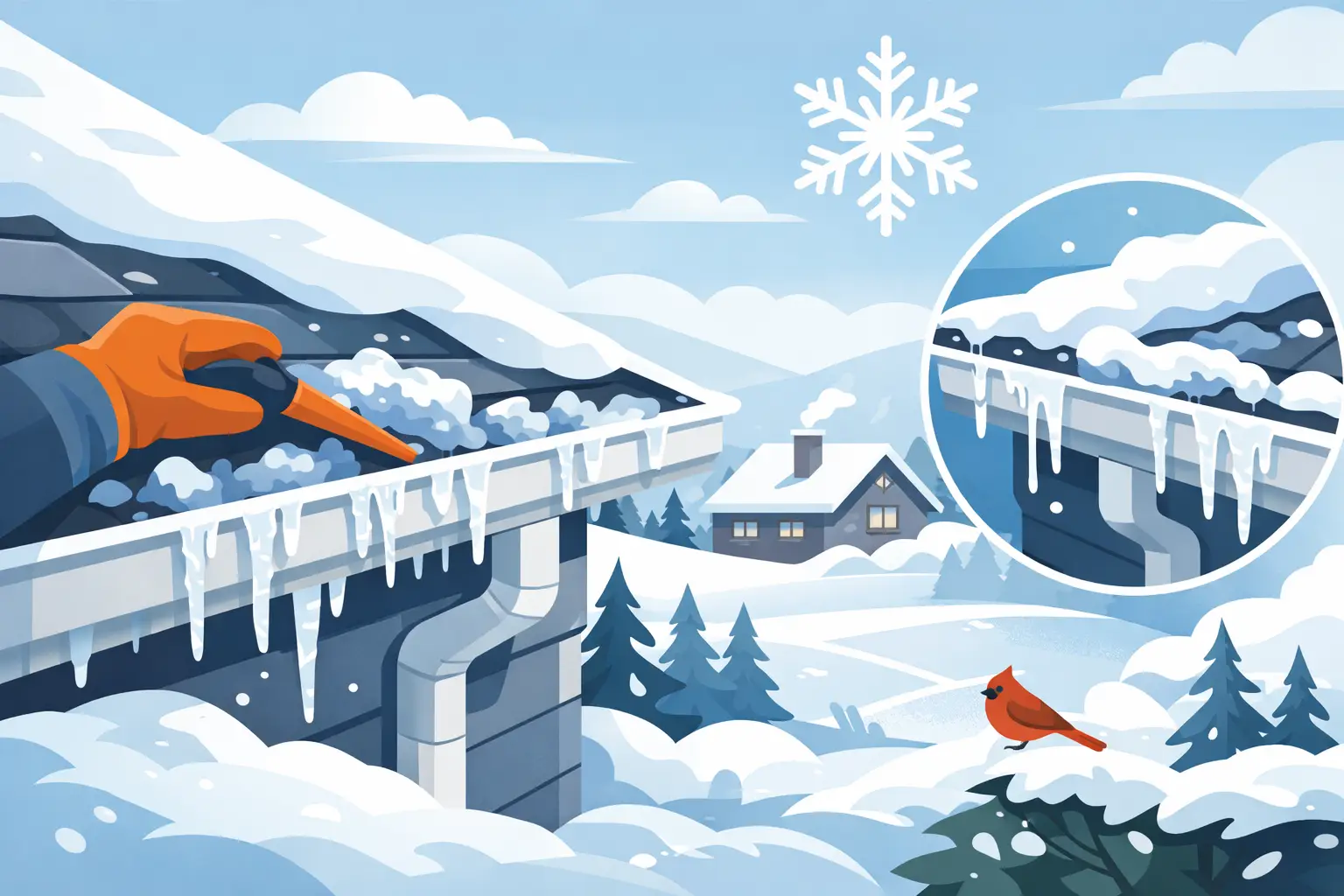
A drainage system is only reliable when water can enter and exit it. Leaves, seed pods, shingle grit, and nests can block gutter channels and downspout openings. In this region, fall leaf buildup followed by freezing temperatures can turn a small blockage into an ice-related drainage problem.
Gutter guards can reduce the amount of debris entering the system, but the guard design and installation quality matter. A continuous-hanger guard such as Double Pro by Alurex can add gutter support while helping keep debris out. It is a useful option for homeowners who want less routine cleaning, especially near mature trees, but no guard eliminates the need for periodic inspection. Debris can still collect on top of guards, and downspout outlets should remain clear.
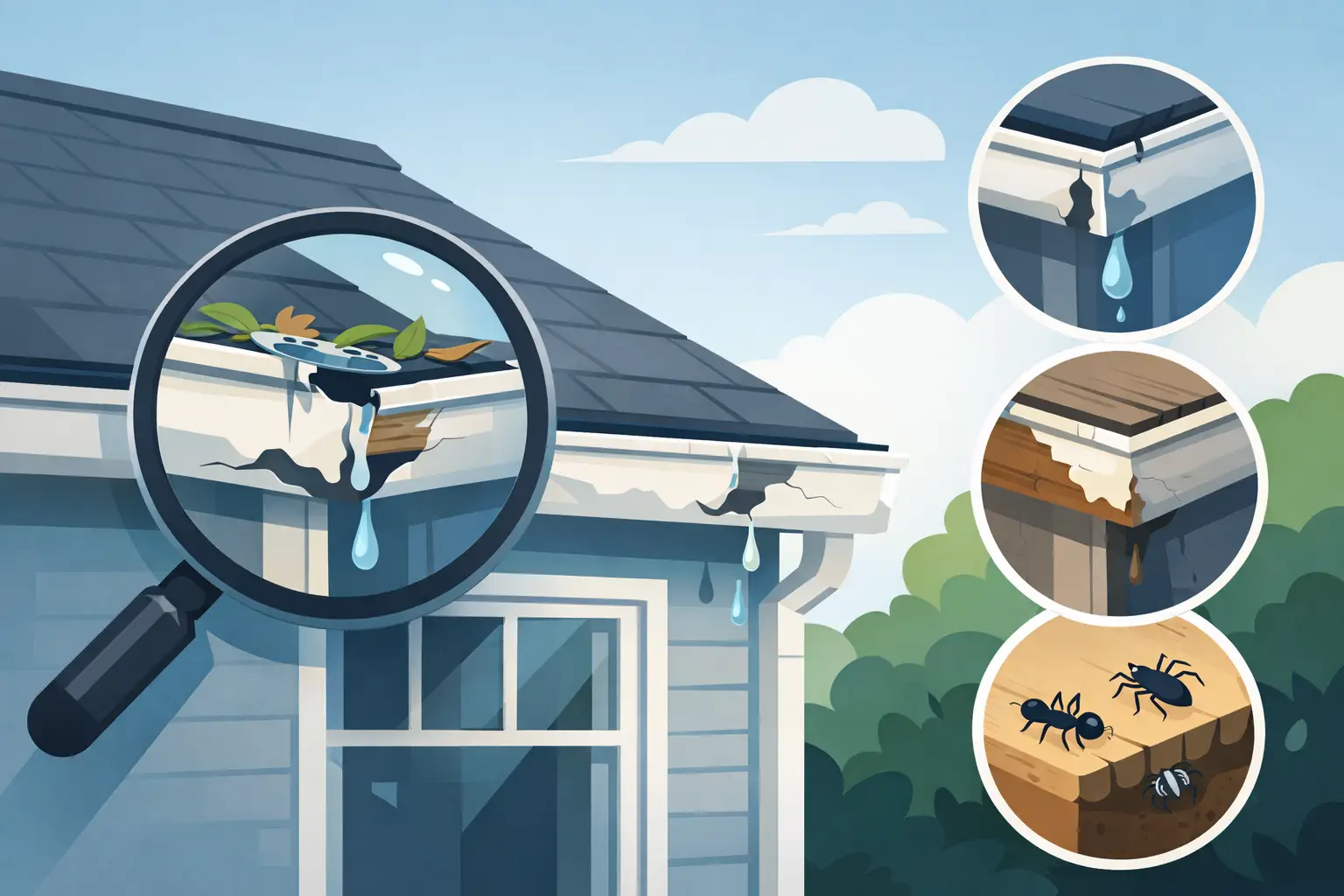
Schedule a visual check after major storms and at least seasonally. Watch for loose hangers, separated joints, sagging sections, overflowing corners, and water marks behind the gutter. Addressing these issues early is usually far easier than repairing damaged fascia, siding, or landscaping later.
Know When a Repair Is Enough and When It Is Not
Some drainage issues have a straightforward repair. A loose downspout, a leaking end cap, a damaged extension, or a localized pitch problem may be corrected without replacing the entire system. If the gutters are structurally sound and properly sized, targeted repairs can be the sensible choice.
Replacement becomes more reasonable when gutters repeatedly overflow despite cleaning, pull away from the fascia, have widespread leaking seams, or lack enough capacity for the roof. Homeowners should also consider replacement when they are already repairing roof edges, fascia boards, or siding damaged by chronic runoff. Fixing the water-management system at the same time helps protect the new work.
A detailed inspection should explain what is failing, why it is failing, and what each recommended repair or upgrade will accomplish. Be cautious with vague proposals that do not identify gutter size, downspout locations, drainage extensions, or the scope of any guard installation.
Questions to Ask Before Approving Drainage Work
A clear estimate makes it easier to compare solutions and avoid surprise charges. Ask how the installer determined gutter and downspout sizing, where downspouts will discharge, whether existing underground drains will be inspected, and how the system will be secured to the home.
It also helps to ask what maintenance the finished system will require. A homeowner with many trees may prioritize leaf protection and service access. A homeowner with a clean roofline but a wet basement may need to focus first on discharge routing and grading. The best solution depends on the actual water path around the property.
Seamless Gutter Solutions LLC provides free inspections and estimates with detailed, itemized quotes and no hidden fees, giving homeowners a straightforward way to understand their options before making a decision.
A well-planned drainage system should fade into the background after it is installed. When the next heavy storm arrives, water should move from roof to gutter to downspout and away from the house without demanding your attention. That quiet performance is one of the best protections you can give your home.