

A gutter system can look perfectly fine from the ground and still fail where it matters most – moving water away fast enough during a hard rain. That is exactly why a guide to sizing downspouts correctly matters. If the downspouts are too small, too few, or placed poorly, water backs up in the gutters, spills over the edge, and starts causing the kind of damage homeowners in Indiana and Ohio would rather avoid.
For most homes, downspout sizing is not just about matching whatever was there before. It should match the roof area, the gutter size, the number of corners and valleys feeding water into the system, and the rainfall intensity your home actually sees. A quick replacement with the wrong size can leave you with the same overflow problems you were trying to fix.
Why downspout sizing matters more than most homeowners think
When a gutter overflows, many people assume the gutter itself is the issue. Sometimes that is true. But often, the bottleneck is the downspout. Gutters can only perform as well as the outlets draining them.
A properly sized downspout keeps water moving instead of pooling. That protects fascia boards, soffits, siding, flower beds, walkways, and most importantly, the foundation. It also helps reduce standing water that can lead to erosion, basement moisture, and ice problems in winter.
Undersized downspouts create a chain reaction. Water slows down, debris settles more easily, clogs form faster, and the gutter system starts carrying more weight than it should. Over time, that can shorten the life of the entire installation.
Guide to sizing downspouts correctly for residential homes
The basic rule is simple: the larger the roof area draining into a gutter run, the more outlet capacity you need. That capacity comes from both the size of the downspout and the number of downspouts on the system.
On many homes, standard rectangular downspouts are either 2×3 inches or 3×4 inches. A 2×3 downspout is common on smaller or moderate roof sections. A 3×4 downspout handles significantly more water and is often the better choice on larger roofs, steeper rooflines, or homes with heavy runoff concentrated in one area.
Round downspouts are another option, but on most residential installations in this region, rectangular sizes are more common and easier to match with standard seamless gutter systems.
In practical terms, one small downspout may be enough for a short, simple gutter run on a modest roof section. But if that section collects water from a large slope, a steep pitch, or a roof valley, a larger downspout or an additional outlet may be necessary. That is where sizing stops being guesswork and starts becoming a system design decision.
Start with the roof drainage area
The first thing to calculate is how much roof area drains to each gutter section. This is the effective drainage area, not just the square footage of the house. A roof with multiple planes may send a surprising amount of water to one side.
For example, a long rear roof section with two valleys feeding into one gutter run will place much more demand on that run than a simple front eave of the same length. Valleys concentrate water quickly, especially during a hard storm. That is why homes with architectural rooflines often need more than a standard layout.
Roof pitch also matters. Steeper roofs shed water faster. Even if two homes have similar square footage, the one with a steeper roof can put more immediate demand on the gutter and downspout system during heavy rain.
Match the downspout to the gutter size
Downspout sizing should not be separated from gutter sizing. A larger gutter paired with an undersized outlet still creates a restriction. In many residential systems, 5-inch gutters are paired with 2×3 downspouts, while 6-inch gutters are often paired with 3×4 downspouts.
That does not mean every 5-inch gutter should automatically get a 2×3 downspout. On some homes, especially where one run handles a large section of roof, upgrading the outlet size can improve performance without changing every visible part of the system.
The right combination depends on water volume, not just appearance. A neat-looking system that cannot keep up in a storm is not really doing its job.
Do not ignore downspout placement
A guide to sizing downspouts correctly should also talk about placement, because size alone does not solve every drainage issue. If a gutter run is too long with only one outlet at the end, water may struggle to reach that point fast enough under heavy flow.
Adding a second downspout can sometimes be better than simply increasing the size of one existing downspout. Shorter travel distance inside the gutter means faster drainage and less chance of overflow at the high-volume areas.
This is especially important on long eaves, front porch sections, and rooflines where valleys dump water near the middle of the run. In those situations, a contractor may recommend redistributing outlets rather than just swapping one size for another.
Common signs your downspouts are undersized
Some problems show up well before obvious water damage. During a rainstorm, you may notice water shooting over the front edge of the gutter even though the gutter looks clean. That often points to drainage capacity problems rather than simple debris buildup.
You may also see water pooling near the foundation, mulch washing out repeatedly, or staining on siding near gutter ends. Another sign is when gutters stay full longer than expected after rain stops. Slow drainage can indicate that the outlets are not moving water efficiently enough.
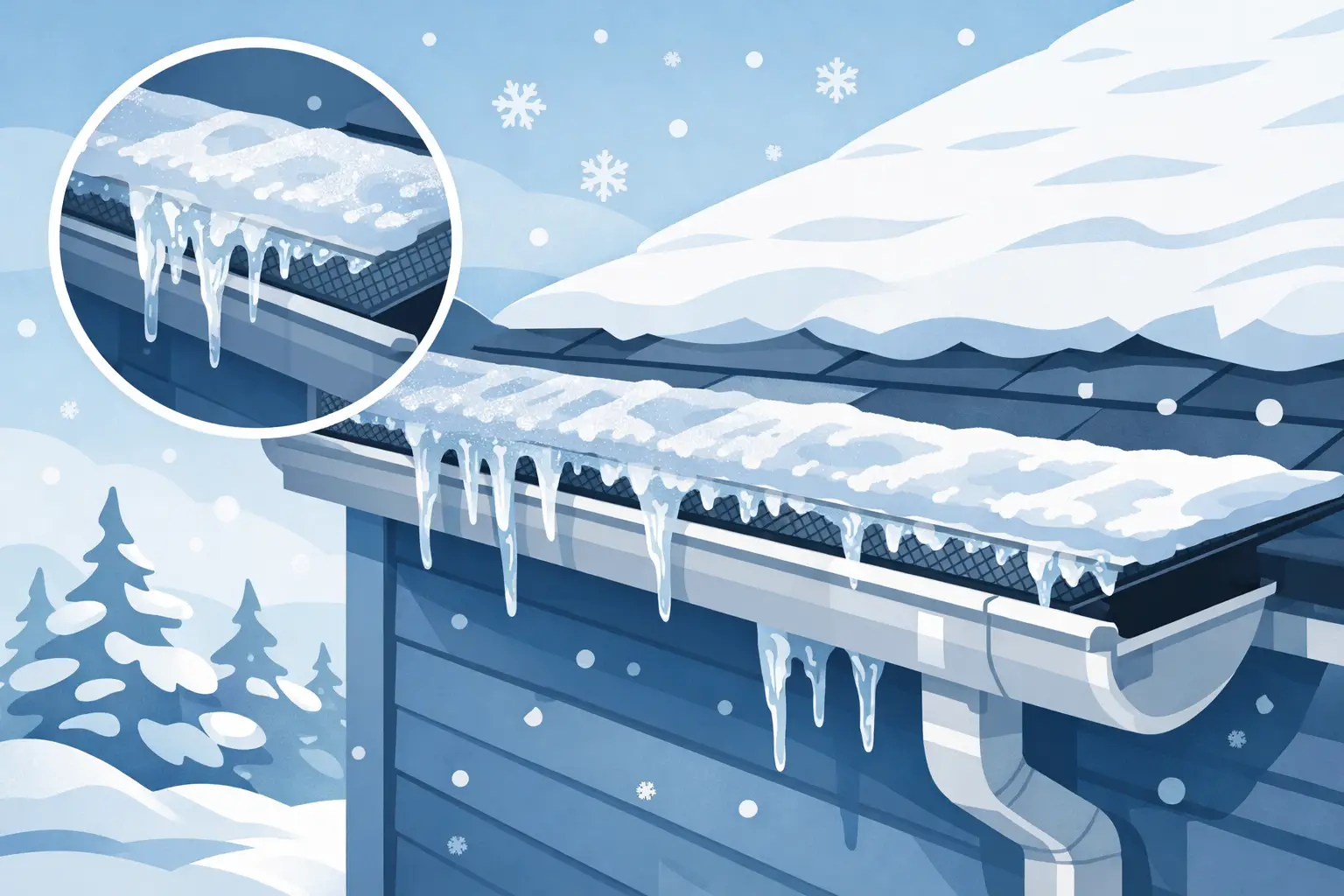
In winter, undersized or poorly placed downspouts can contribute to freeze-thaw issues. Water that lingers in the system is more likely to freeze, add weight, and stress hangers and joints.
Where sizing mistakes usually happen
One of the most common mistakes is assuming replacement means repeating the old layout. If the home has had overflow problems for years, copying the same size and placement usually copies the same problem.
Another mistake is sizing based only on linear feet of gutter. Gutter length matters, but the real issue is how much roof area drains into that length. A short section below a valley can need more capacity than a much longer section on a simple roof slope.
Debris protection also changes performance, but not in the way some homeowners expect. Premium gutter guards can reduce clogging and improve water flow consistency, but they do not make an undersized downspout suddenly adequate. Good protection helps the system work as designed. It does not replace correct sizing.
When bigger is better – and when it is not
There are plenty of cases where upgrading from 2×3 to 3×4 downspouts makes sense. Homes with 6-inch seamless gutters, large roof planes, steep pitches, or frequent overflow complaints often benefit from that increase. The larger opening handles more water and tends to clog less easily.
But bigger is not always the full answer. Oversizing one component without addressing slope, outlet placement, underground drainage limits, or clogging points may leave part of the problem in place. If the downspout drains into an undersized extension or a buried line with poor pitch, the restriction simply moves lower in the system.
That is why a professional inspection matters. The goal is not to sell the biggest parts possible. The goal is to build a balanced drainage system that performs in real weather.
What homeowners in Indiana and Ohio should keep in mind
Homes in this region see more than gentle summer showers. We get heavy thunderstorms, spring downpours, falling leaves, and winter freeze-thaw cycles. A system that barely handles average rain can struggle badly when weather shifts fast.
That makes correct sizing worth taking seriously, especially on older homes, larger ranch homes with long rooflines, and houses with additions that changed how water drains. What worked before a remodel or roof replacement may no longer be enough.
For homeowners who want fewer surprises, this is one of those details that pays off quietly. Correctly sized downspouts help protect the home without calling attention to themselves. That is exactly how a drainage system should work.
If you are seeing overflow, washout, or recurring drainage issues, it is worth having the whole system evaluated instead of replacing parts one for one. Seamless Gutter Solutions LLC approaches that process the way homeowners prefer – with a clear inspection, a detailed quote, and no hidden fees. When the sizing is right from the start, you are not just improving gutters. You are giving rainwater fewer chances to turn into an expensive problem.
The best time to find out your downspouts are too small is before the next hard storm does it for you.