
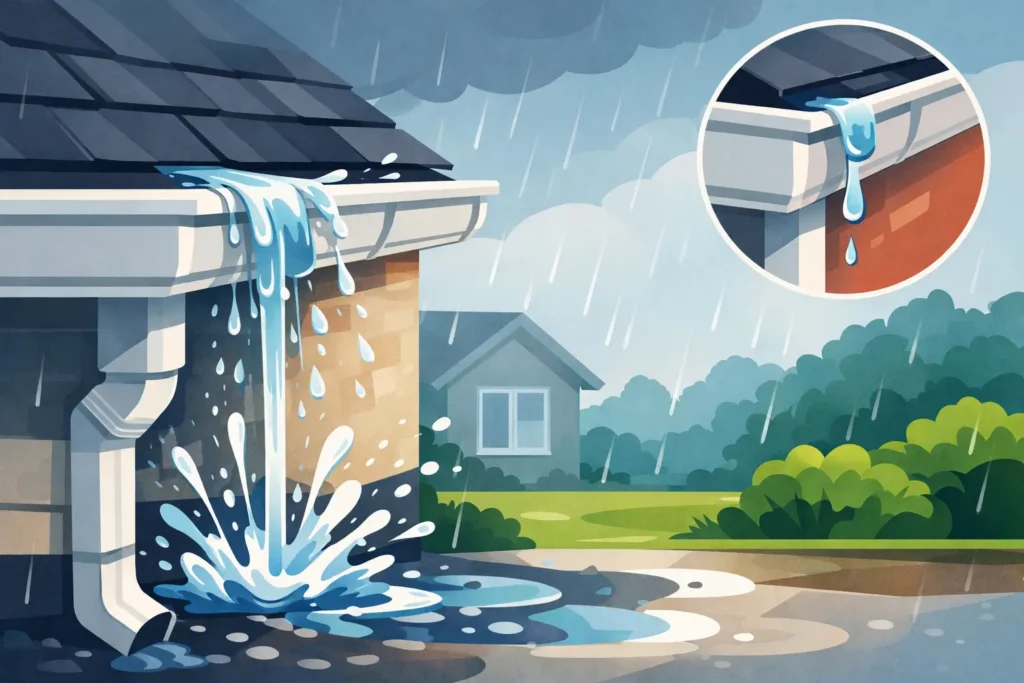
A hard rain should move water away from your home, not send it bouncing onto siding, flower beds, walkways, or the foundation. If you are wondering how to stop gutter splashback, start by identifying where the water is escaping. Splashback can come from overflowing gutters, a downspout that ends too close to the house, or rain striking the ground beneath the roof edge.
The right fix depends on the cause. A small adjustment to a downspout may solve one problem, while another home may need gutter repairs, improved grading, or a properly sized gutter system. Addressing it early helps protect the areas homeowners care about most: the foundation, siding, roof edge, and landscaping.
Find the source of the splashback first
Splashback is easy to notice during a storm, but the exact cause is not always obvious. When it is safe and dry, look for mud marks on siding, washed-out mulch, puddles near the foundation, eroded soil, or staining below a gutter run. These clues show where water is landing and how it is moving.
If water spills over the front or back of the gutter during rain, the issue is likely inside the gutter system. Leaves, roof grit, and shingle granules can create a blockage that prevents water from reaching the downspout. Gutters can also overflow when they are too small for the roof area, improperly pitched, or pulled away from the fascia.
If the gutter appears to drain normally but water still pounds the ground at the downspout outlet, the discharge point is the likely issue. A short downspout can concentrate hundreds of gallons of water in one small area during a heavy storm. That water hits the soil, splashes upward, and may then flow back toward the house.
Finally, look at the roof edge. On homes without gutters, or on roof sections where water runs past the gutter, rainfall can strike bare ground with enough force to scatter dirt onto siding and create trenches below the eaves.
How to stop gutter splashback from overflowing gutters
Overflow is not just a nuisance. Water spilling over a gutter can soak fascia boards, stain siding, damage soffits, and dump water directly beside the foundation. Cleaning may resolve the problem, but it is worth checking the full system rather than assuming debris is the only cause.
Start with a thorough gutter cleaning. Remove leaves, sticks, roof sediment, and anything blocking the downspout opening. Flush each run with a hose after cleaning. Water should move steadily to the outlet without pooling in the middle of the gutter or spilling over an edge.
If water pools, the gutter may have lost its proper slope. Gutters need a subtle pitch toward the downspout so gravity can do its job. Sagging sections, loose hangers, and separated seams can interfere with drainage even when the trough looks clean from the ground.
Also consider whether the gutter size matches the roof. A steep roof, a long gutter run, or a valley where two roof planes meet can send a concentrated rush of water into one area. In these situations, larger gutters, additional downspouts, or a redesigned drainage layout may be more reliable than repeated repairs.
Extend downspouts away from the foundation
A functioning gutter still creates splashback if the downspout releases water at the base of the wall. The discharge should carry water away from the foundation, not simply deposit it beside the house.
A downspout extension is often the most direct fix. It should guide water several feet away from the home and release it where the ground slopes away. The exact distance depends on the property, soil type, grading, and nearby walkways, but the goal is consistent: keep concentrated roof runoff from saturating the soil next to the foundation.
Rigid extensions are durable and provide a defined route for water. Flexible extensions can work around landscaping or temporary obstacles, though they may shift, crush, or collect debris if they are not secured. A buried drain can be a cleaner-looking option when designed with the correct slope and a safe place for water to exit. It should never send water toward a neighbor’s property or create an icy hazard on a driveway or sidewalk.
A splash block can help spread water at the outlet, but it is not always enough on its own. If the ground is flat or the area receives heavy runoff, water can still pool around the block and find its way back toward the home.
Repair the ground where water lands
Gutters and grading work together. Even a well-extended downspout cannot perform as intended if the surrounding soil slopes back toward the foundation.
Check the ground after a storm. Water should move away from the house rather than sit in a ring around it. Low spots, settled mulch beds, and compacted soil can trap runoff. Rebuilding the grade with appropriate fill and maintaining a gentle slope away from the foundation can reduce both splashback and standing water.
Landscaping can also soften the impact of discharged water. River rock, properly placed edging, and hardy plants can help stabilize soil in a drainage area. However, decorative rock is not a substitute for drainage. If a downspout dumps a heavy stream directly onto rock beside the house, the water may still splash against the siding or run toward the foundation.
Be careful with mulch directly below a downspout. It can wash away quickly, clog nearby drains, and leave bare soil exposed. If mulch repeatedly disappears after storms, solve the water-routing issue before replacing it again.
Check for roof-edge and installation issues
Some splashback starts above the gutter. Water may overshoot the trough if the gutter is installed too low, too far from the roof edge, or below a fast-moving valley. A bent drip edge can also allow water to run behind the gutter instead of into it.
Look for signs such as streaking behind the gutter, peeling paint on fascia, or a concentrated waterfall at one location. These are often installation or repair concerns, not problems that a downspout extension will fix.
Seamless gutters reduce the number of joints along a gutter run, which can reduce common leak points. Proper fastening and continuous support matter as much as the material itself. A gutter that twists, pulls loose, or sags under water weight will eventually send runoff where it does not belong.
Prevent clogs before they create more overflow
If trees surround your home, gutter cleaning can become a repeating chore. Leaves are not the only concern. Seed pods, pine needles, roof grit, and small nests can collect at outlets and slow drainage.
A quality gutter guard can reduce the amount of debris entering the system, but the product and installation method matter. Some guards can hold debris on top, while others may not perform well with certain roof types or heavy rainfall. A continuous-hanger system such as Double Pro by Alurex supports the gutter while helping keep larger debris out, making it a practical option for many homes that need both durability and lower maintenance.
Guards do not eliminate every maintenance need. Homeowners should still watch for debris buildup on top of the guard, check downspout outlets, and make sure water is moving correctly during heavy rain.
When a professional inspection makes sense
Call for help when splashback appears in several places, gutters overflow after cleaning, sections are loose, or water is reaching the foundation. These issues may point to a system that needs more than a quick adjustment.
A professional inspection can identify incorrect pitch, undersized gutters, missing downspouts, damaged fascia, drainage trouble, and hidden clogs. It also helps separate a minor repair from a larger installation decision, so you are not paying for work that does not solve the real problem.
For homeowners in Eastern Indiana and Western Ohio, Seamless Gutter Solutions LLC provides free inspections and detailed, itemized estimates with no hidden fees. That gives you a clear picture of what is causing the splashback and what it will take to correct it.
The next time rain hits the roof, take a look from a safe spot after the storm passes. A dry foundation area, stable landscaping, and water moving away from the house are the signs that your gutter system is doing the job it was installed to do.