
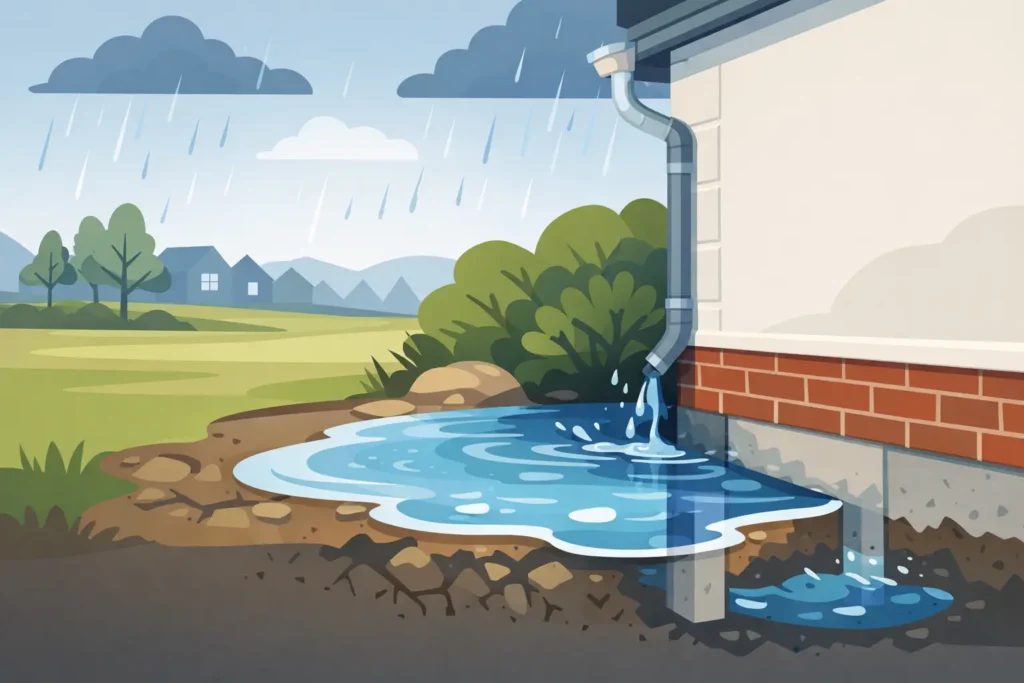
A puddle sitting next to your house a day or two after rain is not just an eyesore. If you are wondering why water pools near foundation areas, the short answer is that rainwater is not being moved away from the home fast enough. That can point to a gutter problem, a grading problem, a drainage problem, or a combination of all three.
For homeowners in Eastern Indiana and Western Ohio, this issue shows up a lot after heavy spring rains, summer storms, and freeze-thaw cycles that slowly change how water moves across a yard. The good news is that pooling water usually leaves clues. Once you know what to look for, the right fix becomes much clearer.
Why water pools near foundation spots in the first place
Water always follows the easiest path. Around your home, that path should lead away from the foundation. When it does not, water collects in the low areas beside the house instead.
Sometimes the cause is obvious, like a downspout dumping water right at the base of a wall. Other times it is more gradual. Soil settles over the years, mulch gets piled too high, flower beds trap runoff, or a gutter starts overflowing only during the hardest rain. Homeowners often notice the puddle before they notice the source.
That is why a proper diagnosis matters. Pooling near a foundation is rarely about one isolated puddle. It is usually a sign that your drainage system is falling short somewhere.
The most common causes of water pooling near a foundation
Clogged or overflowing gutters
This is one of the biggest causes. Gutters are supposed to catch roof runoff and channel it to downspouts. When they are clogged with leaves, shingle grit, or debris, water spills over the sides and drops straight down next to the home.
That repeated overflow can saturate the soil near the foundation, wear out mulch beds, and create a low trench where even more water starts collecting. In a hard rain, even a partial clog can cause a surprising amount of runoff to land where it should not.
Downspouts that end too close to the house
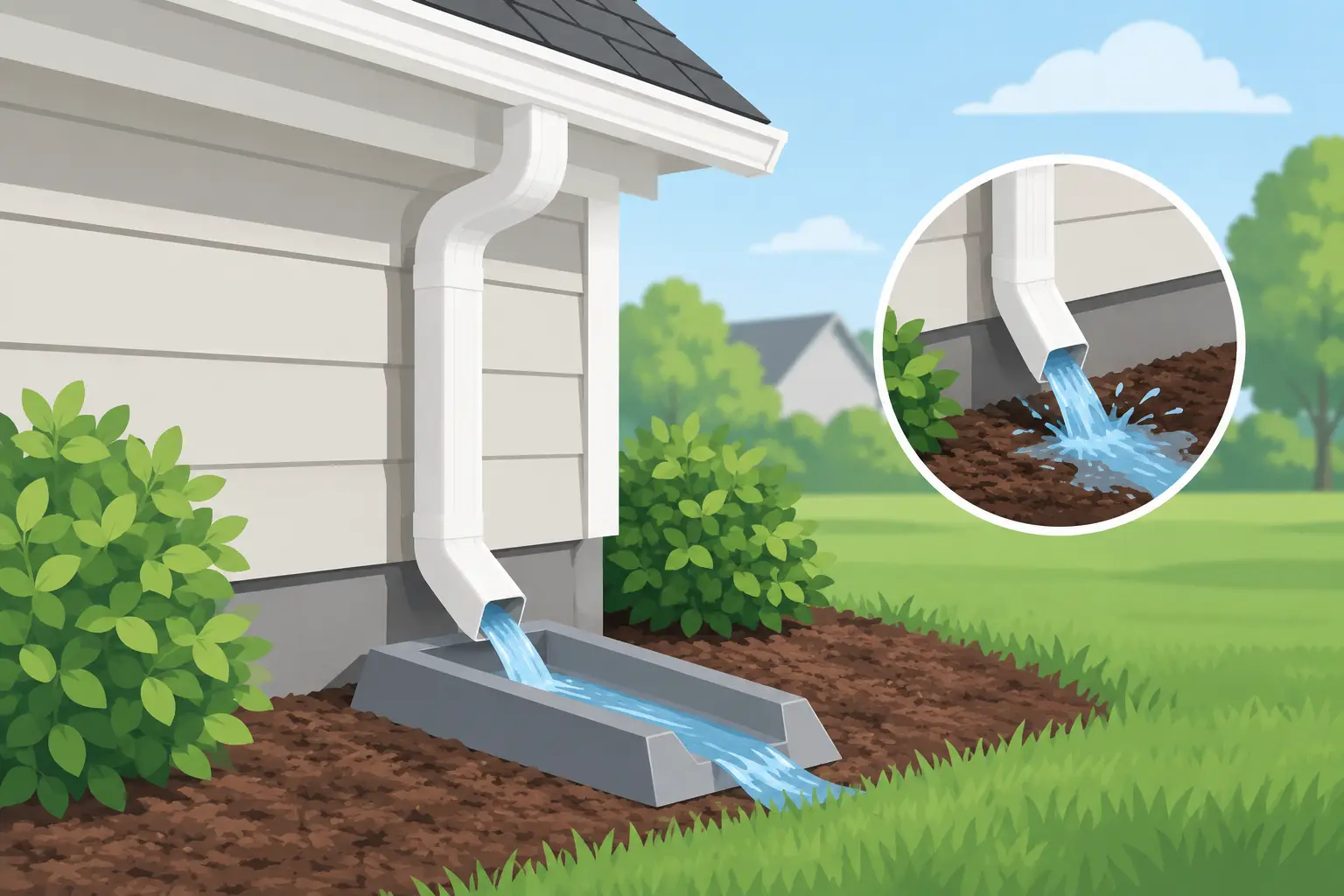
A working gutter system still needs a place to send the water. If your downspouts discharge only a foot or two from the house, that may not be enough distance, especially if your yard has slow-draining soil or a flat grade.
This is common on homes where splash blocks have shifted, extensions were never added, or old drainage pieces came loose over time. The gutter may be doing its job, but the water is still ending up in the wrong place.
Poor grading around the home
Your yard should slope away from the house, not toward it. Even a slight reverse slope can push water back toward the foundation.
This often happens after years of settling. Soil around the perimeter compacts and drops. Landscaping projects can also create problems if beds are built up in ways that trap water against the home. A yard can look fine at a glance and still have just enough slope in the wrong direction to create standing water.
Compacted or slow-draining soil
Not all soil handles rain the same way. Clay-heavy soil, which is common in many Midwestern areas, drains slowly. That means water can sit near the foundation longer, even if the gutter system is partly working.
This is one of those situations where the fix depends on the full picture. Slow soil alone may not cause trouble if grading and runoff control are solid. But pair slow soil with overflowing gutters or short downspouts, and pooling becomes much more likely.
Buried drainage issues
Some homes have underground drain lines connected to downspouts. When those lines clog, collapse, or freeze, water backs up and surfaces near the house.
This can be tricky because the problem is not always visible until a heavy storm. You may see one area of pooling and assume the grade is the issue, when the real problem is a blocked drain line below ground.
What makes this more serious than a puddle
Standing water near your foundation can lead to several problems, and some are expensive if they are ignored too long.
The first concern is foundation stress. Water soaking the soil around your home can cause expansion and movement. Over time, that may contribute to cracks, settling, or basement and crawl space moisture issues. Not every puddle means structural damage is happening today, but repeated saturation is not something to shrug off.
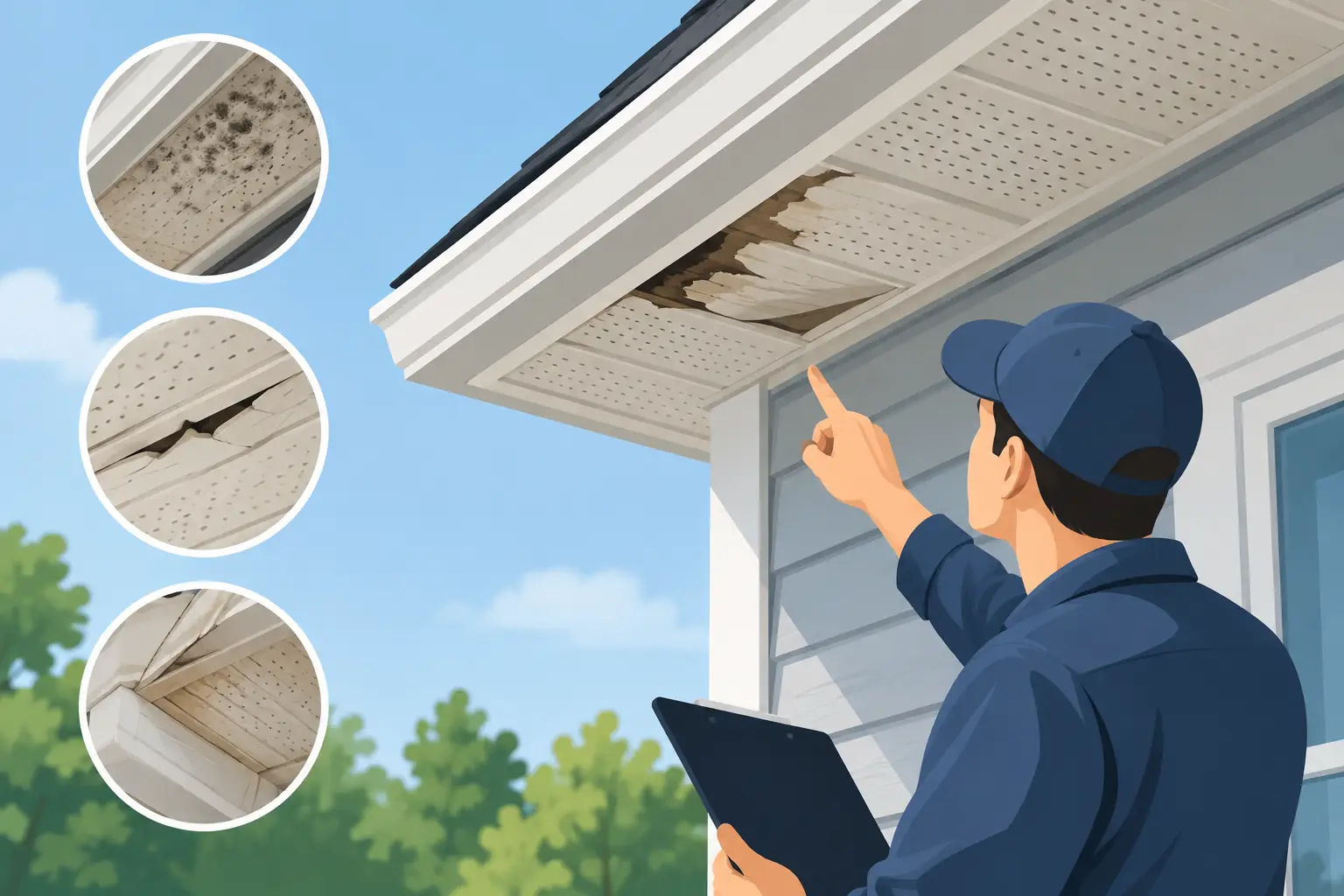
The second issue is surface damage. Splashback from overflowing gutters can stain siding, erode landscaping, and create muddy areas that are hard to maintain. Water can also work its way into small openings around the base of the home.
Then there is the maintenance cycle. Once water starts carving out low spots near the house, each storm tends to make the problem worse. The puddle gets deeper, the soil gets softer, and runoff becomes even harder to control.
Signs your gutter system may be part of the problem
If you want to know why water pools near foundation lines on your property, start by watching your home during rain. You do not need a full inspection checklist to spot some common red flags.
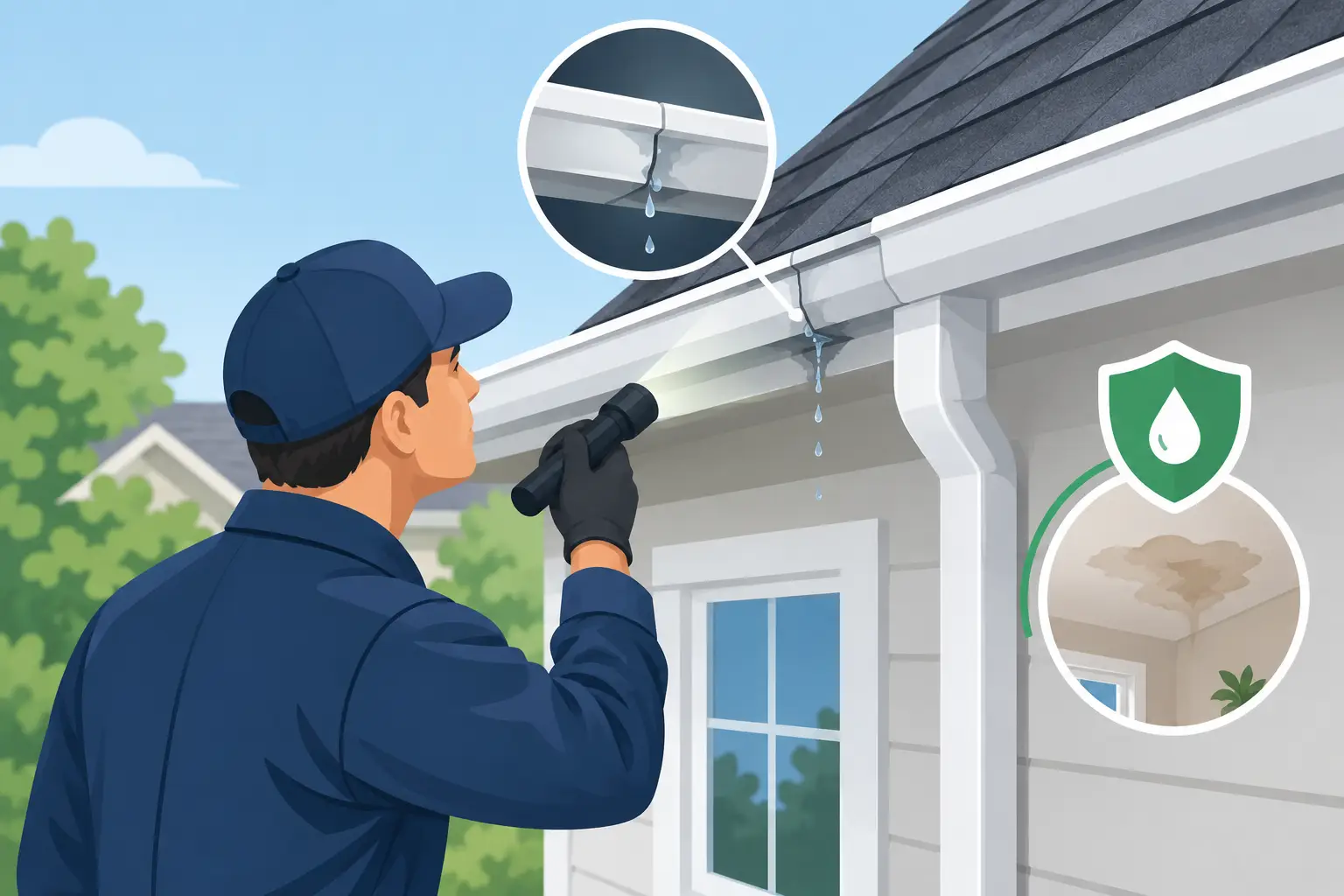
Look for water running over the front edge of gutters, dripping from seams, or pouring behind the gutter against the fascia. Check whether downspouts are carrying water away or just dumping it beside the home. After the storm, look for washed-out mulch, trenching below roof edges, or damp soil concentrated in one section.
You may also notice sagging gutters or sections that hold water. That can mean the pitch is off, the hangers are failing, or debris buildup is slowing the flow. A gutter system does not have to be completely broken to create drainage trouble.
Fixes that actually address the cause
The right solution depends on what is creating the pooling. That is why a one-size-fits-all answer usually falls short.
If the gutters are clogged, professional cleaning may be enough to restore proper flow. If the gutters are undersized, damaged, or pulling away from the home, repair or replacement may be the better long-term move. Seamless gutter systems can help reduce leak points, and premium leaf protection can cut down on the recurring debris problems that often lead to overflow.
If downspouts are the issue, extensions or drainage routing may be needed to move water farther from the foundation. If grading is wrong, adding soil and reshaping the slope can help. In some yards, a French drain or another drainage upgrade makes sense. In others, the simpler fix is improving gutter performance first and seeing whether that solves most of the issue.
That trade-off matters. Homeowners sometimes jump to expensive drainage work before checking whether a failing gutter system is the real source of the problem.
When the problem is seasonal and when it is not
Some pooling happens only during extreme storms or when the ground is frozen and cannot absorb much water. That does not always mean your home has a major drainage defect.
But if you see standing water after average rainfall, or the same area stays wet long after the rest of the yard dries out, that is more concerning. Recurring patterns usually mean something in the system is not functioning the way it should.
This is especially worth paying attention to if you have a basement, crawl space, visible foundation cracks, or older gutters that have not been inspected in years. Small water-management problems tend to stay small only when they are addressed early.
What homeowners should do next
Start simple. Check the gutters and downspouts during the next rain, and pay attention to where water lands once it leaves the roof. Walk the perimeter of the home and look for low spots, erosion, and places where mulch or soil has built up against the siding.
If the cause is obvious, you may have a straightforward fix. If it is not, a professional inspection can save time and guesswork. A good inspection should explain where the water is coming from, what is failing, and what needs to happen first, without vague recommendations or surprise charges later.
For homeowners around Richmond and the surrounding service area, that kind of clarity matters. If you need a local team to take a close look at drainage around your home, Seamless Gutter Solutions LLC provides inspections and estimates with clear, itemized recommendations.
Water near your foundation is easiest to fix when it is still just a drainage problem, not a repair bill.