

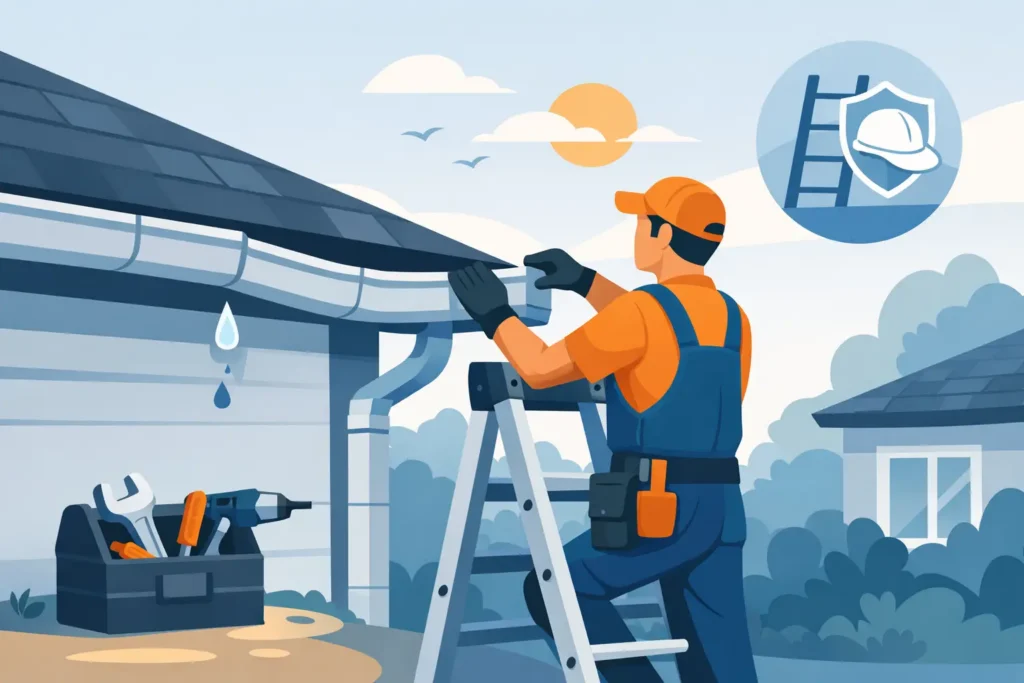
A gutter that pulls away from the fascia rarely stays a small problem for long. Once it starts sagging, water stops flowing the way it should, and that can mean overflow near the foundation, soaked flower beds, stained siding, and added stress on the roof edge. If you are wondering how to fix sagging gutters safely, the first step is knowing whether you are dealing with a simple hanger issue or a larger system failure.
Why gutters start to sag in the first place
Most sagging gutters do not happen because of one bad storm alone. More often, the system has been under stress for a while. Wet debris gets heavy, standing water adds more weight, and loose fasteners slowly pull away from the wood behind the gutter.
In some homes, the issue is age. Older spike-and-ferrule systems can loosen over time, especially after repeated freeze-thaw cycles. In other cases, the gutter pitch was never quite right to begin with, so water sits in sections instead of draining toward the downspout. That standing water adds weight and exposes weak points faster.
The fascia matters too. If the board behind the gutter is rotted or split, new screws alone will not solve the problem. You may tighten the gutter today and watch it pull loose again after the next hard rain.
How to tell if this is a safe DIY repair
Some sagging gutter repairs are manageable for a careful homeowner. Some are not. The difference usually comes down to height, structural condition, and how widespread the failure is.
A short section on a one-story home, with solid fascia and only a few loose hangers, may be a reasonable repair if you have a stable ladder and the right tools. A long run on a two-story home is a different story. If the gutter is twisting, separating at seams, or hanging by a few fasteners, the risk goes up quickly.
You should also pause if you see rot, insect damage, soft wood, roof edge problems, or downspouts that appear to be pulling the whole system out of line. At that point, fixing the sag is less about tightening hardware and more about restoring the support behind it.
Safety comes first
Before you do anything, set up the job so you are not rushing on a ladder. Sagging gutters are often repaired overhead, with awkward arm positions and shifting weight. That is where small mistakes turn into injuries.
Use a sturdy extension ladder on level ground, and make sure it extends above the roof edge enough for stable access. Do not lean far to one side. Move the ladder as needed. Wear gloves because gutter edges and hidden screws can be sharp, and use eye protection if you are drilling out old hardware or clearing compacted debris.
If the section is above a porch roof, over uneven landscaping, or near power lines, stop there. That repair is not worth the gamble.
Tools and materials you may need
The exact repair depends on the gutter style, but most homeowners use a ladder, work gloves, a drill or impact driver, replacement hidden hangers or gutter brackets, exterior-grade screws, a level, and a garden hose for testing. You may also need sealant if seams have opened up and a pry bar if old hardware is damaged.
The key is using hardware designed for gutters, not a random screw from the garage. The support system has to carry water weight, debris load, and weather stress over time.
How to fix sagging gutters safely step by step
Start by cleaning the section
Do not try to realign a gutter that is still packed with leaves, mud, and standing water. Remove debris first so you can see the actual condition of the trough, hangers, and fascia. This also reduces weight while you work.
Once the section is clear, flush it lightly with a hose. Watch whether the water drains or pools. Pooling often points to a pitch problem, not just loose hardware.
Inspect the hangers and fasteners
Look closely at what is actually failing. Hidden hangers may be bent, spaced too far apart, or pulled loose. Older spike-and-ferrule systems may have nails backing out. If only one or two supports are loose and the surrounding gutter is still straight, replacing those hangers may solve the issue.
If several hangers have failed, or if the gutter metal is warped, plan for a more extensive repair. One new bracket will not correct a section that has been carrying too much weight for too long.
Check the fascia before reinstalling anything
This is where many quick fixes go wrong. If the wood behind the gutter feels soft, crumbles at the screw hole, or shows dark staining, the support surface may be compromised. New screws driven into bad wood do not create a reliable repair.
If the fascia is damaged, it needs to be repaired or replaced before the gutter can be properly secured. That adds time and cost, but it is the difference between a lasting fix and another service call after the next storm.
Re-establish the correct pitch
A gutter should slope slightly toward the downspout so water moves instead of sitting still. The drop is subtle, but it matters. If you are reinstalling hangers, use a level to confirm the run has the right direction and a consistent slope.
This is one of those it-depends moments. If the sag was caused by a single failed support, the original pitch may still be fine. If water has been pooling for months, the whole run may need to be adjusted.
Install new supports the right way
Replace damaged hangers with compatible, heavy-duty hardware and secure them into solid wood. Space them appropriately for the gutter system and local weather exposure. If snow, ice, or heavy leaf load is common, stronger support and closer spacing may make sense.
Tighten enough to hold the gutter firmly, but do not overdrive screws and distort the metal. A gutter that is squeezed out of shape can still drain poorly even if it looks attached.
Test with water
After the section is secured, run water through it with a hose. Watch for low spots, overflow, leaks at seams, and slow drainage at the downspout. This test tells you whether you fixed the support issue only or corrected the drainage problem too.
If water still stands in the gutter, you likely need further adjustment or a more complete repair.
When sagging gutters point to a bigger problem
Not every sagging gutter should be repaired in place. Sometimes the gutter has reached the point where replacement makes more sense than repeated patchwork. That is especially true if the system has multiple seams, recurring leaks, bent sections, or chronic clogging.
Seamless gutters often outperform older sectional systems because they have fewer joints and a cleaner, stronger run. If your current gutters are aging out, replacing a failing section may cost less in the long run than chasing one problem after another.
Leaf buildup is another common cause of sagging. If debris is constantly trapping water and adding weight, the repair should include a long-term plan to reduce clogs. Otherwise, the same stress returns. For many homeowners, that means pairing repair work with professional cleaning or a quality gutter protection system.
Signs it is time to call a professional
If the gutter is more than slightly loose, if the fascia is damaged, or if the run is on a second story, professional help is the safer call. The same goes for gutters that have pulled away in multiple places or are separating from the roofline.
A good contractor should be able to tell you clearly whether the issue is a minor repair, a drainage design problem, or a sign that the system needs replacement. You should also expect a detailed estimate, not a vague number scribbled on the spot.
For homeowners in Eastern Indiana and Western Ohio, the best repair decisions usually come from an inspection that looks beyond the visible sag. A trustworthy company will explain what failed, what can be repaired, and what is not worth spending money on.
Preventing the next sag
Once the gutter is secure again, regular maintenance matters. Clean gutters before debris becomes packed and waterlogged. Watch for fasteners loosening after heavy weather. Check that downspouts are clear and moving water away from the house.
If you are tired of dealing with repeated clogs and weight buildup, this is where an upgrade can pay off. Seamless Gutter Solutions LLC often works with homeowners who are done with temporary fixes and want a setup that protects the home with less guesswork and no surprise costs.
A sagging gutter is easy to ignore until the water starts showing up where it should not. Fix it carefully, fix the real cause, and your home stays protected where it counts most.