

A heavy rain should leave your roof, gutters, and yard looking ordinary again within a few hours. If water is still spilling over gutter edges, pooling beside the foundation, or cutting channels through mulch, your drainage system needs attention. Knowing how to inspect roof drainage helps you catch small problems before they turn into damaged siding, washed-out landscaping, basement moisture, or foundation concerns.
For homeowners in Eastern Indiana and Western Ohio, drainage inspections are especially worthwhile after spring storms, leaf season, and freeze-thaw weather. You do not need to climb onto a roof to notice most warning signs. A careful ground-level inspection, combined with a safe look at the gutter system, can tell you when cleaning, repair, or a professional inspection is the right next step.
Start With Safety and the Right Conditions
The best time to inspect drainage is shortly after a steady rain, when water is actively moving through the system. That is when overflow, leaks, and poor downspout discharge are easiest to see. If rain is not in the forecast, a garden hose can help test one gutter section at a time.
Stay on the ground whenever possible. Wet roofs, ladders, and slick walkways create unnecessary risk. If you use a ladder to look inside an accessible gutter, place it on firm, level ground, have someone nearby, and avoid leaning over the roof edge. A professional should handle inspections involving steep roofs, loose gutters, high rooflines, or suspected structural damage.
Bring a flashlight, work gloves, and your phone for photos. Photos are useful because they document where water is escaping or where the ground is staying saturated. They also make it easier to explain the issue if you request a repair estimate.
How to Inspect Roof Drainage From the Ground
Begin by walking around the entire home. Look up at the roof edge, then look down at the ground below it. Roof drainage is a connected system: water has to leave the roof, enter the gutters, travel through downspouts, and discharge far enough away from the home. A problem at any point can send water where it does not belong.
Check the roof edge and gutter line
Look for visible debris along the roof edge or inside the gutters. Leaves, maple seeds, shingle grit, twigs, and nesting material can interrupt water flow. Even a partial clog can make water rise and spill over the front or back of a gutter during a hard rain.
Also look for gutters that appear uneven. Gutters should have a subtle slope toward the downspout. A section that sags, pulls away from the fascia, or holds standing water after rain may have loose hangers, an improper pitch, or damage from ice and debris weight. Water sitting in gutters does more than attract debris. Over time, it can contribute to leaks, corrosion, and fascia board damage.
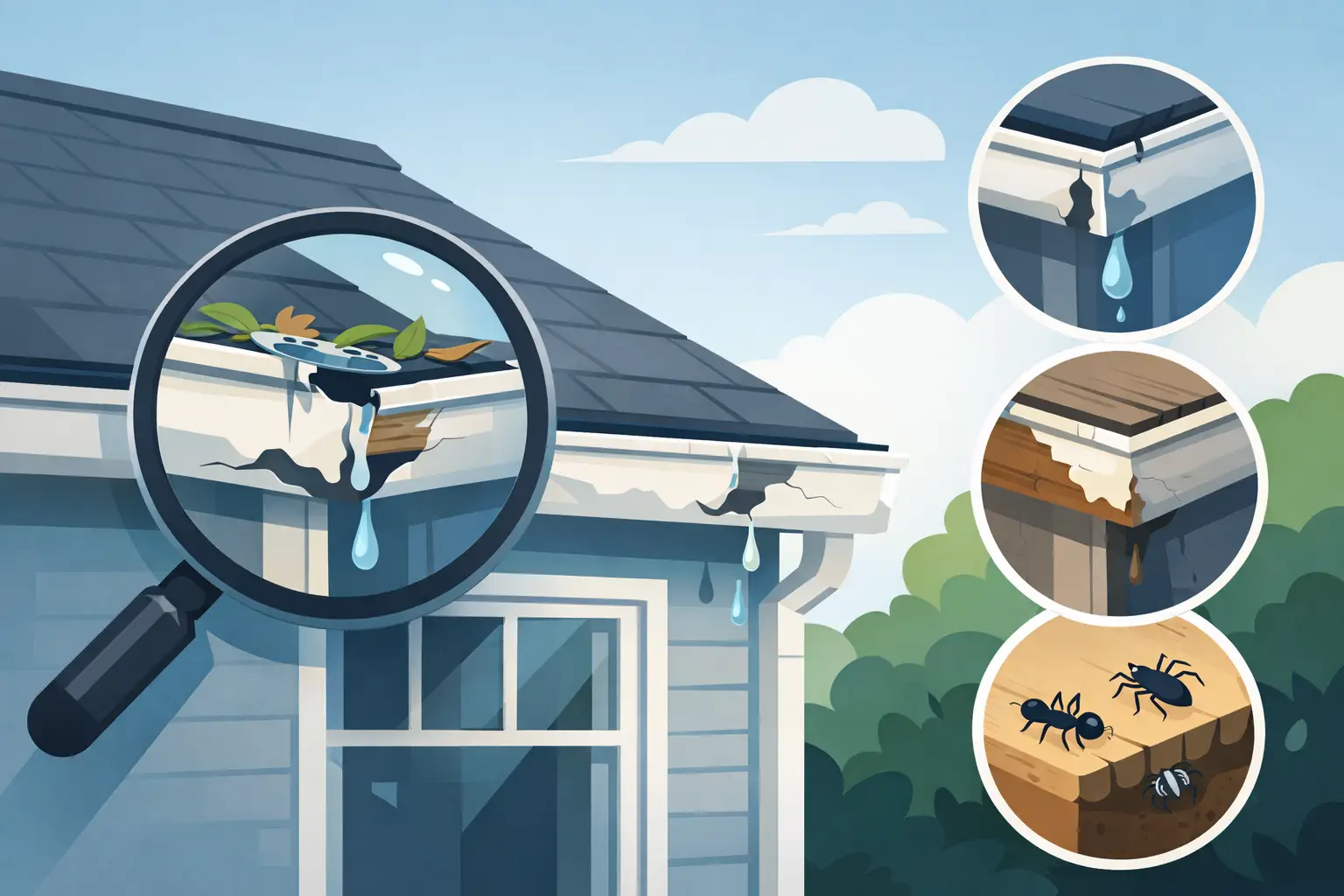
Pay close attention to corners, seams, and end caps. Drips beneath these points often signal a failed seal or a separated section. Seamless gutters reduce the number of joints along a run, but every system still has corners, outlets, and end caps that should be checked.
Watch for overflow patterns
During rain, take a few minutes to observe where water goes. Overflow from the front edge of a gutter usually points to a blockage, undersized gutters, or water moving too quickly into the system. Overflow behind the gutter can be more concerning because water may be running against the fascia and siding rather than into the channel.
One overflowing section does not always mean the entire system needs replacement. It may only need cleaning or a localized repair. However, repeated overflow along multiple rooflines can mean the system is poorly pitched, undersized for the roof area, or not equipped to handle the way water concentrates in certain valleys.
Look at roof valleys as well. Valleys collect runoff from two roof planes and can release a large volume of water into one short gutter section. If a valley consistently overwhelms a gutter during ordinary storms, that area may need a drainage design adjustment instead of another routine cleaning.
Inspect downspouts and discharge areas
Downspouts are where many drainage inspections reveal the real issue. Check that each downspout is securely attached, free of dents or crushed sections, and directing water away from the home. If water is streaming from a seam midway down the downspout, there may be a clog below that point or a loose connection.
At the bottom, water should discharge onto a stable surface and move away from the foundation. A downspout ending directly beside the house can saturate soil near the basement or crawl space. In most situations, extensions should carry water several feet away from the foundation, though the ideal distance depends on lot grading, soil conditions, walkways, and nearby landscaping.
Look for puddles, soft soil, eroded mulch, exposed roots, or stained concrete near discharge points. These are signs that runoff is landing too hard or staying too close to the home. If an extension is crushed, disconnected, buried, or pointed uphill, it cannot do its job.
Look for Evidence of Water Damage
Not every drainage issue is visible while it is raining. Dry-weather clues often reveal a pattern that has been developing for months or years.
Walk the exterior and inspect for peeling paint, dark streaks on siding, water stains beneath gutters, rotting trim, or mildew near roof edges. These signs can result from gutter overflow or leaks that repeatedly wet the same area. Brick and stone may show white mineral deposits, while wood siding can show swollen or softened sections.
At ground level, look for settled soil beside the foundation, cracks in landscape borders, or mulch repeatedly washed away from the same bed. Water should not carve trenches through your yard after every storm. If it does, the system may be directing runoff into one concentrated area without enough control.
Inside the home, be alert for damp basement walls, musty odors, unexplained moisture near lower-level windows, or water stains on ceilings near exterior walls. These symptoms do not automatically mean gutters are the cause, but drainage should be part of the investigation. Water problems often have more than one source, and addressing the most obvious symptom without checking the flow path can leave the underlying issue unresolved.
Test the System With a Hose
A hose test is useful when you want a closer look without waiting for rain. Start at the far end of a gutter run, away from the downspout, and let water flow at a moderate rate. Do not blast water under shingles or use pressure that is stronger than a normal storm.
Watch whether the water moves steadily toward the downspout. If it backs up quickly, the gutter may be clogged or pitched incorrectly. If it leaks at a seam, corner, or outlet, mark that location for repair. Then check the bottom of the downspout to confirm water exits freely.
Test one section at a time. A long gutter run may seem to drain during a light hose test but still overflow in a downpour, especially below a roof valley. This is why observing the system during actual rain remains valuable.
Know When Cleaning Is Enough and When It Is Not
Cleaning can solve problems caused by leaves, seed pods, shingle grit, and small debris. It should restore normal water flow when the gutters are properly attached, correctly sloped, and free of damage. If your gutters clog every season, cleaning may be necessary more often than you expect, particularly around mature trees.
Repair is more appropriate when you see loose hangers, separated seams, leaking corners, damaged downspouts, sagging runs, or sections pulling away from the fascia. These problems rarely improve on their own. Waiting can allow water to reach the wood behind the gutter, which adds cost and complexity to what could have been a straightforward fix.
Replacement or an upgrade may make more sense when the system has widespread leaks, repeated overflow, incorrect sizing, or extensive wear. Homeowners who are tired of frequent clogs may also benefit from a properly installed leaf protection system. A continuous-hanger guard, such as Double Pro by Alurex, can help keep debris out while reinforcing the gutter line. It still deserves periodic visual checks, because no exterior drainage system is completely maintenance-free.
Set a Practical Inspection Schedule
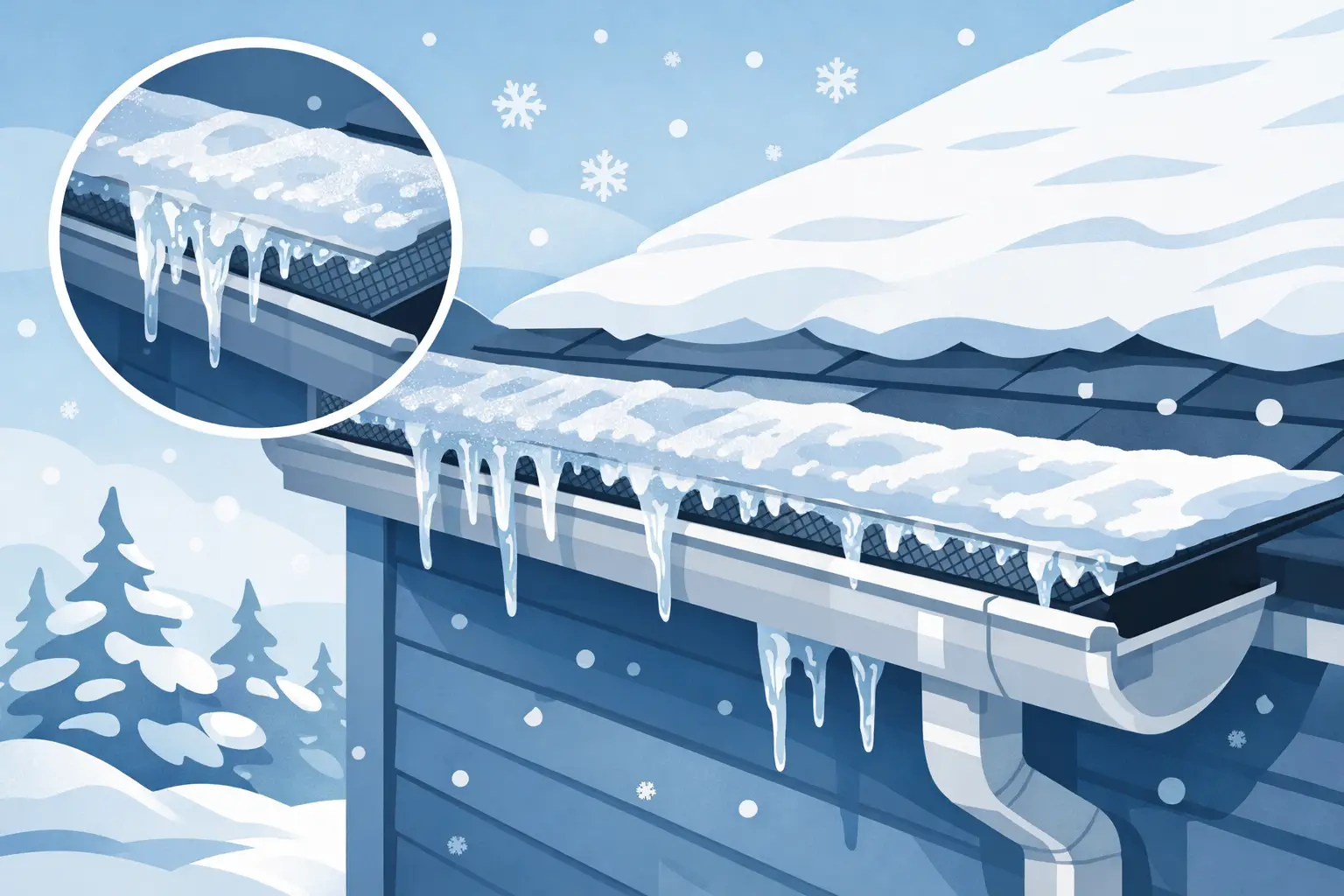
For most homes, inspect roof drainage at least twice a year: once in spring and once after most leaves have fallen. Add an inspection after severe windstorms, heavy snowfall, ice events, or any time you notice overflow near the home.
Older homes, houses surrounded by trees, and properties with complex rooflines often need more frequent attention. So do homes with finished basements, low-lying yards, or drainage problems that have occurred before. The right schedule depends on your property, not just the calendar.
If you find a concern but cannot safely identify the cause, a free professional inspection can remove the guesswork. Seamless Gutter Solutions LLC provides clear inspections and detailed estimates, so homeowners can understand what needs attention without surprise charges.
Water is patient. A small drip, a loose downspout, or a gutter that overflows only during hard rain can gradually affect the parts of your home that are expensive to repair. Checking the flow now gives you the chance to correct a manageable issue before the next storm tests it again.