
A few inches of rain can send hundreds of gallons of water off your roof. If that water empties beside the house, it can soak the soil along your foundation long after the storm ends. A properly planned downspout extension to prevent foundation damage gives that runoff a clear path away from the home instead of allowing it to collect where it can cause expensive problems.
For homeowners across Eastern Indiana and Western Ohio, this is more than a small gutter accessory. Our heavy spring rains, summer storms, fall leaf buildup, and winter freeze-thaw cycles can all expose weak points in a drainage system. The right extension helps protect the foundation, siding, landscaping, and basement or crawl space – but only when the entire gutter system is working as it should.
Why Water Near the Foundation Is a Problem
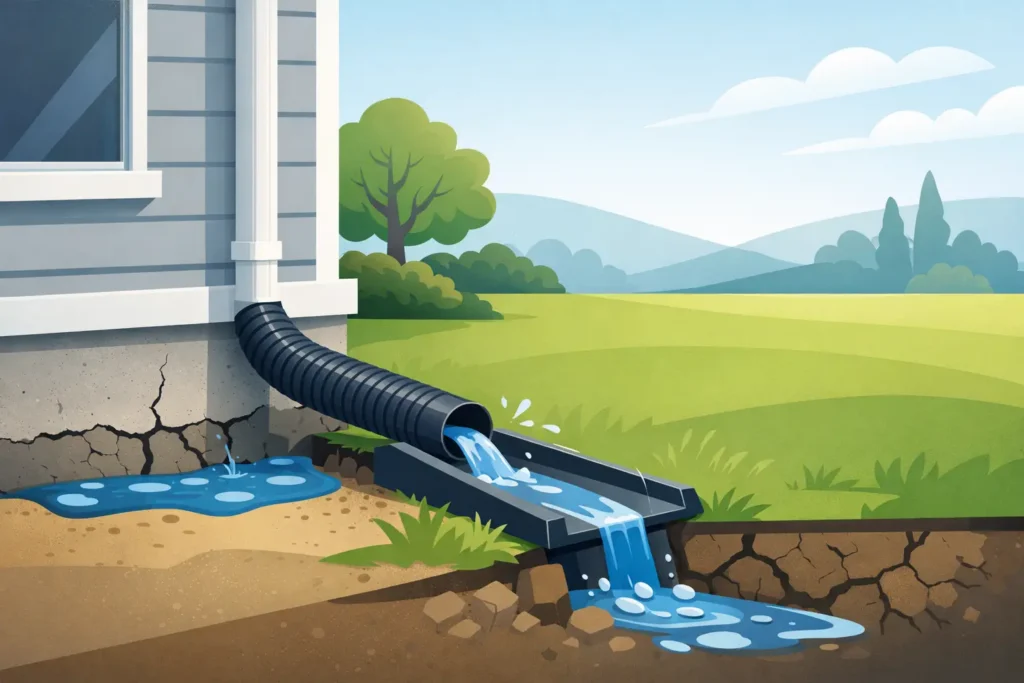
Soil can absorb only so much water at one time. When a downspout releases roof runoff directly at the foundation, the ground becomes saturated, and that water begins looking for another route. It may seep through cracks, press against basement walls, wash away soil, or settle next to the home.
Over time, repeated saturation can contribute to foundation settlement, cracks in masonry or concrete, damp basements, moldy crawl spaces, and damaged landscaping. Water can also erode the grade around the house, creating a low spot that directs even more rainfall back toward the foundation.
Not every damp area means there is a structural problem. However, recurring puddles near downspouts, soil that is visibly washed out, basement moisture after storms, or mulch constantly floating away are signs that drainage needs attention. Addressing runoff early is usually much simpler than repairing the damage it leaves behind.
How a Downspout Extension to Prevent Foundation Damage Works
A downspout extension carries water farther from the base of the house. The goal is straightforward: move the discharge point to an area where water can spread out, drain naturally, or enter an approved drainage system without flowing back toward the home.
In many situations, an extension should carry water at least 4 to 6 feet away from the foundation. That distance is a useful starting point, not a universal rule. A home on a steep lot, a property with heavy clay soil, or an area that stays wet after rain may need a longer route or a different drainage solution.
The direction matters as much as the distance. Water should leave the extension and continue away from the house. If the yard slopes back toward the foundation, a six-foot extension may still discharge water into a problem area. A professional inspection can identify whether the extension, yard grading, gutter placement, or a combination of these needs correction.
The Gutter System Has to Do Its Part
An extension cannot solve a runoff problem if water never reaches the downspout properly. Clogged gutters, undersized downspouts, loose connections, and overflowing corners can dump water beside the foundation before it reaches the extension.
That is why a drainage evaluation should begin at the roofline. Gutters need the correct pitch, secure hangers, clear outlets, and enough downspout capacity for the roof area. Seamless gutters reduce the number of joints where leaks can develop, while a quality leaf protection system can help keep leaves and debris from blocking water flow.
A clean, properly installed gutter system directs water where it belongs. The downspout extension finishes the job at ground level.
Choosing the Right Type of Extension
The best material depends on how the homeowner uses the yard, where the downspout is located, and what happens to the water after it exits. There is no single extension that is right for every property.
Flexible corrugated extensions are affordable and easy to route around flower beds or obstacles. They can be a practical choice for a short run, but they may shift, crush, collect debris, or become an obstacle for mowing if they are not secured well.
Rigid extensions offer a cleaner, more durable installation. They are often a good fit when homeowners want a defined path along the side of the house or through a landscaped area. Because they hold their shape, they can be easier to maintain and less likely to trap standing water.
Buried drain lines keep the drainage route out of sight and away from foot traffic. This option can work well when the line can discharge safely downhill, into a suitable drain area, or to an approved stormwater connection. It requires careful planning. A buried line that has no proper outlet can hold water, clog, freeze, or simply move the problem underground.
Some homeowners prefer a splash block. A splash block can help prevent erosion directly under a downspout, but it does not always move enough water far enough away from the foundation. It is most useful on a well-graded lot where the water already has a clear path away from the home.
Common Mistakes That Leave Homes Exposed
One of the most common mistakes is installing an extension that is too short. A short piece of pipe may stop visible splashing against the siding while still releasing water into saturated soil beside the foundation.
Another mistake is aiming water toward a driveway, walkway, neighboring property, or low area that cannot drain. In winter, runoff across pavement can freeze and create a slipping hazard. Water directed toward a neighbor can create an avoidable drainage dispute. The discharge point needs to be practical for the entire property, not just far from the downspout.
Homeowners also sometimes disconnect extensions before mowing and forget to reinstall them. A hinged extension, a secure low-profile option, or a buried solution may be more practical if regular yard maintenance is a concern.
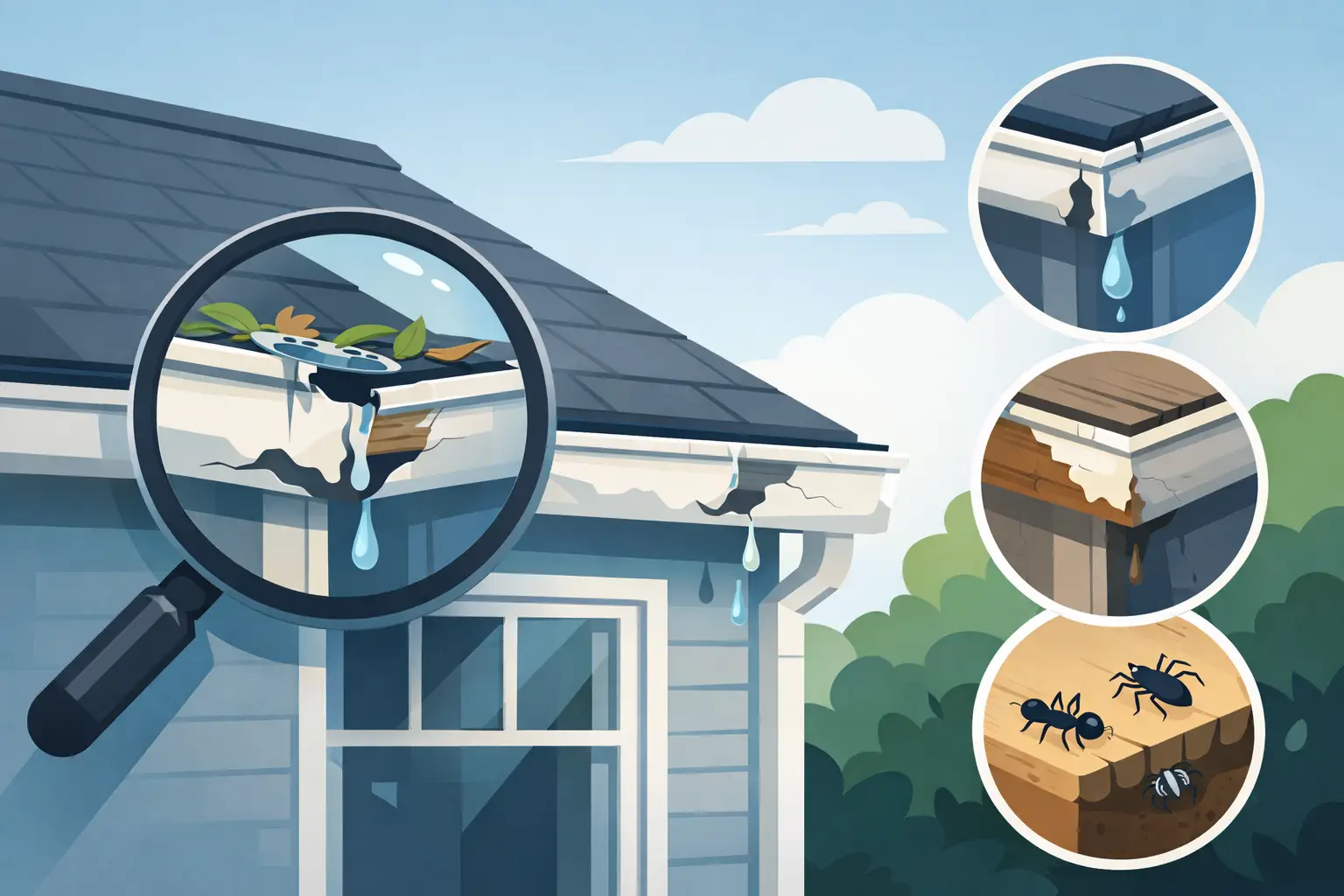
Finally, do not overlook damaged gutters. If a section pulls away from the fascia or leaks at a seam, water can bypass the downspout entirely. Extensions work best as part of a complete water-management plan, not as a quick fix for a failing gutter system.
Seasonal Checks Matter in Indiana and Ohio
Drainage conditions change with the seasons. After a hard rain, walk around the house and watch where the downspouts discharge. Look for standing water, muddy channels, water running toward the home, or overflow at the gutters. These observations are often more useful than checking the system on a dry day.
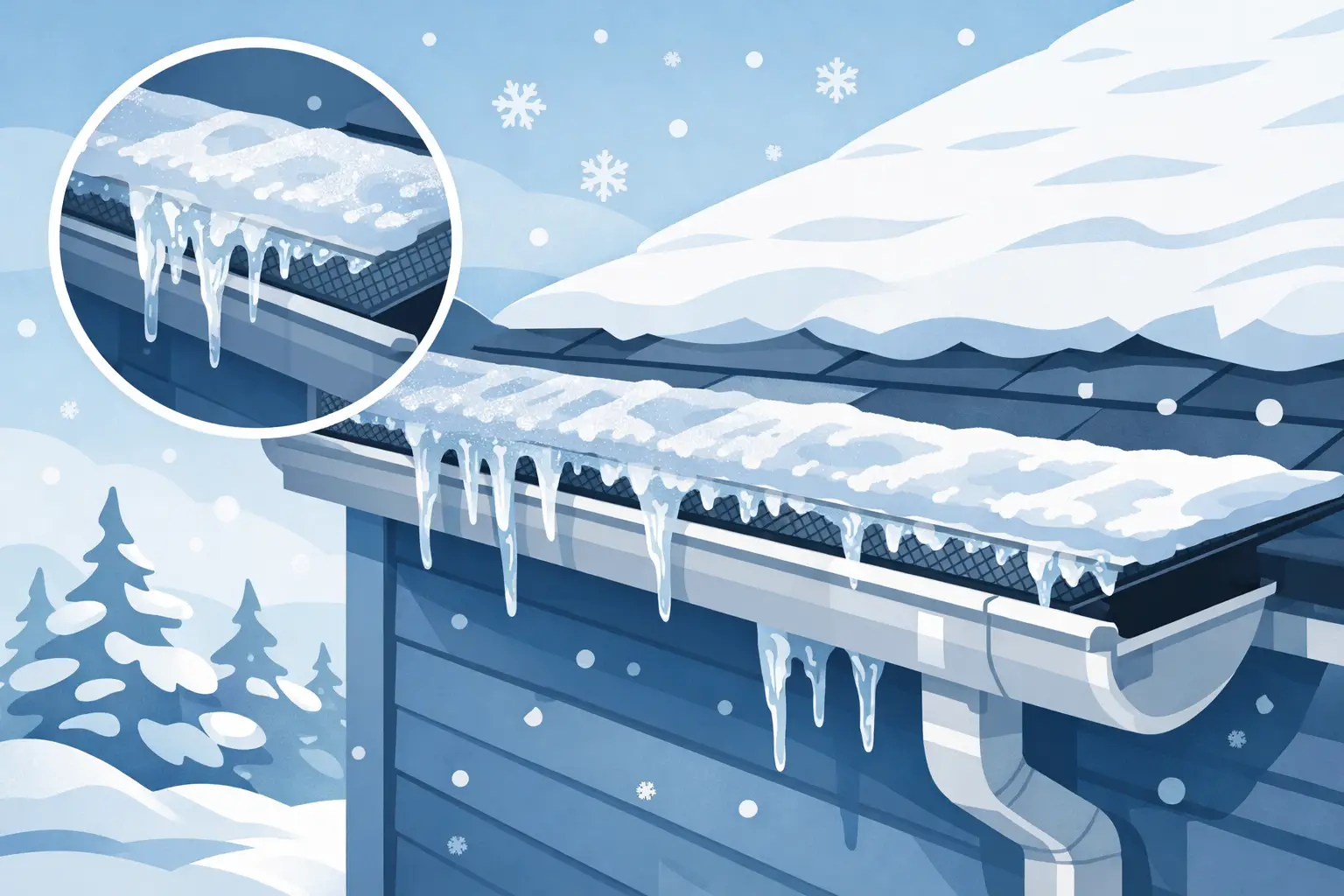
In fall, leaves can block gutter outlets and downspout elbows. In winter, packed debris and ice can slow drainage and cause water to spill over the gutter edge. Spring is a good time to look for soil erosion, shifted extensions, and areas where the ground settled during freeze-thaw weather.
Scheduled gutter cleaning is especially helpful for homes with mature trees. For homeowners who want to reduce recurring debris buildup, a professionally installed guard system such as Double Pro by Alurex can support consistent water flow while providing continuous gutter support. Even with guards, periodic inspections remain a smart way to catch storm damage or drainage changes early.
When to Call for a Professional Inspection
A homeowner can often spot an obvious short extension, but more complex drainage problems deserve a closer look. Request an inspection if you see persistent basement dampness, recurring foundation-area puddles, gutter overflow during normal rainfall, washed-out mulch, sagging gutters, or water that has nowhere safe to drain.
A professional can assess the complete route from roof to ground: gutter sizing, slope, hanger condition, downspout placement, extension length, discharge direction, and the grade around the house. This avoids spending money on an extension that does not address the real cause of the problem.
Seamless Gutter Solutions LLC provides free inspections and estimates for homeowners who want a clear view of what their drainage system needs. Detailed, itemized quotes help you understand the recommended work before it begins, with no hidden fees or vague allowances.
Water management does not need to be complicated, but it does need to be intentional. The next time it rains, take a look at where your roof runoff lands. That small observation can point you toward a simple improvement that helps protect your home for years to come.