

You usually do not notice drainage problems when the weather is nice. You notice them after a hard rain, when water is pooling near the foundation, mulch is washing away, or a basement corner starts to smell damp. The top signs of poor drainage often show up quietly at first, then turn into expensive repairs if they are ignored.
For homeowners in Eastern Indiana and Western Ohio, that matters. Heavy rain, clogged gutters, flat yard areas, and freeze-thaw cycles can all push water where it does not belong. Good drainage is not just about avoiding puddles. It protects your roofline, siding, landscaping, foundation, and the overall condition of your property.
Why poor drainage causes bigger problems than most homeowners expect
Water rarely stays in one place. If runoff is not controlled, it travels down roof edges, spills next to the house, settles in low spots, and slowly works its way into places that should stay dry. A minor issue at the gutter line can become a foundation concern. A soggy patch in the yard can point to a grading problem. What looks cosmetic at first can affect structure, materials, and maintenance costs.
That is why it helps to look at drainage as a system. Gutters, downspouts, extensions, grading, soil conditions, and leaf protection all play a part. When one part fails, the rest of the home takes the hit.
Top signs of poor drainage around your property
Water pooling near the foundation
This is one of the clearest warning signs. After a rain, water should move away from the house, not sit against it. If you consistently see puddles near the base of your home, that means runoff is not being directed far enough out or the soil is sloped the wrong way.
Sometimes the fix is simple, such as extending downspouts or clearing a blockage. Other times, the issue is grading. Either way, standing water near the foundation should never be treated as normal.
Overflowing gutters during rain
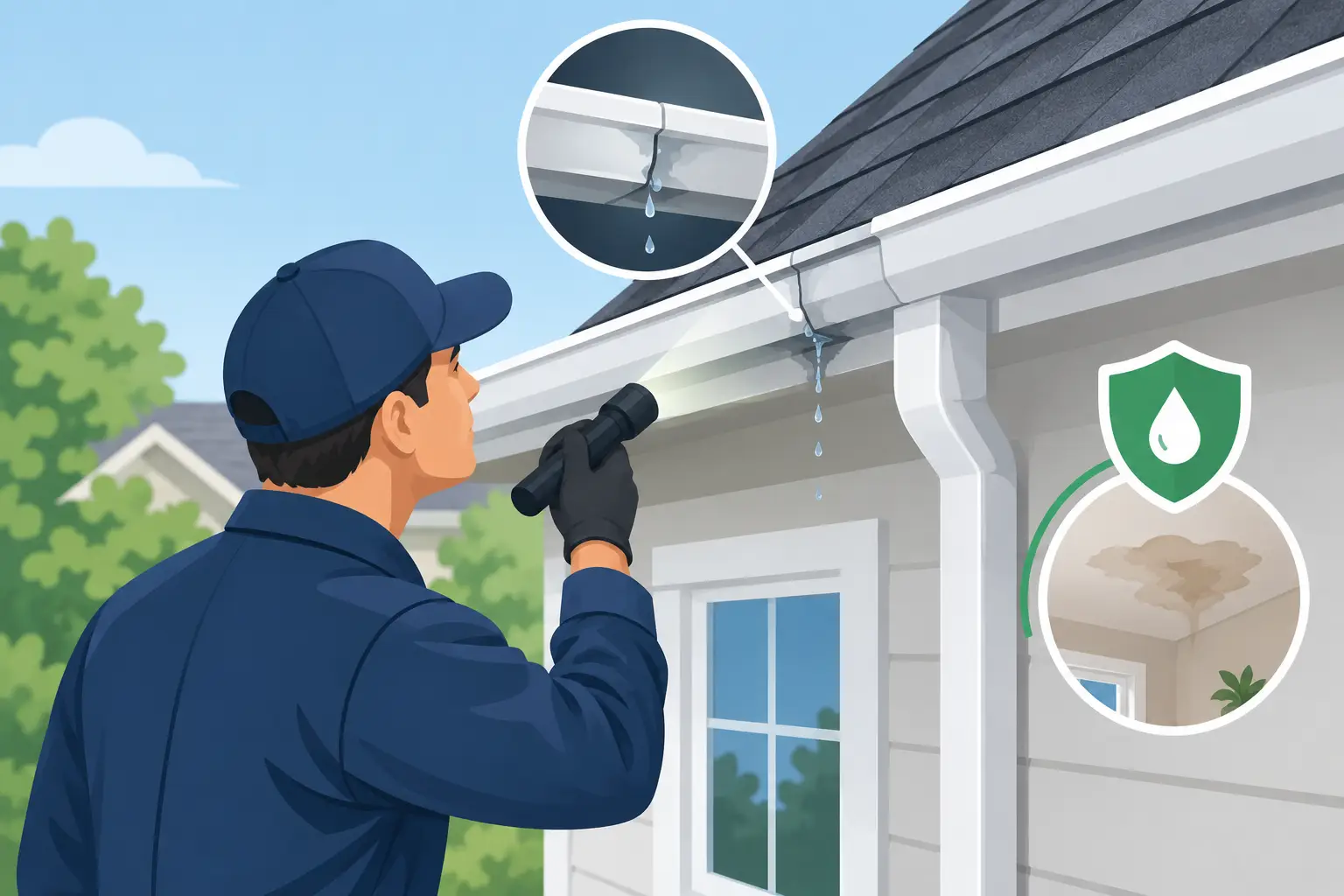
If water is pouring over the sides of your gutters instead of flowing through the downspouts, your drainage system is underperforming. Clogs from leaves and debris are a common reason, but they are not the only one. Gutters can also overflow if they are undersized, pitched incorrectly, or pulling away from the house.
This matters because overflow does not just fall straight down. It can splash onto siding, soak fascia boards, erode flower beds, and dump too much water in one concentrated area. That repeated saturation is where long-term damage starts.
Soil erosion and washed-out landscaping
Mulch that keeps moving, exposed roots, trenches in flower beds, and bare patches in the yard all point to water moving too fast or collecting where it should not. This is one of the top signs of poor drainage that homeowners often dismiss as a landscaping issue, when it is really a water-management issue.
Erosion tells you runoff is not controlled. It may be spilling from clogged gutters, exiting downspouts too close to the home, or running downhill across the property without a proper path.
Basement or crawl space dampness
A musty smell, damp walls, condensation, or visible moisture in the basement or crawl space can all be connected to exterior drainage problems. Water around the perimeter of the home increases hydrostatic pressure and raises the chance of seepage.
Not every damp basement is caused by gutters alone. Plumbing leaks, humidity, and foundation cracks can also contribute. Still, poor exterior drainage is one of the first things worth checking, especially if the problem gets worse after storms.
Cracks in the foundation or settling areas
Small foundation cracks are not unusual in every home, but widening cracks or signs of settlement should not be brushed aside. Water that repeatedly saturates soil around the foundation can affect stability over time. Expanding and contracting soil puts pressure on walls and footings, especially through seasonal weather swings.
You may also notice uneven spots in sidewalks, settled sections near the home, or gaps where the soil seems to be sinking. These are signs that water may be changing the ground conditions around the structure.
Siding stains and peeling paint
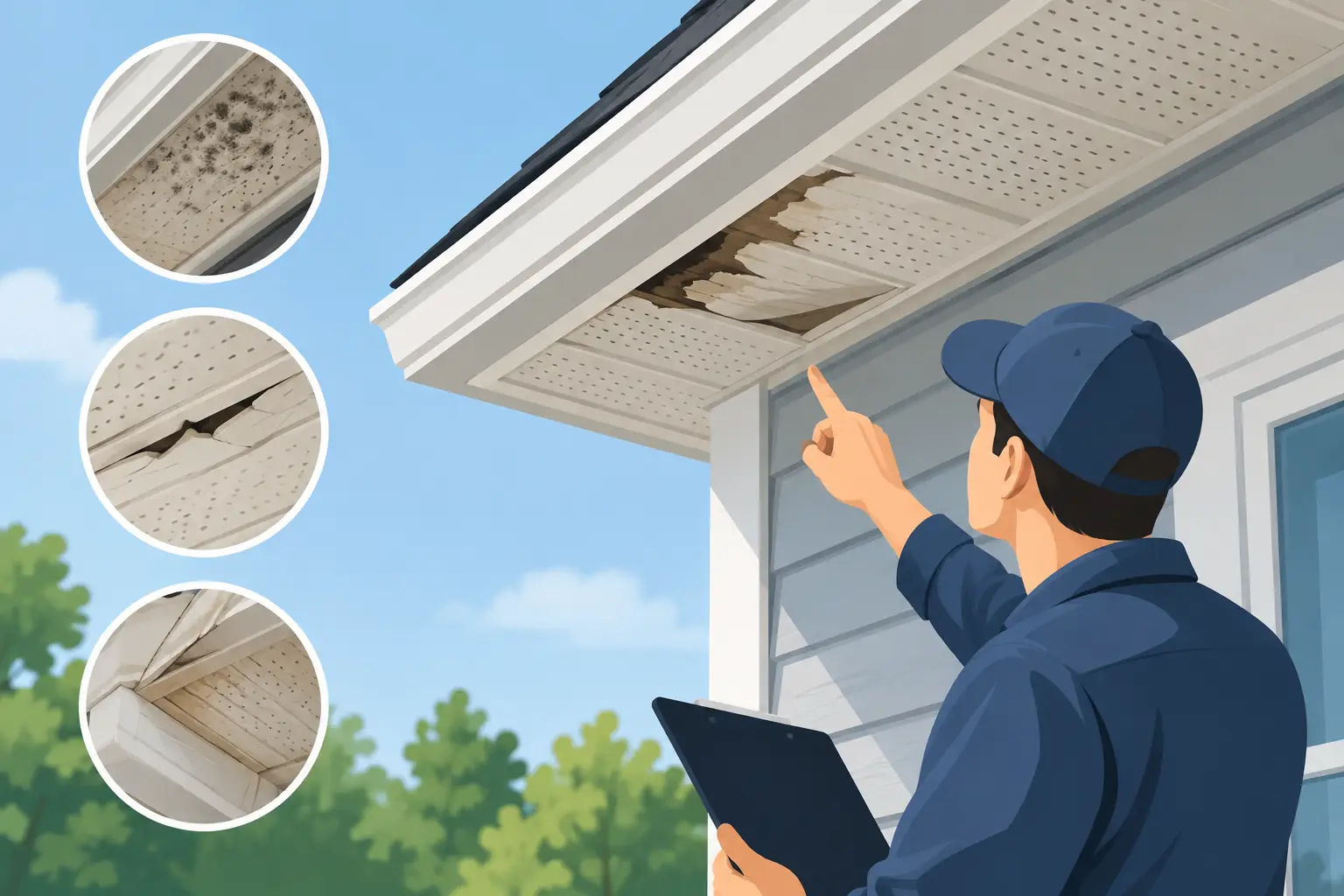
When drainage is failing at the roofline, the evidence often shows up on the exterior walls. Dirty streaks, algae growth, paint failure, and water marks on siding can all point to gutters that are overflowing or leaking at seams and corners.
This kind of damage is easy to overlook because it can seem cosmetic. It is not always cosmetic. Repeated water exposure can shorten the life of siding, trim, and underlying materials.
Standing water in the yard that lingers
A puddle right after a storm is one thing. A soggy area that remains for days is another. If sections of your yard stay wet long after rainfall, the soil may be compacted, the grade may be too flat, or runoff may be funneling into a low point.
Persistent wet spots can make mowing difficult, stress grass and plants, attract mosquitoes, and create slippery conditions. More importantly, they show that water does not have a reliable path away from the property.
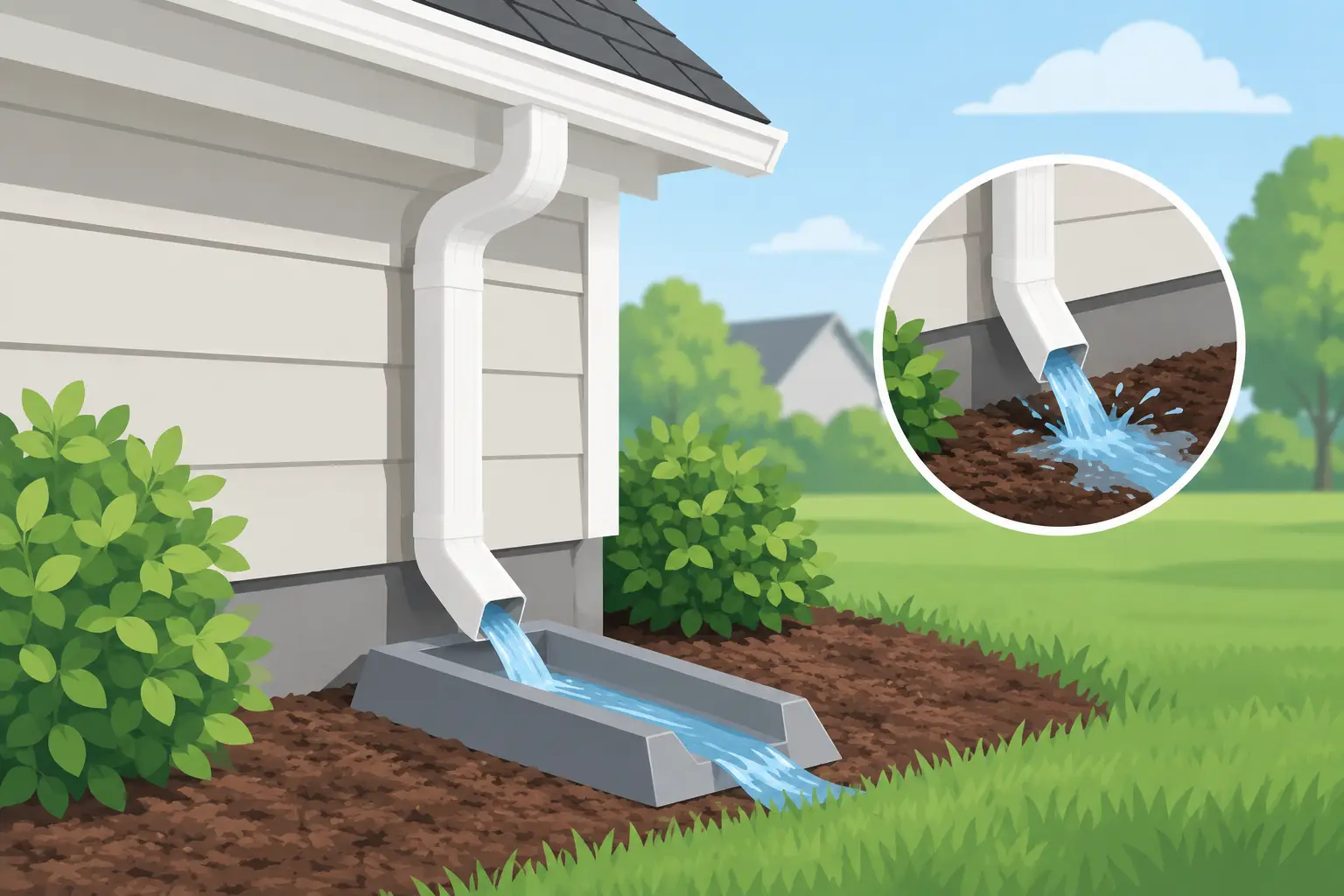
Downspouts that dump water too close to the house
Even a well-installed gutter system can create problems if the downspouts discharge right at the foundation. This is common on homes with short splash blocks, disconnected extensions, or older layouts that were never updated.
A good rule is simple: roof runoff should be carried out and away, not dropped beside the home and left to soak in. If you can see concentrated water pouring at the corners of the house, that is a drainage issue worth correcting.
What these signs usually mean
Poor drainage is rarely caused by one thing alone. In many cases, homeowners are dealing with a combination of clogged gutters, aging components, poor pitch, and yard grading that does not help. Trees can add constant debris. Heavy storms can overwhelm undersized systems. Older sectional gutters may leak in places that are hard to spot from the ground.
That is why guessing can get expensive. A wet basement might lead someone to focus only on the basement, when the real problem starts at the roof edge. A washed-out flower bed might seem minor, but the underlying issue may be repeated gutter overflow in the same location.
When it is a gutter problem and when it is something more
Some drainage issues can be solved by cleaning gutters, resecuring loose sections, repairing downspouts, or adding better leaf protection. If the problem shows up mainly during rain and is concentrated under roof edges, the gutter system is a strong place to start.
If water is collecting across the yard far from the home, or if the property has major slope issues, grading and drainage design may also need attention. It depends on where the water starts, where it ends up, and how long the issue has been developing.
For many homes, the best answer is not a patchwork fix. It is a full look at how water moves from the roof to the ground and away from the structure.
How homeowners can respond before damage gets worse
Start by paying attention during and after the next good rain. Watch where water exits the gutters. Look for overflow, leaks at seams, splashback on siding, and pooling near the foundation. Walk the yard the next day and note any areas that stay soggy.
If you see multiple warning signs, it is smart to get the system inspected instead of waiting for interior damage to confirm the problem. A clear, itemized inspection helps you understand whether you need cleaning, repairs, upgraded downspout routing, or a more durable gutter solution. For homeowners who are tired of recurring clogs, a premium guard system can also reduce maintenance and keep water moving the way it should.
At Seamless Gutter Solutions LLC, the goal is to make that process straightforward with free inspections, free estimates, and no hidden fees. That matters when you are trying to protect your home without guessing what the final cost will be.
A practical way to think about drainage
If water is leaving marks, moving soil, or staying where it should not, your home is already telling you something. The earlier you respond, the more options you usually have and the less likely you are to face structural repairs later. A dry foundation line, controlled runoff, and properly functioning gutters may not be flashy upgrades, but they are some of the most valuable protection a home can have.
The next time it rains, take five minutes and watch where the water goes. That simple check can tell you more than a dry-day walkthrough ever will.