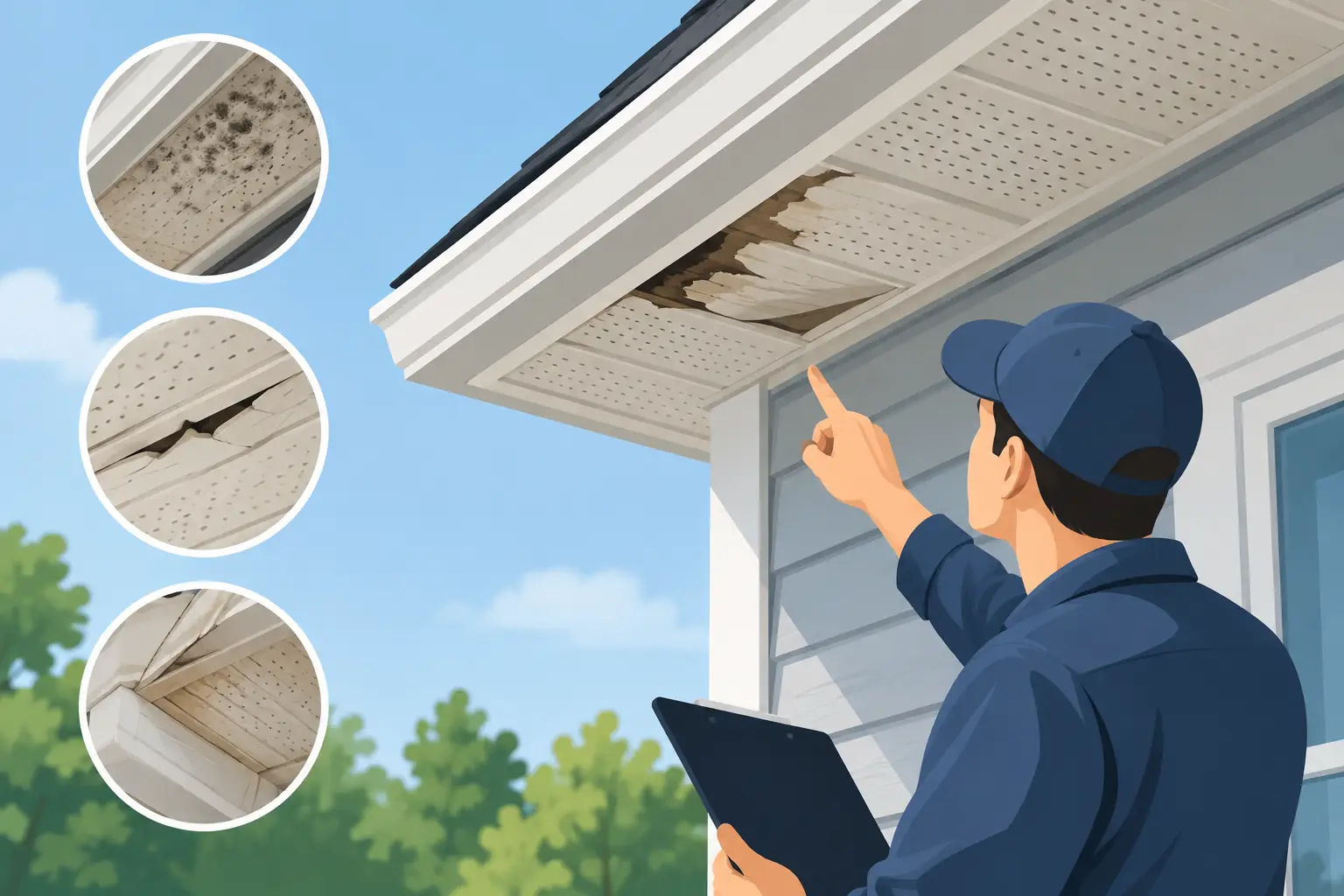


You usually don’t think about gutters until you see the damage – a soggy basement corner, washed-out mulch, peeling paint on the fascia, or a trench forming where water keeps hitting the same spot. Once that happens, the next question comes fast: should you replace what you have with sectional gutters from a big-box store, or invest in seamless gutters made on-site?
If you own a home in Eastern Indiana or Western Ohio, you’ve probably seen both styles on houses in your neighborhood. The right choice depends on what you’re trying to protect (foundation, siding, landscaping), how long you plan to stay in the home, and how much maintenance you’re willing to do.
Seamless gutters vs sectional gutters: what’s the real difference?
Sectional gutters are assembled from pre-cut pieces, usually in 10-foot lengths, that are joined together along the run. Those connection points are sealed and fastened during installation.
Seamless gutters are formed from a continuous piece of metal cut to the length of your roofline. They’re made on-site to fit your home. You still have corners and downspout connections, but you don’t have seams every 10 feet.
That “how it’s made” difference affects everything else: leak risk, long-term durability, how the system handles heavy rain, and what repairs look like later.
Leaks and water control: seams are the whole story
If you’re choosing gutters because you’re worried about water getting where it shouldn’t, seams matter.
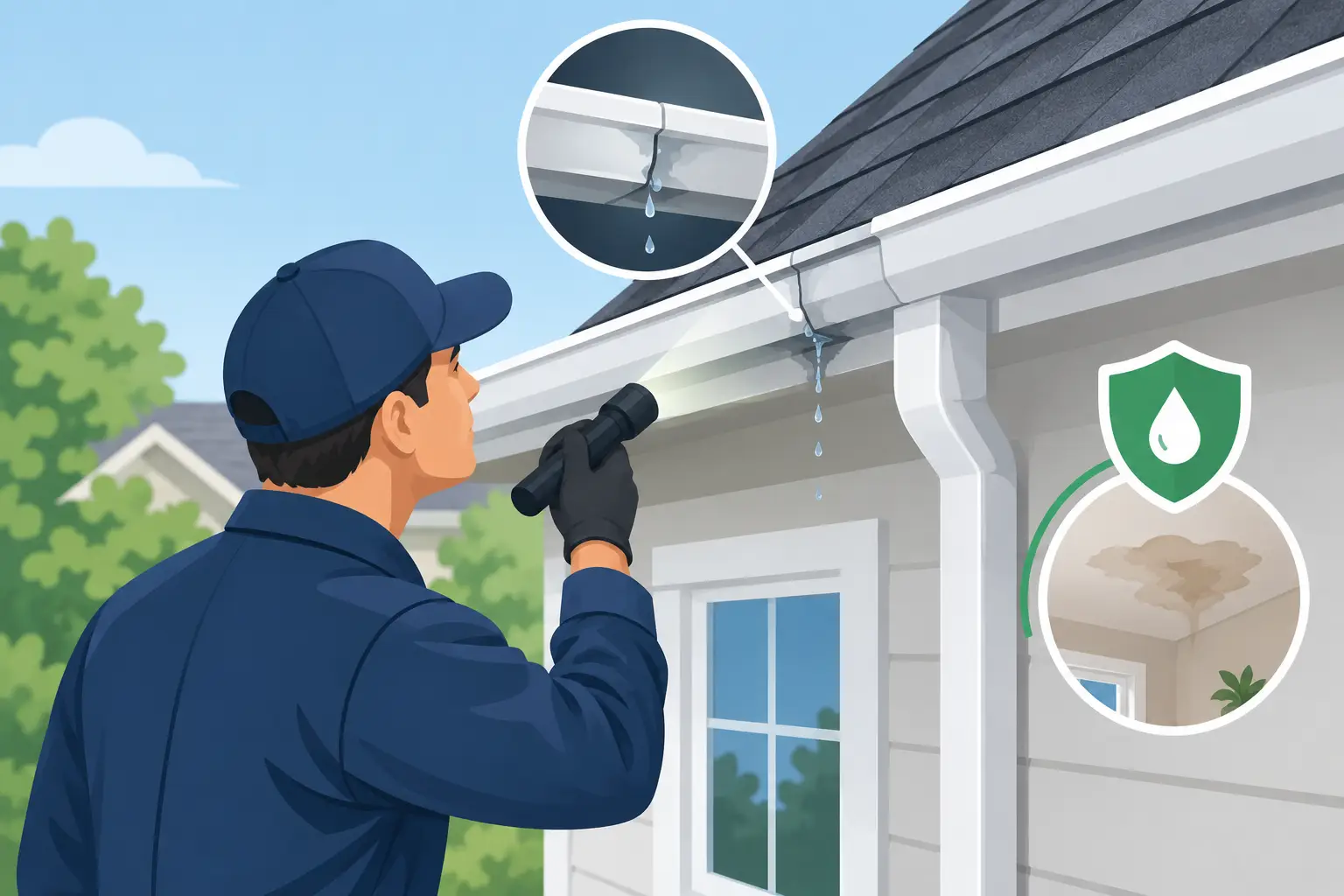
Every joint in a sectional system is a potential leak point. Even when it’s installed carefully, the sealant at those joints is exposed to expansion and contraction through Indiana and Ohio temperature swings. Add in debris, standing water, ice, and ladder bumps during cleaning, and those joints are the first place problems show up.
With seamless gutters, the long straight runs have no joints to separate. That doesn’t mean “never leaks” (corners and end caps still exist), but it reduces the number of places where water can escape. In practical terms, fewer joints usually means fewer drip lines along siding and fewer mystery puddles near the foundation.
If you’ve ever noticed staining under a gutter seam or a little “waterfall” that only happens in a hard downpour, that’s a seam problem more often than not.
Strength and sagging: hangers, spans, and real-life storms
Gutters fail in two common ways: they leak, or they pull away and sag.
Sectional systems can be perfectly fine when they’re properly supported, but they’re also more likely to be installed as a quick project with wider hanger spacing. When a run is built from multiple pieces, each seam creates a spot that can flex under load. If wet leaves collect in the trough and freeze, that added weight tests every connection point.
Seamless systems are typically installed with continuous-hanger support options that reinforce the gutter across the run. That matters when you get one of those Midwest storms that dumps rain fast, or when snow melt hits all at once. The more consistent the support, the better the gutter stays pitched correctly toward the downspouts.
Pitch is a big deal. A gutter can look “fine” from the yard and still hold standing water if it’s sagging just slightly in the middle. Standing water leads to overflow, algae, and faster corrosion.
Maintenance: what you’ll actually deal with year to year
If you like to be hands-on and don’t mind seasonal ladder work, either system can be maintained. The difference is how often small issues turn into recurring chores.
With sectional gutters, the regular maintenance headache is resealing joints. You may go a few years without trouble, then start chasing drips at one seam, then another. It’s rarely catastrophic, but it’s annoying – especially when the leak shows up behind a shrub bed and you don’t notice until the soil has been saturated for weeks.
With seamless gutters, maintenance is more about keeping the trough clear and watching for clogs at downspouts. That’s where leaf protection can change the whole experience. A quality guard reduces debris buildup so water keeps moving, which helps prevent overflow and ice issues at the edge.
The honest trade-off: guards are an added investment up front, but many homeowners like them because they reduce the number of times you need to climb up there or pay for cleanings.
Repairs: quick patch or targeted fix?
Repairs are where homeowners sometimes get surprised.
A sectional gutter that’s leaking at a seam can often be patched quickly. If a single 10-foot piece is damaged, you can swap that section out. The catch is that every “swap” introduces more joints, and if the surrounding sections are aging, you can end up with a system that’s a patchwork of old and new.
Seamless gutters can be repaired too, but the approach is different. If the issue is at an end cap, corner, or downspout connection, a targeted fix is straightforward. If a long section is crushed by a fallen limb, that run may need to be replaced as one piece. That replacement is clean and consistent, but it typically requires a professional with the equipment to form the gutter to length.
So it depends on what kind of “risk” you want: more frequent small fixes at joints, or less frequent but more specialized fixes when damage happens.
Cost: the number that matters is the long-term one
Most homeowners start here, and that’s fair.
Sectional gutters usually have a lower initial price because the materials are standard lengths and the installation can be simpler. For a tight budget or a short-term plan (like selling soon), that may be enough.
Seamless gutters typically cost more up front because they’re custom-made to your home and installed as a system. But the value is in fewer potential leak points and better performance over time.
If you’re comparing estimates, make sure you’re comparing the whole scope, not just “gutters installed.” Downspout placement, hanger type, removal and disposal of old gutters, and the condition of fascia boards all affect performance and price. This is also where transparency matters. Itemized quotes help you see what you’re paying for and avoid surprise add-ons later.
How to decide for your home (without guessing)
Most homes in our area can use either system, but a few factors should push your decision one way or the other.
If your current problem is leaks at multiple seams, paint peeling under joints, or recurring wet spots near the foundation, seamless gutters are usually the more protective choice. You’re reducing the number of failure points, which is exactly what you want when water is already finding its way to the wrong places.
If you have a very small project, a limited run (like a shed or detached garage), or you’re looking for a short-term solution while you plan a bigger exterior update, sectional gutters can be a reasonable stopgap.
Roof complexity matters too. Homes with lots of corners, valleys, and roofline changes need careful planning for downspouts and drainage. The gutter style is only part of it. The system has to move water away from the home quickly, even when the heaviest rain hits one side of the house.
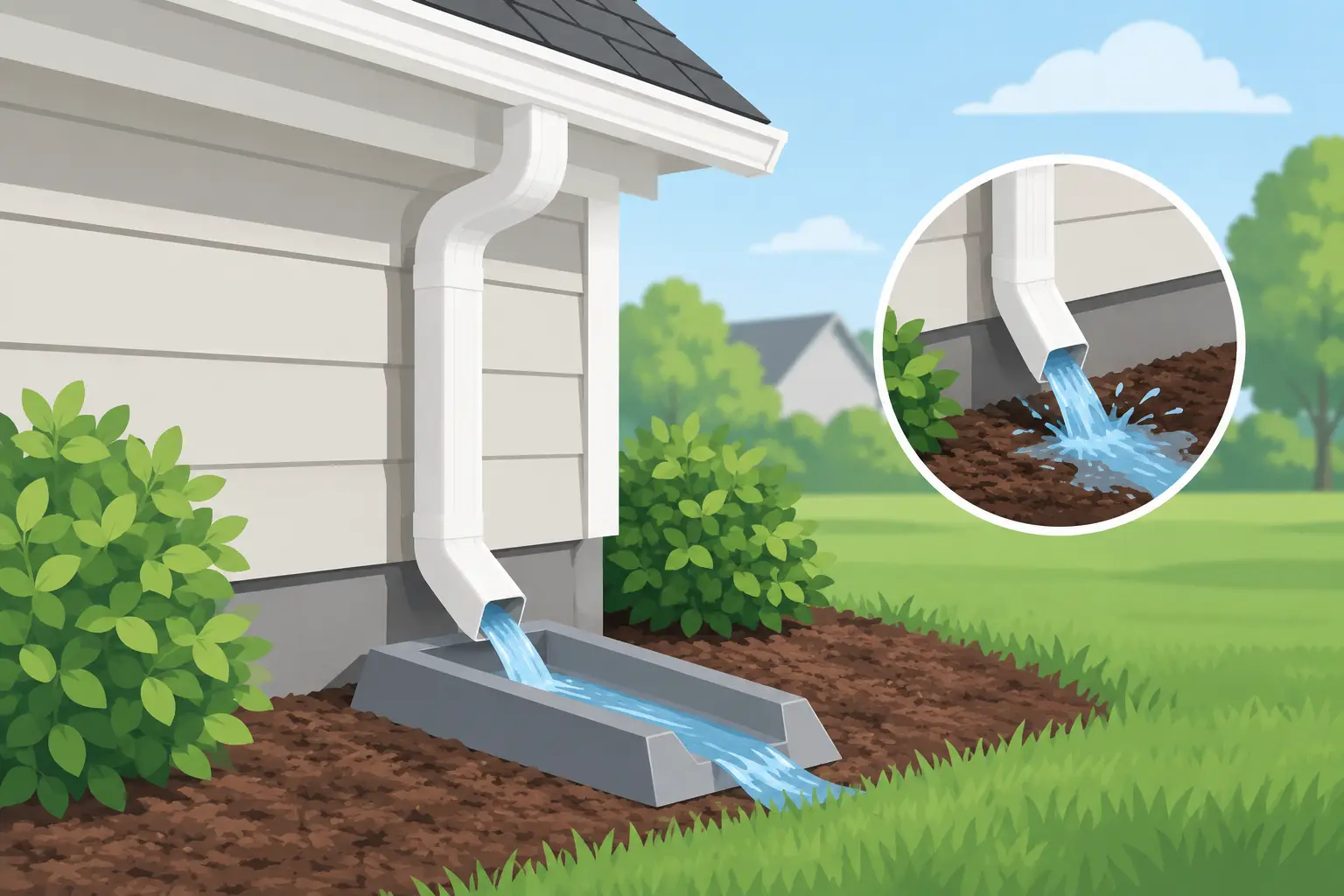
And don’t ignore drainage at ground level. If your downspouts dump right next to the foundation, even the best gutters can’t fully protect the home. Extensions or underground drainage may be part of the plan.
A note on leaf protection: not all guards perform the same
Many homeowners have tried a cheap screen and walked away disappointed. That’s understandable. Some guards clog on top, others let small debris through, and some warp over time.
A premium system is built to work with water flow, not fight it. One option we install is Double Pro by Alurex, a continuous-hanger gutter guard that supports the gutter and helps keep debris out while letting water in. The “continuous hanger” detail matters because support and protection are working together, not competing.
Leaf protection is never a magic trick that eliminates all maintenance forever, but it can cut down on cleanings and reduce the conditions that cause overflow.
What a good estimate should include
If you’re getting quotes for seamless gutters vs sectional gutters, pay attention to how the contractor explains the system.
You should be told what size gutter is being installed (because bigger roofs and steep pitches can overwhelm undersized gutters), how downspouts will be placed, what happens to old materials, and what’s being done to ensure correct pitch. If guards are included, you should know the exact product, how it’s attached, and what it’s expected to handle.
If you’re in the Richmond area or nearby counties and want a clear, no-pressure starting point, Seamless Gutter Solutions LLC offers free inspections and estimates with detailed, itemized pricing and no hidden fees.
Choosing gutters isn’t about chasing the fanciest option – it’s about choosing the setup that keeps water off the parts of your home that are expensive to fix. When you focus on leak points, support, and how water exits the property, the right answer usually becomes obvious, and the next storm feels a lot less stressful.