
A stain on the ceiling usually gets blamed on the roof first. Sometimes that is accurate. But just as often, the real problem starts a few inches lower at the gutter line. If you have been asking, can bad gutters cause roof leaks, the short answer is yes. When gutters stop moving water away from the roof edge the way they should, that water can back up, spill over, and work its way into places it never should reach.
For homeowners in Eastern Indiana and Western Ohio, this matters more than many people realize. Heavy spring rain, summer storms, fall leaf buildup, and winter freeze-thaw cycles all put pressure on the gutter system. A small gutter issue can turn into roof damage, fascia rot, soffit problems, siding stains, and even foundation trouble if it goes long enough.
How bad gutters lead to roof leaks
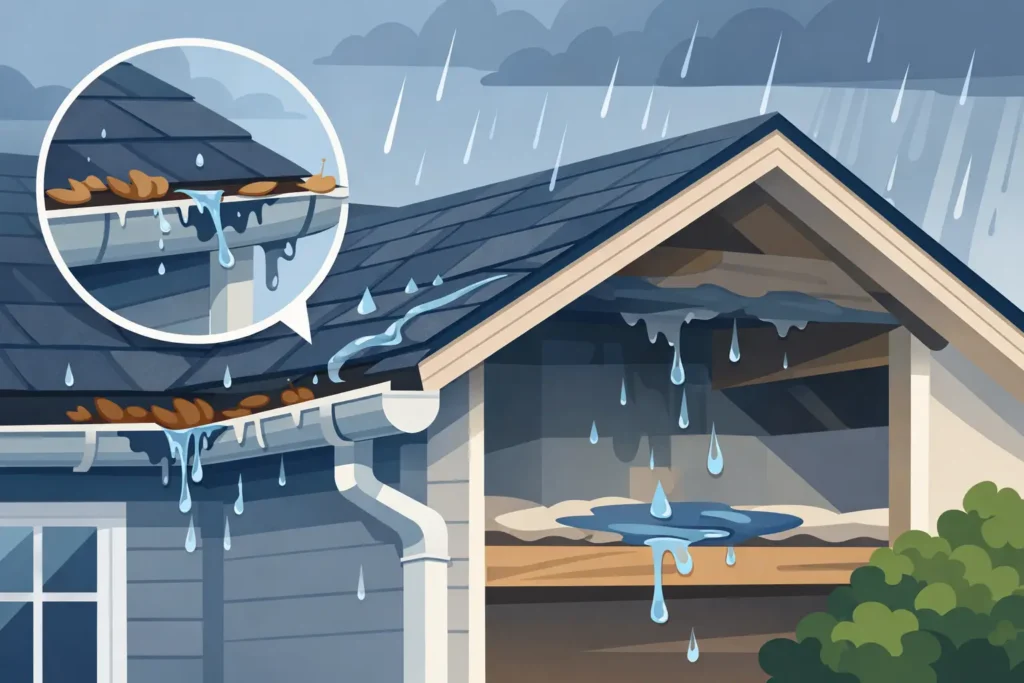
Your gutter system is supposed to catch rainwater as it runs off the roof and carry it safely to the downspouts. When that path is blocked or damaged, water starts pooling near the roof edge. That standing water can seep beneath shingles, soak the underlayment, and reach the roof decking.
This is especially common near eaves, valleys, and low spots where water already collects more heavily. If gutters are clogged with leaves and granules, or if they are pitched the wrong way, water has nowhere to go. It sits there, overflows, or backs up under the first course of shingles.
A leak caused by bad gutters does not always show up right away. Sometimes the first signs are peeling paint, damp fascia boards, mildew in the attic, or water spots along an exterior wall. By the time water appears on an interior ceiling, the issue may have been building for months.
Can bad gutters cause roof leaks even if the shingles look fine?
Yes. That is what makes gutter-related leaks so frustrating.
Homeowners often inspect the shingles from the ground and do not see obvious damage. The roof may still be in decent shape overall, but if the gutters are pulling away from the house, staying packed with debris, or allowing water to pond at the edge, the roofing materials can still be overwhelmed.
Think of it this way. Shingles are designed to shed water downhill. They are not designed to sit in backed-up water for hours after every storm. Once runoff slows down or reverses direction at the edge, the roof system is being asked to do something it was never built to handle.
That is also why replacing shingles without fixing the gutter issue may not solve the leak. If the drainage problem remains, water can keep finding the same weak spots.
The gutter problems most likely to cause leaks
Not every gutter problem creates a roof leak, but some are much more likely than others.
Clogged gutters are the most common issue. Leaves, sticks, seed pods, and asphalt granules build up over time and block water flow. Once the channel fills, rainwater spills over the front edge or backs up toward the roof.
Sagging gutters are another big one. If fasteners loosen or the gutter begins to pull away from the fascia, water no longer flows properly to the downspouts. Low sections collect standing water, which adds even more weight and makes the sagging worse.
Improper pitch can cause similar trouble. Gutters need a slight slope so water moves efficiently. Too flat, and water sits. Sloped the wrong direction, and the system works against itself.
Damaged seams and holes matter too. Even a small opening can let water drip behind the gutter instead of staying inside it. That hidden runoff can rot fascia boards and seep into the roof edge.
Undersized gutters can also contribute, especially on roofs with steep slopes or large drainage areas. During a hard storm, they simply cannot keep up with the volume of water coming off the roof.
Warning signs the gutters are affecting your roof
A lot of homeowners do not notice gutter problems until the damage spreads. Catching the early signs can save a much larger repair later.
Look for water spilling over the sides during rain. That usually means a clog, poor pitch, or a gutter that is too small for the runoff it handles. Watch for gutters that appear tilted, bowed, or separated from the fascia. Peeling paint, staining on the siding, rotted wood near the roofline, and mildew around soffits are also red flags.
Inside the home, pay attention to attic dampness, musty smells, insulation that looks compressed or stained, and ceiling spots near exterior walls. Those symptoms can point to water intrusion at the eaves rather than a major failure in the middle of the roof.
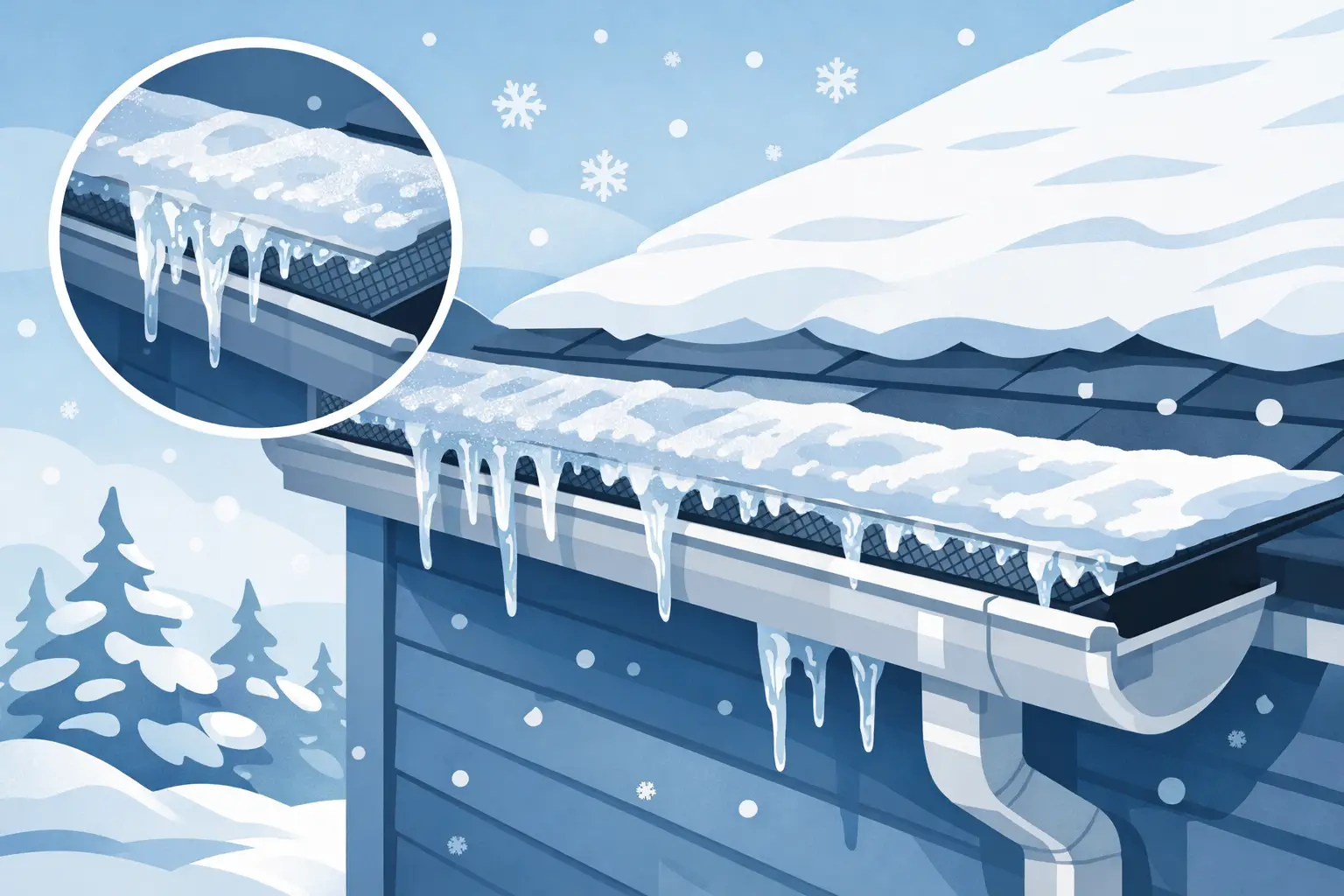
In winter, ice dams are another clue. When gutters hold standing water and temperatures drop, ice can form along the roof edge. That ice traps melting snow and pushes water back beneath shingles.
Why the fascia and soffit are part of the story
When people think about roof leaks, they usually think about shingles and flashing. But the fascia and soffit sit right at the connection point between the roof and the gutters, so they often take the first hit.
If gutters overflow or leak behind the system, fascia boards can absorb repeated moisture. Once that wood starts to rot, the gutter loses support and pulls farther away from the house. Then the water problem gets worse. Soffits can also trap moisture, which may lead to mold, peeling paint, or damage inside the attic.
This is why a gutter issue rarely stays just a gutter issue. Water has a way of spreading the cost if it is given enough time.
Repair or replace? It depends on the condition
If the gutters are structurally sound and the main issue is debris, a professional cleaning may be enough. If a few hangers are loose or a short section is leaking at a seam, a targeted repair can often restore proper function.
But there are times when patching is only delaying a larger problem. If the system sags in multiple places, separates from the house, leaks at several joints, or has recurring overflow despite regular cleaning, replacement may be the smarter move. Older sectional gutters tend to have more seam-related trouble over time, while seamless gutters reduce those weak points and generally perform better with less maintenance.
Leaf protection can also make a real difference, especially in areas with heavy tree cover. A quality guard system helps keep water moving while reducing the debris buildup that causes backups in the first place. That does not make the system maintenance-free, but it can lower the chances of the clogs that start roof-edge leaks.
Why a professional inspection matters
The challenge with roof leaks is that the visible symptom is not always the source. Water can travel along decking, rafters, and wall cavities before it appears indoors. That is why guessing can get expensive.
A thorough inspection should look at the roof edge, gutters, downspouts, fascia, soffits, and drainage pattern around the home. The goal is to find out whether the leak is coming from roofing materials, gutter failure, or a combination of both.
That kind of inspection gives homeowners a clearer next step. Instead of replacing parts that are not failing yet, you can address the actual cause and protect the rest of the system.
For homeowners who want a straightforward answer without surprise charges, that transparency matters. It is one reason companies like Seamless Gutter Solutions focus on free inspections, detailed estimates, and clear recommendations rather than vague guesses.
Preventing gutter-related roof leaks
The best way to avoid this problem is to keep water moving before it has a chance to back up.
That starts with routine cleaning, especially after heavy leaf drop and storm seasons. Gutters should also be checked for pitch, secure attachment, proper downspout flow, and signs of hidden leakage behind the system. If your current gutters overflow in normal rain, they may be undersized or poorly designed for the roof they serve.
For many homeowners, the most cost-effective move is not waiting for a leak to prove the point. A simple inspection can catch sagging sections, clogs, wood rot, and drainage issues early, when the fix is usually smaller and less disruptive.
If you are noticing overflow, staining, or signs of moisture near the roofline, trust what your house is telling you. Bad gutters can absolutely cause roof leaks, and the sooner you deal with the water path, the better chance you have of protecting everything beneath it.