
If you have water spilling over the sides during a storm, mulch washing out of your beds, or dark streaks on siding, a free gutter inspection is not just a nice extra. It is the fastest way to find out whether you need a simple repair, a full replacement, cleaning, or added leaf protection. When homeowners search free gutter inspection what to expect, they usually want one thing – a clear answer without a sales pitch.
That is fair. Gutters protect more than the roof edge. They help keep water away from your foundation, fascia, landscaping, windows, and entryways. If the system is failing, small problems can turn into expensive ones. A good inspection should reduce uncertainty, not add to it.
Free gutter inspection what to expect from the visit
A professional gutter inspection should feel straightforward from the moment it is scheduled. You should know when the crew or estimator is arriving, whether someone needs to be home, and roughly how long the visit will take. Most inspections on a typical home are fairly quick, but the timing depends on the size of the house, rooflines, and whether there are obvious problem areas to document.
Once on site, the inspector usually starts by looking at the home from the ground. That first walkaround can reveal a lot. Overflow stains, sagging runs, loose downspouts, erosion below roof edges, and standing water marks all help tell the story of how the current system is performing.
From there, the inspection often gets more detailed. The contractor may check gutter pitch, attachment points, seams, end caps, corners, downspout placement, and discharge points. If your home has basement moisture, soil washout, or recurring clogs, those issues should be part of the conversation too. The point is not just to look at the gutters themselves, but to understand where rainwater is going and whether that is creating risk around the house.
What a contractor should actually inspect
Not every free inspection is equally thorough. Some companies glance at the front elevation, throw out a price, and move on. That does not help you make a good decision. A real inspection should cover the full drainage picture.
Gutter condition
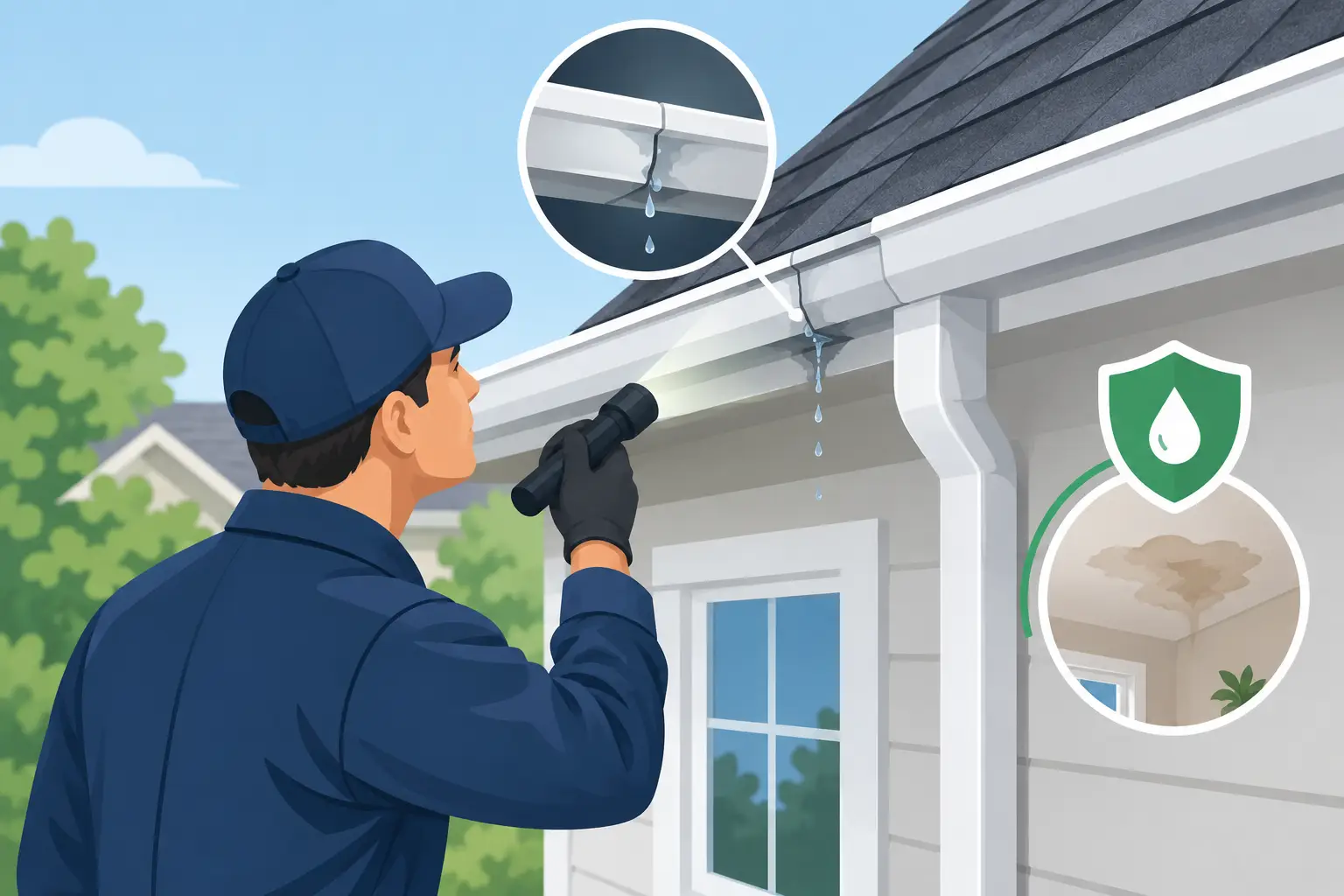
The obvious starting point is the gutter itself. The inspector should look for cracks, separated seams, rust, sagging sections, pulling fasteners, dents, and areas where water may be ponding instead of flowing. On older sectional systems, seams are often the first weak point. On any system, poor slope can lead to slow drainage and overflow.
Fascia and soffit areas
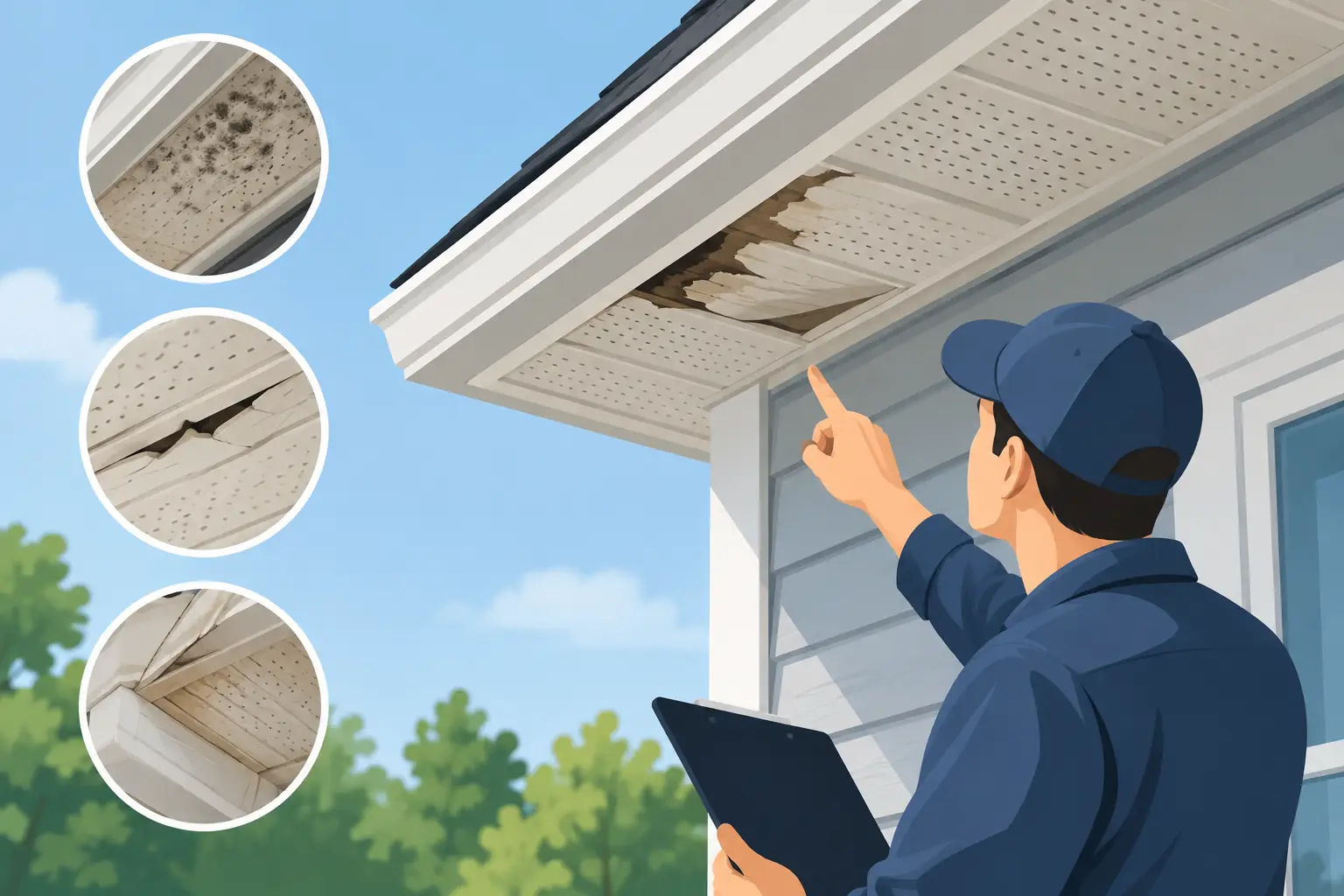
If gutters have been leaking or backing up for a while, the wood behind them may already show damage. Soft fascia, peeling paint, mildew, or staining near the roof edge can signal that the problem is bigger than a simple clog. This matters because replacing gutters without addressing underlying wood issues may only solve part of the problem.
Downspouts and drainage paths
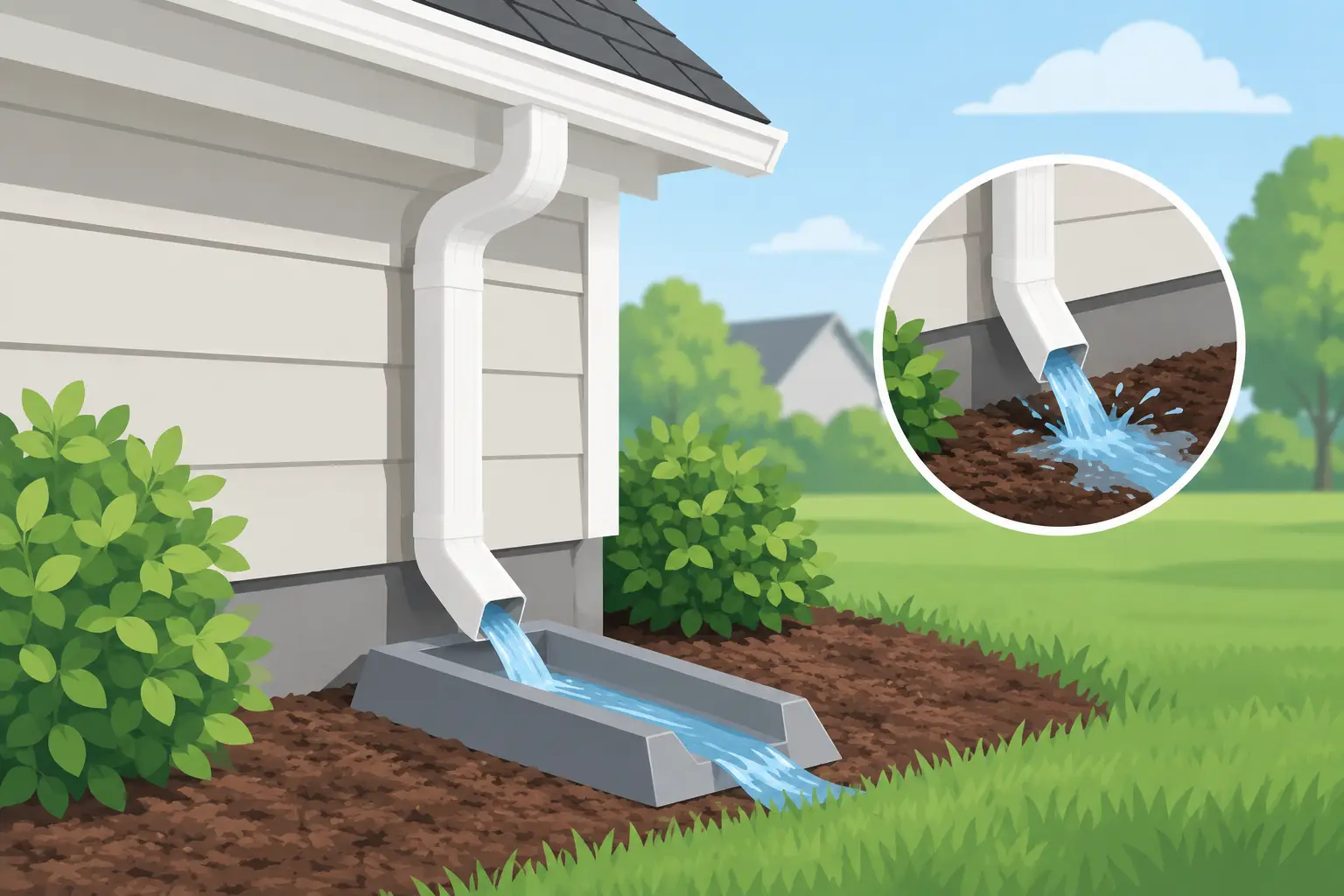
A lot of gutter trouble is really downspout trouble. A system can look fine overhead but still dump water too close to the foundation. The inspector should note whether downspouts are undersized, disconnected, crushed, or poorly placed. They should also look at where the water exits and whether extensions or drainage improvements are needed.
Debris and maintenance issues
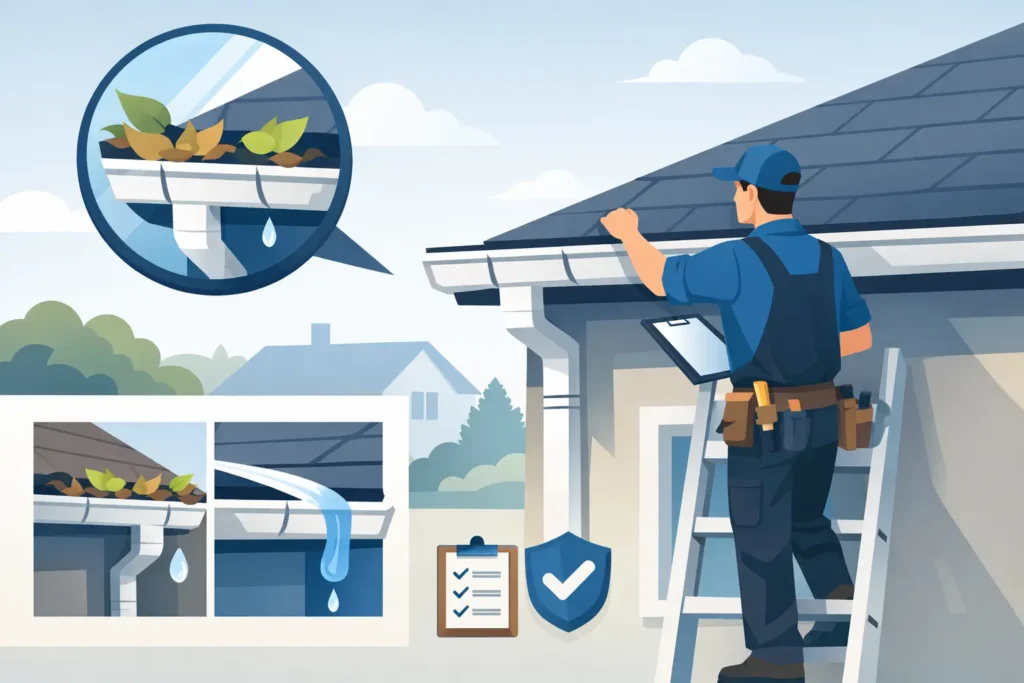
Leaves, seed pods, shingle grit, and roof debris can block flow and wear down the system over time. If your gutters clog repeatedly, the inspection should address whether routine cleaning is enough or whether a guard system makes more sense. That answer depends on the trees around your property, your roof design, and how much maintenance you want to deal with long term.
What you should hear during the inspection
A trustworthy inspection is not just visual. It includes clear explanations. You should hear what is working, what is not, and what matters now versus later. If everything is presented as urgent, that is a red flag. Some issues need prompt attention, but others can be monitored or planned for.
Good inspectors explain the why behind their recommendations. If they suggest replacement, they should be able to show you why repairs would be short-lived. If they suggest repairs instead of replacement, that usually means there is still useful life in the system. If they recommend gutter guards, they should explain how that choice fits your home rather than treating it like an automatic add-on.
This is also the point where measurements are often taken. For replacement work, the contractor may measure linear footage, note downspout counts, identify corners and special rooflines, and record any custom details. That detail matters because accurate estimates come from accurate fieldwork.
What your estimate should include
When people ask about free gutter inspection what to expect, they are often really asking what happens after the inspection. The estimate is where trust is either earned or lost.
A strong estimate should be detailed and easy to read. You should be able to see what service is being recommended, what materials are included, how much gutter and downspout work is involved, and whether extras like leaf protection, removal of old materials, or drainage extensions are included. If wood repair, cleaning, or re-securing existing sections is part of the scope, that should be spelled out too.
Vague pricing creates problems. A quote that says only “gutter job” with one total number does not give you much protection. Itemized pricing is better because you can see what you are paying for and compare options honestly. It also helps prevent the unpleasant surprise of hidden charges later.
For homeowners in Eastern Indiana and Western Ohio, that level of clarity matters. Weather swings are hard on exterior systems, and you want to know whether you are fixing a short-term problem or making a long-term improvement.
Questions worth asking during a free gutter inspection
You do not need to be an expert to get useful answers. A few practical questions can tell you a lot about the company in front of you.
Ask whether your current gutters can be repaired or whether replacement is the smarter investment. Ask what is causing the failure – clogging, poor pitch, undersized gutters, weak fasteners, too few downspouts, or aging materials. Ask how the recommended solution will move water farther away from the home.
If gutter guards come up, ask why that specific product is being recommended and what kind of maintenance you should still expect. No guard eliminates all maintenance in every situation. Trees, roof valleys, and storm debris can still affect performance. Honest contractors will say that.
You should also ask about installation methods. The hanger system, gutter size, downspout sizing, and placement all affect long-term performance. Premium materials and better fastening methods may cost more upfront, but they often reduce call-backs and ongoing headaches.
A few red flags to watch for
Free inspections are valuable, but only if the process stays transparent. Be cautious if the contractor refuses to explain what they found, pressures you to sign immediately, or avoids giving a written estimate. Those are common warning signs.
Another concern is a recommendation based only on price rather than function. The cheapest option is not always wrong, but it should still solve the drainage problem. If a company talks only about cost and not about water control, pitch, capacity, or discharge location, they may be selling gutters instead of solving runoff issues.
It is also worth paying attention to how specific the conversation feels. Homes in Richmond, Muncie, Dayton, Greenville, and nearby areas do not all have the same rooflines, tree coverage, or drainage grades. A one-size-fits-all recommendation usually means the inspection was not that thorough.
When a free inspection can save you money
Homeowners sometimes wait because the gutter problem seems minor. A small drip or occasional overflow does not feel urgent until it starts affecting fascia boards, basement walls, landscaping, or entry areas. That is where a free inspection has real value. It helps you catch the issue before water damage spreads.
Sometimes the result is good news. You may only need cleaning, a pitch correction, a reattachment, or a downspout adjustment. Other times, the inspection confirms that replacement is the better call, especially if the existing system has multiple seam failures or repeated leak points. Either way, knowing the actual condition of the system is better than guessing.
For homeowners who want fewer maintenance headaches, an inspection is also the right time to discuss seamless gutters and higher-performance leaf protection. Systems like Double Pro by Alurex can make sense when clogging is consistent and the goal is long-term durability, not just a temporary fix.
What the best experience feels like
At the end of the appointment, you should feel more informed than when it started. You should understand the condition of your gutters, the risk to your home, and the options in front of you. You should not feel cornered.
That is the standard homeowners should expect from any company, including Seamless Gutter Solutions LLC. A free inspection should be simple, honest, and useful enough that you can make a decision with confidence.
If your gutters have been giving you signs that something is off, do not wait for the next hard rain to make the decision for you.