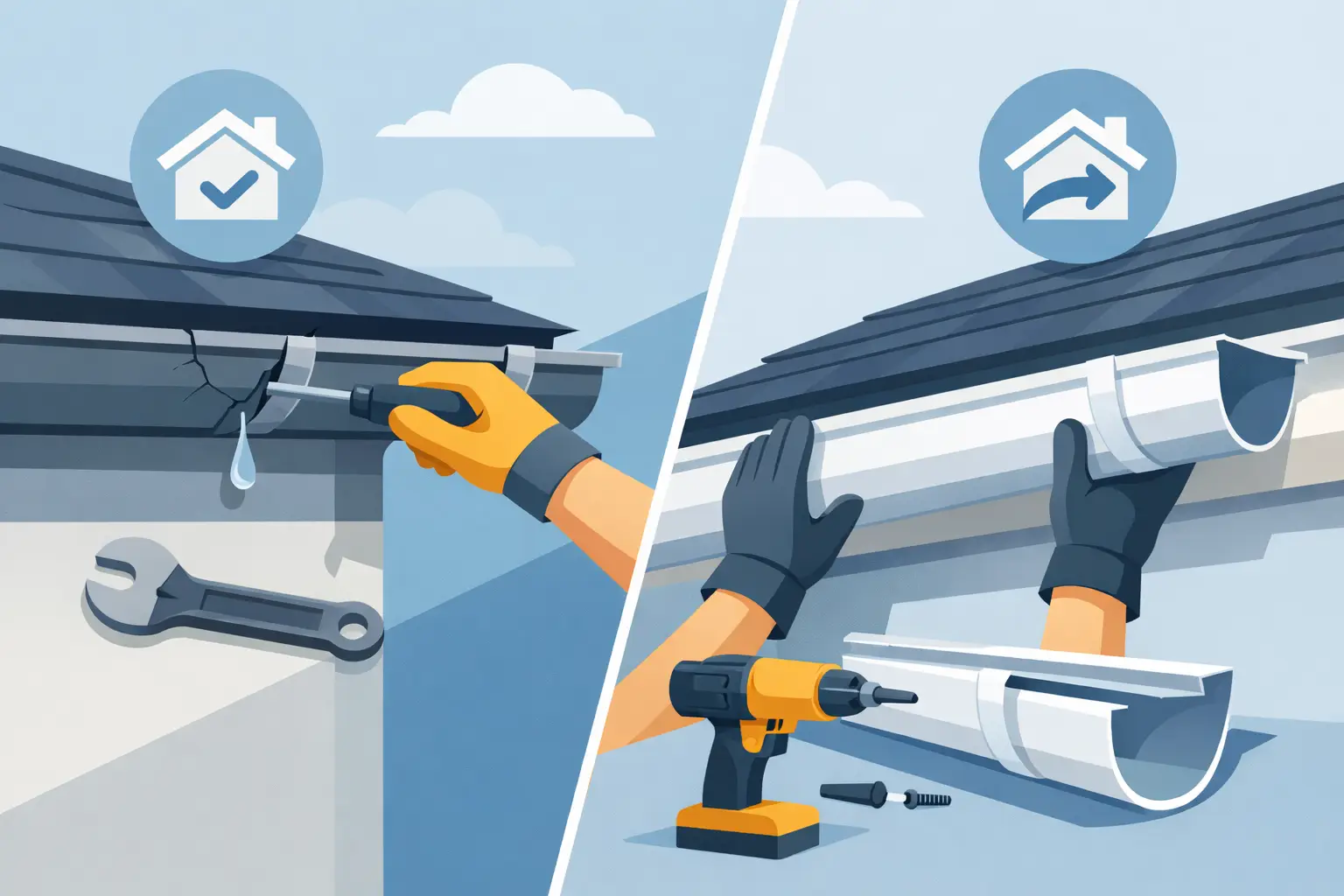

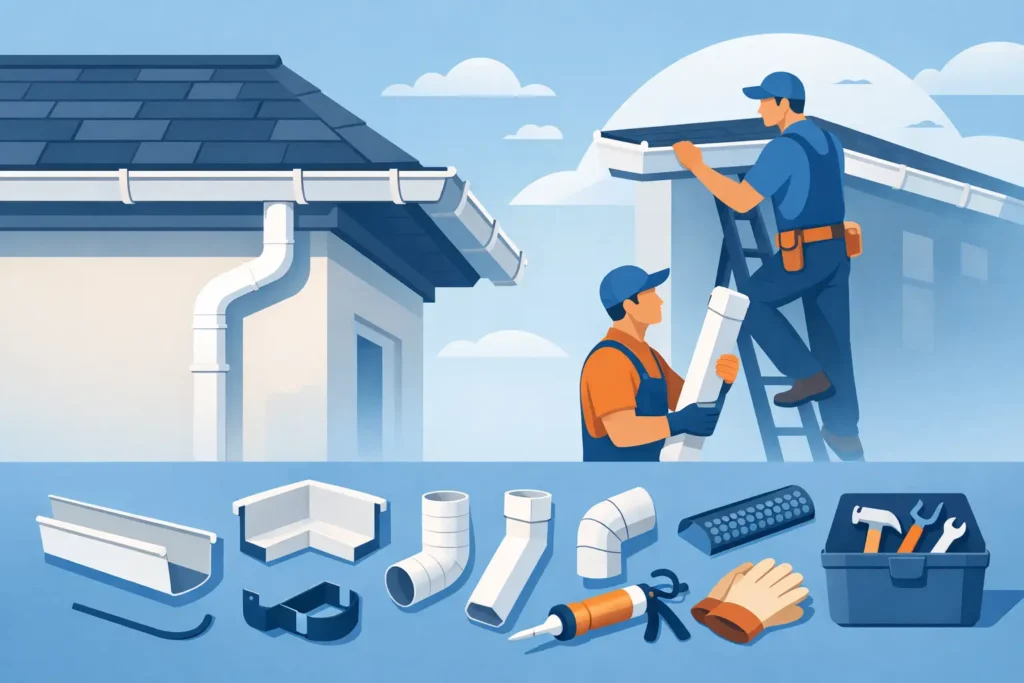
If you have ever looked at a gutter estimate and thought, What exactly am I paying for?, you are not alone. Homeowners across Eastern Indiana and Western Ohio often ask what is included in gutter installation because the right system does a lot more than just catch rain. It protects your roofline, siding, foundation, landscaping, and walkways from water that would otherwise end up in the wrong place.
A good gutter installation should feel clear from the start. You should know what materials are being used, how the system will be attached, where water will be directed, and whether cleanup and haul-away are part of the job. If those details are vague, that is usually a warning sign.
What is included in gutter installation for most homes?
At the most basic level, gutter installation includes measuring the roofline, fabricating or selecting the gutter system, mounting it with the proper slope, adding downspouts, and making sure water drains away from the house. But that short version leaves out the details that make the difference between a system that lasts and one that causes headaches.
For most homes, the process starts with an inspection and measurement. The installer looks at roof edges, fascia condition, roof pitch, valleys, runoff volume, and the best downspout locations. This matters because not every home needs the same layout. A long straight ranch home, a two-story house with multiple rooflines, and a home surrounded by heavy tree cover all have different drainage demands.
Next comes material selection. Many homeowners today choose seamless aluminum gutters because they reduce leak points and give the house a cleaner look. Sectional gutters can cost less upfront, but they have more joints, and joints are often where problems start. If an estimate simply says gutters without explaining whether they are seamless or sectional, it is worth asking.
Installation also includes the supporting hardware. That means hangers, fasteners, end caps, outlets, elbows, and sealants where needed. These smaller parts are easy to overlook, but they affect strength and long-term performance. A gutter is only as reliable as the way it is supported.
The parts that should be on your estimate
A trustworthy quote should break the job into understandable pieces. In many cases, that means line items for gutter runs, downspouts, elbows, outlets, removal of old gutters, and optional add-ons like leaf protection. Some homes also need splash blocks or downspout extensions to move water farther from the foundation.
This is where transparency matters. One contractor may give a low number that leaves out disposal, fascia repairs, or key accessories, then add charges later. Another may show the full cost up front so you know exactly what is covered. For homeowners, the second option is usually the safer one, even if the first number looks tempting at first glance.
If you are comparing bids, do not just compare total price. Compare scope. Does the quote include tear-off of the old system? Is there any fascia replacement built in if damaged wood is discovered? Are downspouts sized correctly for the roof area? Is cleanup included? Those details tell you more than the bottom line alone.
Gutter runs and custom fitting
The main visible part of the project is the gutter channel itself. On a professional job, these runs are measured to fit the home and pitched correctly so water flows toward the downspouts without standing in the trough. With seamless gutters, the installer typically forms each length on site to match the exact dimensions of your home.
That custom fit matters for both performance and appearance. Too many seams can lead to leaks over time. Poor pitch can leave water sitting in the gutter, which adds weight, attracts debris, and shortens the life of the system.
Downspouts and drainage direction
Downspouts are not an afterthought. They are a major part of what is included in gutter installation because they control where all that roof runoff ends up. A good layout places them where water can move away from your foundation without creating puddles, erosion, or icy walkways.
Sometimes that means adding extensions or adjusting locations to fit landscaping, driveways, or patios. On homes with larger roofs or problem drainage areas, extra downspouts may be needed. Fewer downspouts can make an estimate look cheaper, but they can also overload the system during heavy rain.
Hangers, fasteners, and attachment method
Homeowners do not always ask about hangers, but they should. The attachment system holds everything in place during storms, snow load, and seasonal expansion and contraction. Hidden hangers are common on modern systems because they provide clean looks and strong support.
The spacing of those hangers also matters. In areas that get severe weather, proper support helps prevent sagging or pull-away over time. A professional installer should attach the system securely to sound fascia and let you know if that wood is too damaged to support new gutters safely.
What may or may not be included
Not every company includes the same services by default, which is why homeowners should ask direct questions before signing off. Removal and disposal of old gutters is often included, but not always. Minor fascia issues may be noted during inspection, yet repair could be priced separately. If soffit or fascia boards are rotted, that work may need to happen before the new system goes up.
Leaf protection is another item that is often optional rather than standard. For some homes, especially those under mature trees, gutter guards can save a lot of cleaning and reduce clogs. For other homes with minimal debris exposure, they may not be necessary right away. It depends on your property, your maintenance goals, and your budget.
Some installers also include a water test after installation to confirm flow and check for leaks. Others may simply inspect visually. A final walkthrough should always be part of the process so you can see the completed work and ask questions.
Why seamless gutters change the conversation
When homeowners ask what is included in gutter installation, the answer can look different depending on whether the system is seamless. With seamless gutters, on-site fabrication is often part of the service. That means the installer brings specialized equipment to create long continuous sections that fit your home.
The big advantage is fewer joints. Fewer joints usually means fewer leak opportunities and less maintenance over time. Seamless systems also tend to look more finished on the home. The trade-off is that they require specialized tools and professional installation, so they are not usually a weekend DIY project.
For many homeowners, that trade-off is worth it. The upfront investment is often higher than basic sectional gutters, but better fit and lower leak risk can make the long-term value stronger.
Gutter guards, upgrades, and add-ons
A standard installation does not always include gutter guards, but many homeowners ask about them at the same time because it is easier to add protection during installation than after. If your home deals with frequent leaf buildup, pine needles, or seed pods, a premium guard system can reduce maintenance and help water keep moving.
That said, no guard solves every problem in every setting. Some products perform better than others, and installation quality still matters. A well-made continuous-hanger guard system can add strength while reducing debris entry, but it should be presented as a performance upgrade, not a magic fix.
Other add-ons may include oversized gutters for heavy runoff areas, additional downspouts, decorative rain chains, or specific color choices to match trim and siding. These can be worthwhile, but they should be explained clearly so you know which items are essential and which are optional.
What a professional process should feel like
A proper gutter installation should not feel confusing or rushed. You should get a clear inspection, a detailed estimate, and straight answers about materials, timing, and cost. If anything is excluded, that should be stated plainly.
For homeowners, peace of mind often comes down to process as much as product. A contractor who explains the scope, points out existing drainage concerns, and gives itemized pricing is making it easier for you to make a smart decision. That is especially important when you are protecting a home, not just buying a piece of metal.
Seamless Gutter Solutions LLC built its approach around that kind of clarity because most homeowners are not looking for surprises. They want to know the job is being done right, the quote is honest, and the system will protect the home when the next hard rain hits.
If you are reviewing estimates, the best question is not just What do gutters cost? Ask what is included, what is optional, and what happens if the installer finds a problem along the way. A good contractor will answer all of it without hesitation. That kind of clarity is usually the first sign you are making the right investment.