
You usually notice it after a hard rain. Water spills over one section, the gutter looks a little crooked, and suddenly you can see a gap between the gutter and the fascia. If you are wondering what causes gutters to pull away, the short answer is that something has changed in the weight, fastening, or structure supporting the system.
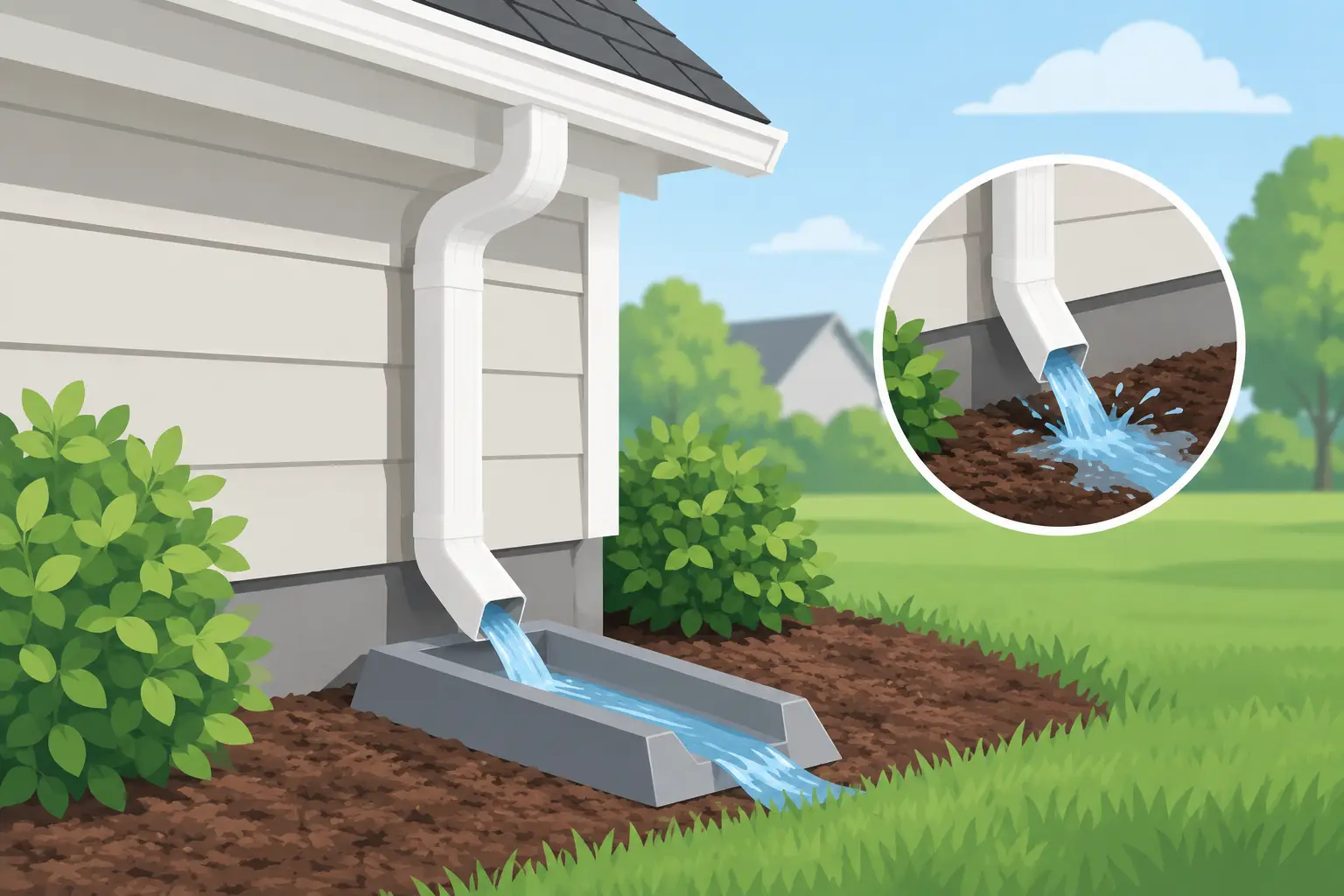
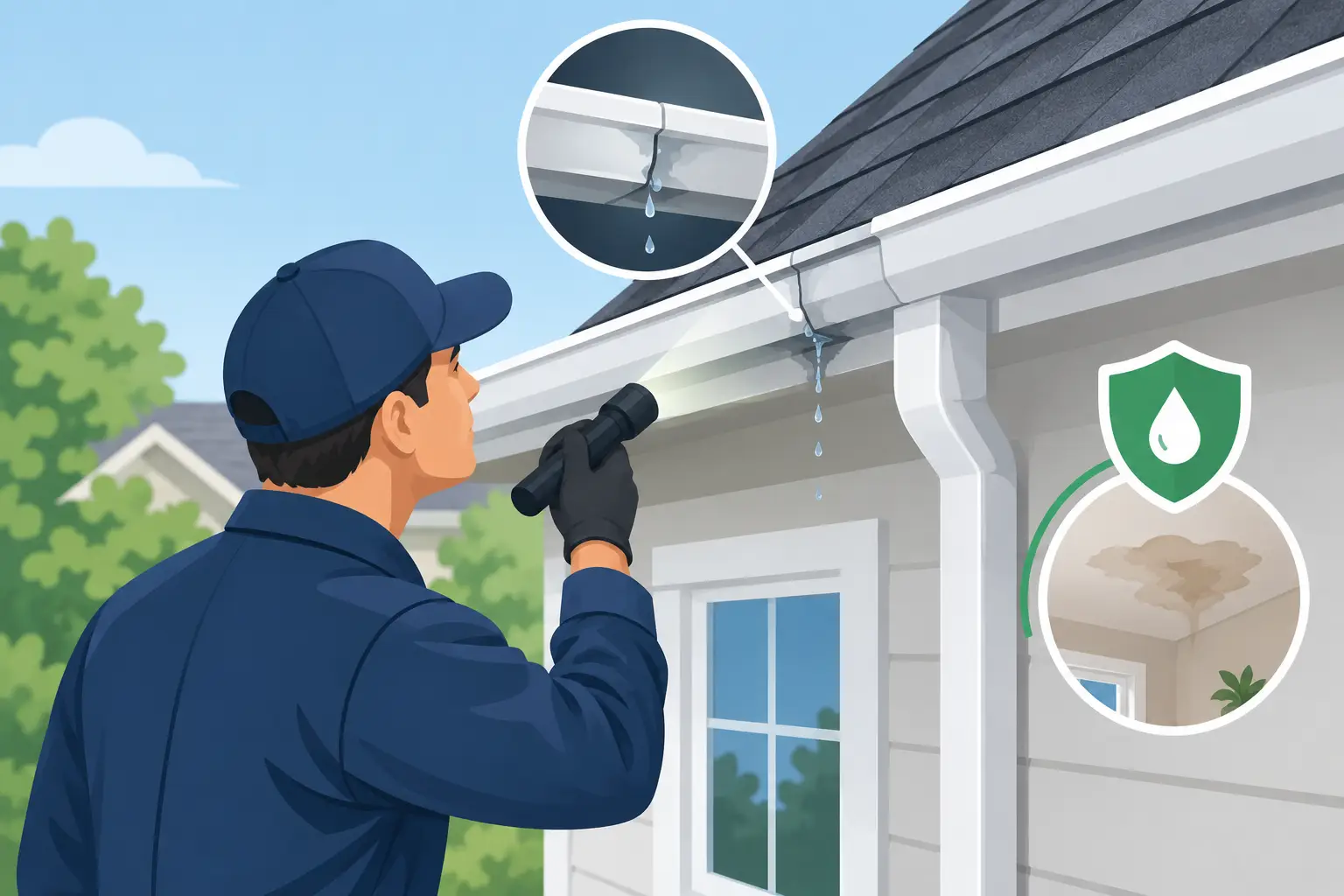
That matters more than most homeowners expect. A gutter that has pulled away is not just a cosmetic problem. It can send water behind the gutter, into the fascia, down the siding, around the foundation, and into the landscaping beds you have already paid to maintain. The sooner you know what is causing the separation, the easier it is to stop a small repair from becoming a bigger exterior problem.
What causes gutters to pull away from the house?
In most cases, gutters pull away because the fasteners loosen, the gutter becomes too heavy, or the wood behind it starts to fail. Sometimes it is one issue. More often, it is a combination.
A gutter system is only as strong as the parts holding it in place. Even a well-installed gutter can start to separate if years of water, debris, ice, and seasonal movement put enough stress on the hangers and the fascia board. That is why the cause is not always obvious from the ground.
Clogged gutters are one of the biggest causes
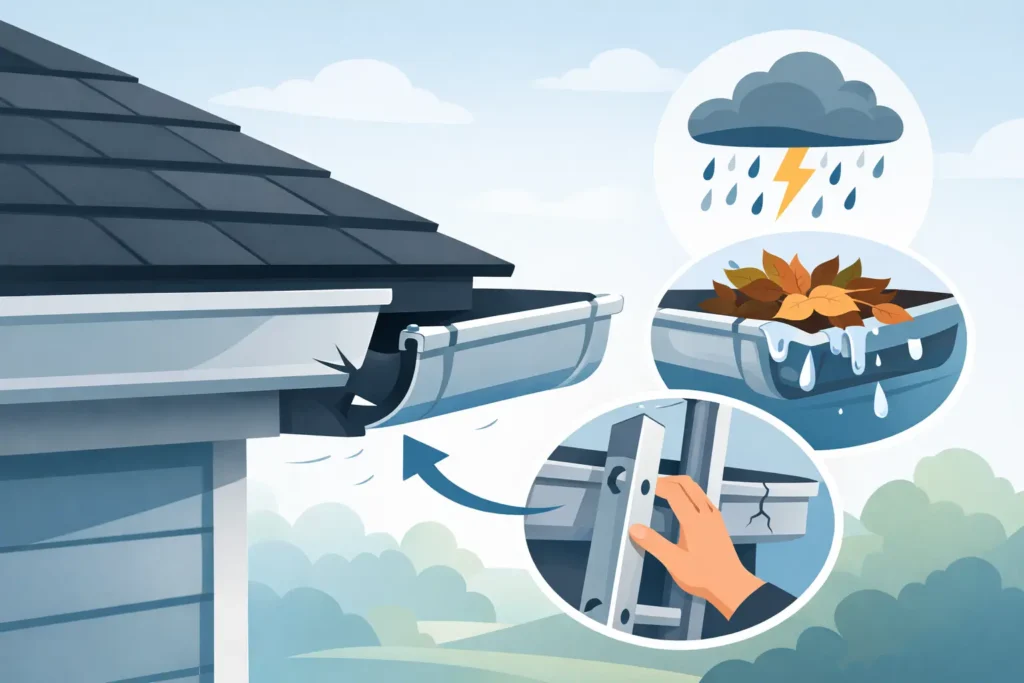
When gutters fill with leaves, sticks, shingle grit, and mud, they stop moving water the way they should. Instead of channeling rainfall toward the downspouts, they hold it. That added weight puts constant strain on the hangers and screws.
During a light rain, you may only see some overflow. During a heavy storm, the gutter can hold a surprising amount of water, especially if the downspout is clogged too. Over time, that weight starts pulling the gutter outward. If the system already has weak fasteners or aging wood behind it, the separation can happen faster.
This is one reason regular cleaning matters so much in Eastern Indiana and Western Ohio. In neighborhoods with mature trees, buildup happens faster than many homeowners expect.
Leaf buildup is not just a maintenance issue
A lot of homeowners think of debris as a cleaning problem, not a structural one. But once gutters are packed full, every storm adds more stress. If the system is repeatedly overloaded, the hangers can bend, spikes can back out, and sections can begin to sag.
That is also where premium gutter protection can make a real difference. The right guard system reduces the amount of debris entering the gutter in the first place, which helps protect both water flow and the hardware holding the system to the home.
Loose or outdated fasteners can let go
Older gutters were often installed with long spikes and ferrules. Those systems can work for a while, but over time the spikes may loosen and begin backing out of the fascia. Once that happens, the gutter no longer sits tight against the house.
Newer hidden hangers with screws generally provide a more secure hold, but even those are not immune to wear if they were spaced too far apart, installed into weak wood, or exposed to repeated stress from clogging and ice.
If you can see nails or spikes sticking out from the front edge of the gutter, that is a strong sign the system is losing its grip. In some cases, re-securing the gutter may solve the issue. In others, the fastener failed because the wood behind it is no longer sound.
Rotting fascia boards are a common hidden cause
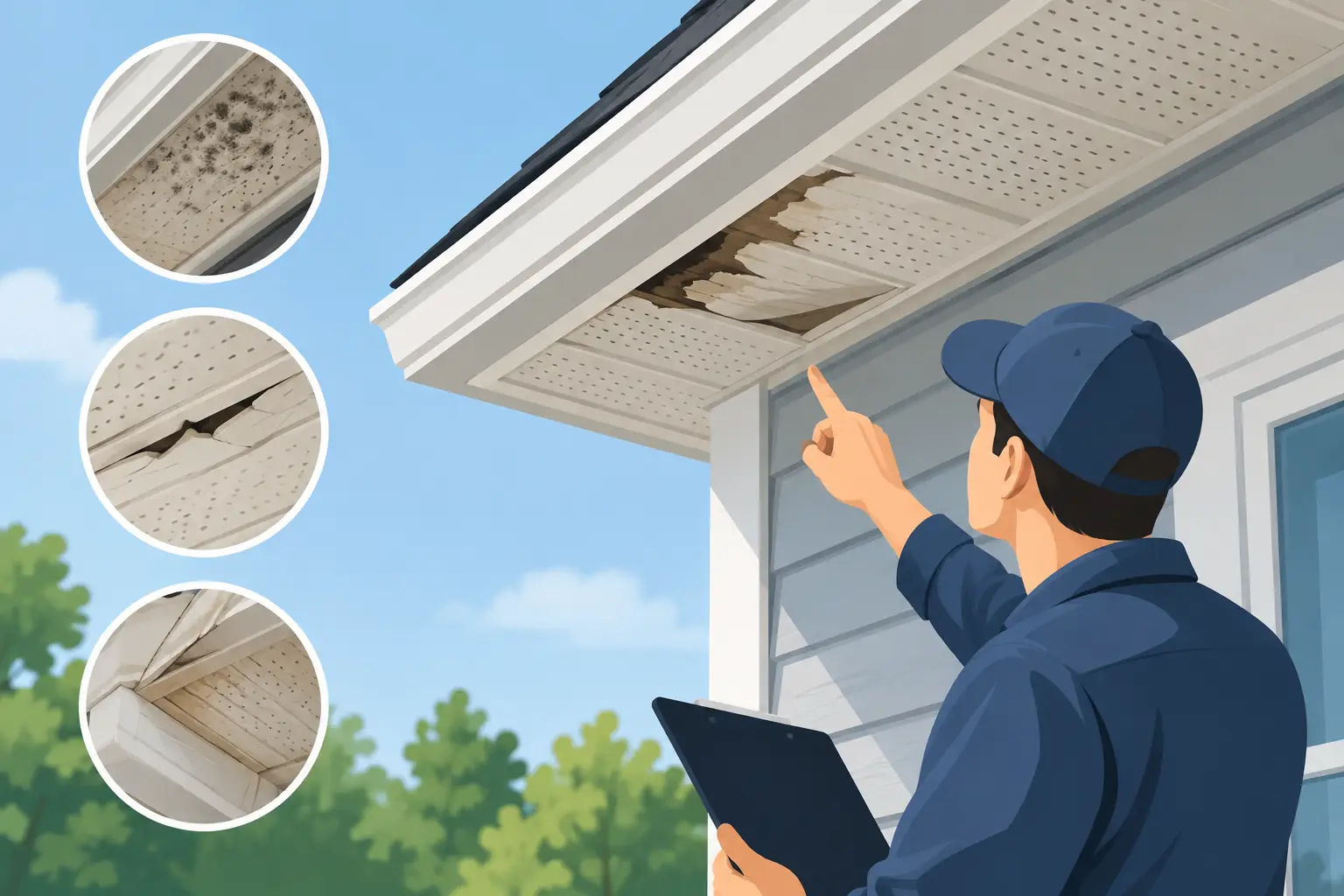
The gutter itself is only part of the system. It attaches to the fascia board, and if that board has started to rot, the gutter may pull away no matter how many times someone tries to screw it back in.
This is one of the most common reasons a quick fix does not last. A contractor can drive a new screw into soft or water-damaged wood, and it may feel secure for a short time. But if the fascia is compromised, the connection will not hold the way it should.
Why fascia rot happens
Fascia boards usually rot because water has been getting behind the gutter or overflowing for a while. That can happen from clogs, bad pitch, leaky joints, or gutters that were already separating. Once moisture keeps reaching the wood, deterioration follows.
Painted wood can hide the problem for a while. From the ground, everything may look normal except for one sagging section. Up close, the board may be soft, cracked, or crumbling around the fasteners.
Improper pitch can create standing water
Gutters need a slight slope so water moves efficiently toward the downspouts. If the pitch is off, water can pool in certain sections instead of draining out.
Standing water adds weight all the time, not just during storms. It also speeds up corrosion in some gutter materials and increases the chance of overflow. If one section always seems heavy or sagged, poor pitch may be part of the problem.
This is where installation quality really shows. A gutter can look straight and still be pitched wrong. That is why a proper inspection matters before anyone decides whether the answer is a simple adjustment or a full replacement.
Ice and snow can stress the entire system
Winter can be hard on gutters in this part of the country. Snow sitting on the roof, followed by freeze-thaw cycles, can create ice buildup along the gutter line. That weight gets heavy fast.
If the gutters are already clogged or loosely fastened, ice can pull them down or away from the fascia. Even if they do not fully detach, they may shift enough to create gaps and leaks.
There is a trade-off here. Not every winter-related issue means the installation was poor. Sometimes weather is simply severe. But strong fastening, proper drainage, and a clear gutter system all reduce the risk of winter damage.
The gutter may be undersized or poorly installed
Sometimes the answer to what causes gutters to pull away is not age. It is that the system was never right for the house.
If hangers are spaced too far apart, if the gutter size is too small for the roof area, or if the downspouts are not placed well, the system has to work harder than it should. Heavy runoff can overwhelm it, and repeated overflow can wear down both the gutter and the fascia.
Seamed sectional gutters can also be more vulnerable over time than seamless systems because joints are common failure points. That does not mean every sectional gutter must be replaced. It does mean older systems often develop multiple weak spots at once, and repair decisions should be made carefully.
Storm damage and ladder damage happen more than people think
A gutter does not always pull away slowly. Sometimes it happens after one event.
A windstorm can loosen a section. A branch can strike the edge and bend the hangers. Even leaning a ladder against the gutter in the wrong spot can twist it enough to damage the attachment points. Homeowners often remember the visible dent but miss the fact that the mounting hardware shifted too.
If the problem appeared suddenly, think back to the last major storm, roof work, tree trimming, or exterior project around the house.
Signs the problem is getting worse
The obvious sign is a visible gap between the gutter and the fascia. But there are other warning signs worth catching early.
You may notice water running behind the gutter instead of into it. You may see peeling paint, dark streaks on the fascia, erosion below the roofline, or a section that sags in the middle. In some homes, the first clue is actually inside the landscaping, where runoff starts carving trenches or pooling near the foundation.
If screws or spikes are backing out, that is not something to watch for six more months. Gutters rarely pull themselves back into place.
Repair or replacement depends on the real cause
This is where homeowners can waste money if they are not given a clear inspection. Some pulled-away gutters need a straightforward repair. If the gutter is still in good shape and the fascia is solid, re-hanging the section with proper hardware may be the smart move.
But if the system is older, repeatedly clogging, leaking at multiple seams, or attached to rotted wood, patchwork repairs can become expensive fast. In that case, replacement may be the better long-term value, especially if a seamless system and quality gutter protection would reduce future maintenance.
A trustworthy estimate should explain exactly what failed, what can be repaired, and where replacement makes more sense. That is the kind of clear, no-surprise approach homeowners deserve.
What to do if your gutters are pulling away
Start with an inspection, not a guess. The visible gap is only the symptom. The real issue may be debris, bad pitch, loose hardware, fascia damage, storm impact, or a combination of all of them.
If you live around Richmond, Muncie, Connersville, Dayton, or nearby communities, a local company that handles installation, repair, and cleaning can usually spot the root cause quickly. Seamless Gutter Solutions LLC takes that practical approach because the goal is not to sell the biggest job. It is to protect the home with the right one.
A gutter that is pulling away is your house asking for attention before water finds a more expensive path. Catch it early, fix the real cause, and you give your roofline, siding, and foundation a much better chance of staying dry.