

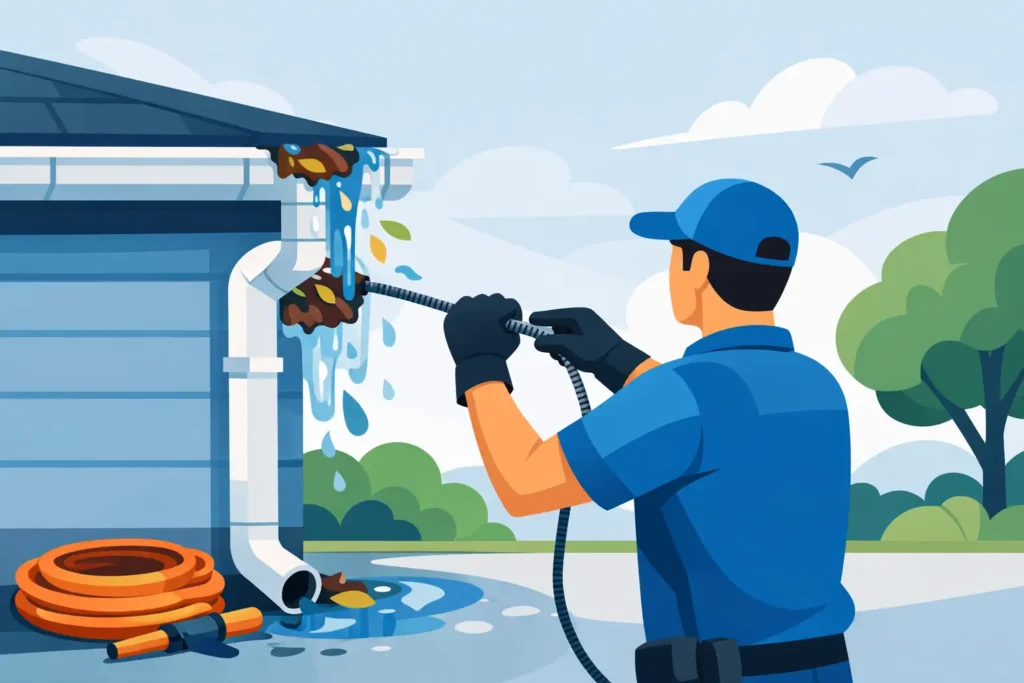
A gutter system usually gives you a warning before it fails. Water spills over the edge during a storm, one section sags, or you notice mulch washed out near the foundation. If you are wondering how to unclog downspouts safely, the goal is not just to get water moving again. It is to fix the blockage without creating a fall risk, damaging the gutter system, or forcing debris deeper into the line.
For many homeowners, the safest approach starts with a simple question: can this be handled from the ground, or does it require ladder work? That decision matters more than the clog itself. A minor blockage near the bottom outlet is very different from a packed downspout attached to a second-story gutter in wet weather.
Why downspout clogs need attention quickly
A clogged downspout turns the whole gutter run into a problem. Instead of channeling rain away from the house, the system backs up and overflows. That water can end up against the foundation, behind fascia boards, onto siding, or into landscaping beds that were never meant to absorb that much runoff at once.
In Eastern Indiana and Western Ohio, heavy seasonal rains, seed pods, maple helicopters, and wet leaf buildup can all contribute to stubborn blockages. If winter freezing follows a blockage, trapped water can add even more stress to hangers, seams, and joints. What starts as a maintenance issue can become a repair bill.
Safety comes first before you clear anything
If you take nothing else from this guide, take this: do not rush a downspout clog. Most homeowner injuries around gutters happen because someone tries to stretch too far from a ladder, works on slick ground, or uses the wrong tool overhead.
Before you begin, wait for dry conditions and daylight. Wear work gloves and eye protection. Use shoes with good traction. If the ground is soft, uneven, or sloped, that changes the risk level right away.
It also helps to know when not to do it yourself. If the clog is high on a second-story run, the downspout is loose, the gutter is pulling away from the house, or power lines are nearby, this is usually a job for a professional. Clearing a clog is not worth a fall or a damaged gutter system.
Tools that help you unclog downspouts safely
You do not need a truck full of equipment. In most cases, a few basic tools are enough: gloves, a garden hose with a spray nozzle, a bucket, and a stable ladder if ladder access is truly necessary. A plumber’s snake or drain auger can help with compacted debris, and a handheld scoop is useful if the gutter above the downspout opening is packed.
What you want to avoid is anything sharp or overly aggressive. Metal rods, coat hangers, and makeshift hooks can puncture aluminum, scratch protective finishes, or jam debris tighter into elbows. A pressure washer can work in some situations, but it can also blast debris unpredictably, force apart weak joints, or make ladder work more dangerous. For most homeowners, a hose and controlled pressure are the safer choice.
How to unclog downspouts safely from the ground
If your downspout has a bottom extension or splash block, start there. Remove the extension if possible and look directly into the lower opening. Many clogs collect at the elbow near the bottom because leaves and grit settle there first.
With gloves on, pull out any visible debris by hand. If the blockage is just inside reach, this may solve the problem immediately. Once the opening is cleared, run water upward through the bottom with a hose. This may seem backward, but it often loosens compacted material and pushes it back toward the top where it can break apart.
Go slowly. If water starts backing out toward you right away, the clog is likely dense or higher than expected. In that case, stop forcing water and try a drain snake carefully through the lower opening. Feed it gently. If you meet solid resistance, do not jam it. Twist and pull back to break up the debris instead of compacting it farther into the elbow.
When the clog releases, flush the downspout thoroughly until water runs freely. You want to see a steady discharge, not a weak trickle.
How to unclog downspouts safely with ladder access
Sometimes the blockage is not in the lower elbow. It starts where the gutter drops into the downspout opening, especially if leaves have formed a mat over the outlet. If that area is reachable from a first-story ladder setup on level ground, you may be able to clear it safely.
Set the ladder on firm, dry ground and keep three points of contact as you climb. Do not lean out to the side. If you cannot reach the work area comfortably while staying centered, climb down and reposition the ladder.
At the top, remove loose debris from the gutter near the outlet first. If the opening is packed, clear it by hand or with a plastic scoop. Then run water from the hose into the downspout opening and watch what happens below. If water drains normally, the clog was at the top. If it backs up, there is still a blockage somewhere inside the downspout.
This is where homeowners often overdo it. If the downspout remains clogged after basic clearing and flushing, more force is not always the answer. Older systems, loosely fastened elbows, and repaired sections can separate under pressure. It depends on the age and condition of the system.
Signs the clog is more than a simple blockage
Not every overflow means you only have a clog. Sometimes debris buildup is covering a larger issue, such as poor pitch, damaged hangers, crushed downspout sections, or a disconnected elbow behind the wall of water.
A few signs point to a bigger problem. If one area overflows even after you clear the downspout, the gutter may not be sloped correctly. If you hear dripping inside a wall or near soffits, water may be escaping where it should not. If the downspout shakes, bows outward, or leaks at joints during flushing, there may be hardware failure or seam separation.
That is usually the point where a professional inspection makes more sense than continued trial and error. A good contractor should be able to explain what is happening, show you the problem areas, and provide a clear estimate without vague add-ons.
Preventing the next clog
The best way to deal with downspouts is to keep them from clogging in the first place. Regular gutter cleaning matters, especially in neighborhoods with mature trees. Even a well-installed system will struggle if leaves, twigs, seed pods, and roof grit are left to collect season after season.
This is also where protection systems can make a real difference. Not all gutter guards perform the same way, and some lower-cost options still allow fine debris to accumulate at trouble points. Homeowners who are tired of repeated cleanings often benefit from a more durable leaf protection system that helps maintain flow while supporting the gutter itself.
If your home has a history of clogs, overflow, or hard-to-reach sections, it may be worth looking beyond basic maintenance. Seamless Gutter Solutions LLC often works with homeowners who want fewer recurring problems, clearer expectations, and an estimate process that is straightforward from the start.
When calling a professional is the safer move
There is no prize for clearing a difficult downspout yourself. If the work involves second-story height, unstable footing, storm damage, or repeated backups, professional service is often the safer and less expensive choice in the long run.
An experienced gutter technician can tell whether the issue is a packed clog, a design problem, or wear that has built up over time. That distinction matters. Clearing debris without addressing pitch, fastening, or guard performance can leave you right back in the same spot after the next hard rain.
For homeowners, the practical standard is simple: if you can clear the blockage from the ground or from a stable first-story ladder position without stretching, forcing, or guessing, it may be reasonable to handle. If not, stepping back is the smart decision.
A downspout should move water away from your home quietly and consistently. When it does not, the safest fix is the one that restores flow without putting you or your gutter system at risk.