
A gutter can look clear from the ground and still be one heavy rain away from overflowing. Leaves settle at the downspout opening, roof grit builds along the bottom, and water begins spilling over the front edge instead of moving safely away from the house. Understanding how gutter guards reduce cleaning helps homeowners make a practical decision about preventing that cycle – especially in Eastern Indiana and Western Ohio, where spring storms, falling leaves, and winter debris all put drainage systems to work.
Gutter guards are not a promise that your gutters will never need attention again. They are a barrier and filtration system designed to keep most large debris out while letting rainwater enter the gutter. When the right guard is paired with properly sized, correctly pitched gutters, it can substantially reduce the frequency, mess, and ladder time involved in gutter maintenance.
How Gutter Guards Reduce Cleaning Work
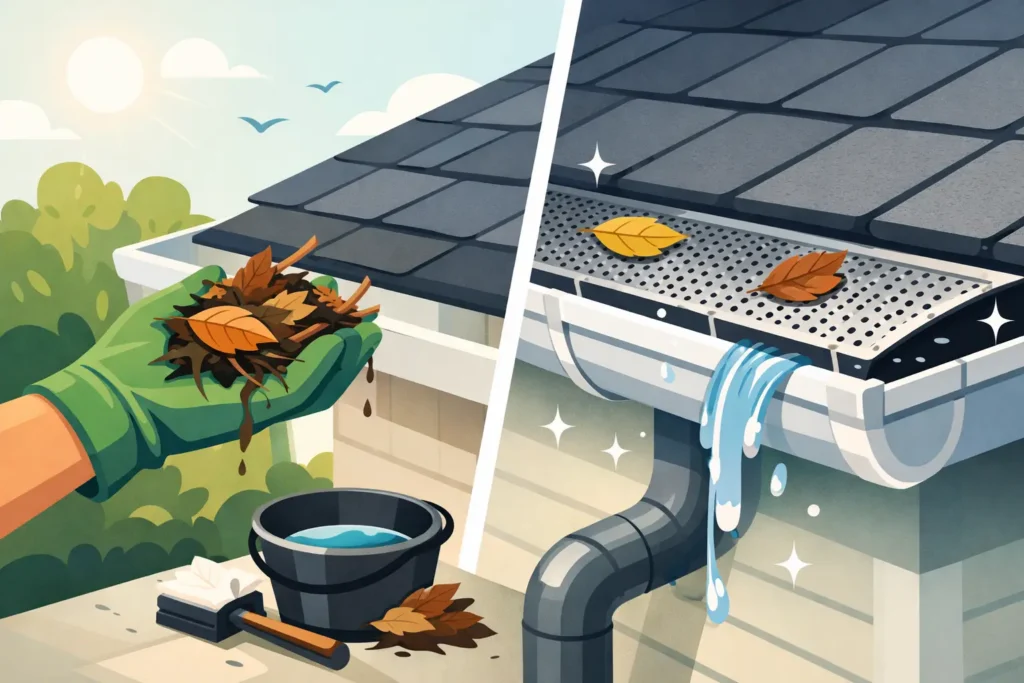
Without guards, gutters are open trays. Leaves, seed pods, twigs, pine needles, roofing granules, and windblown debris land directly inside them. Some debris washes toward the downspouts, but much of it stays behind. Once it gets wet, it can turn into a dense layer that blocks water flow and is difficult to remove.
A gutter guard covers the gutter opening and controls what gets inside. Rainwater passes through or around the guard, while larger debris stays on top. Wind and normal rainfall can move much of that debris off the roof edge, rather than allowing it to collect in the trough.
That simple separation changes the cleaning job. Instead of repeatedly scooping wet material from inside a gutter, a homeowner may only need to remove occasional debris resting on top of the guard and have the system inspected. The gutters and downspouts are less likely to develop the compacted clogs that turn a basic cleaning into a longer repair visit.
Less debris inside means fewer clogs
The biggest maintenance benefit is keeping leaves out of the gutter channel. A clear channel gives water a direct path to the downspout. When leaves collect inside an unprotected gutter, they can form a dam that catches even more debris. Water then backs up, overflows, or sits against the fascia.
Guards interrupt that buildup early. This is especially useful for homes near mature maple, oak, cottonwood, or pine trees. No guard handles every kind of debris in exactly the same way, but a well-designed system keeps the bulk of common leaf litter from becoming a soggy blockage inside the gutter.
Cleaner gutters protect the parts you cannot easily see
Cleaning is not only about appearance. Debris that holds moisture in a gutter can contribute to corrosion, staining, and premature wear. Standing water can also expose weak seams, loose hangers, or failing end caps that might otherwise have stayed dry.
When debris is kept out, the gutter can dry more readily after rainfall. That helps preserve the system and makes future inspections more useful. A technician can see the actual condition of the gutter instead of digging through a layer of wet leaves to find the problem.
Fewer trips up the ladder
For many homeowners, the most valuable benefit is reduced ladder use. Gutter cleaning is often awkward work: carrying tools, reaching over the roof edge, handling slippery debris, and moving a ladder around the home. Reducing how often that job is needed lowers exposure to a task that can become risky quickly.
That does not mean homeowners should ignore the roofline after a storm or assume every downspout is clear forever. It means the routine is generally simpler. A visual check from the ground, occasional removal of debris on top of the guard, and professional inspection when needed are usually safer than frequent full cleanouts.
The Guard Design Matters as Much as the Guard Itself
Not all gutter guards perform the same way. Brush inserts and foam filters can collect debris within the gutter itself, which may create another material that needs cleaning or replacement. Basic screens can block large leaves but may allow smaller particles to enter, depending on the opening size and the trees around the home.
A fitted, durable guard system is usually the better long-term choice because it is installed as part of the drainage system rather than dropped into it. The guard should allow water to enter efficiently, remain secure in high winds, and avoid creating gaps where debris can bypass the protection.
Continuous-hanger systems offer an additional advantage: they help support the gutter along its length while providing leaf protection. Double Pro by Alurex is one example of this type of premium system. It combines a continuous hanger with an integrated guard, helping keep gutters securely fastened while reducing the amount of debris that reaches the interior.
The best choice still depends on the home. Roof pitch, shingle style, gutter condition, nearby trees, and the volume of rainfall all affect performance. A guard installed over a poorly pitched gutter or a downspout with an existing blockage will not solve the underlying drainage issue. That is why an inspection should come before a recommendation.
What Gutter Guards Do Not Eliminate
A trustworthy answer includes the trade-offs. Gutter guards reduce cleaning, but they do not eliminate maintenance altogether. Fine roof grit, pollen, small seeds, and shingle granules can still enter some systems. Debris may also rest on top of the guard, particularly after a windstorm or during heavy leaf drop.
Homeowners should also watch for signs that water is not moving as it should. Overflowing at one section, water pouring behind the gutter, staining on siding, or puddles near the foundation deserve attention. Those issues can point to a clogged downspout, loose gutter section, incorrect pitch, or roof runoff that exceeds the system’s capacity.
Guards cannot repair sagging gutters, damaged fascia, or undersized downspouts. In fact, covering a gutter before correcting those problems can make it harder to identify the real cause of overflow. A professional should evaluate the full system – gutters, hangers, outlets, downspouts, and drainage path – before installing protection.
A Practical Maintenance Routine After Guard Installation
With guards in place, maintenance becomes more focused. Check the roofline after major storms, especially if branches or heavy leaf litter are visible. Look for water spilling over the gutter edge during rain. From the ground, confirm that downspouts are directing water away from the foundation rather than pooling beside the home.
A professional seasonal inspection is a sensible option for homes surrounded by trees, homes with steep roofs, or homeowners who do not want to use ladders. The inspection can confirm that the guards are secure, remove buildup from the surface where necessary, and verify that downspouts remain open.
In this region, late fall is a common time for an inspection because leaf drop can continue well into the season. Spring is also useful after winter ice, wind, and thaw cycles. The right schedule depends on your property, not a one-size-fits-all calendar.
When Gutter Guards Are Worth the Investment
Gutter guards make the most sense when cleaning is frequent, difficult, or unsafe. They can also be a smart addition when a homeowner is installing new seamless gutters and wants to protect that investment from the beginning. Keeping debris out supports more consistent water flow, which helps protect siding, landscaping, foundation areas, and the roof edge from repeated overflow.
For a home with few nearby trees, guards may still reduce nuisance debris, but the payoff can be less dramatic. For a property beneath large trees, the reduction in cleaning can be substantial. The key is choosing a system based on the home’s conditions and having it installed correctly.
Seamless Gutter Solutions LLC provides free inspections and detailed, itemized estimates so homeowners can understand whether gutter protection fits their property before making a decision. A clear assessment should explain the condition of the existing gutters, the recommended work, and the expected maintenance needs – with no hidden fees.
The goal is not to make a promise that gutters will never need care. It is to make that care safer, less frequent, and far less likely to turn into a water problem at the edge of your home.