

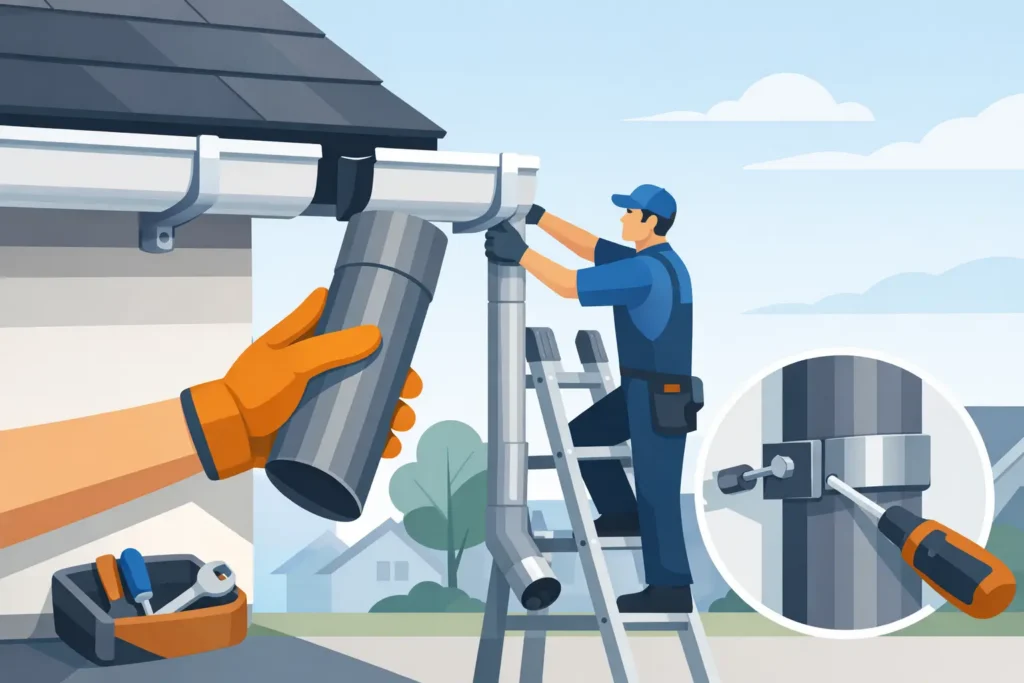
A downspout that pulls away from the house is easy to ignore until the next hard rain sends water against your siding, around your foundation, or straight into your flower beds. That is why gutter repair for loose downspouts matters more than most homeowners expect. What looks like a small hardware problem can turn into wood rot, basement moisture, and erosion if the water is no longer being carried safely away from the home.
Loose downspouts usually do not happen for just one reason. Sometimes the straps have rusted out. Sometimes the screws have backed loose from age, wind, or repeated expansion and contraction through the seasons. In other cases, the downspout is not the real problem at all. The gutter above may be sagging, the outlet may be clogged, or the wall surface behind the straps may already be damaged.
What causes loose downspouts in the first place?
The most common cause is simple wear. Fasteners loosen over time, especially on older systems that have been through years of storms, ice, and debris buildup. If your gutters overflow regularly, the extra weight and movement can put added strain on the downspout connections and wall straps.
Poor installation is another frequent issue. Downspouts need to be secured at the right points with the right hardware for the siding or exterior material. If they were attached with undersized screws, spaced too far apart, or anchored into weak material, they may never have had a strong hold to begin with.
There is also the possibility of impact damage. A ladder set in the wrong place, a mower throwing debris, or even a branch hitting the side of the house can bend sections and pull fasteners loose. In regions that see freeze-thaw cycles and heavy seasonal weather, small alignment issues can get worse fast.
Signs your home needs gutter repair for loose downspouts
Some signs are obvious. You may see the downspout hanging away from the siding or notice a strap that has snapped entirely. Other signs are easier to miss unless you look during or just after a rain.
Watch for water spilling behind the downspout, stains on siding, muddy trenches near the foundation, or mulch getting washed out from one corner of the house. You may also hear rattling or banging during windy weather. That noise often means the downspout is moving more than it should, which wears out connections even faster.
If the problem has been there for a while, the warning signs may show up indoors too. Damp basement walls, musty smells, or water pooling near the foundation can all trace back to drainage issues outside. The downspout may not be the only problem, but it is often part of the chain.
When a quick fix works – and when it does not
There are cases where a straightforward repair makes sense. If the downspout itself is in good shape, the wall surface is sound, and only one or two fasteners have failed, reattaching it with proper hardware may be enough. Replacing a rusted strap or tightening loose screws can solve the issue if it is caught early.
But there is a point where a quick fix becomes temporary at best. If the metal is bent, the seams are separating, or the outlet from the gutter is backing up with debris, simply adding a new screw will not fix the reason it came loose. The same is true if the fascia, siding, or trim behind the downspout has softened from water damage. Fasteners need solid material to hold.
This is where homeowners often lose time and money. A repair looks simple from the ground, but the visible loose section may only be the symptom. A good inspection should answer a bigger question: is this an isolated attachment issue, or is the gutter system no longer draining correctly?
The hidden risks of delaying repair
Water rarely stays where it starts. Once a downspout stops directing runoff away from the house, it can affect multiple areas at once. Siding may take repeated splashback. Soffit and fascia can stay damp longer than they should. Soil around the foundation can become oversaturated, which is especially risky near basements, crawl spaces, and entry points.
There is also the landscaping problem. Homeowners often notice the cosmetic damage first – flattened plants, bare soil, or washouts near corners – but the structural concern is more important. Concentrated runoff can settle near the base of the home and create trouble long before it becomes visible inside.
Delaying repair can also turn a targeted service call into a larger gutter project. A loose downspout that gets fixed early may need basic re-securing and minor adjustment. Leave it through a few strong storms, and you may be dealing with damaged gutter sections, rotted attachment points, or recurring overflow that points to a failing system.
What professional gutter repair for loose downspouts should include
A proper repair should start with inspection, not guessing. The contractor should check the downspout, the straps, the elbows, the outlet connection, and the gutter section feeding that downspout. They should also look at the wall surface and the drainage path at ground level. If water reaches the bottom of the downspout but dumps right next to the foundation, the system still is not doing its job.
The repair itself may involve replacing straps, re-anchoring the downspout with more appropriate fasteners, sealing joints, reshaping bent sections, or replacing damaged pieces. If clogs or poor pitch are contributing to the issue, those should be addressed at the same time.
This is also where transparency matters. Homeowners should know whether they are paying for a true repair or a short-term patch. A detailed estimate helps clarify that. If additional issues are found, they should be itemized clearly so you can decide what needs immediate attention and what can wait.
Repair versus replacement
Not every loose downspout means you need new gutters. In many cases, repair is the right call and can extend the life of the system. That is especially true when the gutters are otherwise functioning well and the problem is limited to one area.
Replacement becomes more worth considering when the system has multiple failure points. If the gutters are pulling away, the downspouts are loose in more than one location, seams leak regularly, and clogging is a constant issue, it may make more financial sense to upgrade rather than keep paying for repeated repairs.
This is where seamless systems and quality leaf protection can change the maintenance picture. Fewer seams mean fewer leak points, and a well-supported gutter guard system can reduce the debris load that contributes to overflow and stress. That does not mean every home needs a full upgrade today. It means the right recommendation depends on the condition of the whole system, not just the loose strap you can see from the driveway.
How homeowners can prevent the problem from coming back
The best prevention is regular inspection, especially after storms and at seasonal changeovers. You do not need to become a gutter expert, but it helps to notice early signs: a rattling downspout, overflowing corners, visible gaps, or fasteners on the ground.
Routine cleaning also matters. When gutters fill with leaves and debris, water backs up and adds weight where the system is already vulnerable. If your home has recurring buildup, adding a premium guard system may reduce the strain and the need for repeated cleanouts.
Most importantly, do not wait for visible interior damage before acting. Exterior drainage problems are easier and less expensive to fix when they are still small. A loose downspout is one of those repairs that can look minor while creating bigger risks in the background.
For homeowners in Eastern Indiana and Western Ohio, the safest next step is usually a clear inspection and a straightforward quote from a company that will tell you exactly what is wrong, exactly what it will cost, and whether a repair truly solves the problem. Seamless Gutter Solutions LLC is built around that kind of process because protecting your home should not come with guesswork, vague pricing, or surprises. A solid downspout connection may not be the most exciting part of your house, but when the rain starts, it does a job you really do not want to leave to chance.