
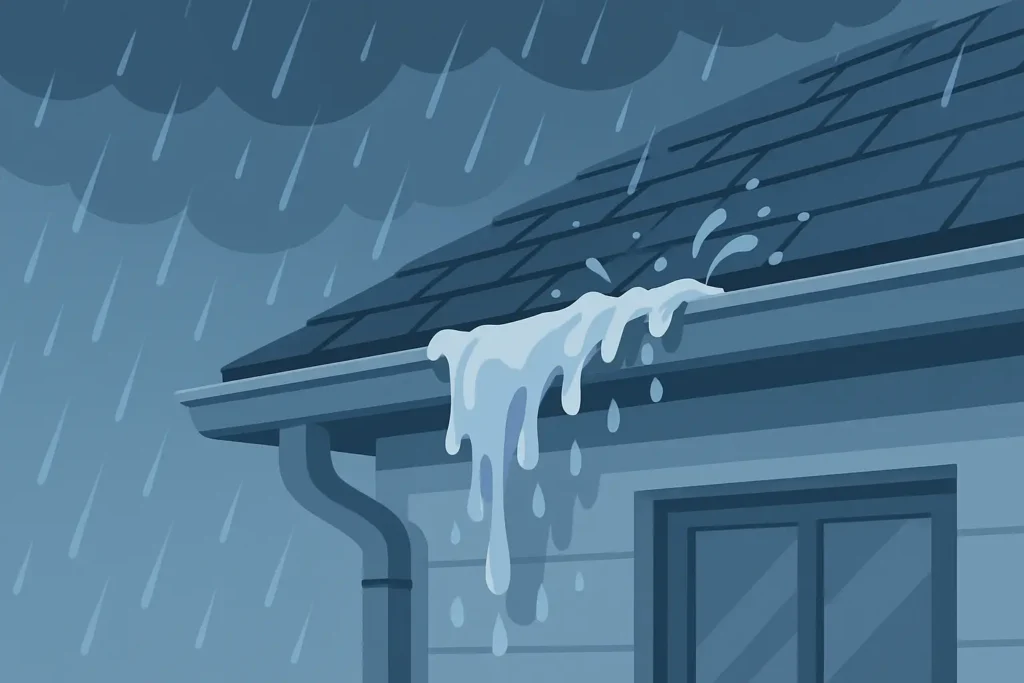
You know that sound – rain pounding hard enough that you can barely hear the TV, and then you spot it: water spilling over the front edge of the gutter like a mini waterfall. If it only happens during the biggest downpours, it is tempting to shrug it off as “just what gutters do.” But overflow is one of the clearest signals that water is not being controlled the way your home needs.
For homeowners around Richmond, IN and across nearby parts of Eastern Indiana and Western Ohio, heavy rain is not rare. When gutters overflow, the extra runoff does not just disappear. It can saturate landscaping, stain siding, erode soil, and push water where it does the most expensive damage – near your foundation and basement.
Gutter overflow in heavy rain causes: the big picture
Gutters are simple by design: they collect roof runoff, move it to downspouts, and send it away from the house. Overflow happens when that system cannot accept water fast enough, cannot move it fast enough, or cannot discharge it fast enough.
Sometimes the cause is obvious, like a downspout packed with leaves. Other times it is a design issue that only shows up when rainfall intensity spikes. The tricky part is that “it only overflows in heavy rain” can still mean a real problem – because heavy rain is exactly when your home needs the system to perform.
The most common gutter overflow in heavy rain causes
1) Clogs and slowdowns inside the gutter channel
Even a thin layer of shingle grit, seeds, or decomposing leaves can reduce how much water the gutter can carry. In a normal rain, it might not matter. In a downpour, the reduced capacity shows up immediately as spillover.
If you see overflow in one section but not the rest of the house, there is a good chance debris is built up right there, or the gutter is holding water because it is not sloped correctly (more on pitch below). You might also notice plants or moss starting to grow in the gutter. That is a clear sign the system is retaining wet debris long enough to become soil.
2) Downspouts that cannot keep up (or cannot drain)
A gutter can be perfectly clean and still overflow if the downspout is restricted or undersized. During heavy rainfall, the downspout is the choke point. If water cannot exit quickly, it backs up in the gutter until it spills over.
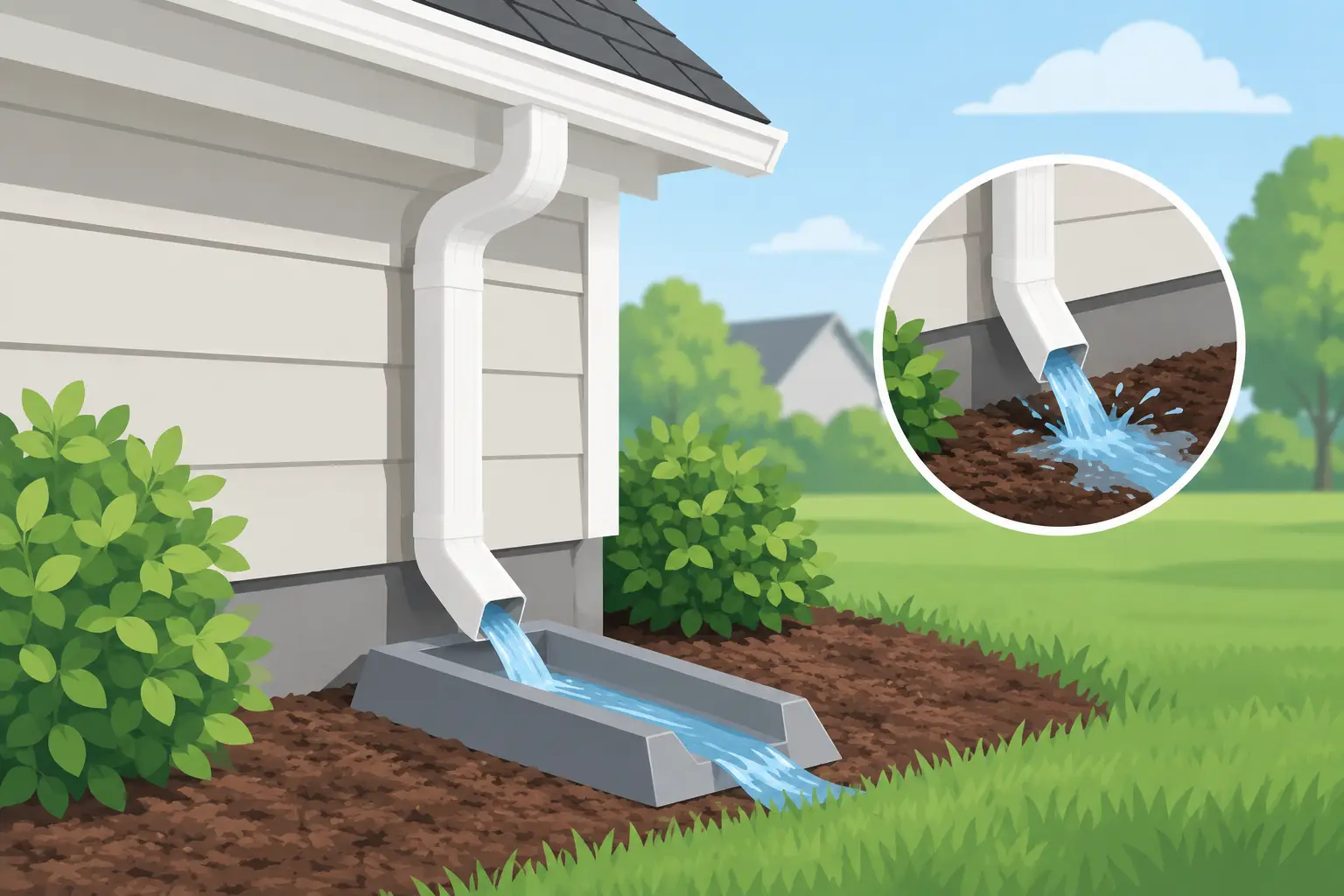
Common downspout issues include a clog in the vertical run, a crushed section, or a tight elbow at the bottom packed with grit. Another overlooked problem is the discharge point. If the downspout dumps into a saturated area, a buried drain that is blocked, or a splash block that is sunk below grade, water can pool and create backpressure. You will often see this as overflow right above the downspout location.
3) Gutters that are too small for the roof area
Not all gutter systems are built for the same volume. A larger roof plane, a steep pitch, and valleys that concentrate runoff can overwhelm a standard-size gutter during intense storms.
Two houses can get the same rainfall, but one experiences overflow because the roof funnels water to a few “hot spots.” Roof valleys are the classic example. When two roof planes meet, they channel water into a narrow line. That concentrated flow can overshoot the gutter or fill it faster than the downspout can drain.
This is where “it depends” matters. A gutter size that works fine on a simple ranch home may struggle on a two-story with multiple valleys and long runs. The fix is not always bigger gutters everywhere – sometimes it is better placement, more downspouts, or both.
4) Improper pitch and sagging sections
Gutters need consistent slope toward downspouts. If a section is pitched the wrong way, water collects instead of flowing. In heavy rain, that pooled water quickly reaches the front lip and spills.
Sagging is often caused by aging fasteners, sections pulling away from the fascia, or long runs that were not supported properly. You may notice a “low spot” that holds water after a storm. That is not just an annoyance – standing water accelerates corrosion, adds weight, and can pull the gutter farther out of alignment over time.
5) The gutter is mounted too high (or the roof edge is wrong)
A common overflow scenario is water going behind the gutter, or shooting past it, even when the gutter is clean. That can happen if the gutter is installed too high relative to the roof edge, or if the drip edge and shingles are not directing water into the trough.
In heavy rain, water moves fast. If the roof edge sends water out and away instead of down into the gutter, it can overshoot the front. If it runs behind the gutter, you may see fascia rot, peeling paint, and staining. This is one of those problems that can look like “gutter overflow” but is really a roof-to-gutter transition issue.
6) Guard systems that do not match your roof and trees
Homeowners often choose guards to reduce cleaning, which makes sense. The trade-off is that not every guard style behaves the same in a downpour.
Some covers can shed water well at moderate flow but struggle at very high volume, especially near valleys. Other designs can trap fine debris or shingle grit, slowly reducing capacity until overflow returns. The goal is not “a guard” – it is a guard that maintains flow while keeping debris out.
If you already have a guard and overflow started afterward, that is worth inspecting. It might be an installation detail, a slope issue, or a guard type that is not performing well in your specific conditions.
7) Ice, snow, and winter damage that shows up later
In our region, winter can quietly set you up for spring overflow. Ice can bend hangers, loosen fasteners, and shift pitch. A gutter that looks fine from the ground may have small alignment changes that only reveal themselves when the water volume spikes.
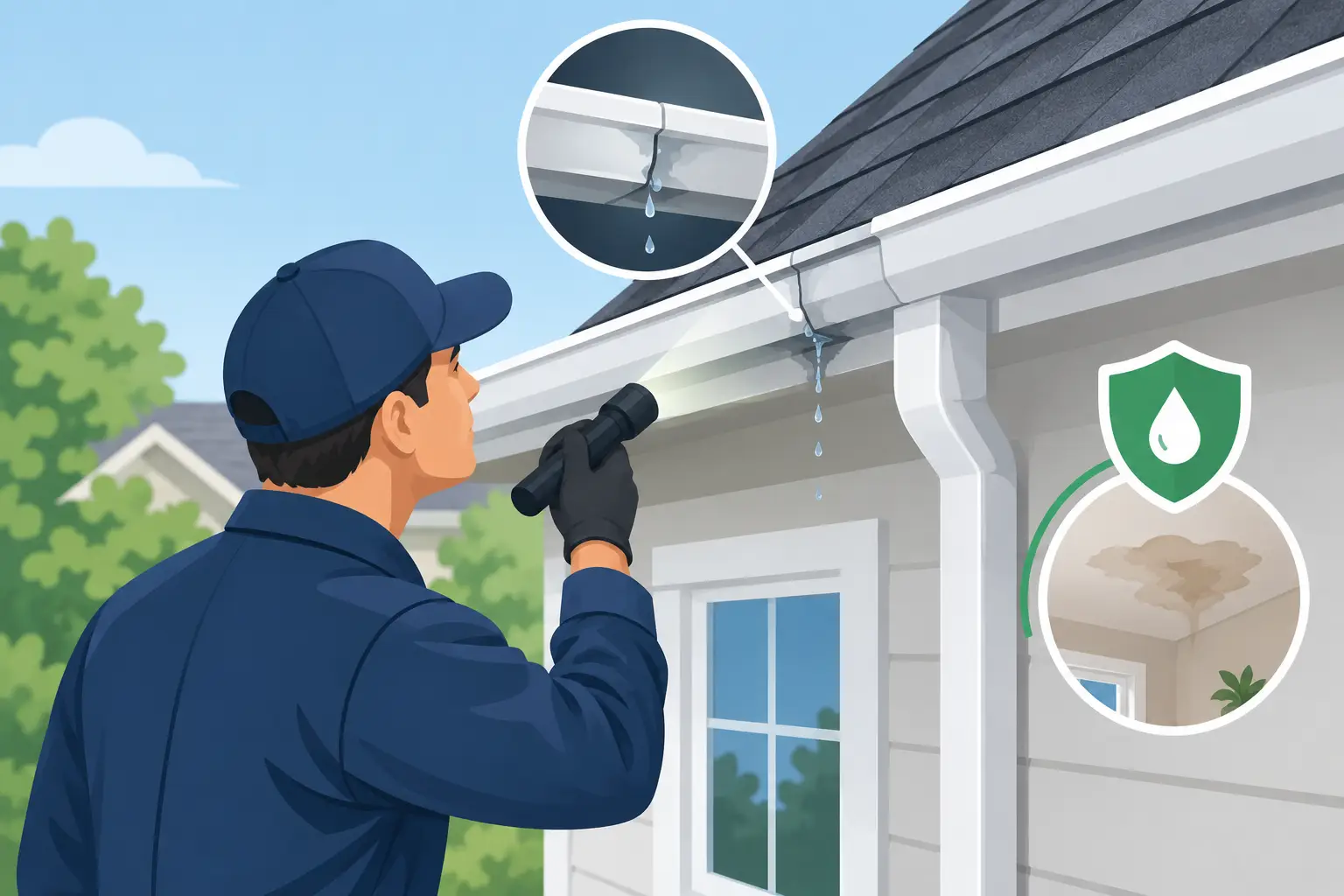
If overflow appears after winter, especially in the same spots, it is smart to check for subtle sagging, separated seams, or downspout joints that have opened up.
What overflow can do to your home (and why it is worth fixing)
Overflow is not just messy. It changes where water lands and how long it stays there.
When water cascades off the roof edge, it can dig trenches in mulch and soil, splash mud onto siding, and beat down plants. More importantly, repeated heavy runoff near the foundation can increase hydrostatic pressure against basement walls, worsen crawlspace moisture, and contribute to settlement issues over time.
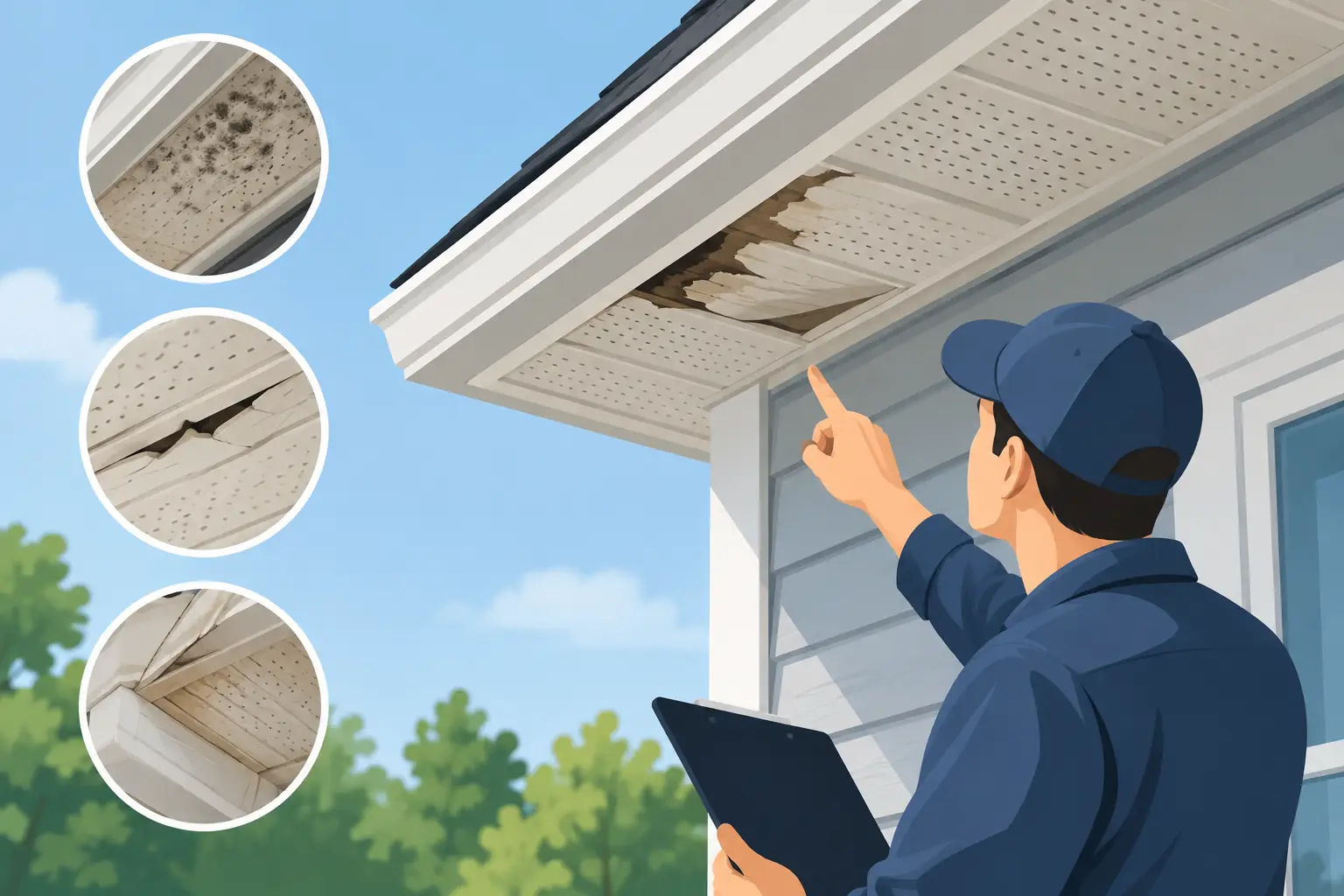
If the overflow is happening near entryways, it can also create slippery concrete and icing risks in winter. And if water is running behind the gutter, fascia and soffit damage can start long before you see obvious wood rot.
How to narrow down the cause without guessing
You do not need to climb a ladder in a thunderstorm to learn something useful. Start with patterns.
If overflow happens at one corner or one straight section, suspect a local clog, a low spot, or a pitch issue. If it happens near a downspout, suspect a blockage or a discharge problem. If it happens under a roof valley, suspect concentrated flow that needs more capacity or a better collection setup.
After a storm, look for water marks on the gutter face, mud splatter lines on siding, and washed-out mulch. Also check whether that section holds water after the rain ends. Standing water points toward pitch, sag, or internal buildup.
If you are comfortable and conditions are safe, a controlled hose test can help. Run water on the roof above the problem area and watch how quickly the gutter fills and how it drains to the downspout. Slow movement, backing up, or water shooting past the lip each suggest different fixes.
Fixes that actually match the problem
Cleaning is the right first step when debris is the issue, but it is not the answer to everything. If you clean a gutter twice a year and it still overflows in heavy rain, the system is telling you it needs a different kind of help.
Sometimes that means adding downspouts or upgrading downspout size to move more water. Sometimes it means correcting pitch, replacing failing hangers, or re-securing a run that is pulling away. In other cases, the best fix is upgrading to seamless gutters with the right capacity for your roof layout, especially if your current system has multiple seams, chronic leaks, or recurring alignment problems.
If you want lower maintenance, choose a leaf protection approach that is built for high volume flow, not just for keeping big leaves out. A premium continuous-hanger guard system can also improve gutter rigidity, which helps maintain pitch and reduces sagging over time.
When to get a professional inspection
If overflow is leaving stains, dumping water next to the foundation, or happening at multiple points during every heavy storm, it is worth having it inspected. The cost of being wrong can be much higher than the cost of getting a clear answer.
A proper inspection looks beyond “is it clogged.” It checks roof valleys, gutter sizing, pitch consistency, hanger condition, downspout routing, and discharge distance from the home. It also looks for signs of water getting behind the gutter line, because that is where hidden rot and fascia damage begin.
If you are in the Richmond-area service region, Seamless Gutter Solutions LLC offers free inspections and estimates with detailed, itemized quotes and a no hidden fees promise. That is helpful when you are trying to decide whether you need a cleaning, a repair, added downspouts, or an upgrade like seamless gutters and a premium guard system such as Double Pro by Alurex.
Heavy rain is stressful enough. Your gutters should be the boring part – quietly moving water away, even when the storm is loud.