
A hard rain can tell you more about your house than a sunny week ever will. If water pours over the gutter edge, pools near the foundation, or carves channels through your mulch, you already know why a guide to rainwater drainage solutions matters. The right setup protects your roofline, siding, windows, landscaping, and foundation. The wrong setup keeps asking for repairs.
For homeowners in Eastern Indiana and Western Ohio, drainage problems are rarely just about one clogged gutter. Most of the time, the issue is a system problem. Gutters may be undersized, downspouts may dump too close to the home, guards may be missing, or old sections may be leaking at every seam. The fix depends on what the water is doing now and where it needs to go instead.
What rainwater drainage solutions are really meant to do
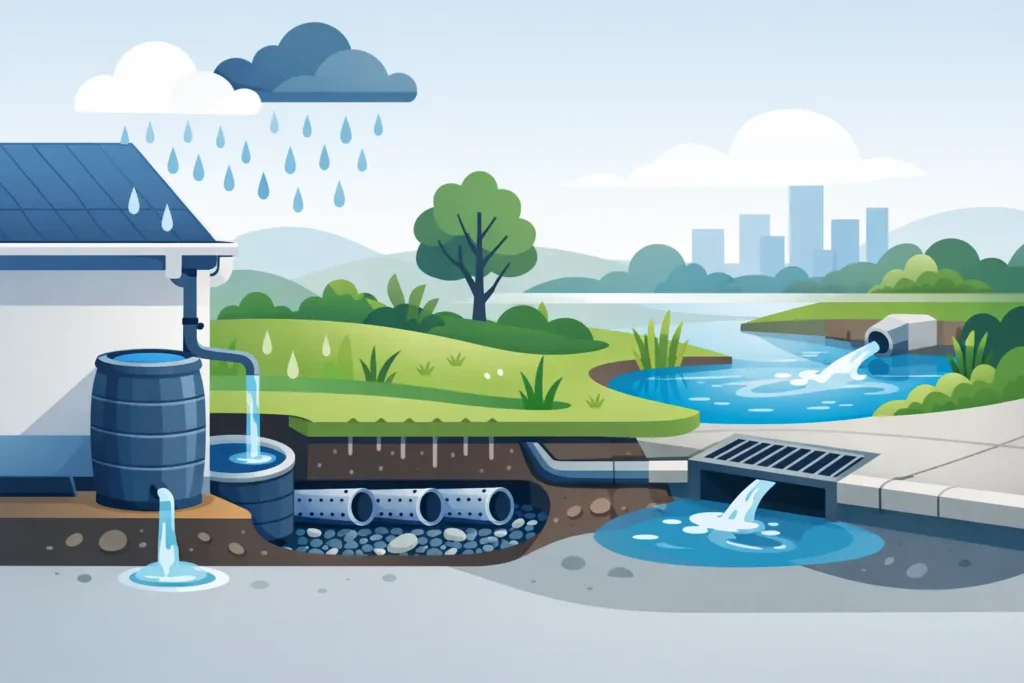
A good drainage system has one job – move water off the roof, into gutters, down through downspouts, and safely away from the house. That sounds simple, but every part of that path matters. If one section fails, the water finds its own route, and that route is usually expensive.
Overflow at the roof edge can stain siding, rot fascia, and wash out flower beds. Water that lands too close to the house can settle against the foundation, seep into basements or crawl spaces, and create long-term moisture issues. Even smaller failures, like a loose gutter spike or a low spot in a run, can turn into bigger problems over time because water is patient.
That is why the best drainage solutions are not one-size-fits-all. A steep roof sheds water faster than a low-slope roof. A home under heavy tree cover faces different problems than one in an open subdivision. A newer home with settled grading may need a different approach than an older property with years of patchwork repairs.
A practical guide to rainwater drainage solutions
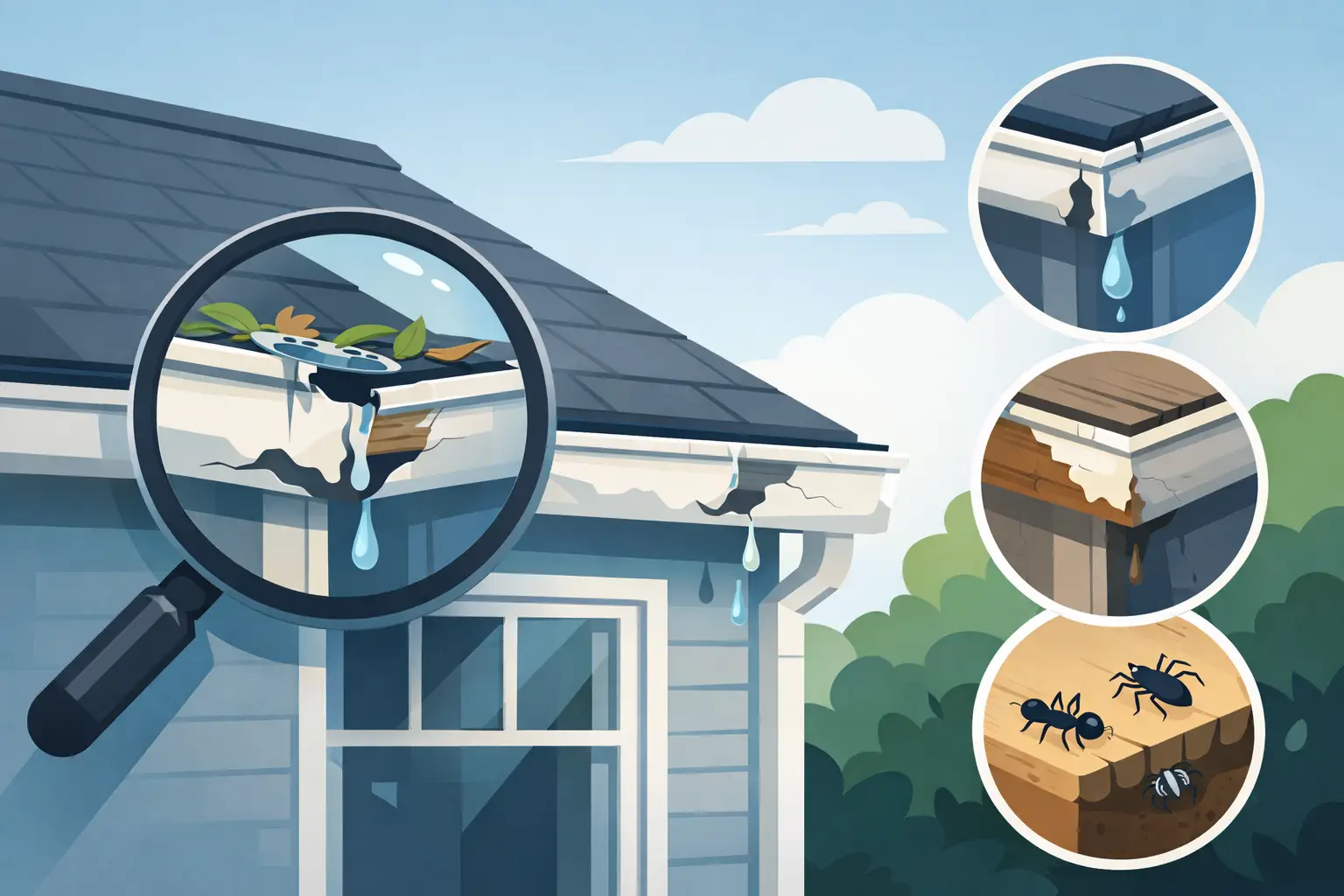
The first step is figuring out whether your current system is failing because it is blocked, damaged, undersized, or just poorly designed. Homeowners often start by noticing symptoms instead of causes. You may see mud splashing up the siding, peeling paint near the eaves, standing water at the corner of the home, or gutters pulling away from the fascia. Those clues matter because they point to where water is escaping the system.
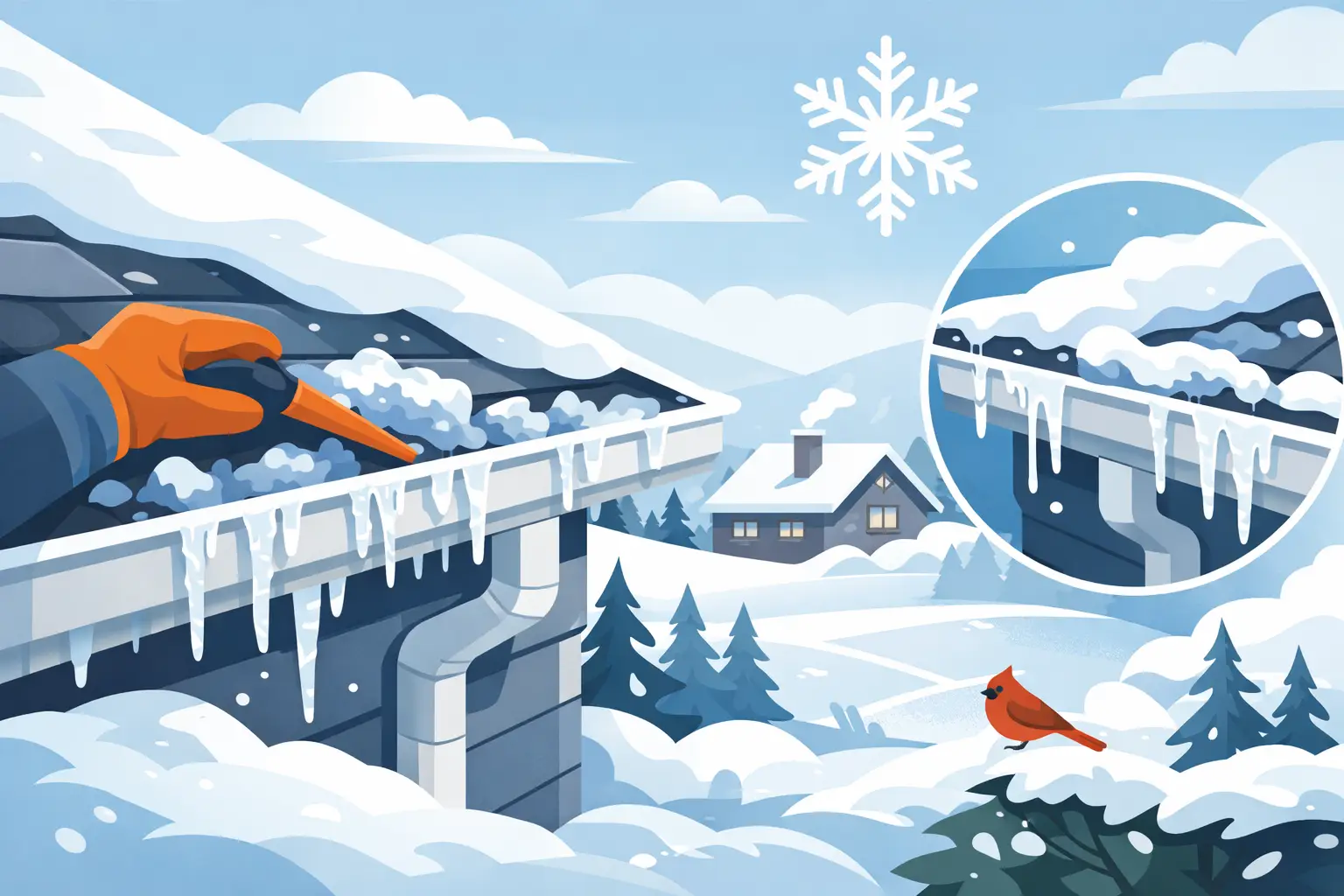
If the gutters are full of leaves and shingle grit, cleaning may restore flow. If joints drip and sections sag, repair may be enough. If the system overflows during normal storms even when it is clean, that usually points to a design issue, not a maintenance issue. In those cases, replacing old sectional gutters with properly pitched seamless gutters often makes more sense than paying for repeated fixes.
Seamless gutters help because they reduce the number of joints where leaks typically start. That does not mean every home automatically needs a full replacement, but it does mean older sectional systems often cost more in upkeep than homeowners expect. When repairs are stacking up, replacement can be the more protective and more predictable option.
Gutters: the front line of the system
Your gutters need to match the roof area and rainfall demands of the home. If they are too small or too shallow, water can overshoot them in heavy storms. If they are installed with poor pitch, water will sit instead of draining. If they are attached weakly, they can pull away under the weight of debris and standing water.
This is where installation quality matters as much as material. Even a premium gutter will not perform well if it is hung incorrectly. A properly installed seamless system gives water a clear path and gives homeowners fewer leak points to worry about.
Downspouts: where drainage often succeeds or fails
A gutter can collect water perfectly and still fail the house if the downspouts discharge in the wrong place. One of the most common drainage mistakes is sending roof runoff right back to the base of the foundation. That creates a cycle where the roof sheds water efficiently, but the property does not.
Downspouts should move water far enough from the home that it cannot immediately soak back into the foundation area. Sometimes that means simple extensions. Sometimes it means reworking discharge points around driveways, walkways, patios, or planting beds. The right answer depends on grading, lot layout, and where water naturally wants to collect.
Gutter guards: useful, but only when chosen well
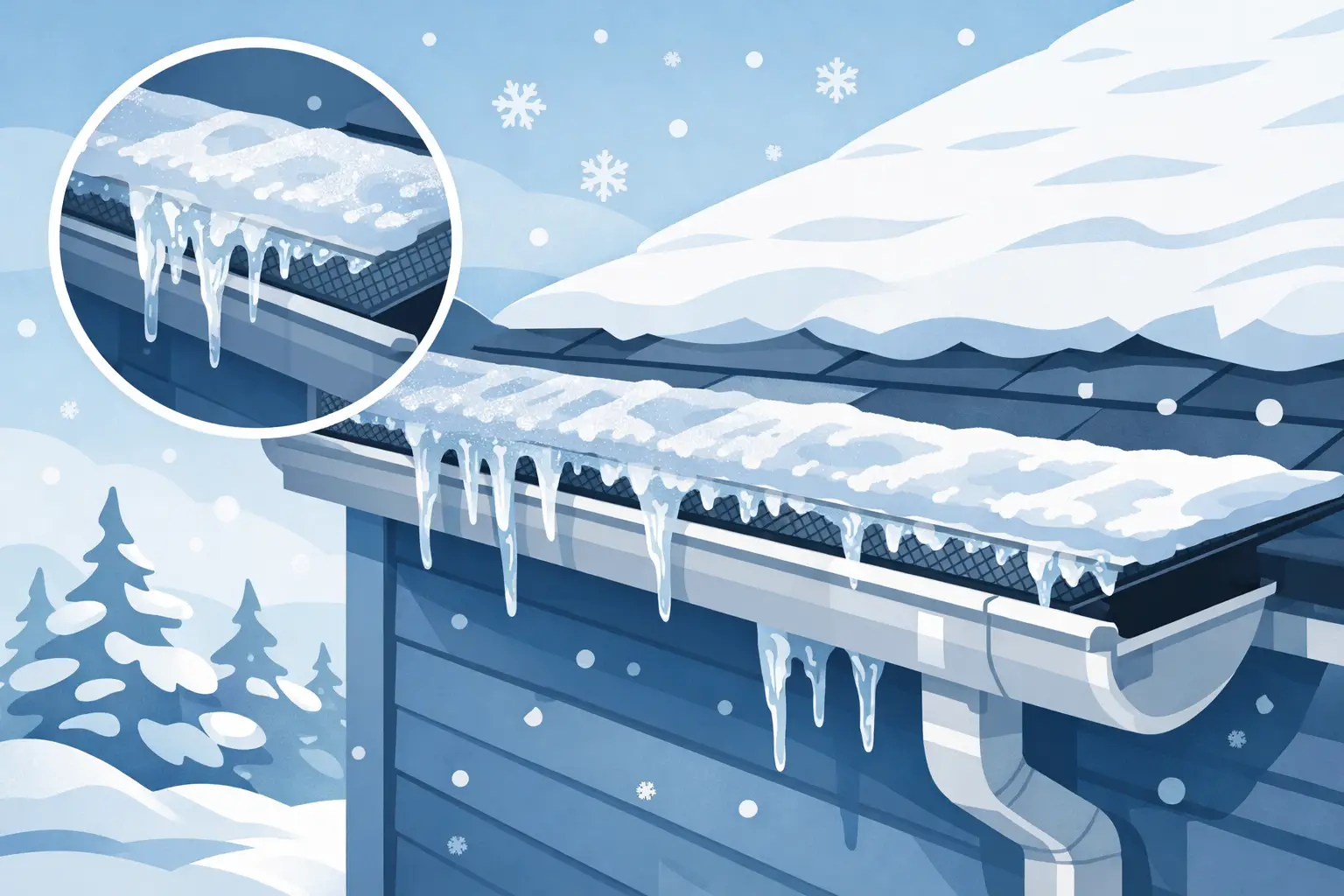
Many homeowners want low-maintenance drainage, and that is a reasonable goal. Gutter guards can reduce cleanings and help water keep moving, but not all guard systems perform the same way. Cheap add-on screens often create their own problems by trapping debris on top or allowing smaller material to work into the gutter below.
A premium option like Double Pro by Alurex is built for durability and continuous support, which is a different category than a basic insert or snap-on cover. That matters if you want a system that does more than just check a box. Still, even a strong guard product is not a substitute for proper gutter sizing, pitch, and downspout placement. It is part of the solution, not the whole solution.
When repair is enough and when replacement is smarter
Homeowners often ask the same fair question: should I repair what I have, or replace it and be done with it? The honest answer is that it depends on the age of the system, the number of failure points, and whether the original layout was ever right for the home.
Repair makes sense when the gutter system is generally sound and the problems are isolated. A few leaks, a loose section, or a clogged run can often be corrected without major work. Replacement is usually the better route when gutters are separating at multiple seams, sagging in more than one area, overflowing despite cleaning, or showing signs that they were undersized or poorly planned from the start.
This is also where transparency matters. Homeowners should not have to guess whether a contractor is recommending more work than necessary. A detailed inspection and itemized estimate make it easier to see what is being proposed and why. That clarity helps you compare short-term fixes against long-term value without feeling pressured.
Signs your home needs better drainage now
Some drainage problems are obvious during a storm, but others show up later. If you notice erosion below roof edges, watermarks on siding, mildew near the base of exterior walls, basement dampness after rainfall, or mulch repeatedly washing out, your home is telling you water is not being controlled well enough.
You should also pay attention to maintenance frequency. If your gutters need constant cleaning to stay functional, or if one corner of the home always seems to overflow first, that is not just bad luck. It usually means the drainage system needs a better design, better protection, or both.
How to choose the right rainwater drainage solution for your home
Start with the actual problem, not the product name. If debris is the main issue, cleaning and a high-quality guard may solve it. If water is spilling because the system cannot keep up, guard installation alone will not fix the overflow. If downspouts dump at the foundation, new gutters without discharge changes will leave the main risk in place.
A good contractor should walk the property, inspect how water leaves the roof, and explain the weak points in plain language. You should know whether you need cleaning, repair, seamless gutter installation, leaf protection, or a combination. You should also know the price before work starts, with no vague allowances and no hidden fees appearing later.
That straightforward process matters just as much as the hardware. For many homeowners, the frustrating part is not only the water problem. It is the uncertainty that comes with trying to fix it. Working with a company that offers free inspections, free estimates, and clear line-item pricing removes a lot of that risk. If you are in the Richmond area or nearby communities, Seamless Gutter Solutions LLC takes that homeowner-first approach because protecting the house should not feel like a guessing game.
Why the best solution is usually a complete path for water
The strongest drainage systems are built as a full path, not as disconnected parts. Water should be captured cleanly at the roof edge, carried through secure gutters, moved through sufficient downspouts, and discharged away from the home where it can no longer do damage. When that path is complete, maintenance gets easier and surprise repair bills get less common.
If your current setup only works in light rain, it is not really working. A dependable drainage system should hold up when weather is at its worst, because that is when your home needs protection most. A careful inspection, clear recommendations, and the right mix of installation, repair, cleaning, and guard protection can make the next heavy storm a lot less stressful.