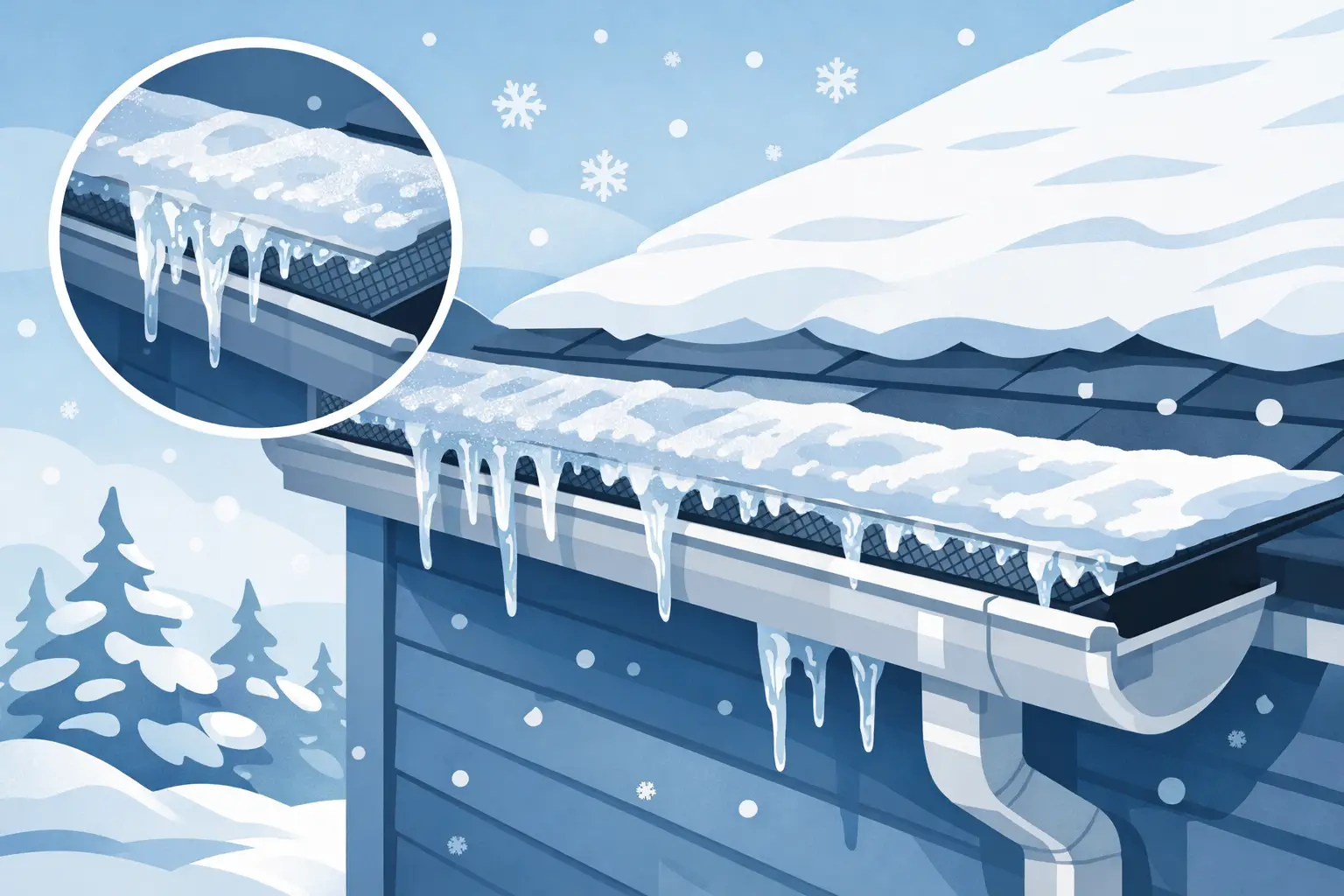


If you have water pouring off a roof edge like a waterfall during an Indiana or Ohio downpour, you do not need more drama. You need a gutter system that catches the water, moves it fast, and drops it where it cannot damage your foundation, siding, landscaping, or basement.
A lot of homeowners assume gutters are a simple add-on. In reality, the difference between “good enough” and “problem solved” is the installation process. Below is a homeowner-friendly walkthrough of the seamless gutter installation process, what a professional crew is looking for, and where the biggest trade-offs show up.
The real goal of a gutter system
Gutters are not just troughs under the roofline. They are a drainage system that has to match your roof’s water load, your home’s layout, and your property’s grading.
When gutters fail, the damage usually shows up in expensive places: fascia rot, peeling paint, eroded mulch beds, stained siding, ice issues in winter, and water working its way toward the foundation. A correct install is designed to prevent those problems, not just “get water off the roof.”
The seamless gutter installation process, step by step
Every house is different, but a professional installation tends to follow the same sequence. The order matters because each step sets up the next one.
1) Inspection and problem-spot mapping
The first thing a good installer does is walk the home and look for the “why” behind the current issue. That includes obvious overflow points, but also less visible clues like streaking on siding, soil washout, and areas where the fascia or soffit looks soft.
This is also where an installer should identify constraints that affect design: roof valleys that dump heavy water, long runs with limited downspout options, porch roofs, garage tie-ins, steep pitches, and any sections where ladders or equipment access will be tricky.
It depends on what is already there. If you have old sectional gutters, the crew may be planning for careful removal to avoid damaging fascia. If you have no gutters at all, they are planning attachment points and downspout routes from scratch.
2) Measurements that go beyond “linear feet”
Homeowners often see estimates based on linear footage and think that is the whole story. Linear feet is part of it, but accurate sizing starts with measuring roofline runs and then pairing that with real water volume expectations.
A contractor should be thinking about gutter size (often 5-inch or 6-inch), the number of downspouts, and where those downspouts can realistically discharge. More capacity is not automatically better if it is installed incorrectly or draining to the wrong spot.
If your home has a big roof plane feeding one corner, the solution might be a larger gutter, an extra downspout, or both. The right answer depends on how your roof concentrates water and where you can safely move it.
3) Material and color selection that fits the house
Most homeowners want gutters that look clean and disappear into the trim. The practical decision is aluminum thickness and finish quality, then color matching to your fascia, soffit, or siding.
This is also the moment to decide whether you want to add a leaf protection system as part of the same install. Adding it later is possible, but doing it upfront can be more efficient because the crew is already setting hangers, checking pitch, and ensuring tight alignment.
4) Planning the pitch and the downspout strategy
Pitch is where many installs quietly succeed or fail. Gutters need enough slope to move water, but not so much that they look crooked.
Downspout placement matters just as much. One downspout can only handle so much roof area before heavy rain overwhelms the system. A good plan considers:
- Where the water naturally wants to go based on roof geometry
- Where extensions can discharge away from the foundation
- Where drains, splash blocks, or underground lines might be used
- Where downspouts will be least visible but still serviceable
If your lot is flat or you have water that already pools near the house, the downspout plan becomes a high-stakes decision. Moving water into the wrong area can trade one problem for another.
5) Removal and prep work (if you are replacing gutters)
If you are replacing an old system, prep is not glamorous but it is essential. The crew should remove the old gutters, check the fascia for rot, and confirm they have solid wood to fasten into.
Some homes need fascia repair before new gutters go up. That can change scope and cost, and it is one reason detailed, line-item quotes matter. If a contractor glosses over the condition of the fascia, you risk a “mystery surprise” later or, worse, gutters attached to compromised boards.
6) On-site fabrication of seamless gutter runs
This is where seamless gutters earn their name. Instead of piecing together multiple sections, the crew forms long, continuous runs on-site from a coil of aluminum. That reduces the number of seams where leaks typically start.
Corners and end caps still exist, so “seamless” does not mean “zero joints.” It means far fewer joints along the run, which is exactly where sectional systems tend to drip over time.
A clean fabrication step also supports curb appeal. The gutter line looks straighter, and there are fewer visible connections.
7) Hanger and fastening method
How gutters are attached is not a small detail. Fasteners should be placed with the right spacing and anchored into solid framing, not just thin fascia material.
Many high-performing systems use continuous hangers or heavy-duty hidden hangers to keep the gutter tight to the fascia and resist sagging. This matters in our region because gutters have to handle heavy rain, wind, and seasonal temperature swings. If you have trees, they also have to handle added weight from wet debris.
If you are comparing quotes, ask what hanger system is included. Two bids can look similar until you find out one uses lighter supports.
8) Installing corners, end caps, outlets, and sealant
Corners and outlets are the pressure points. They see concentrated water and they are where clogs can create backup.
A professional install uses compatible components, clean cuts, and the right sealant applied correctly. Too little sealant can leak. Too much can look messy and still fail if the surfaces were not prepped.
This step is also where craftsmanship shows. Tight miters, clean lines, and secure end caps are what you notice every time you pull into the driveway.
9) Downspouts, elbows, and discharge control
Downspouts are not just vertical pipes. They are the bridge between the gutter and the ground, and they need to be routed in a way that avoids foundation saturation.
Expect the crew to install elbows for alignment, straps for support, and a discharge method that makes sense for your yard. Sometimes a simple extension works. Sometimes you need a different discharge point because one area is already prone to pooling.
If you want underground drainage, that is a separate conversation. It can be a great upgrade, but it depends on soil conditions, slope, and where the water can legally and safely exit.
10) Water testing and final adjustments
A quality crew does not pack up without testing. That typically means running water to confirm flow, watching corners and outlets for leaks, and checking for any spots where water holds.
Minor tweaks are normal. A hanger may need adjustment, or a downspout elbow may need a small change to improve flow. This is the last chance to make the system behave the way it should before the next storm proves the point.
Where homeowners get the most value (and avoid regret)
The most common regrets we hear are not about color. They are about performance.
One is under-sizing. If a home needs 6-inch gutters or additional downspouts and gets a basic setup instead, you might still see overflow in heavy rain.
Another is poor discharge planning. Water that exits too close to the foundation can quietly do damage for years.
The third is skipping fascia inspection. New gutters on weak fascia can pull away, sag, and create gaps that funnel water behind the system.
Adding leaf protection: when it makes sense
Leaf protection is worth considering if you have trees, clogged gutters, or you simply do not want to be on a ladder multiple times a year. The trade-off is that not every guard performs the same, and the installation details matter.
For example, Double Pro by Alurex is a premium continuous-hanger gutter guard system that combines support and debris control. Systems like this tend to appeal to homeowners who want long-term durability and less maintenance, not a quick patch.
It still depends on your property. If you have fine debris like pine needles or heavy roof granule loss from aging shingles, you want to talk through realistic expectations and cleaning intervals. Even the best guard is not a magic force field. It is a tool to reduce clogs and cut down cleaning frequency.
What a transparent quote should include
If you are shopping bids, clarity is protection. A professional quote should spell out what is included and what is not, so there are no surprises halfway through.
You should expect line items for the gutter size, linear footage, number of downspouts, corners, hangers, and any add-ons like leaf protection. If fascia repair is a possibility, it should be addressed upfront as either included, excluded, or priced as a contingency based on what is found after removal.
That is the difference between a confident decision and a stressful one.
Choosing a local installer in Eastern Indiana and Western Ohio
You want a company that understands the storms we get, the freeze-thaw swings, and the reality of mature trees in many neighborhoods. You also want someone who will tell you when a cheaper option will likely fail, and when an upgrade is truly worth it.
If you are near Richmond, IN or throughout the surrounding counties, Seamless Gutter Solutions LLC offers free inspections and estimates with detailed, itemized quotes and a no hidden fees promise. That process is designed for homeowners who want straightforward answers before they commit.
A new gutter system should not feel like a gamble. The right install makes the next heavy rain feel uneventful, which is exactly the point.