
Water usually tells you when a downspout is in the wrong place. It pours over a gutter corner during a hard storm, floods a flower bed, stains siding, or pools near the foundation where it should never sit. That is why a good guide to gutter downspout placement matters. The right layout is not just about getting water off the roof. It is about moving it away from the house in a controlled, predictable way.
For homeowners in Eastern Indiana and Western Ohio, that matters even more because heavy rain, wind-driven storms, and seasonal debris can expose weak gutter design fast. A gutter system can look fine from the ground and still drain poorly if the downspouts are undersized, too far apart, or pointed into a bad discharge area. Good placement protects your roofline, siding, landscaping, and foundation. Bad placement creates expensive problems that tend to show up all at once.
Why gutter downspout placement matters
A gutter’s job is simple on paper. It catches roof runoff and directs it to downspouts. But the downspouts do the real work of getting that water away from the structure. If they are placed without considering roof area, pitch, valleys, corners, and ground drainage, water backs up in the gutter or spills where you do not want it.
This is where homeowners often get mixed signals. They may think the gutter itself is failing when the bigger issue is downspout location. A system can have solid materials and still underperform because water has too far to travel before it can exit. In other cases, the downspouts are technically enough, but they discharge into low spots that send water right back toward the house.
A practical guide to gutter downspout placement
The best starting point is roof runoff volume. Bigger roof sections collect more water, and steep pitches move that water faster. Long straight gutter runs also need more thought because water has to travel farther to reach an outlet. As a rule, downspouts should be spaced so water can leave the gutter before it builds up and overshoots the front edge during a storm.
On many homes, that means placing downspouts near the ends of gutter runs. On longer sections, a single end downspout may not be enough. Adding a second downspout at the opposite end or near the middle can reduce strain on the entire system. The exact layout depends on the roof design, not just the linear feet of gutter.
Corners and roof valleys deserve extra attention. Valleys dump a concentrated amount of water into one area of the gutter, and that section can overwhelm quickly. If a downspout is too far from a valley, the gutter may not keep up during a strong rain. In those cases, placing a downspout closer to the high-flow section often improves performance more than simply installing a larger gutter alone.
The most common placement mistakes
One of the biggest mistakes is assuming fewer downspouts always look cleaner and therefore must be better. Fewer visible downspouts may improve curb appeal in some cases, but there is a trade-off. If you remove outlets just for appearance, you may force too much water through one section of gutter.
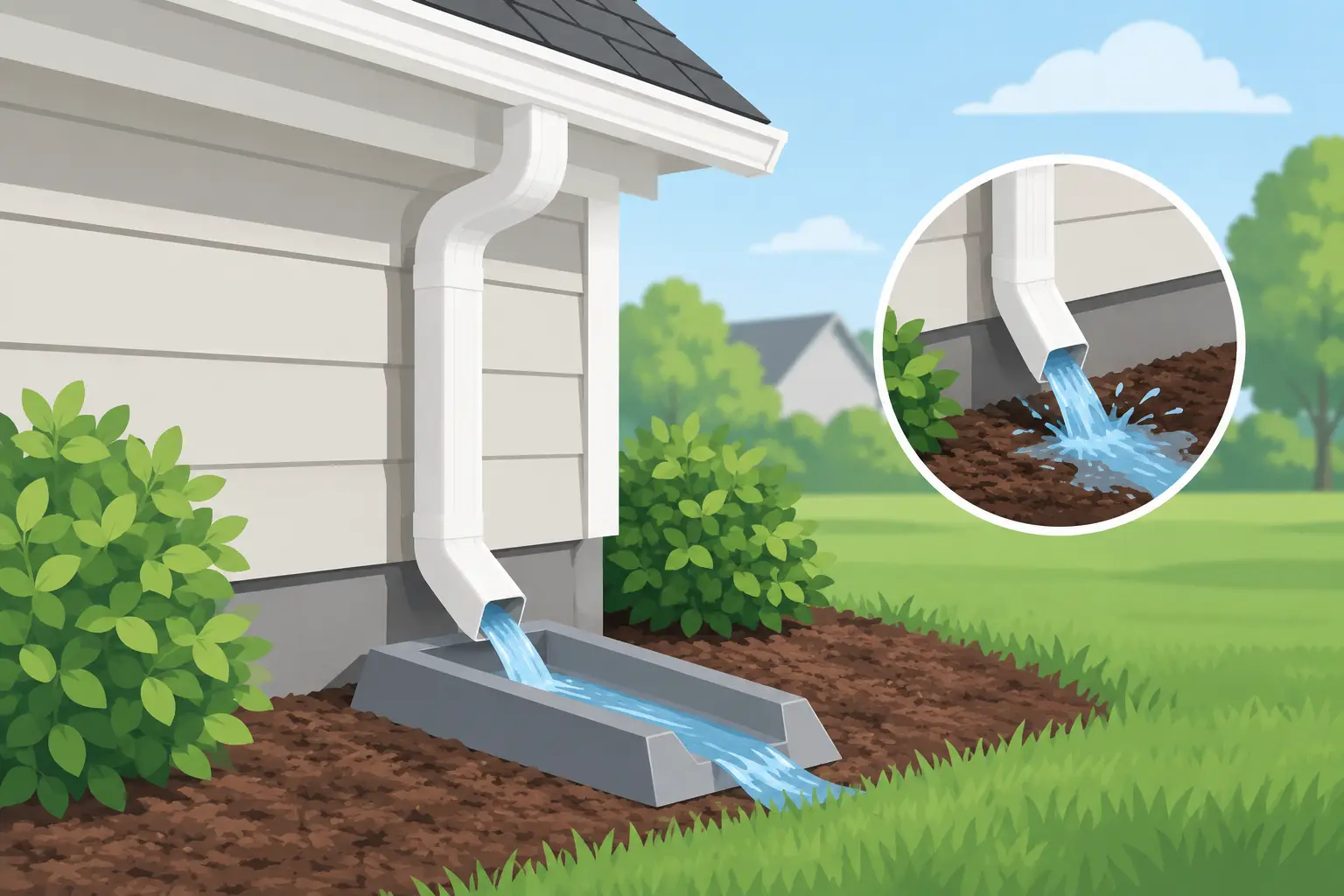
Another common issue is discharging water too close to the foundation. Even if the gutter drains well, the system is still failing if water drops at the base of the house and saturates the soil there. Extensions, underground drains, splash blocks, and grading all affect whether the placement is actually working.
There is also the problem of placing downspouts where they create daily frustration. A downspout that empties onto a walkway, driveway edge, patio, or high-traffic area may turn runoff into a slipping hazard, washout problem, or winter ice patch. Good placement should protect the house without creating a new issue for the homeowner.
How roof design affects downspout location
Simple ranch homes are usually more straightforward than homes with multiple rooflines, dormers, and intersecting valleys. A basic roof with short gutter runs may drain perfectly with standard end placement. More complex homes often need a more customized plan.
For example, a long front elevation on a two-story home may need multiple downspouts, especially if large roof planes feed the same gutter. A garage connection, porch roof, or rear addition can also change the runoff pattern. Water from a small upper roof may dump onto a lower roof and increase the amount the lower gutter must handle. If you only look at the lower gutter length, you can underestimate the drainage demand.
This is why inspections matter. Proper placement is less about a generic formula and more about reading the whole structure. The roof, fascia, soffits, grade, landscaping, and discharge areas all work together.
Slope and downspout placement work together
Even perfect downspout spacing will not fix a gutter with poor pitch. Gutters need a slight slope so water flows toward the outlet instead of sitting stagnant or running the wrong direction. In most cases, the gutter should slope toward each downspout or from a high point to outlets on both ends, depending on the run length and layout.
This is an area where small installation errors create noticeable results. Too little pitch and water stands in the gutter. Too much and the gutter line can look uneven from the ground. The right balance is subtle but important. When downspouts are placed correctly and the pitch matches the plan, the whole system works quietly in the background, which is exactly what homeowners want.
Where should downspouts discharge?
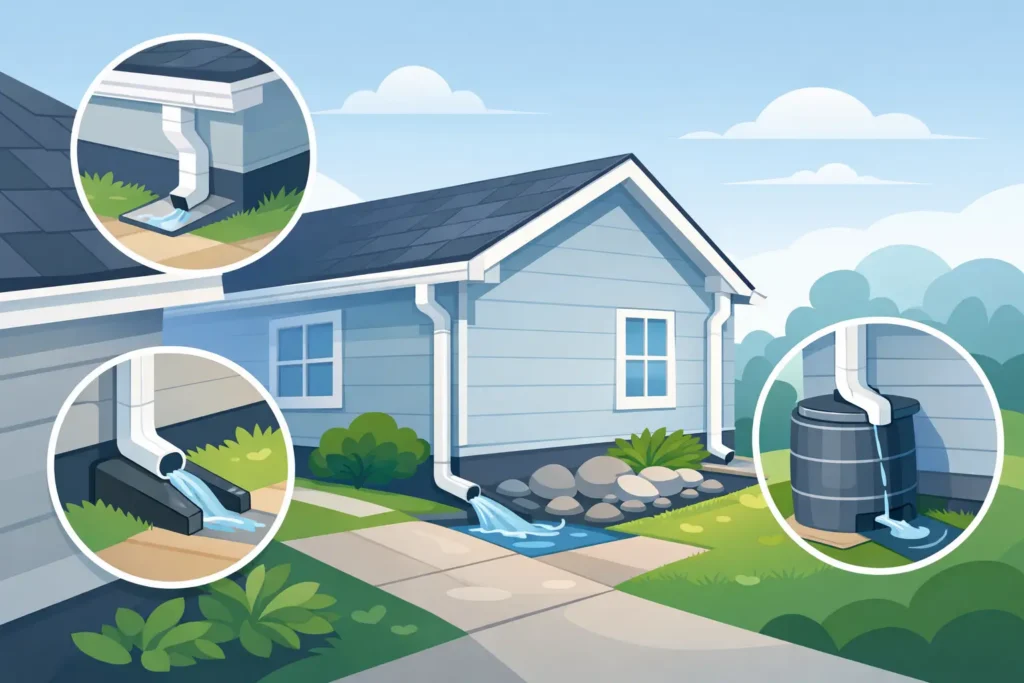
This part gets overlooked, but it is a major part of any guide to gutter downspout placement. The discharge point should move water away from the house and into an area that can handle it. That may mean a splash block on a well-graded lawn, an extension that carries water farther out, or a buried drain line where surface discharge is not practical.
The best answer depends on the property. If the yard slopes away from the home, above-ground discharge may be enough. If the lot is flat, tight, or already prone to pooling, an underground solution may make more sense. But buried drains are not automatically better. They need proper outlet planning and occasional maintenance, especially in areas with leaves, sediment, or winter freeze-thaw cycles.
Landscaping also matters. Constant runoff into one mulch bed can erode soil, drown plants, and stain edging. A downspout should protect your foundation without sacrificing your yard.
Gutter guards do not replace good placement
Homeowners sometimes assume gutter guards solve every drainage issue. Guards can reduce clogs and cut down on maintenance, which is valuable, especially in areas with heavy leaf drop. But even a premium guard system cannot fully compensate for poor downspout placement.
If the outlet is too far from the main water load, or if discharge is too close to the home, the problem is still there. Guards help water enter and debris stay out. They do not redesign the path that water takes after it enters the gutter. That is why installation quality and layout planning still come first.
When to consider adding or relocating downspouts
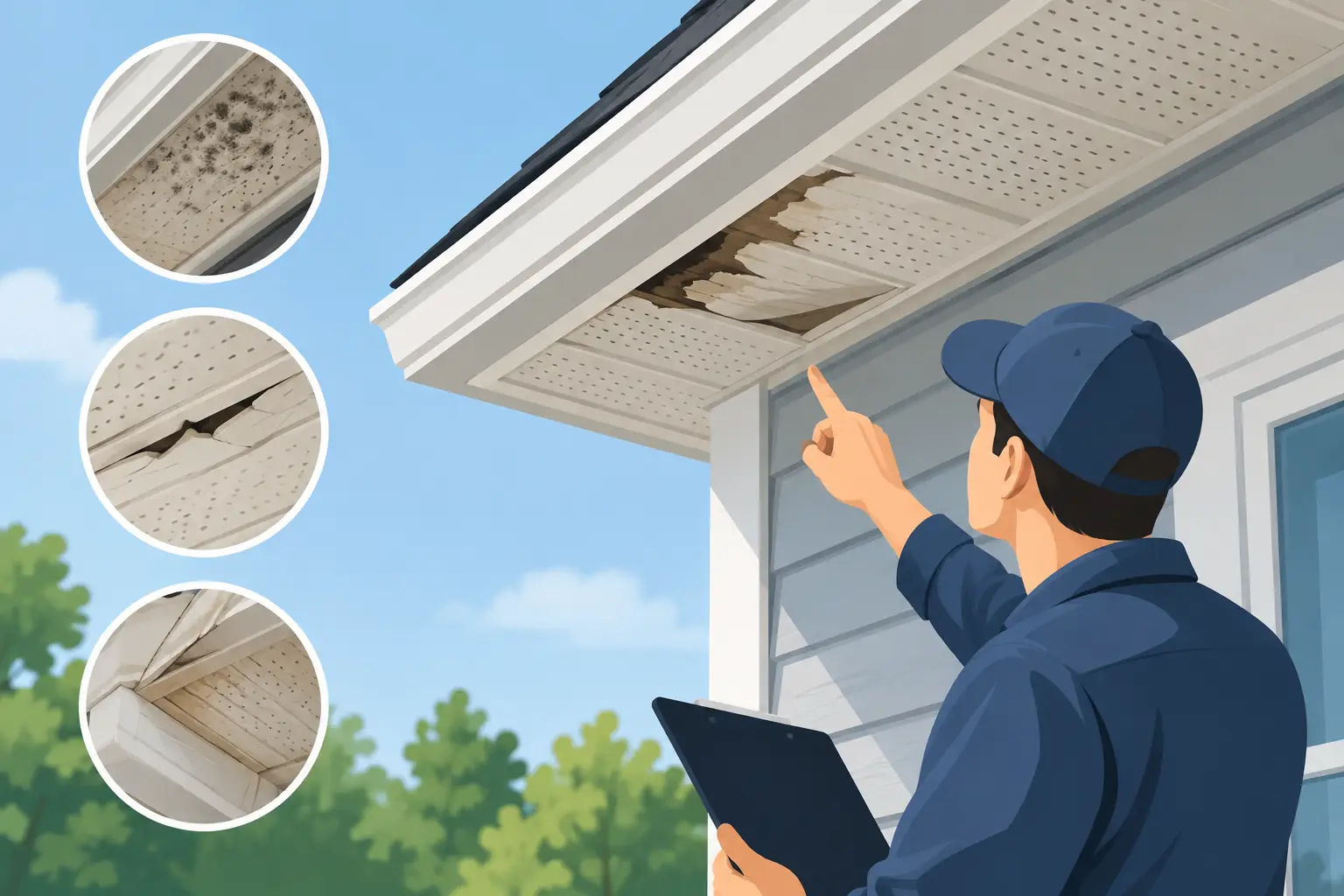
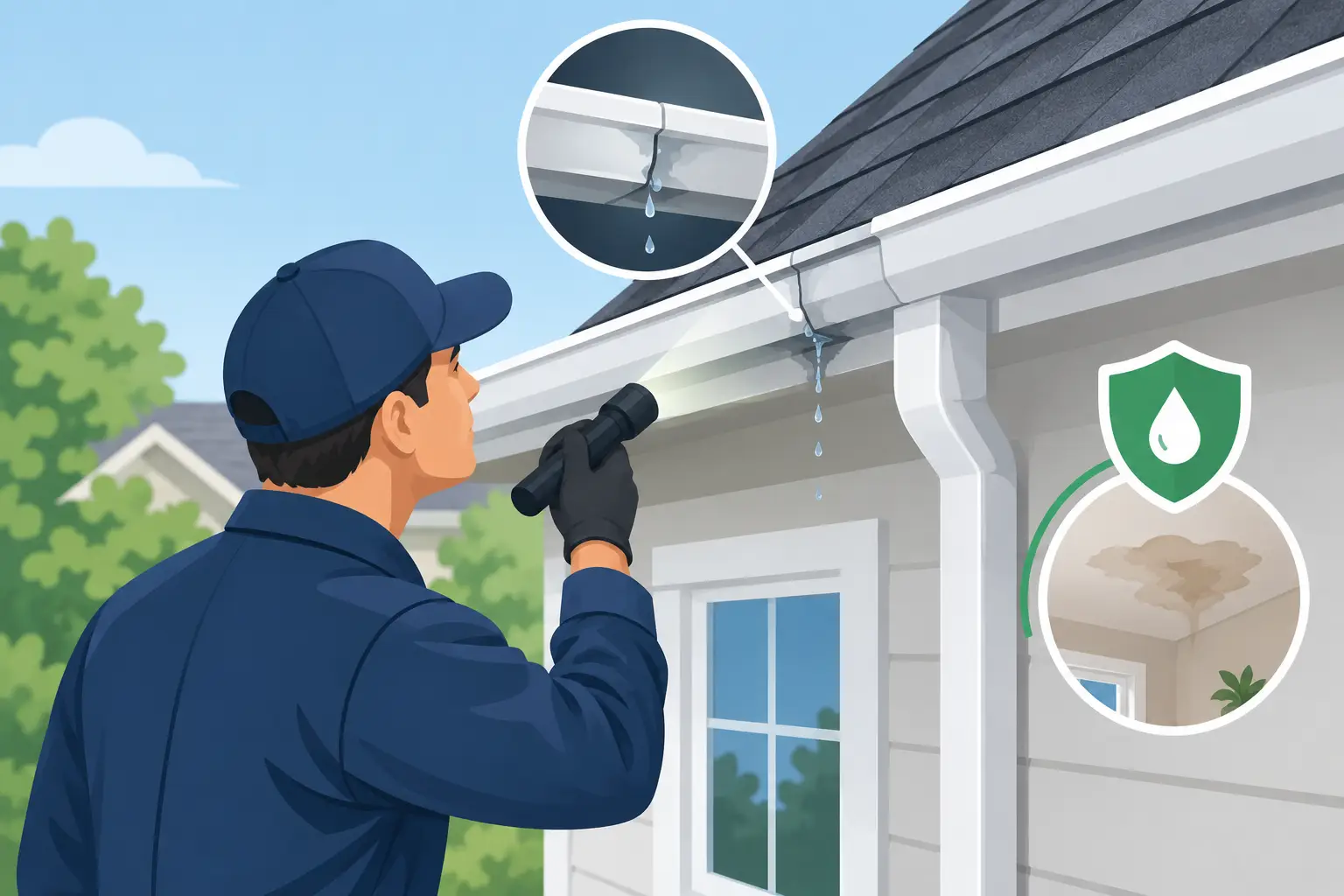
If you see overflow during moderate rain, not just extreme storms, placement should be reviewed. The same goes for recurring basement dampness, soil washout, peeling paint near gutter lines, or standing water around the foundation. Those are warning signs, not cosmetic annoyances.
You may also want to revisit placement during a gutter replacement rather than waiting for damage to force the issue. That is often the best time to correct an outdated layout, upgrade capacity, and improve drainage without patching one problem at a time. For homeowners who want clear answers without guesswork, a professional inspection can show whether the issue is clogging, pitch, undersizing, discharge, or downspout location.
At Seamless Gutter Solutions LLC, that kind of straightforward review is part of what homeowners appreciate most. A clear inspection and a detailed quote remove the uncertainty and make it easier to decide what actually needs to change.
What homeowners should look for before making a decision
Start with the evidence your home is already giving you. Watch where water goes during a storm. Check whether any gutter sections overflow before water reaches a downspout. Look for erosion, splashing, or puddling at the base of each outlet. If one area of the house always seems wet, there is usually a reason.
Then think beyond the gutter itself. The best placement on paper still has to fit the home’s appearance, traffic flow, landscaping, and drainage conditions. Sometimes the right answer is an extra downspout in a more visible spot because it prevents a much more expensive foundation or siding problem. That trade-off is usually worth it.
A good downspout layout should feel boring in the best way. Water comes off the roof, moves through the gutters, exits where it should, and stays away from the house. If your current system is doing anything else, it is worth taking a closer look before the next hard rain makes the decision for you.