
A gutter system can look fine from the ground and still be one heavy rain away from spilling water next to your foundation. That is why the choice between gutter guards vs leaf screens matters more than most homeowners expect. If your gutters clog, overflow, or pull away under debris weight, the damage rarely stays limited to the gutter itself.
For homeowners in Eastern Indiana and Western Ohio, this decision usually comes down to one question: do you want the cheapest cover that helps a little, or a stronger protection system that holds up better over time? Both options are designed to reduce clogs, but they are not built the same, and they do not perform the same in real weather.
Gutter guards vs leaf screens: what is the difference?
People often use these terms as if they mean the same thing. In practice, they usually describe two different levels of protection.
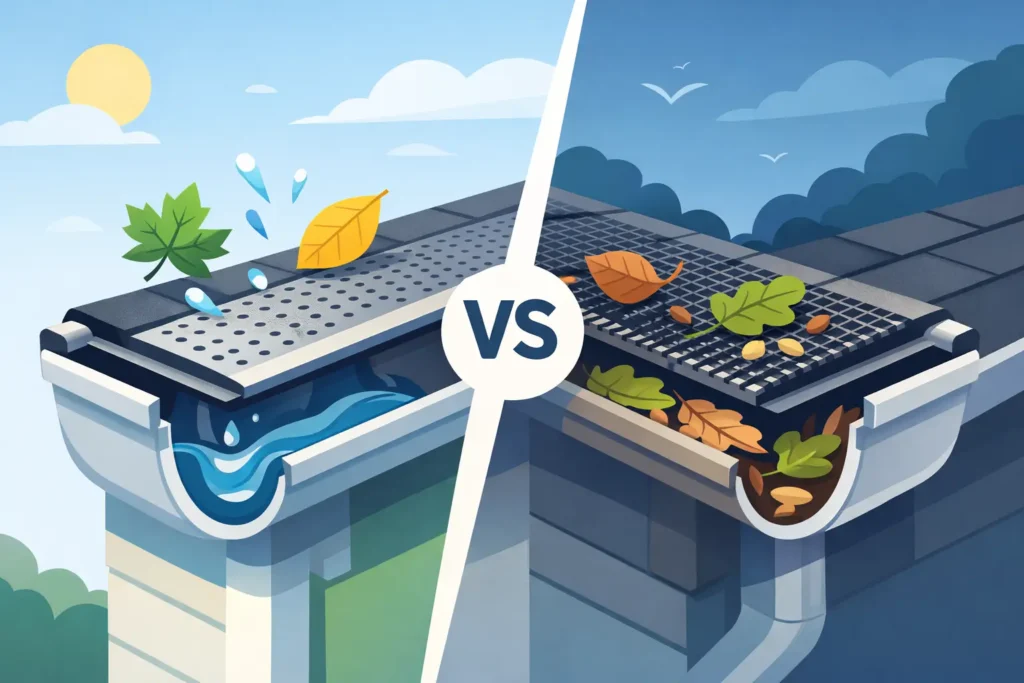
A leaf screen is typically a basic screen or mesh layer that sits over the gutter opening. Its job is simple – block larger debris like leaves and twigs while still letting water pass through. Leaf screens can help, especially if your main problem is big leaves from nearby trees. But because the openings are often larger and the materials lighter, smaller debris can still work its way in.
A gutter guard is a broader category, but in most homeowner conversations it means a more advanced protection system. Higher-end guards are designed not only to block debris, but also to support the gutter, improve water flow, and reduce maintenance more consistently. Some systems integrate with the gutter structure itself, which can make a big difference in durability.
That difference matters when your goal is not just fewer clogs this season, but less hassle and fewer repair calls over the years.
Why leaf screens appeal to homeowners first
Leaf screens are popular for a reason. They are usually more affordable up front, easy to understand, and often marketed as a quick fix. If you are tired of seeing leaves packed into your gutters every fall, a screen seems like a logical next step.
In some homes, it can be a reasonable step. If you have light tree coverage, relatively simple roof lines, and gutters that are already in good shape, a basic screen may reduce the amount of gutter cleaning you need. That can be enough for homeowners who are looking for modest improvement instead of a full upgrade.
But there is a trade-off. Lower-cost screening products can bend, shift, clog on top, or let fine debris through. Maple seeds, pine needles, roof grit, and wet shingle granules are where many basic screens start showing their limits. Water may still get into the gutter, but so can the material that turns into sludge over time.
That means some homeowners install leaf screens expecting maintenance-free gutters and end up with only slightly less maintenance.
Where gutter guards usually perform better
A well-built gutter guard system is designed with longer-term performance in mind. Instead of simply covering the opening, it works with water flow, debris shedding, and gutter support. That is a major reason premium systems usually cost more.
The payoff is often seen during storms and through seasonal buildup. Better guards help rainwater enter while encouraging leaves and debris to move past the gutter instead of settling into it. Stronger materials also resist sagging and warping better than thinner screen products.
For homes surrounded by mature trees, this is often the more dependable choice. It is also a better fit for homeowners who do not want to keep climbing ladders or paying for repeat cleanings after every heavy debris season.
Seamless Gutter Solutions LLC installs Double Pro by Alurex, which is a continuous-hanger gutter guard system. That kind of design does more than keep debris out. It also adds structural support across the gutter run, which can help the system stay more secure under load.
The maintenance question most product ads skip
No gutter protection system should be sold as never needing attention again. That is not a realistic promise.
Even the best systems can collect debris on top, especially after storms, heavy pollen seasons, or long periods of falling leaves. The real question is not whether maintenance disappears completely. It is how much maintenance you reduce, and how difficult that maintenance becomes.
With basic leaf screens, debris may collect both on top of the screen and inside the gutter. Once fine material gets through, cleaning can turn into a frustrating job because the screen itself may need to be removed or worked around.
With a stronger gutter guard system, the maintenance tends to be lighter and less frequent. You may still need occasional inspection or surface clearing, but you are less likely to deal with packed internal clogs that stop water flow completely.
For many homeowners, that difference is the whole value of the investment.
Cost matters, but so does what you are buying
If you compare gutter guards vs leaf screens on price alone, leaf screens usually come out ahead. That part is simple.
What gets overlooked is the long-term cost of a lower-performing product. A cheaper screen that still allows clogs, contributes to overflow, or needs frequent adjustment may not stay cheap for long. Add in repeat cleanings, possible gutter repairs, and water damage risks, and the savings can disappear.
A higher-quality guard costs more up front because it is meant to do more. Better materials, stronger installation methods, and more reliable performance all factor into the price. For homeowners planning to stay in their home, that can be money better spent.
This is where clear estimates matter. If a contractor gives you a vague number for “gutter covers,” you still do not know what you are getting. Homeowners are better served by detailed quotes that explain the product, the installation method, and any related repairs needed to make the system perform correctly.
When a leaf screen may be enough
Not every home needs the most advanced product available. A leaf screen may be a practical choice if your debris load is light, your budget is tight, and you understand that some regular maintenance will still be part of the picture.
It can also make sense on a newer home with clean roof lines and limited surrounding tree coverage. In that situation, a basic screen may offer a decent balance of cost and improvement.
The key is having realistic expectations. If you expect a leaf screen to solve every clog problem in a wooded area, you will probably be disappointed.
When a gutter guard is the smarter investment
A premium gutter guard usually makes more sense when your home deals with frequent leaf drop, pine needles, seed pods, or storm debris. It is also the better option when your gutters have struggled with sagging, pulling away, or repeated overflow.
If you are already spending money on regular cleaning or repairs, it may be time to stop patching the symptom and improve the system itself. Homeowners who want fewer service calls, less ladder work, and better overall gutter performance often end up happier with a stronger guard solution.
This is especially true if your gutters are part of a bigger home protection plan. Water that spills over clogged gutters does not just make a mess. It can affect fascia boards, siding, landscape beds, basement moisture, and foundation conditions.
What to ask before you choose
Before you commit to either option, ask how the product handles small debris, whether it changes the structural support of the gutter, and what kind of upkeep is still expected. Ask what happens during a heavy downpour, not just on a sunny sales day.
You should also ask whether your current gutters are worth protecting as they are. If the system is undersized, damaged, or poorly pitched, adding a cover alone may not fix the underlying problem. Sometimes the best answer is a combination of gutter repair, replacement, and protection.
That is why a free inspection and a detailed, itemized quote matter so much. A homeowner should be able to see exactly what is being recommended and why, without guessing where the final bill might land.
The best choice between gutter guards and leaf screens is the one that fits your home, your tree coverage, and your tolerance for future maintenance. If you want a short-term improvement, a screen may help. If you want stronger performance and better long-term protection, a premium guard usually earns its keep. The right system should give you more confidence every time the forecast calls for heavy rain.