
A basement leak rarely starts in the basement.
That surprises a lot of homeowners. They see water along a wall, damp carpet, or a musty smell after a hard rain and assume the problem is a crack below grade. Sometimes it is. But just as often, the water started at the roofline. If you’re asking, can gutters cause basement leaks, the short answer is yes – and it happens more often than people think.
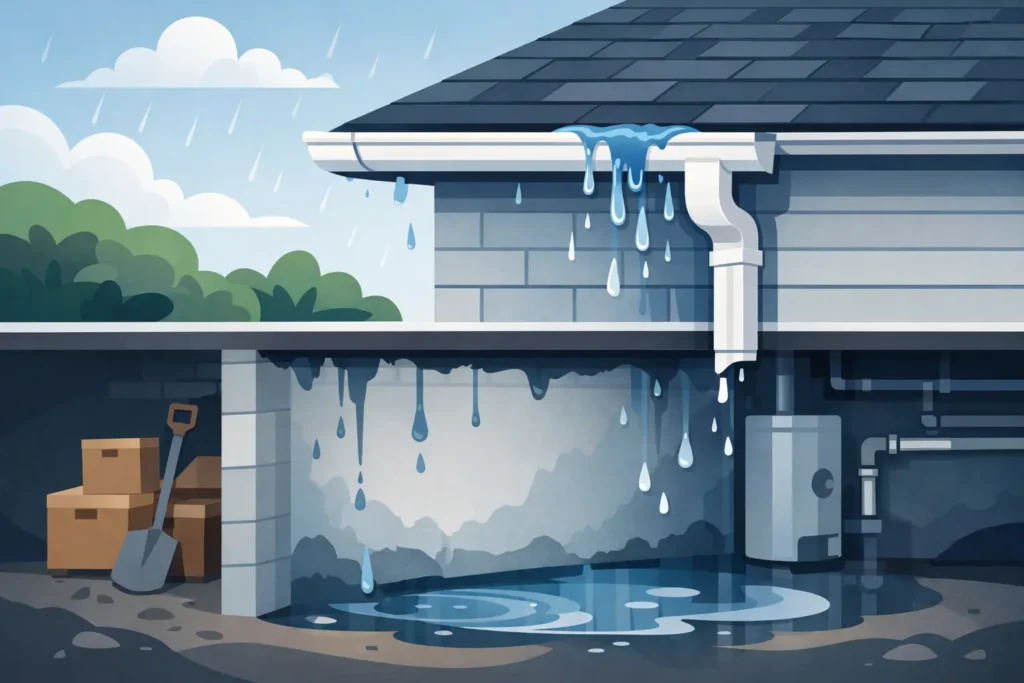
Gutters are supposed to collect roof runoff and move it safely away from the house. When they fail, overflow and poor drainage can dump a huge amount of water right beside the foundation. Once that soil gets saturated, water looks for the easiest path inside.
How gutters cause basement leaks
Your roof sheds a lot of water during even a moderate storm. Without a working gutter system, that runoff falls straight down near the home. With clogged or damaged gutters, the result is not much better. Water spills over the edge, runs down siding, pools near the base of the house, and starts building pressure around the foundation.
That pressure matters. Concrete and block foundations are strong, but they are not waterproof by default. Water can work its way through small cracks, porous masonry, window wells, pipe penetrations, cold joints, or the cove where the floor meets the wall. A basement does not need a dramatic structural failure to leak. It just needs enough water sitting in the wrong place for long enough.
This is why gutter issues often show up as interior moisture problems. The basement leak is the symptom. The drainage problem outside is the cause.
Can gutters cause basement leaks even if the foundation looks fine?
Yes. A foundation can look perfectly solid from the inside and still let water in when drainage around the house is poor. Many leaks happen because the soil against the wall becomes oversaturated, not because the wall has a major visible crack.
Clay-heavy soils common in parts of Indiana and Ohio can make this worse. They hold water longer and expand when wet. That creates more pressure against the foundation and slows drainage away from the home. If a downspout empties too close to the house or a gutter overflows in the same area every storm, the problem can build gradually until one heavy rain turns it into a leak.
That is why the pattern matters. If your basement gets wet only after rain, especially near one corner or one wall, the first place to check is often the gutter and downspout system above that area.
The most common gutter problems behind basement moisture
Clogs are the obvious issue, but they are not the only one. Gutters can contribute to basement leaks when they are undersized, pitched incorrectly, pulling away from the fascia, or draining into short downspout extensions. In each case, the outcome is similar – too much water ends up too close to the foundation.
A clogged gutter can overflow like a waterfall at one section of the house. A loose gutter can dump water behind the trough and down the fascia board. A bad pitch can cause standing water that spills over the front edge. Short downspouts may carry water off the roof but still release it right next to the home, where it has nowhere good to go.
Leaf buildup is a big factor here. Homeowners often assume the system is fine because gutters are technically installed, but if they are packed with debris, they are not protecting the home the way they should. That is one reason low-maintenance protection systems can make a real difference on homes surrounded by trees.
Signs your gutters may be causing the leak
The timing is usually the first clue. If the basement gets damp during or right after rain, pay attention to what is happening outside at the same time. Overflowing corners, water pouring over the gutter edge, puddles near the foundation, and downspouts discharging too close to the house are all strong warning signs.
You may also notice peeling paint, staining on foundation walls, eroded mulch beds, or trenches in the soil below a roof edge. Inside, the signs can be subtler – musty odors, efflorescence on masonry, damp drywall, or recurring wet spots in one area.
Not every basement leak points back to gutters, but the combination of rainfall, localized moisture, and visible runoff problems is hard to ignore.
When the problem is not just the gutters
This is where some nuance matters. Gutters can cause basement leaks, but they are not always the whole story. In some homes, the gutter system is the primary issue. In others, it is one part of a larger drainage problem that includes negative grading, failing foundation waterproofing, sunken concrete, or a clogged footing drain.
For example, if your yard slopes toward the house, even a decent gutter system may struggle to keep water away. If a basement wall already has structural cracking, gutter overflow can make that weakness show up faster. If a sump pump discharge line empties too close to the foundation, you can get a similar moisture pattern that looks like a gutter issue at first.
That is why a good inspection should look at the whole water path, from roof edge to discharge point to ground slope around the foundation. Quick guesses often miss the real cause.
What fixes the issue
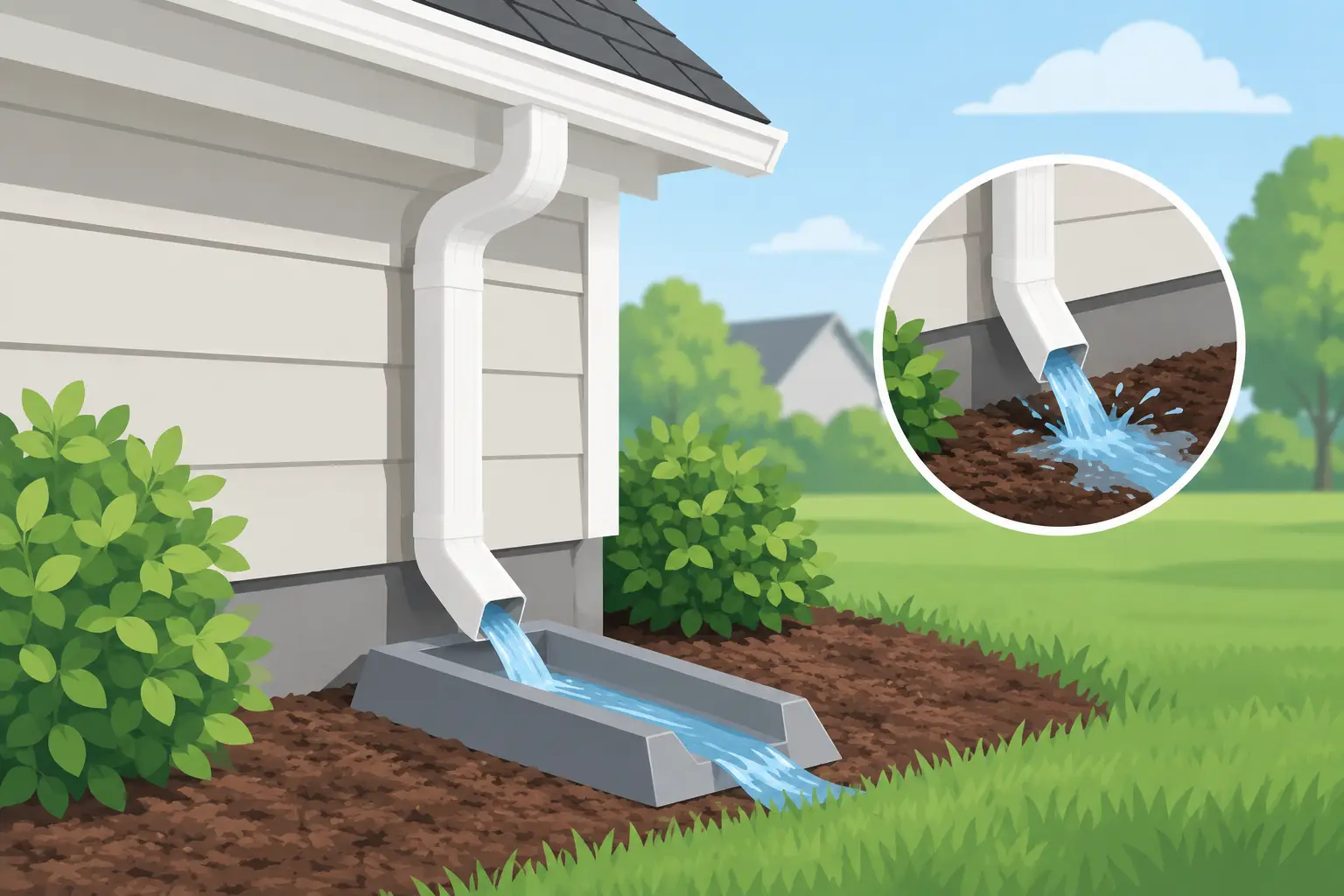
The right fix depends on what is failing. If gutters are clogged, cleaning may solve the immediate problem. If they are sagging, leaking at joints, or constantly overflowing in heavy rain, repair or replacement may be the better long-term move. If downspouts stop too close to the home, extending them farther out can make a major difference.
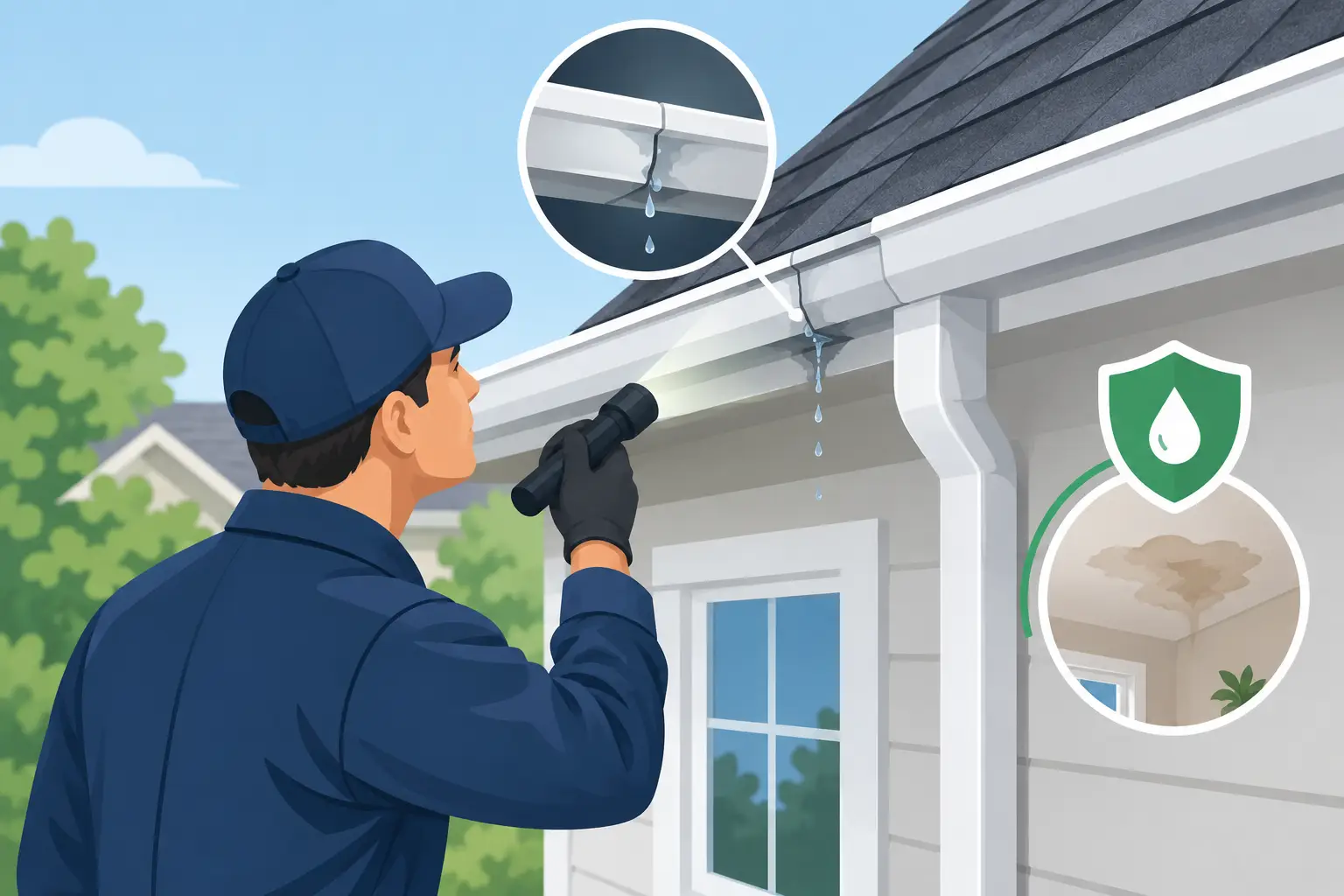
For many homeowners, seamless gutters are worth considering because they reduce the number of joints where leaks can develop. Proper sizing and correct pitch matter too. A gutter system should not just be attached to the house. It should be designed to handle local rainfall and move water away consistently.
Leaf protection can also help if debris is the reason the system keeps failing. A well-built guard system reduces clogging and cuts down on the cycle of overflow, cleaning, and repeat problems. That is especially useful for homeowners who are tired of chasing seasonal gutter issues and just want reliable performance.
If grading is part of the problem, soil may need to be adjusted so water drains away from the house. In more serious cases, foundation waterproofing or drainage work may still be needed. But even then, ignoring bad gutters usually means the same conditions will keep stressing the home.
Why homeowners should not wait
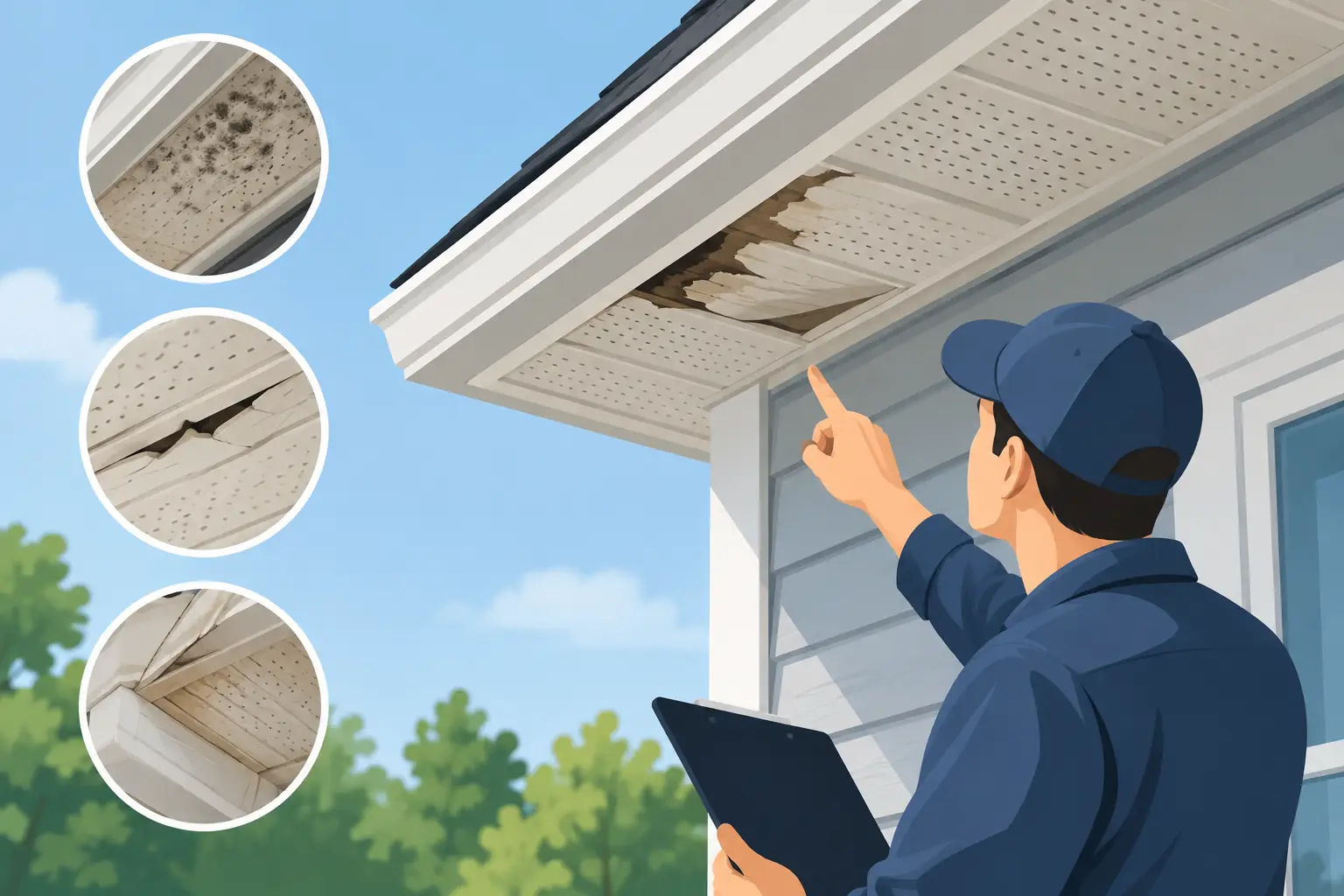
A small basement leak can turn into a much more expensive repair than most people expect. Water near the foundation can lead to mold, damaged framing, ruined finishes, and ongoing air quality issues. Outside, repeated overflow can wash out landscaping, stain siding, and contribute to fascia or soffit rot.
There is also the simple fact that water problems tend to spread. What starts at one gutter corner can affect the foundation, basement wall, and interior flooring over time. The earlier you catch it, the more options you usually have.
For homeowners in Eastern Indiana and Western Ohio, that matters because seasonal storms, freeze-thaw cycles, and leaf-heavy fall weather can all put extra stress on a gutter system. A setup that looks good from the driveway is not always functioning the way it should.
A practical way to check your home
The easiest first step is to watch your house during a real rain. Look at every gutter run, every corner, and every downspout. If water is spilling, backing up, or dumping near the foundation, you have useful evidence right away.
After the storm, check the basement for damp spots and compare the location to what you saw outside. That connection often tells the story. If you are not sure what you are seeing, a professional inspection is usually the fastest way to separate a gutter issue from a foundation problem.
Seamless Gutter Solutions LLC helps homeowners identify exactly where runoff is going and whether the gutter system is doing its job. A clear inspection and itemized quote can take a lot of guesswork out of what feels like a high-stakes repair.
If your basement smells damp every time it rains, trust that warning sign. Water almost always leaves a trail, and very often, it starts at the gutters.