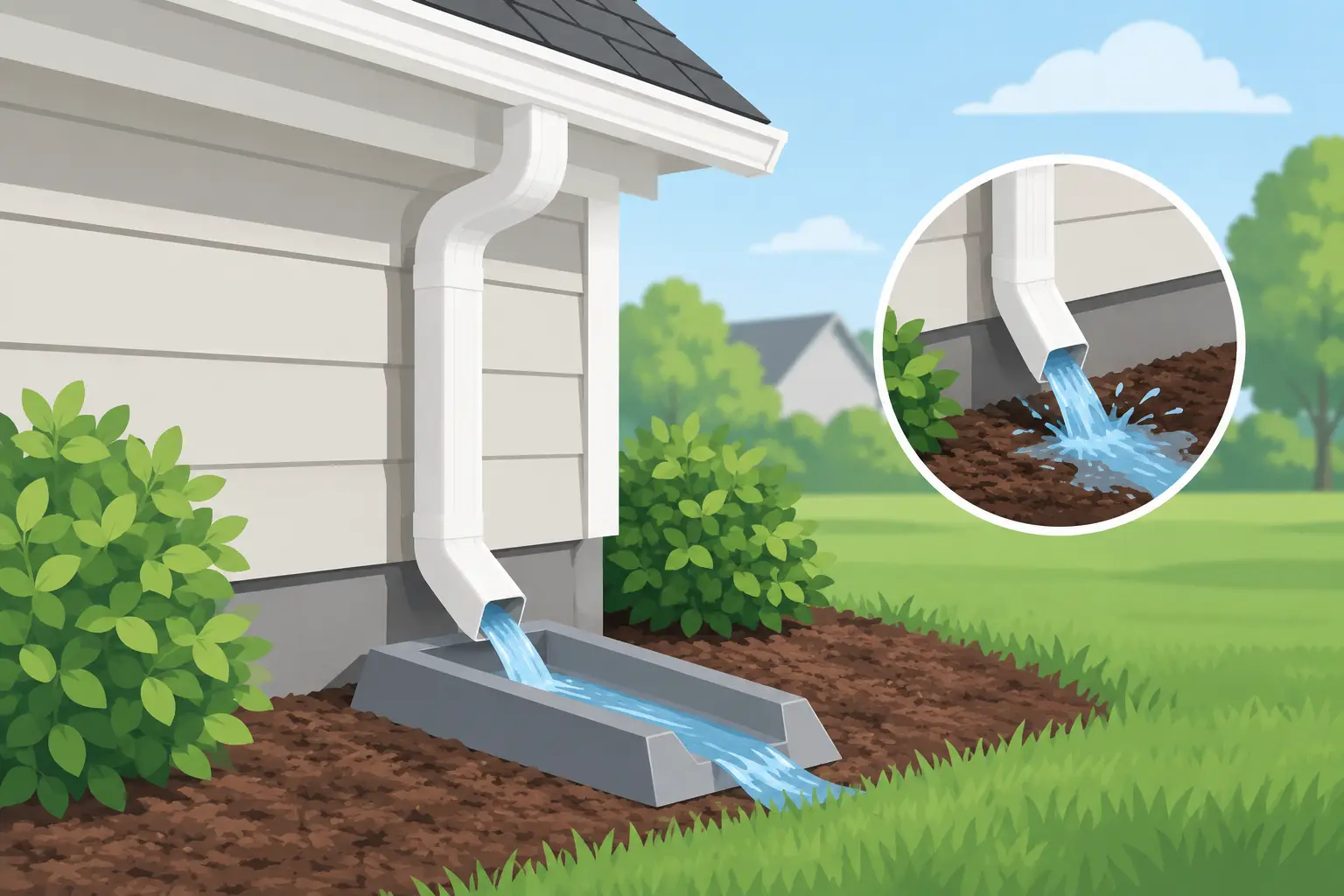

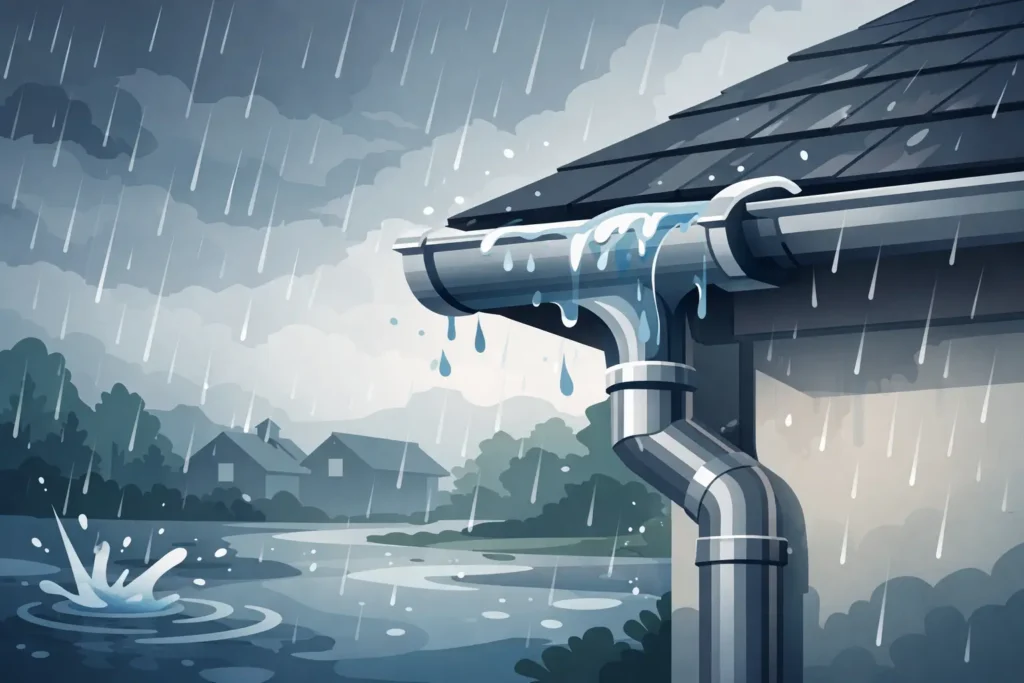
A hard rain tells you very quickly whether your gutter system is doing its job. Water pouring over the front edge, pooling near the foundation, or carving trenches through mulch is not just annoying – it is a warning sign. If you are comparing the best gutters for heavy rain, the right answer usually comes down to capacity, installation quality, and how well the system stays clear when leaves and debris show up.
For homeowners in Eastern Indiana and Western Ohio, that matters more than most. We get strong seasonal storms, wind-driven rain, spring downpours, and winter conditions that can punish a weak gutter system. A gutter that looks fine on a calm day can fail fast in a real storm if it is undersized, poorly pitched, or constantly clogged.
What makes the best gutters for heavy rain?
When people ask about the best gutters for heavy rain, they are often thinking about material first. Aluminum or steel? K-style or half-round? Those details matter, but the bigger issue is how much water the system can move without overflowing.
A high-performing gutter system for heavy rain needs enough width and depth to catch roof runoff, enough downspout capacity to move that water away quickly, and strong fastening to stay secure during repeated storms. It also needs clean, consistent pitch so water flows toward the downspouts instead of sitting in low spots.
That is why the best system is rarely just a product off the shelf. It is a properly sized and professionally installed system that matches your roof area, roof slope, local rainfall, and tree coverage.
Gutter size matters more than most homeowners expect
If your home has standard 5-inch gutters and they overflow in hard rain, the problem may not be damage alone. The system may simply be too small for the roof it serves.
5-inch vs. 6-inch gutters
For many homes, 5-inch K-style gutters are common and can work well under normal conditions. But in heavier rain, larger roofs, steeper roof lines, or valleys that dump a lot of water into one section, 6-inch gutters often perform better. They hold more water and handle faster runoff before it spills over the edge.
That extra capacity can make a real difference on problem areas, especially near roof intersections. If one section of your home regularly overshoots the gutter during storms, upsizing may solve a problem that cleaning alone never will.
Downspouts are part of the equation
Even large gutters can struggle if the downspouts are too few or too small. Water has to leave the gutter just as fast as it enters. A well-designed system may need larger downspouts or more downspout locations to keep water moving.
This is one of the most overlooked parts of gutter performance. Homeowners often focus on the trough itself, but drainage bottlenecks usually show up where water exits.
The best gutter profiles for heavy rain
Most homeowners comparing options will hear about K-style and half-round gutters. For heavy rain, K-style is usually the stronger practical choice for residential homes.
K-style gutters
K-style gutters are popular because they carry more water than half-round gutters of the same width. Their shape helps them manage runoff efficiently, and they fit the look of most homes. For heavy rain, they are often the best balance of performance, appearance, and value.
Half-round gutters
Half-round gutters can work well and have a clean, traditional look, but they usually hold less water than K-style gutters in the same nominal size. On homes where storm capacity is the priority, half-round often is not the first recommendation unless appearance is driving the decision and the system is upsized to compensate.
That is a good example of where it depends. If curb appeal is the top concern, half-round may still make sense. If overflow prevention is the goal, K-style usually has the advantage.
Best gutter materials for heavy rain
Material does matter, just not in the way many people assume. Heavy rain does not automatically require the heaviest metal. What matters most is durability, resistance to sagging, and long-term performance.
Aluminum gutters
Aluminum is the most common residential choice for good reason. It resists rust, performs well in wet conditions, and offers a solid balance of cost and lifespan. For most homes, professionally installed aluminum seamless gutters are one of the best choices for heavy rain.
The key phrase there is seamless. Seamless gutters have fewer joints, which means fewer weak points for leaks and fewer places where debris can catch. That helps the system stay efficient during repeated storms.
Steel gutters
Steel is stronger than aluminum and can be a good option where extra durability is needed. The trade-off is that steel can be more vulnerable to rust over time if finishes wear down, and it is generally heavier and more expensive.
For some homes, that added strength is worthwhile. For many homeowners, properly installed seamless aluminum offers the better overall value.
Vinyl gutters
Vinyl is usually not the best pick for heavy rain. It can be appealing on upfront price, but it is more likely to warp, crack, or separate over time, especially with changing weather conditions. If you want a system built for long-term protection, vinyl often falls short.
Why seamless gutters usually win
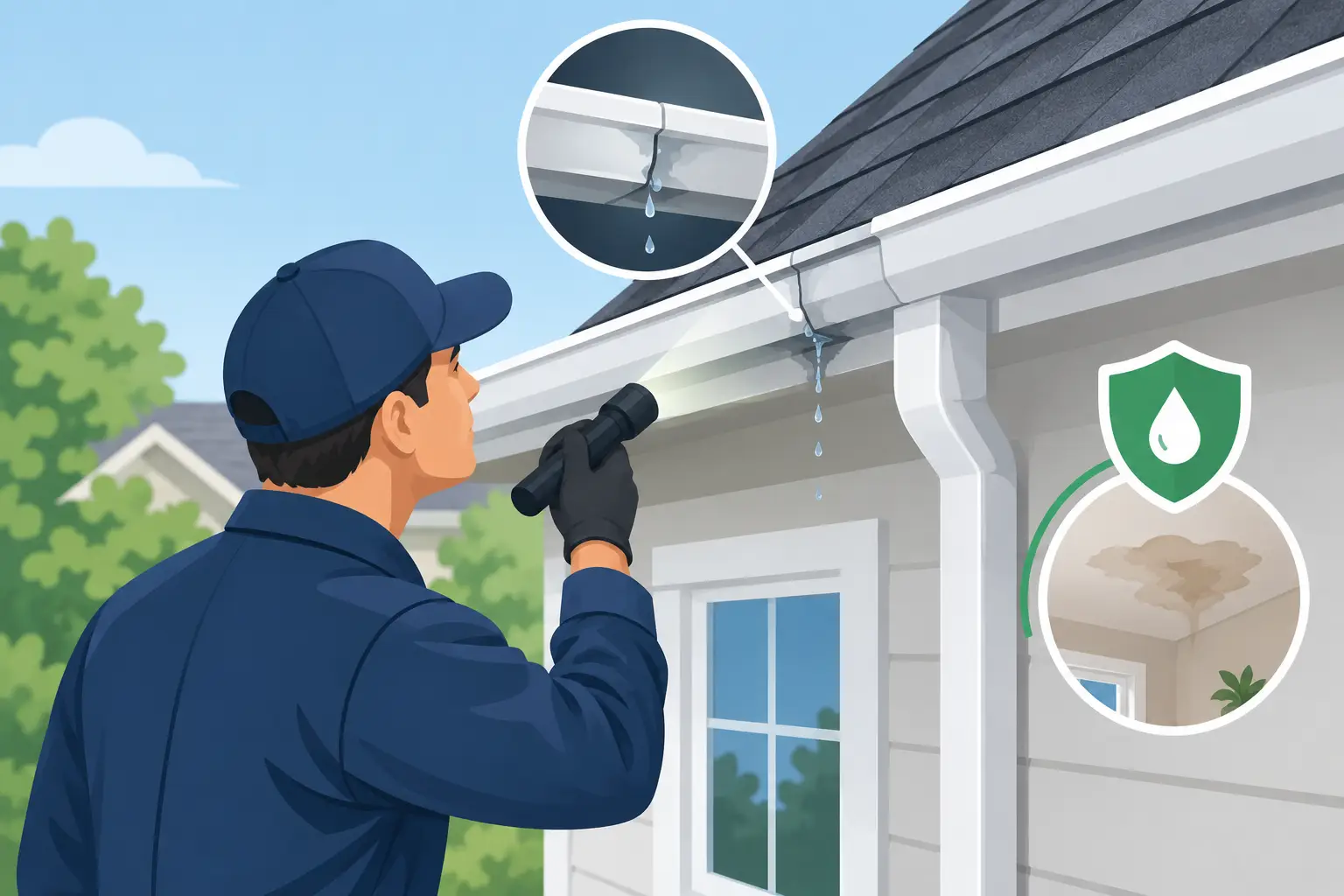
If your goal is dependable storm performance, seamless gutters are hard to beat. Traditional sectional gutters have seams at regular intervals, and every seam is a potential leak point. In heavy rain, those weak spots become more obvious.
Seamless gutters reduce leaks, improve appearance, and generally require less maintenance over time. They also allow for a cleaner custom fit across the roofline. That matters because poor fit leads to poor drainage, and poor drainage leads to water where you do not want it – around fascia, siding, landscaping, and foundations.
For homeowners who want fewer problems and a more durable system, seamless is usually the safer investment.
Gutter guards can make or break heavy-rain performance
A gutter can be perfectly sized and still fail if it fills with leaves, seed pods, and roof grit. During heavy rain, clogged gutters act like blocked pipes. Water backs up, spills over, and ends up right next to the home.
That is why gutter protection deserves a serious look, especially in neighborhoods with mature trees. The best setup for heavy rain is not just a bigger gutter. It is a gutter that stays open.
Not all guards perform the same
Some low-end screens slow down clogs but still allow buildup on top or inside the gutter. Others can interfere with water entry during intense downpours if they are not designed well.
A stronger option is a premium guard system that supports the gutter while helping keep debris out. That combination matters. You want protection from clogs, but you also want structural support so the gutter does not sag over time.
For homeowners looking for a lower-maintenance system, a continuous-hanger guard like Double Pro by Alurex is worth attention because it combines reinforcement and leaf protection in one system. That can be especially useful in heavy rain areas where both water volume and debris are working against the gutter.
Installation quality is where good gutters become great gutters
Even the best materials will disappoint if the system is installed poorly. This is where many gutter problems start. Gutters need the right slope, hanger spacing, outlet placement, and sizing for the roof section they serve.
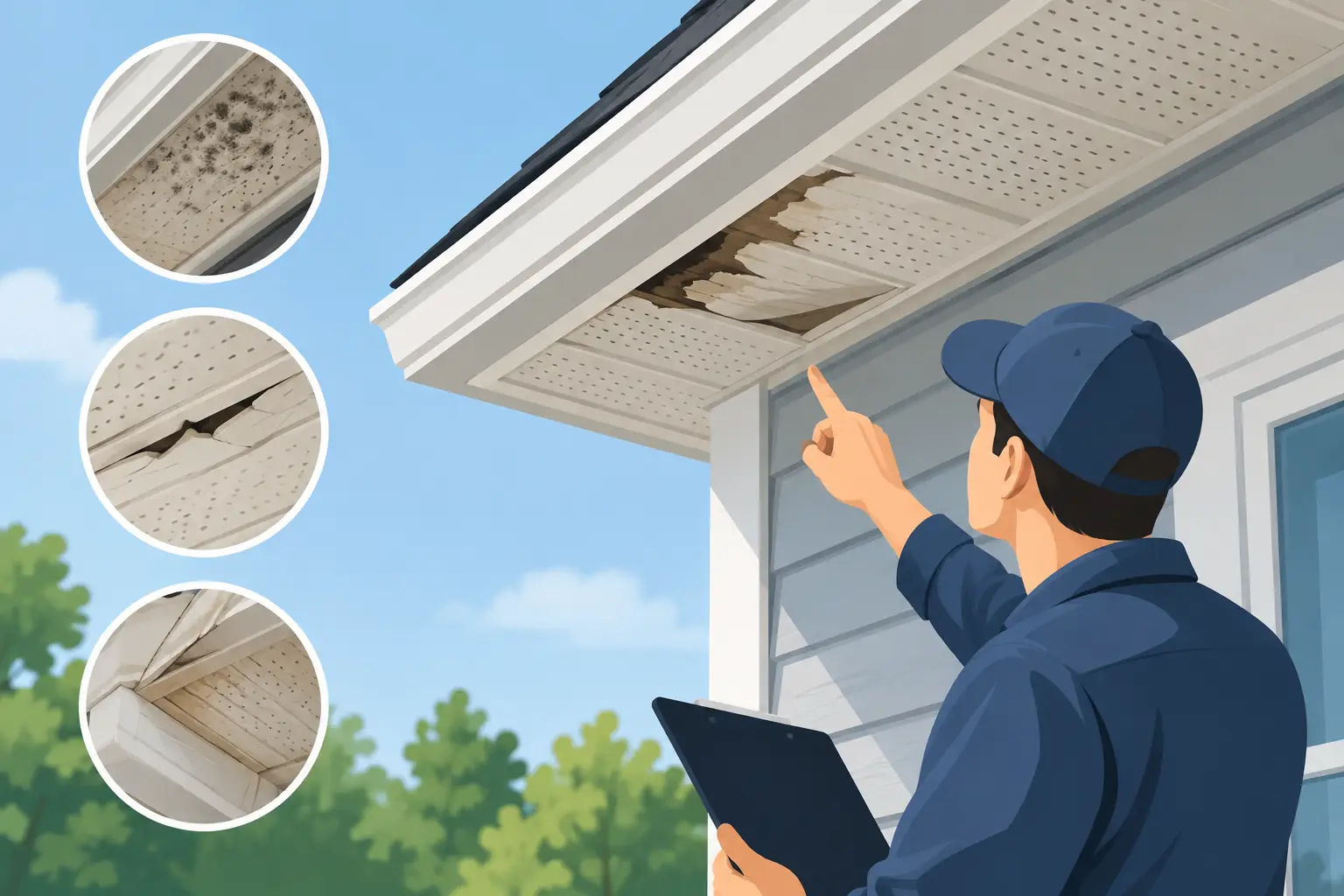
A system that is slightly off may look fine from the ground and still fail during the next major storm. Overflow, standing water, separated joints, and sagging sections often point back to installation shortcuts.
That is why a real inspection matters. You want someone looking at roof pitch, drainage paths, trouble spots, fascia condition, and where water lands at the ground level. A detailed quote should reflect those conditions clearly, not give you one vague number and hope for the best.
How to choose the right setup for your home
For most homeowners dealing with strong seasonal rain, the best answer is usually 6-inch seamless aluminum K-style gutters with properly sized downspouts and a high-quality gutter guard if trees are nearby. That setup gives you strong water-handling capacity without overcomplicating the project.
Still, every home is different. A smaller ranch with open surroundings may do well with a standard setup. A two-story home with steep roof lines and heavy tree cover may need larger capacity and better protection to avoid constant maintenance.
If you are seeing overflow, erosion, basement moisture, or water marks on siding, it is worth getting the system evaluated before the next round of storms. Seamless Gutter Solutions LLC works with homeowners who want clear recommendations, detailed estimates, and no hidden fees – which is exactly how a high-stakes home protection decision should be handled.
The best gutter system is the one that quietly does its job every time the sky opens up, so you can stop watching the roofline and trust where the water is going.