
A gutter problem rarely starts with a dramatic collapse. More often, it begins with a small drip near a seam, water splashing where it should be flowing, or a section that no longer looks quite level. Knowing the top gutter repair warning signs helps you act before runoff reaches your foundation, damages siding, or creates a much larger repair bill.
For homeowners in Eastern Indiana and Western Ohio, gutters work through heavy spring rain, summer storms, falling leaves, and winter freeze-thaw cycles. That constant exposure takes a toll. A quick look around your home after a rainstorm can reveal whether your drainage system needs attention.
Top Gutter Repair Warning Signs Around Your Home
Water spilling over the gutter edge
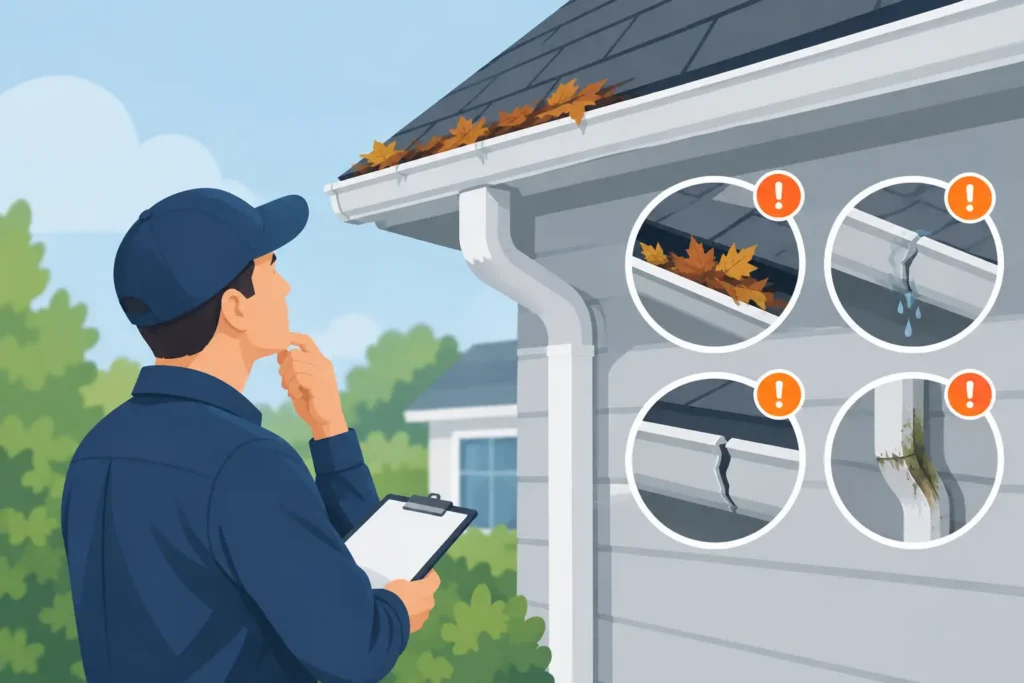
Overflow is one of the easiest warning signs to spot. If water pours over the front or back edge of the gutter during a normal rainfall, the system is not moving water away fast enough.
A clog is one possible cause, especially if leaves, shingle grit, or small branches are visible. But cleaning alone will not solve every overflow problem. Gutters that are too small for the roof area, installed with the wrong slope, or pulling away from the fascia can overflow even when they are clear. Downspouts may also be clogged or undersized.
Watch where the water lands. Runoff that repeatedly dumps beside the house can saturate soil near the foundation, wash away mulch, and leave water standing around basement walls. If you see overflow in the same spot during several storms, it is time for a professional inspection rather than another temporary fix.
Sagging, loose, or visibly uneven gutters
Gutters should follow a clean, consistent line along the roof edge. A dip, bow, or section that appears to lean outward is not just a cosmetic concern. It often means the hangers have loosened, the fasteners are failing, or the gutter has been carrying too much weight from trapped debris and standing water.
In winter, wet debris can freeze and add even more weight. Ice may be the moment you notice a sag, but it is not always the original cause. The underlying issue could be poor support, improper spacing between hangers, or damage to the fascia board behind the gutter.
Do not ignore a gutter that is separating from the home. Once water gets behind it, it can affect the roof edge, soffit, and wood trim. Repairs are usually simpler when the system is stabilized early, before damaged wood becomes part of the job.
Drips, leaks, and water stains below seams
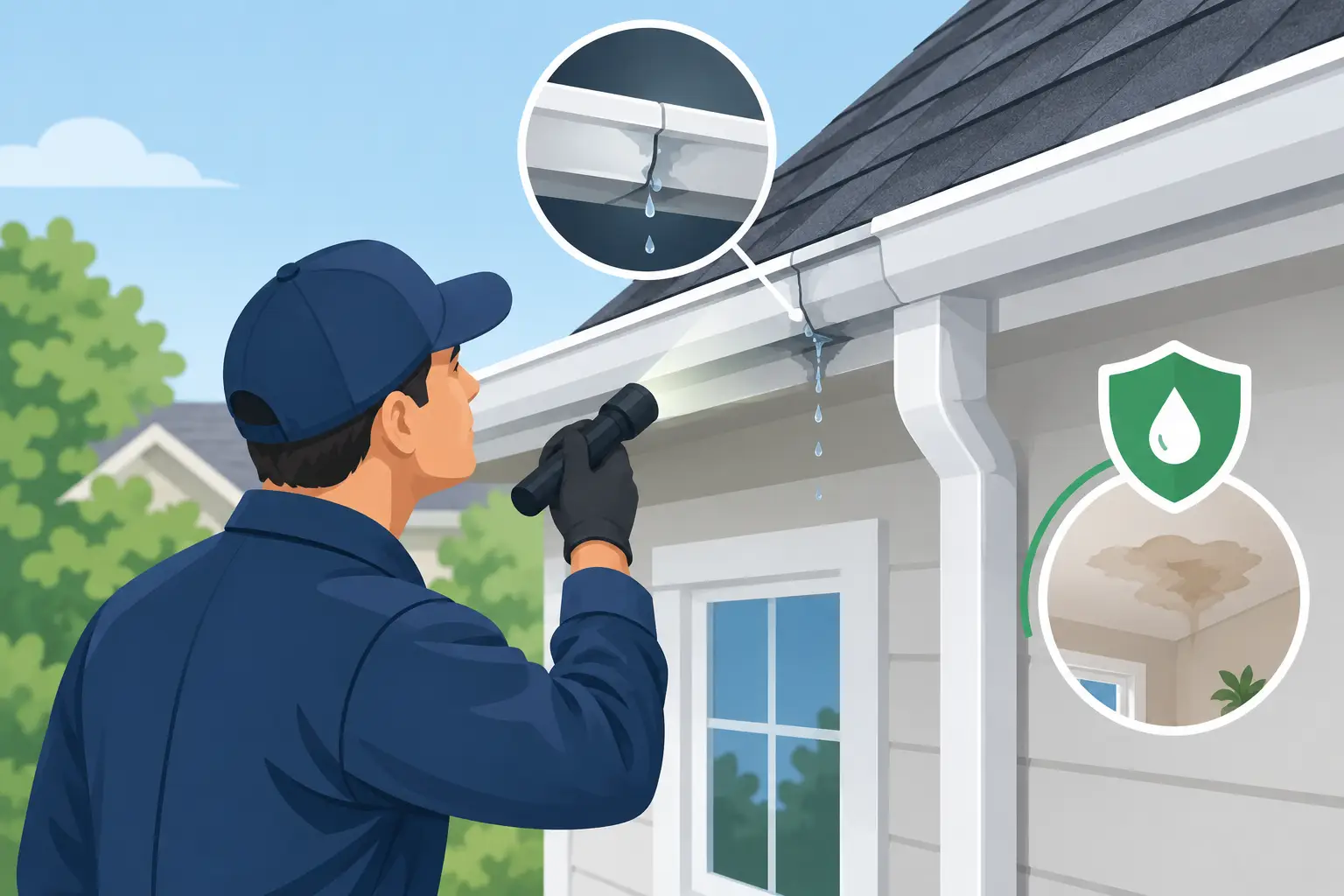
A little water at the end of a storm is normal. A steady drip from the same gutter seam, corner, end cap, or downspout connection is not. Leaks commonly develop where sections meet, where sealant has aged, or where metal has cracked or corroded.
Look for dark water streaks on siding, peeling paint, mildew, or soil erosion directly below the leak. These clues can be more visible than the opening itself. On a one-story home, you may be able to see the issue from the ground during a light rain. There is no need to climb a ladder in wet conditions to investigate.
Seamless gutters reduce the number of joints along a run, which can reduce common leak points. They still need properly sealed corners, end caps, and outlets. The right repair depends on the location and condition of the leak. A small failed seal may be repairable, while widespread corrosion or repeated seam failures may point to replacement.
Peeling paint, rotted trim, or damaged siding
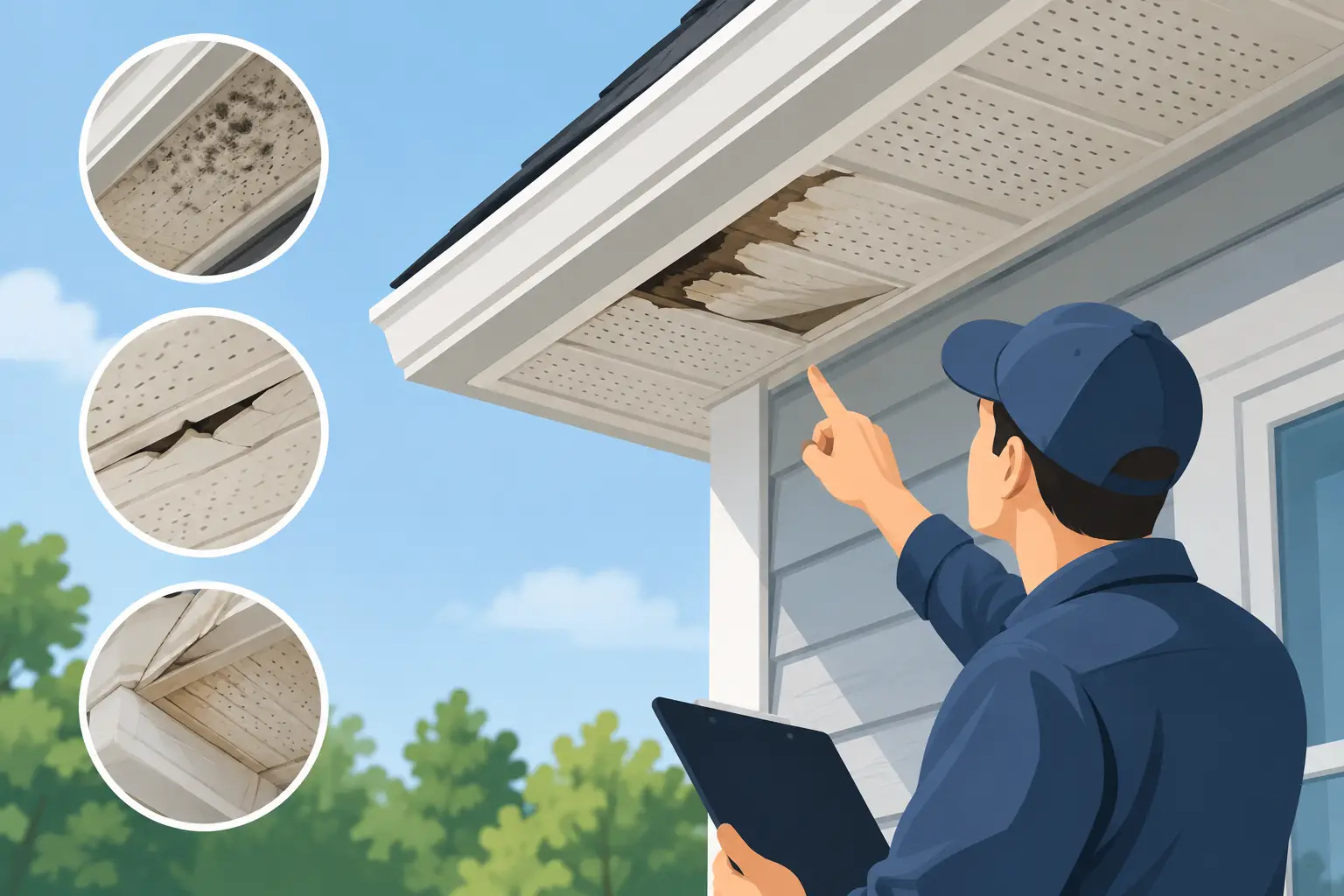
Your gutters may be the source of an exterior problem that seems unrelated at first. Paint that bubbles or peels near the roofline, softened fascia boards, stained soffits, and warped siding can all indicate that water is escaping the gutter system.
This is especially common when a gutter is installed too close to the house, has a hidden leak behind it, or has overflowed for a long time. Water follows the easiest path, and once it reaches wood trim or siding, repeated moisture exposure can create rot and mold-friendly conditions.
A repair professional should inspect both the gutter and the area behind it. Refastening a loose section without checking the fascia may hide the symptom without addressing what allowed the gutter to pull away in the first place.
Puddles, washed-out mulch, or foundation moisture
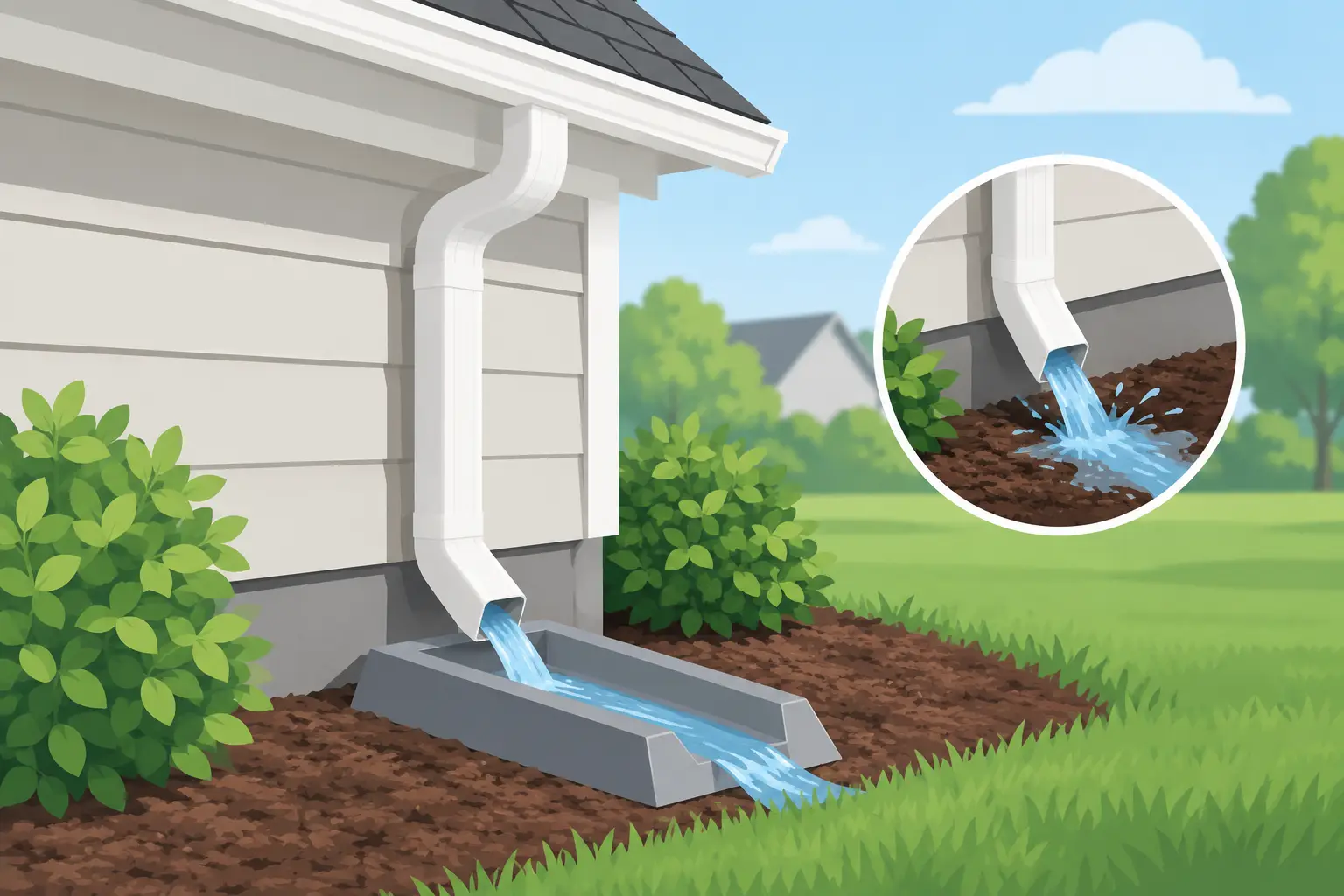
Gutters are designed to collect roof runoff and direct it safely away from the house. When downspouts release water too close to the foundation, or when they are disconnected, blocked, or crushed, that runoff can pool where you do not want it.
After rain, check for puddles around the foundation, channels cut through mulch, exposed roots, and soil that remains soggy long after the rest of the yard dries. In some homes, you may also notice damp basement walls, a musty smell, or increased moisture in a crawl space.
Not every foundation moisture issue starts with gutters, and grading matters too. Still, the gutter system is one of the first places to inspect because it is meant to control a large volume of water coming off the roof. Downspout extensions, splash control, and proper discharge locations can make a meaningful difference.
Cracks, holes, rust, and separated connections
Small cracks and pinholes can turn into active leaks quickly, particularly after a hard freeze. Rust on steel components, holes in aluminum, and split seams should be addressed before another season of heavy weather puts more pressure on the system.
Check the downspout connections as well. A downspout that has pulled loose can send water straight against siding or the foundation. If it rattles in the wind, bends at the elbow, or separates near the outlet, it may need to be resecured or replaced.
Material condition matters when deciding between repair and replacement. One isolated hole or loose elbow can often be fixed. Multiple weak spots across an older system may mean repairs will keep adding up without providing dependable protection.
When a Gutter Repair Is Enough – and When It Is Not
A targeted repair can be a smart, cost-conscious solution when the rest of the system is in good condition. Reattaching a loose hanger, resealing a corner, clearing a blockage, correcting a minor pitch issue, or replacing a damaged downspout section can restore proper performance.
Replacement is worth considering when gutters are repeatedly leaking, severely sagging, heavily corroded, or damaged in several areas. It can also make sense if the original system was not sized or pitched correctly for the home. Patching a system that has ongoing design problems may cost less today but leave the same water-management risks in place.
Leaf buildup is another decision point. If your gutters are structurally sound but need frequent cleaning because of nearby trees, a premium leaf protection system may reduce maintenance and help prevent debris-related overflows. A continuous-hanger guard such as Double Pro by Alurex can also add support along the gutter edge. It is not a substitute for proper installation or occasional inspection, but it can be a practical long-term upgrade for the right home.
What to Do When You Spot a Problem
Start from the ground after the next rainfall. Note where water overflows, drips, pools, or stains the exterior. Take a few photos if it is safe to do so. These details help identify whether the issue is a clog, a slope problem, a failed connection, or a broader drainage concern.
Avoid leaning ladders against loose gutters or attempting roofline repairs during wet, icy, or windy weather. Gutters can look sturdy while their fasteners or supporting wood are compromised. A professional inspection can assess the entire system, including areas that are difficult to see from the ground.
Seamless Gutter Solutions LLC provides free inspections and estimates for homeowners who want a clear answer about what their gutters need. A detailed, itemized quote makes it easier to compare a focused repair with replacement or leaf protection, without guessing about hidden costs.
The best time to address a gutter concern is before the next storm turns a small drip into damaged trim or foundation moisture. If something around your roofline looks off, trust that observation and have it checked while the repair is still manageable.