
A flower bed can look perfectly healthy in April and be carved into a muddy trench after one hard summer storm. The problem is rarely the mulch or the plants. It is usually concentrated water coming off the roof. To protect landscaping from roof runoff, homeowners need to control where that water leaves the roofline, where it travels across the yard, and where it safely soaks into the ground.
For homeowners across Eastern Indiana and Western Ohio, this is more than a cosmetic concern. Heavy rain, saturated clay soil, snowmelt, and freeze-thaw cycles can turn a small drainage issue into washed-out beds, damaged siding, standing water, or moisture near the foundation. The right solution depends on your roof layout, lot grade, soil, and landscaping plan, but it always starts with a reliable gutter system.
Why Roof Runoff Damages Landscaping
A roof collects a surprising amount of water. Even a modest rainfall spread across a large roof can send hundreds of gallons toward the ground in a short period. Without gutters, or with gutters that overflow or discharge in the wrong place, that water lands with force at the edge of the home.
The impact strips mulch, compacts soil, and exposes plant roots. It can also create channels that keep getting deeper every time it rains. In planted beds, repeated runoff may drown moisture-sensitive plants, spread soil onto walkways, and leave a bare, uneven surface that is difficult to maintain.
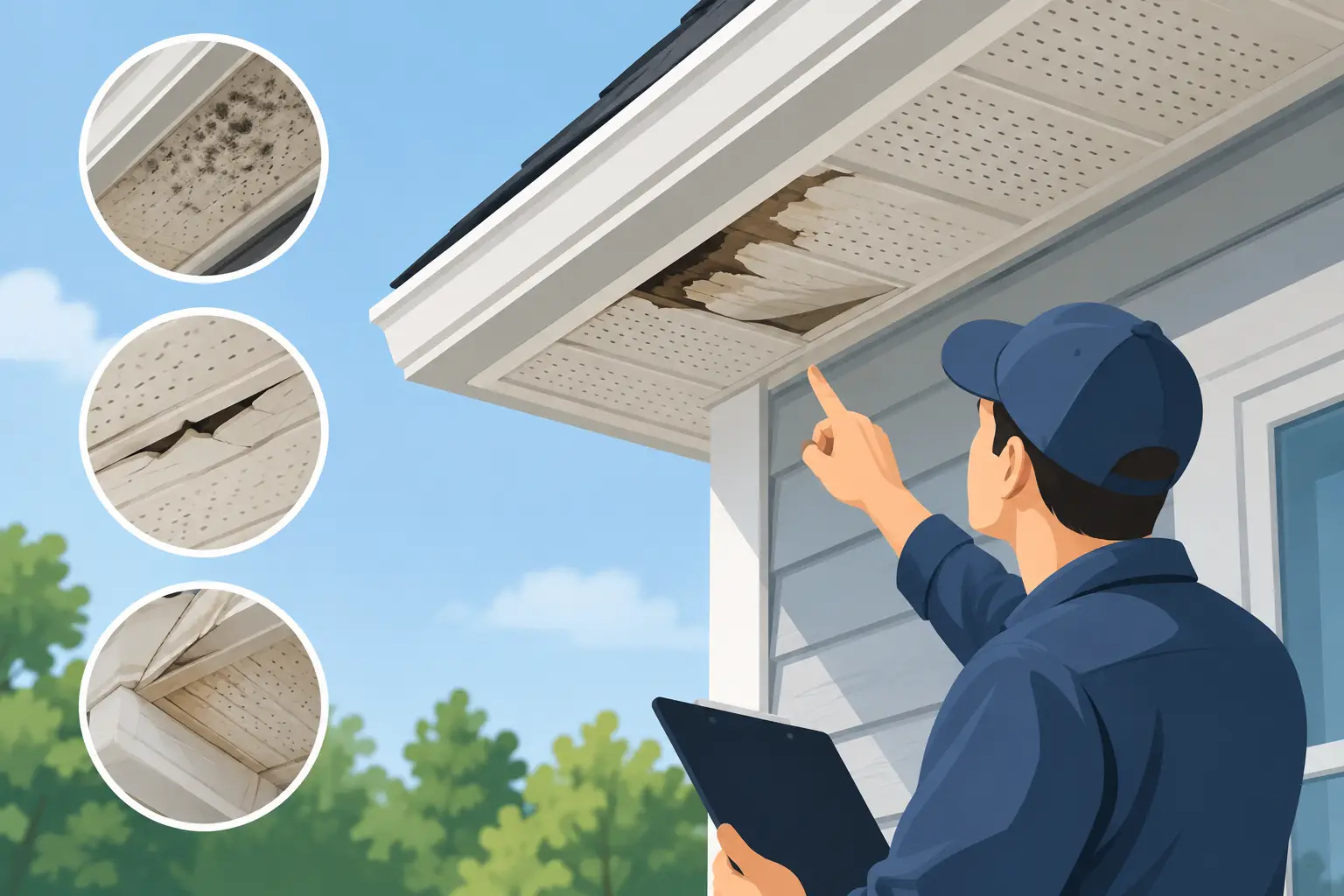
The damage does not always stay in the landscape bed. Water splashing back from the ground can stain siding and wear away at lower exterior surfaces. If the soil slopes toward the house, runoff can collect against the foundation instead of moving away from it. That is why landscaping protection and foundation drainage should be planned together.
Start With Gutters That Collect Water Reliably
The best landscaping drainage plan cannot compensate for gutters that are undersized, clogged, loose, or pitched incorrectly. Gutters need to capture water along the roof edge and move it consistently toward downspouts. When they overflow, rain falls directly into the beds they are supposed to protect.
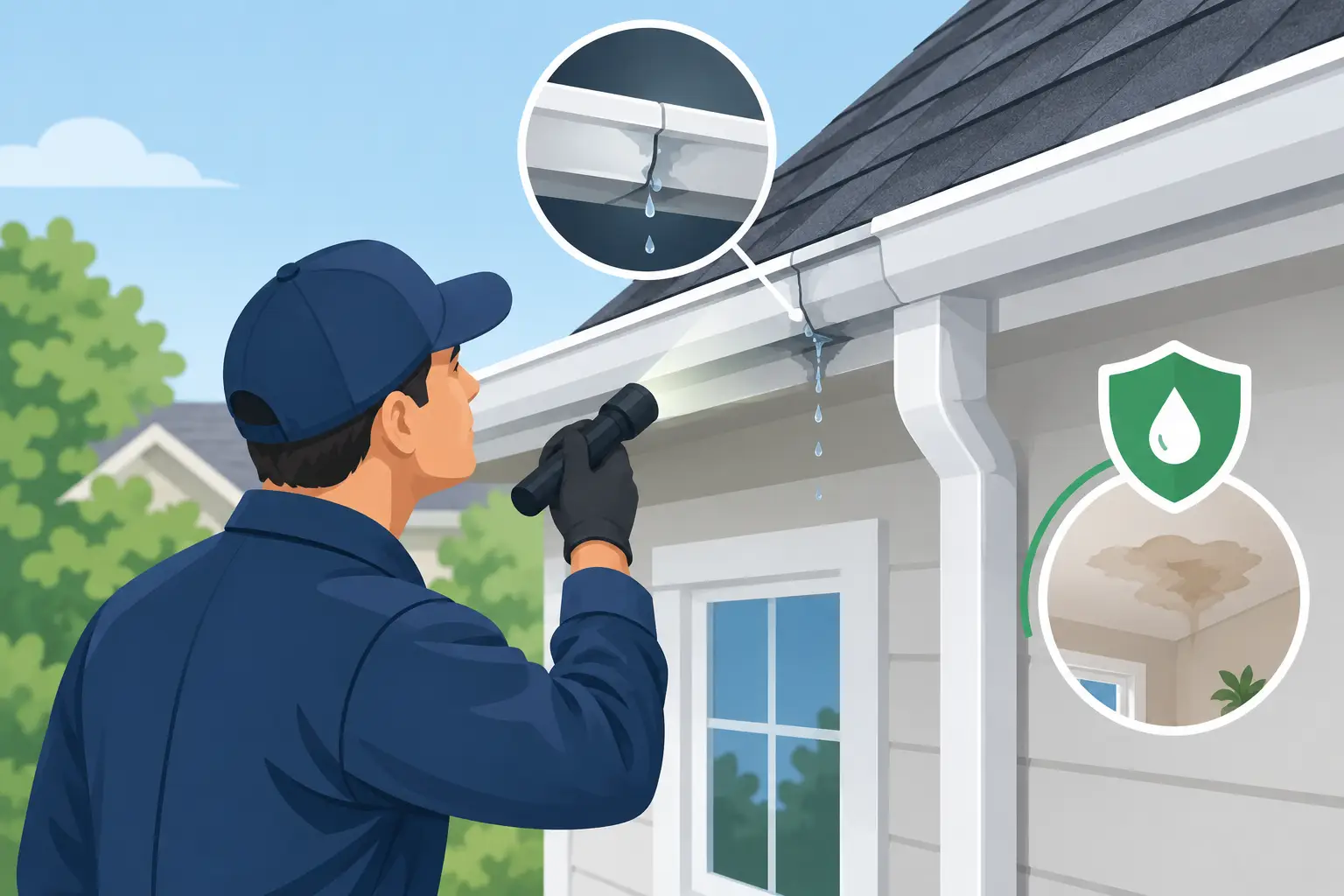
Seamless gutters are a practical upgrade for many homes because they have fewer joints along the run. Fewer seams can mean fewer common leak points, especially when the system is professionally sized and installed for the roof’s drainage needs. Proper hanger spacing, secure fastening, and correct pitch matter just as much as the gutter material.
Pay attention to where water spills over during rainfall. Overflow at one section may indicate a clog, but it can also point to a sagging gutter, insufficient capacity, or a downspout that cannot move water quickly enough. A professional inspection can identify the cause before the next storm sends more water into the same vulnerable area.
Keep Gutters and Downspouts Clear
Leaves, maple seeds, roof grit, and small twigs can restrict water flow long before a gutter looks completely full. Once a downspout begins backing up, water has nowhere to go except over the gutter edge. That often creates the familiar waterfall effect over a porch, doorway, or landscaped corner.
Scheduled cleaning helps, but frequent tree cover may call for a longer-term guard system. A continuous-hanger gutter guard, such as Double Pro by Alurex, can help keep debris out while strengthening the gutter system. No guard eliminates every maintenance need, but quality protection can reduce clogs and make routine service more manageable.
Move Downspout Water Beyond the Planting Bed
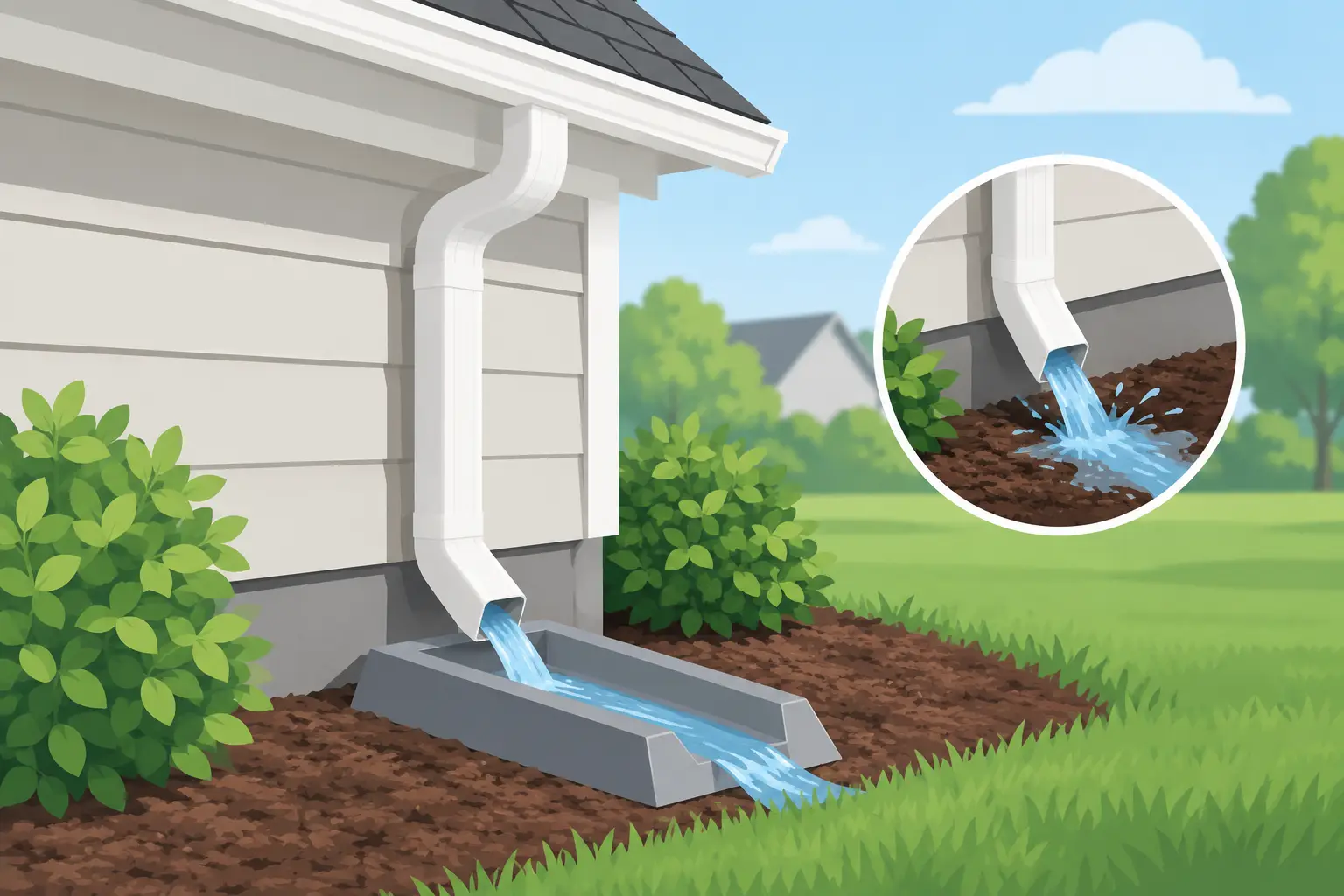
A downspout that ends beside the foundation concentrates roof water at the worst possible spot. It may leave a circular hole in mulch, saturate nearby shrubs, and keep the soil against the house wet for days. The goal is to carry water far enough away that it can disperse without returning toward the home.
A simple downspout extension can work well on a gently sloped lawn with open space. It should direct water away from the house and avoid sending it onto a neighbor’s property, walkway, driveway, or patio. Above-ground extensions are easy to inspect, but they can be visible and may need to be moved for mowing.
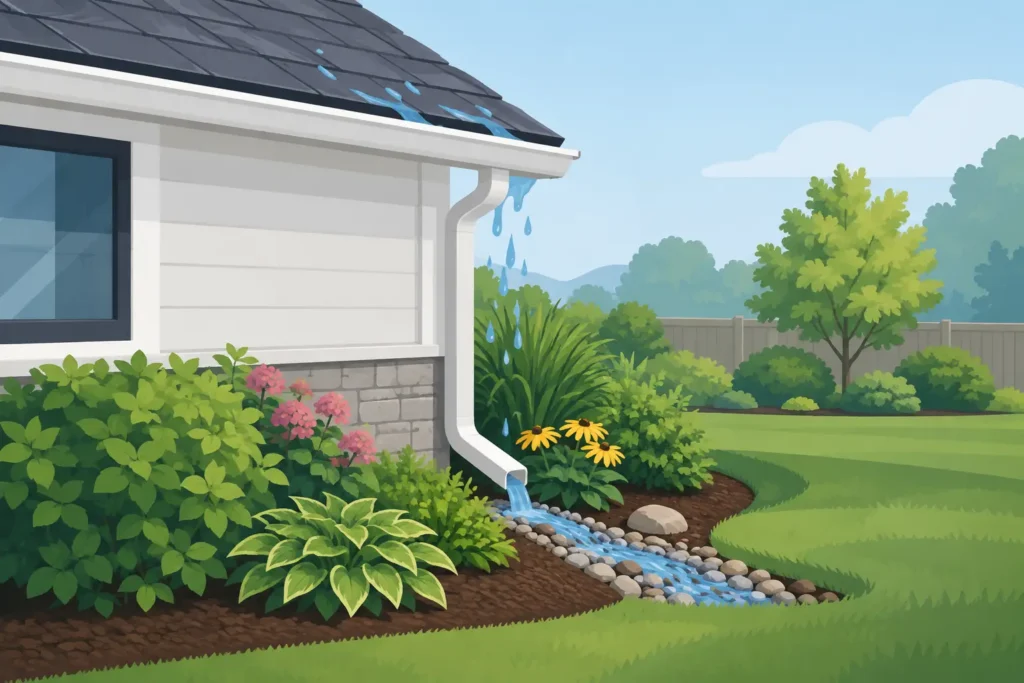
For a cleaner appearance, underground solid drain pipe can carry water to a suitable outlet farther into the yard. This is often useful when a downspout sits in a landscaped bed or near a patio. The pipe must have the right slope and a place for water to discharge. An underground drain that ends in a low, poorly drained area can simply move the puddle from one location to another.
Avoid relying on a short splash block alone when runoff is already causing erosion. Splash blocks can help spread low-volume discharge, but they do not solve major water flow problems. If water is cutting through mulch or pooling near the house, a more deliberate extension or drainage route is usually needed.
Protect Landscaping From Roof Runoff With Grading
Gutters move water off the roof. Grading determines what happens next. Soil around the foundation should slope away from the house so water does not settle at the wall. Over time, mulch additions, settled soil, edging, and landscaping projects can flatten or reverse that slope without homeowners realizing it.
Check the ground after a steady rain. Water should not pond along the foundation, around downspout outlets, or in the center of a bed. If it does, the area may need soil added and shaped to create a gradual outward slope. This work should be done carefully. Raising soil too high against siding can create other moisture concerns, so maintain proper clearance between grade and exterior materials.
In difficult areas, a shallow swale can guide surface water around a bed and toward a safer low point in the yard. A swale is not a ditch carved into the lawn. It is a broad, gentle channel that looks natural when properly graded. For some properties, it is a better answer than forcing every gallon of runoff into buried pipe.
Use Landscape Materials That Handle Water Wisely
Once runoff is directed away from the house, reinforce the areas that still receive normal rainfall. Mulch is useful for moisture control and weed suppression, but it can float or wash away under concentrated discharge. Keep it several inches away from downspout outlets and use edging only where it will not block water from leaving the bed.
River rock can be a durable choice beneath a controlled downspout outlet or along a defined drainage path. It helps reduce splash erosion and stays in place better than lightweight mulch. The trade-off is that rock can collect leaves and may be harder to remove if you later change the landscaping design.
Plant selection also matters. Low spots and drainage edges may benefit from plants that tolerate periodic moisture, while drought-loving perennials should stay out of areas that receive roof discharge. Do not use plants as the primary solution to an active drainage problem, though. Even water-tolerant plants cannot correct water that is repeatedly undermining soil or flowing toward the foundation.
Watch for Signs That the System Needs Attention
Roof runoff problems are easiest to fix before they become major repairs. Walk around the house during or shortly after a hard rain. You may notice one of these warning signs:
- Water spilling over the front or back of gutters
- A deep groove, missing mulch, or exposed roots below a roof edge
- Standing water beside the foundation or on a walkway
- Downspouts draining directly into a planted bed with no extension
- Stains on siding, wet basement walls, or soil consistently washing onto concrete
Do not assume every wet spot requires a full drainage overhaul. Sometimes the fix is as straightforward as cleaning a downspout, reattaching a loose gutter, correcting the gutter pitch, or adding an extension. Larger patterns of overflow, erosion, and foundation-side pooling deserve a more complete evaluation.
Choose a Solution Based on the Whole Property
There is no one-size-fits-all downspout location. A home with a steep roof and short gutter runs may need larger capacity at specific corners. A flat lot with heavy soil may require more attention to grading and discharge distance. A property with mature trees may benefit from leaf protection to keep the system flowing through the seasons.
The key is to avoid treating the symptom alone. Replacing mulch every spring does not solve water that is being dumped in the same place. Moving a downspout ten feet may not help if the yard slopes back toward the foundation. A clear inspection of the roofline, gutters, downspouts, grade, and landscape beds gives homeowners a better basis for choosing the right repair or upgrade.
Seamless Gutter Solutions LLC provides free inspections and detailed, itemized estimates with no hidden fees, so homeowners can see what is causing the problem and what work is actually recommended. A well-planned gutter and drainage system should let rainwater leave your roof quietly, travel where it belongs, and leave your landscaping looking like a landscape instead of a storm path.