
A damp line along a basement wall after a hard rain is not something to paint over and forget. Water entering below grade can damage stored belongings, create musty odors, encourage mold growth, and put pressure on concrete over time. Knowing how to prevent basement seepage starts with one practical question: where is the water going after it leaves your roof and yard?
For many homes in Eastern Indiana and Western Ohio, the answer changes with the season. Spring rain, summer downpours, falling leaves, and freeze-thaw cycles all expose weak points in a home’s drainage plan. The good news is that most seepage problems can be reduced or prevented by correcting water flow outside before it reaches the foundation.
How to Prevent Basement Seepage From the Outside
Basement waterproofing products have their place, but exterior water management should come first. Your foundation is designed to support your house, not to act as a permanent dam against roof runoff and standing water. When soil around the home becomes saturated, water can press against foundation walls and find its way through cracks, joints, window wells, and porous concrete.
The most effective approach is to move rainwater away quickly and keep the soil beside the foundation as dry as reasonably possible. That means looking at gutters, downspouts, grading, landscaping, and underground drainage as one connected system.
Keep gutters clear and properly sized
Gutters are the first line of defense against basement seepage. If they are clogged with leaves, shingle grit, or nests, rainwater can spill over the edge and land directly beside the house. Even a small overflow repeated through several storms can saturate the soil near the foundation.
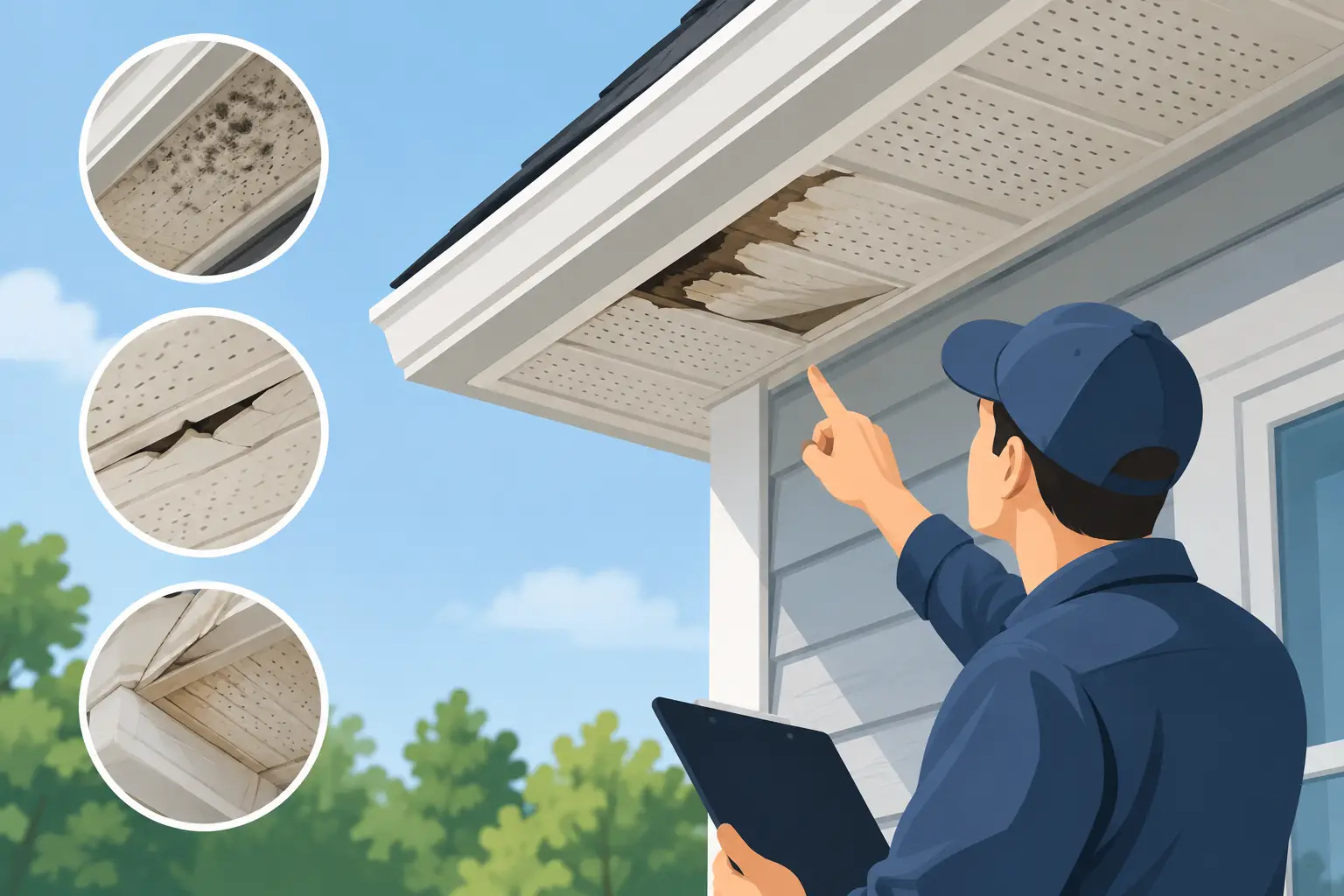
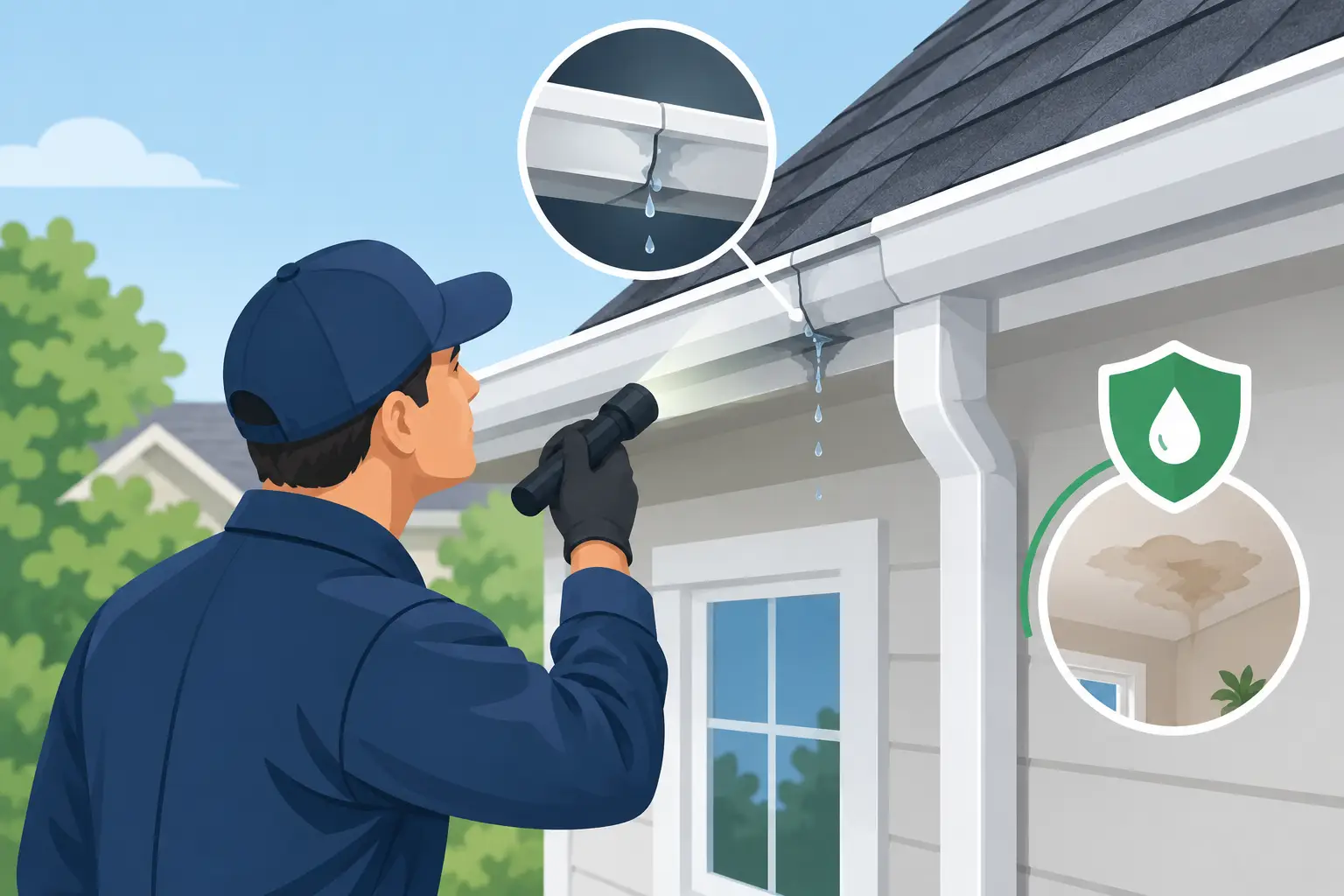
Walk around the home during or soon after rainfall. Look for water pouring over gutter edges, sagging sections that hold standing water, loose fasteners, and staining on siding beneath the gutter line. These are signs that water is not reaching the downspouts as intended.
A gutter system should also be sized for the roof area and local rain intensity. A larger roof sheds a surprising amount of water during a heavy storm. If gutters are too small, incorrectly pitched, or have too few downspouts, overflow can happen even when they are clean. Seamless gutters reduce the number of joints where leaks commonly develop, but they still need proper installation, pitch, and maintenance to perform well.
For homes surrounded by mature trees, scheduled cleaning is often necessary. A premium guard system can reduce the debris load and make maintenance more manageable, but no product removes the need to check the system periodically after major storms.
Extend downspouts far from the foundation
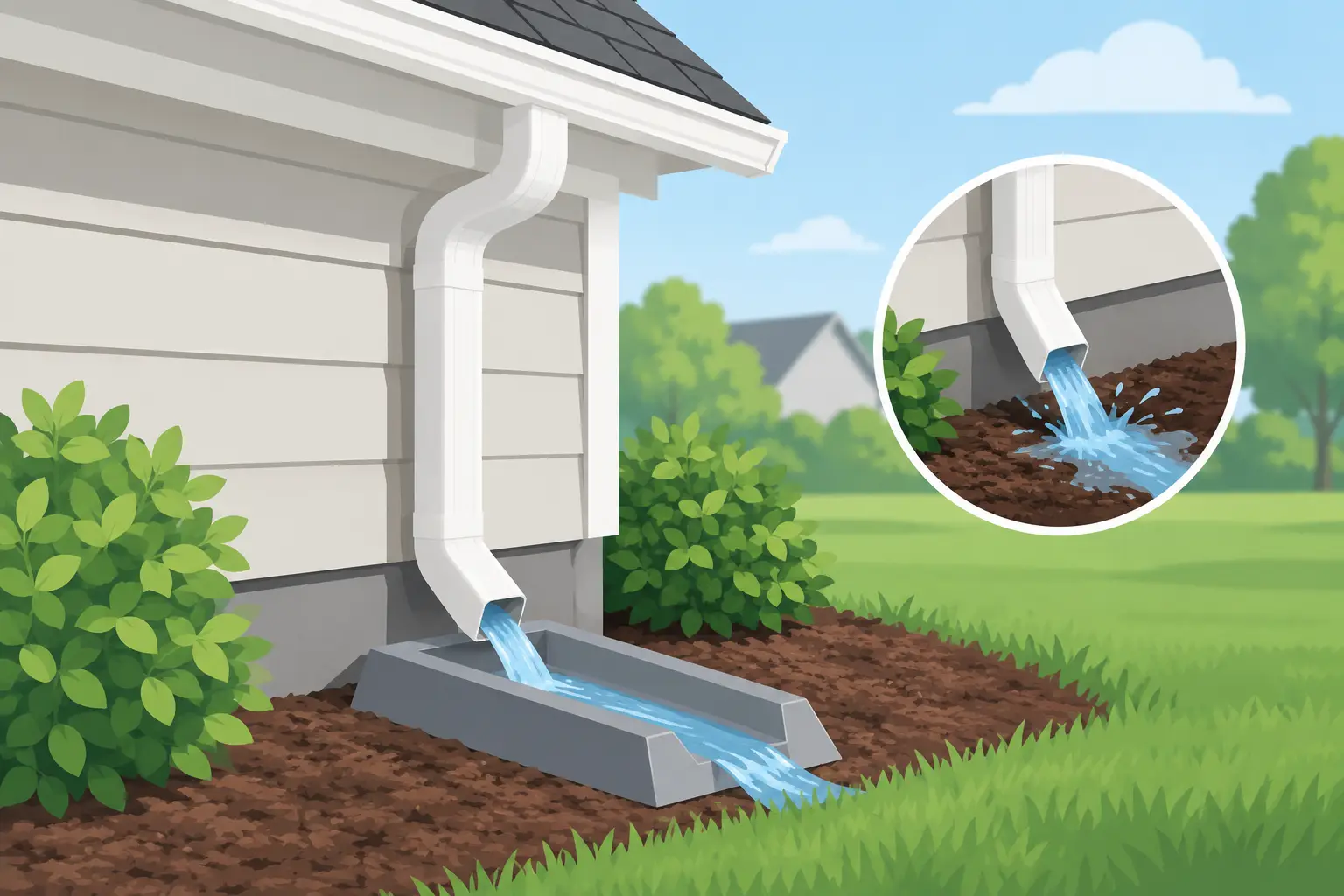
A working gutter is only helpful if the downspout discharges water in the right place. Downspouts that end at the corner of the house simply move roof runoff from the eave to the foundation wall.
As a general rule, extend discharge points at least 4 to 6 feet away from the home, and farther when the lot is flat, the soil drains slowly, or the basement has a history of water intrusion. The extension should release water onto an area that slopes away from the house. Do not direct it toward a neighbor’s property, a driveway that slopes back toward the home, or a walkway that becomes icy in winter.
Above-ground extensions are simple to inspect and adjust, while buried drain lines can create a cleaner appearance. Buried lines work well when designed with adequate slope and a clear outlet. However, they can clog, collapse, or freeze if installed poorly. If a buried downspout drain is suspected of failing, have it inspected rather than assuming the water is disappearing safely underground.
Correct the slope around the home
The ground around your foundation should slope away from the house. A common target is a drop of about 6 inches over the first 10 feet, where site conditions allow. The goal is not to create a dramatic hill. It is to keep rainfall and melting snow from collecting beside the basement wall.
Over time, soil settles around foundations, especially near backfilled utility trenches, patios, porches, and landscape beds. Mulch can also hide low spots. If you see puddles near the house after rain, or if the ground feels soft and muddy beside the wall, grading may be part of the problem.
Adding clean fill and reshaping the grade can be effective, but take care not to bury siding, brick weep holes, or wood trim. Keep soil and mulch below the siding line. If the property is naturally low or neighboring lots drain toward your home, grading alone may not be enough. That is when a swale, catch basin, or professionally designed drainage solution may be needed.
Identify Where the Moisture Is Coming From
Not every damp basement is caused by seepage. Before spending money on repairs, look for patterns. Does water appear only after rain or snowmelt? Is it concentrated along one wall, below a window, or near a downspout location? That points toward an exterior drainage issue.
If moisture appears during humid weather without rainfall, condensation may be the cause. Cold basement walls and pipes can collect moisture from humid indoor air. A dehumidifier, sealed ductwork, insulated pipes, and better ventilation can help in that situation.
Plumbing leaks are another possibility. Check around water heaters, laundry connections, bathroom supply lines, and floor drains. A leak that occurs regardless of weather needs a different repair than rainwater seepage.
Pay attention to warning signs such as white mineral deposits on concrete, peeling paint, a persistent musty smell, rusted metal supports, or damp carpet along an exterior wall. These signs do not always mean a major structural issue, but they do mean moisture has been present long enough to leave evidence.
Protect Vulnerable Basement Entry Points
Once outside drainage is under control, inspect the common places where water gets through. Hairline cracks in poured concrete walls may allow water in during prolonged saturation. Small cracks can sometimes be repaired, but cracks that widen, run horizontally, or are paired with wall movement deserve professional evaluation.
Basement windows and window wells need special attention. A window well should be clear of leaves and soil, drain properly, and sit high enough that surface water cannot easily spill over the window. A properly fitted cover can help keep out debris and reduce direct rainfall, but it cannot solve a well with poor drainage.
Check where utility pipes and cables enter the foundation as well. Failed sealant around these penetrations can become an easy route for water. Re-sealing may be a reasonable maintenance task, but recurring leakage around an entry point usually means there is still too much water collecting outside.
Know When Interior Drainage Is Worth Considering
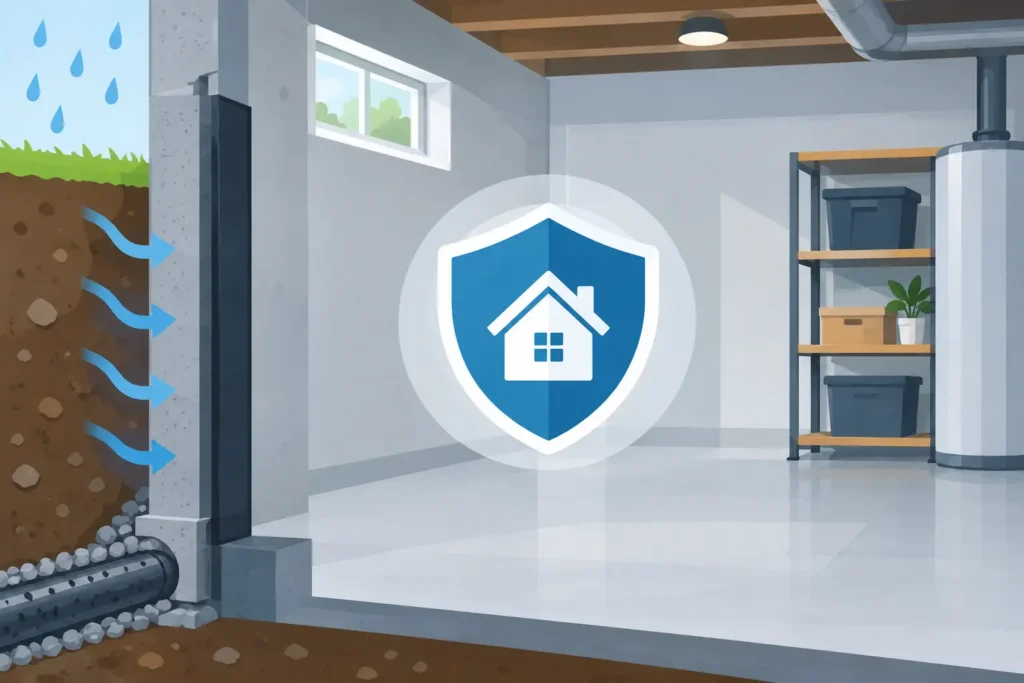
Some homes need more than gutters, downspout extensions, and grading. Properties with high water tables, frequent hydrostatic pressure, or consistently wet soil may benefit from an interior perimeter drain and sump pump system. These systems collect water before it reaches the basement floor and pump it away from the house.
Interior drainage can be a practical solution when exterior excavation is difficult because of patios, landscaping, or access limitations. The trade-off is that it manages water after it reaches the foundation area rather than preventing every drop from getting there. It also depends on electricity, so a battery backup is worth considering in areas that lose power during storms.
Exterior waterproofing and footing drains may be appropriate during major foundation work or when excavation is already planned. They can be highly effective, but they are more disruptive and usually more expensive. A clear inspection should identify whether the problem is simple runoff management or a deeper drainage issue before recommending a large project.
Build a Seasonal Water-Management Routine
Basement seepage prevention is easier when small problems are caught early. In spring, check for winter damage, disconnected extensions, and settled soil. Before fall leaf drop, make sure gutters and downspouts are ready to carry water freely. After major storms, look for overflow, washouts, and standing water around the foundation.
Keep an eye on landscaping too. Dense shrubs, edging, and raised beds can unintentionally trap water against the house. Mulch should be refreshed thoughtfully, not piled higher every year. If a drainage path has worked well, avoid blocking it with a new patio, fence, or garden project without considering where rainwater will go.
If your gutters overflow, your downspouts discharge too close to the home, or your yard holds water near the foundation, address those issues before the next long rain. Seamless Gutter Solutions LLC can provide a free inspection and detailed, itemized estimate so you can see what needs attention without hidden fees. A dry basement often begins with a simple, visible improvement outside: water leaving the roof and continuing safely away from your home.