

A corner leak is the one gutter problem that feels small – until you notice the splash marks on your siding, the soggy mulch bed, or water pooling right where you do not want it: near your foundation. Corners take more stress than straight runs, and they are also where most “quick fixes” fail first.
If you are asking, “why are my gutters leaking at corners,” the good news is that the cause is usually understandable and repairable. The better news is that spotting it early can prevent far more expensive damage to fascia boards, soffit, landscaping, basements, and slab edges.
Why are my gutters leaking at corners in the first place?
Gutters leak at corners because corners are connection points. Water changes direction there, debris tends to collect there, and the gutter system is under slightly different forces there (expansion and contraction, ladder bumps, ice, and the weight of wet leaves). Even on seamless gutters, corners are typically made with a corner piece and sealant, not a single continuous bend. That joint is a common failure point over time.
Most corner leaks come down to one of three realities: the joint is no longer watertight, water is backing up and overflowing in a way that looks like a leak, or the gutter is no longer sitting at the right pitch and support so water is forced to escape at the corner.
The most common causes of corner leaks (and what they look like)
The corner seam sealant has failed
The most frequent culprit is simple: the sealant in the corner joint has cracked, separated, or thinned out. Indiana and Ohio weather makes this more likely because the sealant is asked to handle freeze-thaw cycles, summer heat, and constant wet-dry repetition.
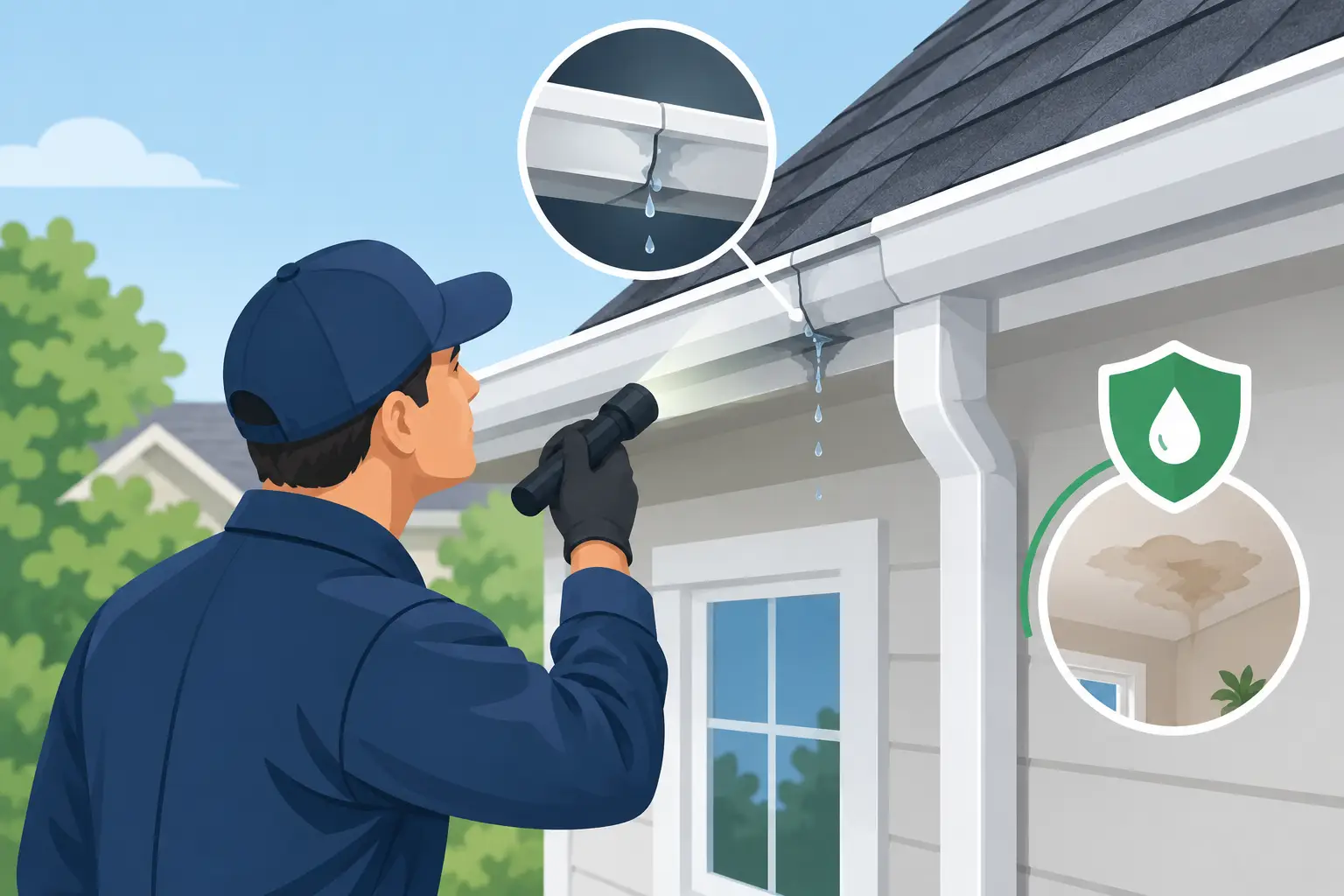
You will often see a slow drip that continues for a bit after rain stops. From the ground, it can look like a steady thread of water from the corner itself rather than a sheet of overflow.
A trade-off to understand here: adding more sealant can work if the joint is still tight and clean, but it will not hold if the corner has shifted, if water is sitting in the corner due to poor pitch, or if the old sealant was applied over dirty metal.
The corner joint has separated or loosened
Corners can pull apart slightly over time. This might happen after heavy snow loads, a ladder leaning on the corner, or fasteners that were never set well in the first place. Even a tiny gap can leak under volume flow.
This problem often shows up as a heavier leak during hard rain and a noticeable stain line down the outside of the gutter right below the corner. If you can see daylight at the joint when you are up close (only if you can do so safely), that is a strong sign the joint needs to be re-secured and resealed – not just caulked.
Clogs are forcing water to back up at the corner
Sometimes the corner is not “leaking” at all. It is overflowing because water cannot move through the system as designed. Corners and inside turns are natural catch points for shingle grit and leaf fragments. Add a partially blocked downspout, and the corner becomes a spillway.
Overflow usually leaves wide splash marks or a wash pattern on the fascia and siding. You may only see it during heavy rain, or when a section of roof dumps a lot of water quickly.
This is where it depends: if the gutter is clean but the downspout is clogged, the corner can still overflow. If the gutter is dirty but the downspout is clear, you can still get corner pooling. The fix is different, so it is worth confirming where the restriction is.
The gutter pitch is off, so water sits in the corner
Gutters need a gentle slope toward the downspout. When hangers loosen or the fascia board behind the gutter changes over time, the pitch can flatten or reverse. Water then collects at the corner, creating standing water that attacks sealant and finds tiny gaps.
If you notice water lingering long after a storm, or you see a “tide line” inside the gutter near the corner, pitch is a prime suspect. Sitting water also increases mosquito risk and speeds corrosion on older systems.
Hangers or fasteners near the corner are failing
Corners carry weight differently. When a hanger is missing, spaced too far apart, or attached into weak fascia, the gutter can sag just enough to open a joint or disrupt the drip edge alignment.
This often presents as a corner that looks slightly lower than the adjacent run, or a gutter that “wobbles” when touched. A wobbly corner is not just annoying – it is telling you the system is moving, and moving joints do not stay sealed.
Ice and freeze-thaw damage
In our region, corner leaks frequently show up after winter. Ice can form in corners where water collects, then expand and pry at seams. Even if the gutter looks fine in spring, the sealant may have been compromised.
If your leak started after a snowy season or you have a history of icicles near corners, it is worth treating the corner as a high-risk joint. The long-term solution may involve improving pitch, addressing attic insulation or ventilation issues that contribute to ice dams, and making sure downspouts are carrying water away efficiently.
The downspout outlet is restricting flow
If the downspout drop is right after a corner, the outlet opening can become a bottleneck. Small debris gets trapped there, and water stacks up. That “stacking” creates pressure at the corner joint.
You might notice the gutter looks full during rain, especially near the corner and outlet, while other sections look normal. In that case, clearing the downspout and checking the outlet fit often solves the “leak.”
What you can check safely before calling a pro
You do not need to be a gutter expert to narrow down the cause. You do need to be honest about ladder safety. If you are not comfortable on a ladder, or the ground is uneven, it is smarter to stop and schedule an inspection.
From the ground, watch the corner during a steady rain (or right after). If water is pouring over the top edge, you are likely dealing with a clog, a pitch issue, or an undersized outlet. If water is dripping from the underside seam while the gutter is not overflowing, that points more toward a joint or sealant failure.
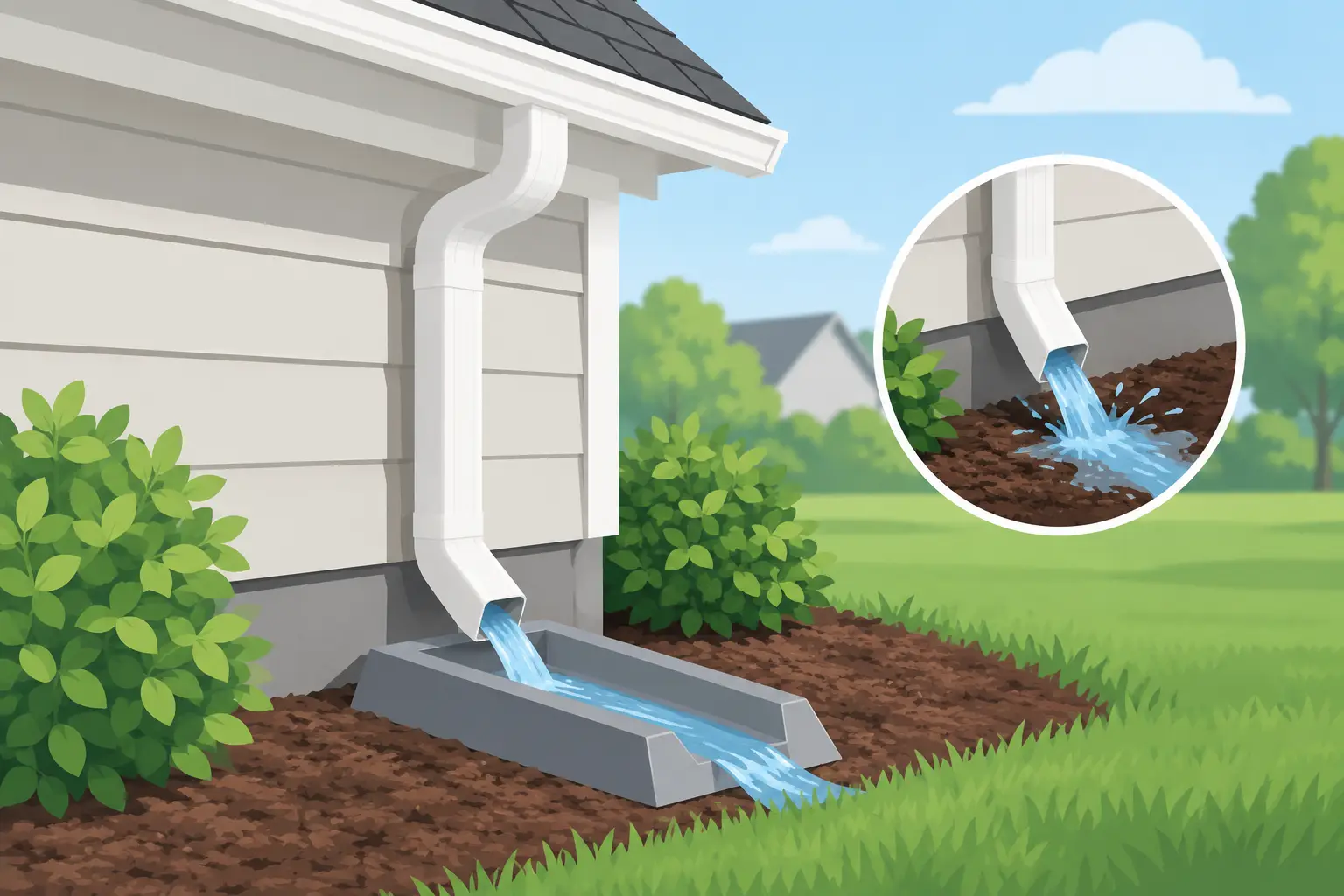
If you can safely get close, look for debris packed into the corner, a visible gap at the joint, loose hangers, or staining that tracks from a specific seam line. Also look at where the downspout discharges. Even a perfect corner will “act broken” if the downspout dumps water right next to the foundation and it splashes back up.
When a DIY fix works – and when it usually doesn’t
A simple reseal can work when the corner joint is structurally sound, properly fastened, and completely clean and dry before sealing. The challenge is that many homeowners apply sealant over damp surfaces, old failing sealant, or debris. That turns into a temporary patch.
If the corner has shifted, if the gutter is sagging, or if the leak is caused by backup, sealant alone is a repeat problem. You might get a few storms of relief and then see the same drip line again.
A more durable repair often involves tightening or replacing fasteners, adding or repositioning hangers to restore pitch, cleaning the system thoroughly, and then sealing the joint with the right product in the right conditions.
How to tell if it’s time for a repair vs replacement
If your gutters are otherwise in good shape, a targeted corner repair is usually the most cost-effective move. But if you are seeing multiple corner leaks, widespread rust, recurring clogs, or joints separating in more than one area, you may be putting money into a system that is past its practical life.
Seamless gutters reduce the number of joints that can fail, which is exactly why many homeowners upgrade after dealing with recurring corner issues on older sectional systems. Pairing a solid gutter install with a premium guard can also reduce corner buildup that leads to overflow and seam stress.
Preventing corner leaks long-term
Corner leaks are often a symptom of two bigger themes: maintenance and structural support. Keeping gutters clear and downspouts flowing prevents backup pressure. Ensuring the system is properly supported and pitched prevents standing water that breaks seals.
If you are tired of cleaning corners every season, a properly installed leaf protection system can make a noticeable difference – not by “making gutters maintenance-free,” but by reducing the volume of debris that turns corners into clog points.
A straightforward next step for homeowners near Richmond
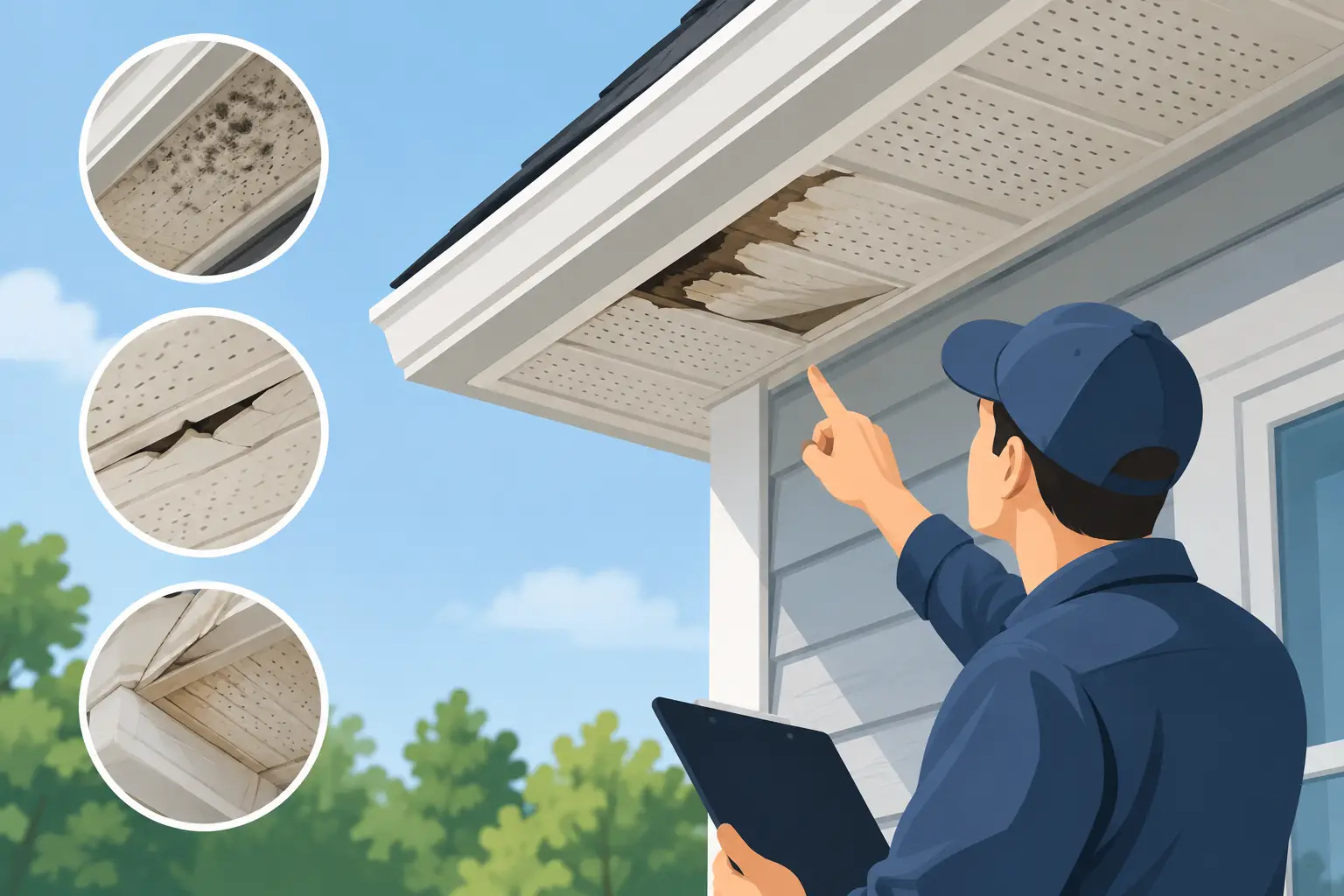
If your corner leak is active, the risk is not just the gutter. Repeated water at the same spot can rot fascia, stain siding, and erode soil next to the foundation. If you want a clear answer without guesswork, a free inspection is often the fastest way to confirm whether you need a simple corner reseal, a pitch adjustment, a downspout clearing, or a more complete repair.
Seamless Gutter Solutions LLC provides free inspections and detailed, itemized estimates with no hidden fees for homeowners across Eastern Indiana and Western Ohio. You can learn more or request a visit at https://sgsrichmond.com.
Water has a way of finding the one weak point in a system. Fix the corner now, and you are not just stopping a drip – you are protecting the parts of your home that are expensive to replace and hard to ignore once they are damaged.