
Water should leave your roof, move through the gutters and downspouts, and drain safely away from the house. When it does not, downspout drainage problems can turn an ordinary rainstorm into a threat to your foundation, siding, landscaping, and basement. The good news is that most drainage failures leave clear warning signs before major damage occurs.
For homeowners across Eastern Indiana and Western Ohio, drainage deserves extra attention after heavy spring rains, summer storms, and winter freeze-thaw cycles. A downspout that appears to be working may still be releasing too much water too close to the home. Catching the problem early is usually simpler and less expensive than repairing water damage later.
What a Properly Working Downspout Should Do
A downspout has one job: carry roof runoff from the gutter to a location where it can drain without affecting the house. That means water should flow freely through the gutter and downspout, exit at ground level, and continue away from the foundation.
As a general rule, discharge should be directed several feet away from the home and toward an area with positive slope. The exact setup depends on your lot, soil, landscaping, walkways, and local drainage conditions. A home on a flat lot may need a longer extension or a buried drain line, while a sloped yard may need careful placement so runoff does not cut a channel through mulch or wash toward a neighbor’s property.
The goal is not simply to get water out of the downspout. The goal is to control where that water goes next.
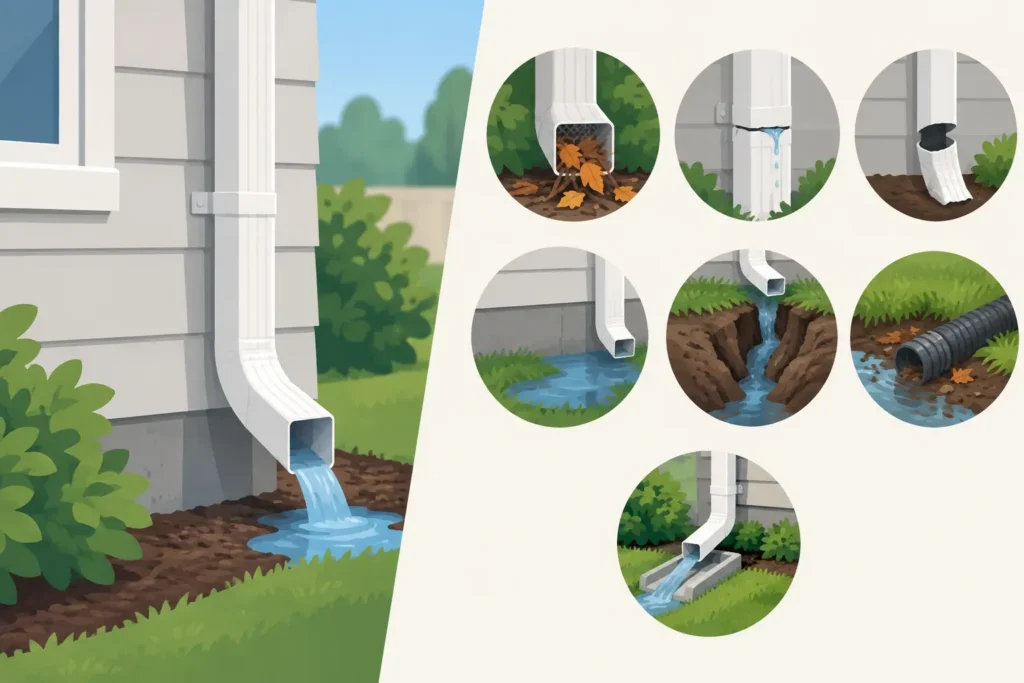
7 Downspout Drainage Problems to Watch For
1. Water pooling near the foundation
Puddles beside the house after rain are one of the most serious warning signs. Some standing water can come from poor yard grading, but a short, missing, or poorly aimed downspout extension often makes the problem worse.
When roof runoff repeatedly saturates soil near the foundation, it can create hydrostatic pressure against basement walls, contribute to seepage, and cause soil to shift over time. In colder weather, water around the foundation can also freeze and expand. Redirecting the discharge farther from the home may help, but it is worth having the full drainage path evaluated if pooling continues.
2. Overflowing gutters at one location
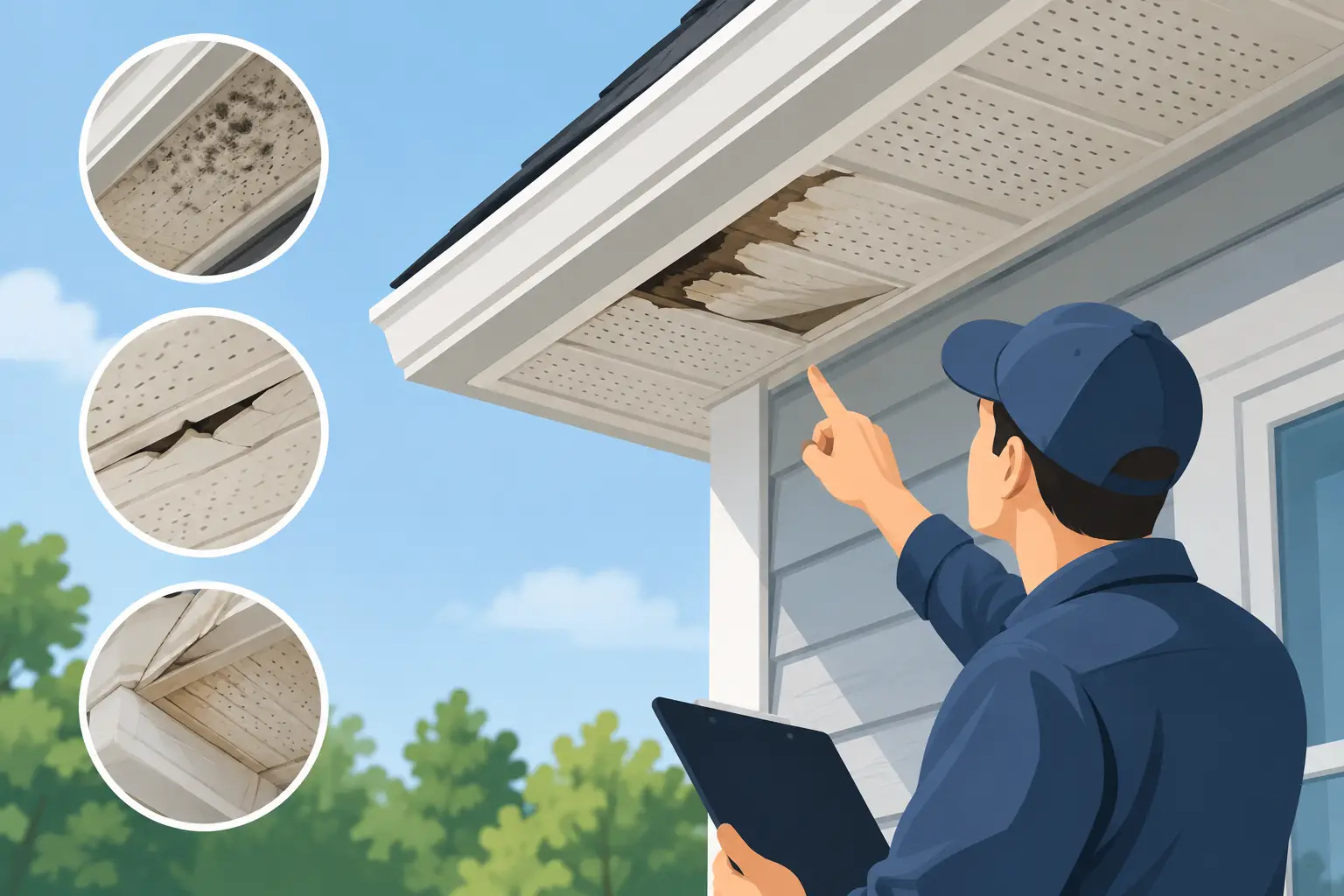
If water spills over the gutter near a downspout, the issue may not be the gutter itself. The downspout opening, elbow, or lower section could be clogged with leaves, shingle grit, twigs, or compacted debris. Water backs up in the gutter until it finds an easier route over the front edge.
Overflow can stain siding, damage fascia boards, and drown plants below. It also adds weight to the gutter system when water cannot drain properly. Cleaning the visible outlet may solve a minor blockage, but recurring backups can point to a poorly placed outlet, undersized downspout, or gutter pitch issue.
3. A disconnected or crushed extension
Extensions are easy to overlook because they sit at ground level. They can be knocked loose by lawn equipment, moved during yard work, crushed by foot traffic, or disconnected after a hard freeze. Even a small gap can dump a concentrated stream of water directly beside the foundation.
Check that every extension is firmly attached, angled away from the house, and clear of obstructions. Flexible extensions can be useful in tight spaces, but they should not kink, collapse, or create a tripping hazard. Rigid extensions are often a better long-term choice where the route is straightforward.
4. Eroded mulch, bare soil, or washed-out landscaping
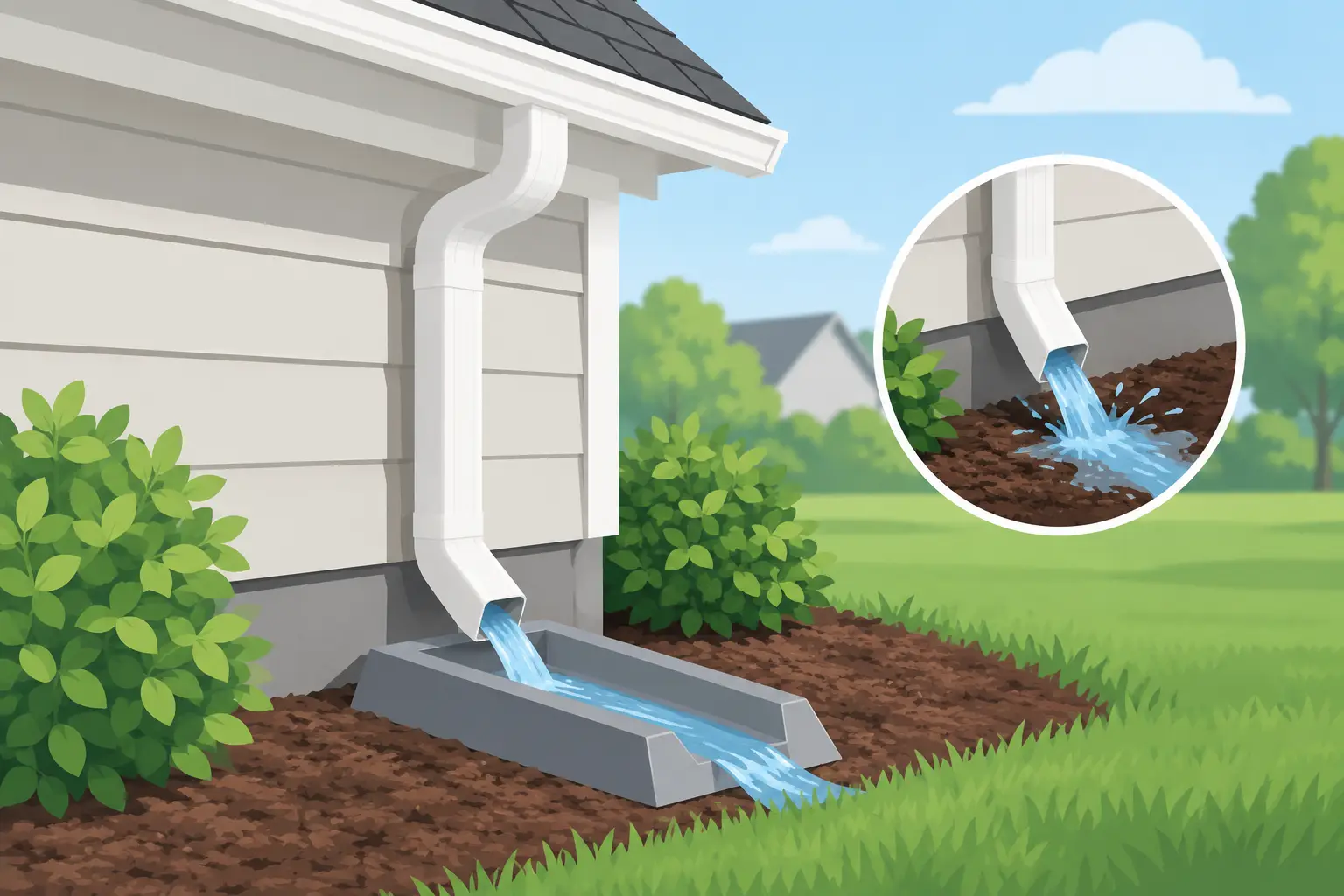
A downspout can move a surprising amount of water in a single storm. If you see trenches through mulch, exposed roots, splashed mud on siding, or a bare patch forming below an outlet, the discharge is too concentrated for that location.
A splash block may reduce surface impact in some situations, but it does not always move water far enough away. A properly fitted extension, a drainage swale, or a buried drainage solution may be more appropriate. The right fix depends on how much water the roof area sends to that downspout and how quickly the surrounding soil absorbs it.
5. Damp basement walls or a musty smell
Not every basement moisture issue starts at the gutters, but poor downspout drainage is one of the first places to investigate. Look for damp spots, peeling paint, white mineral deposits on masonry, or a persistent musty odor after rain.
These symptoms do not automatically mean you need a major foundation repair. Sometimes the correction is as practical as clearing a blockage, repairing a leaking gutter joint, extending discharge, or correcting grading near the home. Still, moisture inside the basement should never be ignored, especially if it appears after storms.
6. Water freezing at the downspout outlet
Winter creates a different kind of drainage challenge. Ice around a downspout outlet may mean water is draining slowly, spilling into an area that does not receive enough sun, or running into a frozen extension. Ice can block the outlet, force water back into the gutter, and create hazardous slick spots near entryways.
Do not chip aggressively at gutters or downspouts, which can dent metal or loosen fasteners. Instead, identify why water is collecting there. Keeping gutters clear before winter, securing extensions, and making sure outlets are not blocked by leaves or snow can reduce freeze-related trouble.
7. Leaking seams, elbows, or gutter-to-downspout connections
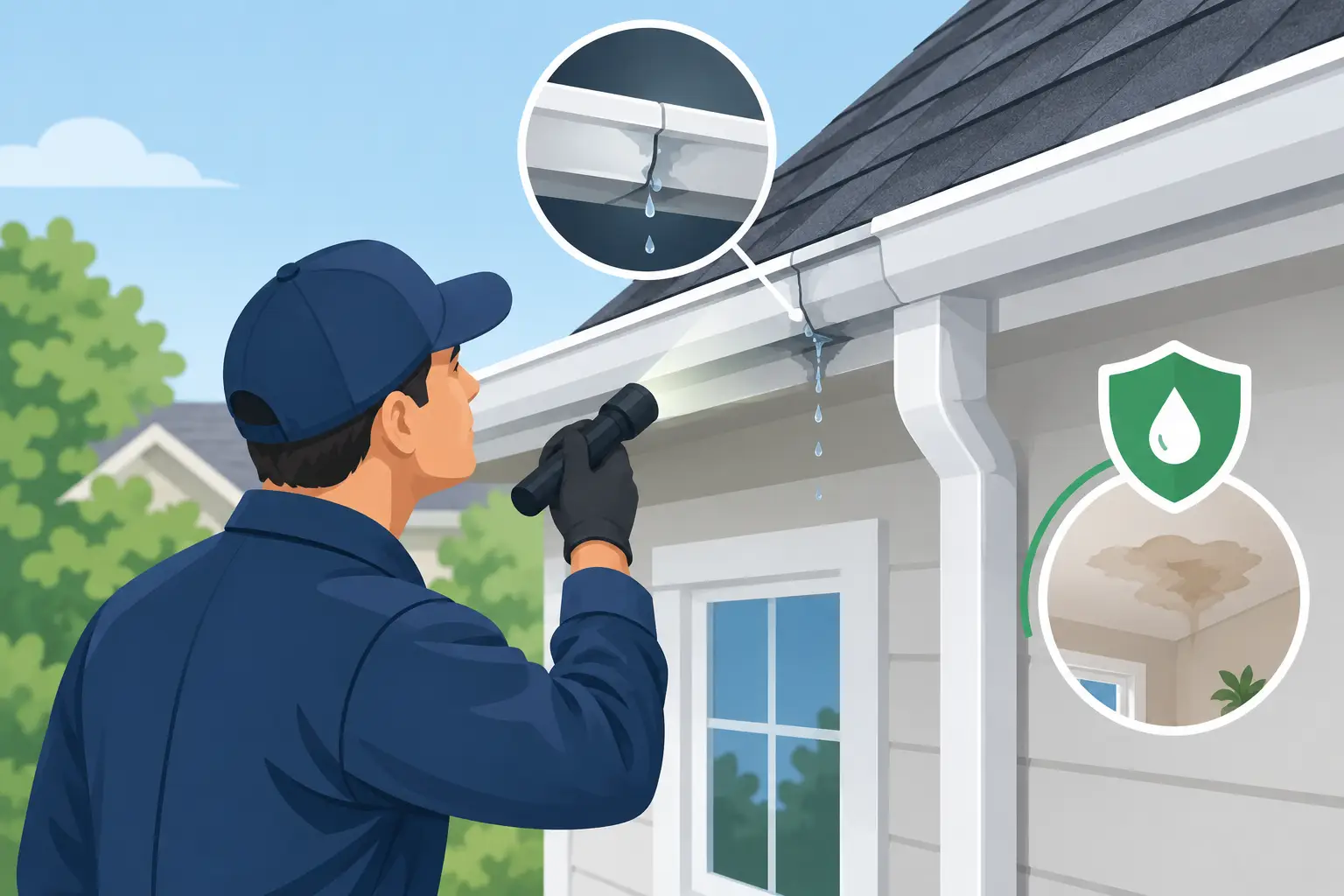
Water escaping from a seam can look minor during a light shower, then become a steady stream in heavy rain. Watch for drips from elbows, streaks on siding, rust or corrosion around connections, and wet spots directly below joints.
A loose fastener or failed seal may be repairable. However, repeated leaks, sagging sections, or separated components can indicate a larger installation or support problem. Seamless gutters reduce the number of horizontal seams where leaks often develop, but every system still needs properly installed outlets, downspouts, hangers, and connections.
Why Downspout Drainage Problems Happen
Clogs are common, but they are not the only cause. Leaves and roof debris can block the flow, especially in wooded neighborhoods. Heavy rainfall can expose a system that was sized for lighter storms. Settling soil can change the slope around the foundation, turning a once-effective outlet into a source of standing water.
Installation details matter too. A gutter must have the right pitch to carry water to the outlet. Downspouts need adequate capacity for the roof area they serve. Extensions need a clear path and a safe place to release water. Adding more sealant to a leaking connection will not correct an improperly pitched gutter or a downspout that ends at the foundation.
This is why a full inspection is more useful than addressing only the visible symptom. The gutter, downspout, roofline, landscaping, and ground slope all work together.
When Cleaning Is Enough and When a Repair Is Needed
Cleaning may be enough when the system is structurally sound and debris is the clear cause of the backup. This is common after falling leaves, seed pods, or a storm that fills gutters with twigs and shingle granules. Scheduled cleaning helps keep water moving and gives a professional an opportunity to spot loose components before they fail.
A repair or upgrade is more likely needed when the same area overflows repeatedly, a downspout detaches, water drains too close to the home, or gutters pull away from the fascia. If frequent clogs are the root issue, a premium leaf protection system can reduce debris buildup while supporting the gutter continuously. It is not a substitute for proper drainage design, but it can reduce the maintenance burden for many homes.
For older sectional gutters, repeated seam leaks and sagging may make replacement the more practical investment. Seamless gutter installation limits the number of joints along each run and can provide a cleaner, more dependable drainage path when matched with correctly placed downspouts.
A Simple Check After the Next Rain
Walk around your home once the rain has slowed, not while lightning or high winds are present. Look at where each downspout discharges and whether water is moving away from the house. Check for overflow, drips, pooled water, soil erosion, and extensions that have shifted out of position.
Then inspect the basement or crawl space for new moisture signs over the following day. Taking a few photos can be helpful if the problem only appears during hard rain. That gives a gutter professional a clearer picture of the conditions that need to be corrected.
If you are unsure whether the issue is a clog, a repair need, or a drainage design problem, a free inspection can remove the guesswork. Seamless Gutter Solutions LLC provides clear, itemized recommendations so you can understand what needs attention and what does not. Protecting your home starts with making sure every drop has a safe place to go.