
A gutter system can look perfectly fine from the street while putting thousands of gallons of water in the wrong place. The best downspout placement tips focus on where that water goes after it leaves the roofline. When downspouts discharge too close to the home, rain can saturate soil along the foundation, stain siding, wash out mulch, and create icy walkways in winter.
For homeowners in Eastern Indiana and Western Ohio, placement matters even more because heavy summer storms, freeze-thaw cycles, and leaf buildup can all test a drainage system. A properly sized seamless gutter is only one part of the solution. The downspouts must be positioned to collect runoff efficiently and carry it to a safe discharge area.
Start With the Roof’s Water Load
Downspouts should not be placed based on appearance alone. Each section of roof sends water toward a particular gutter run, and larger roof areas require more drainage capacity. A long gutter run with only one downspout at the far end may overflow during a hard storm, even if the gutter itself is clean and in good condition.
As a general rule, downspouts belong near the low ends of gutters, where the system is pitched to direct water. Longer rooflines often need additional downspouts rather than oversized gutters alone. The right number depends on roof area, roof pitch, gutter size, local rainfall patterns, and where valleys concentrate water.
Roof valleys deserve special attention. They channel a large volume of water into one small section of gutter. If a downspout is too far from that valley, the gutter can overflow before water reaches the outlet. In some cases, adding a downspout near a valley is the simplest way to protect siding, soffit, and landscaping below.
Best Downspout Placement Tips Around the Foundation
The goal is straightforward: direct water away from the house without creating a new problem elsewhere on the property. Water should not pool beside the foundation, run back toward the home, cross a driveway where it can freeze, or discharge directly onto a neighbor’s property.
Keep discharge away from the foundation
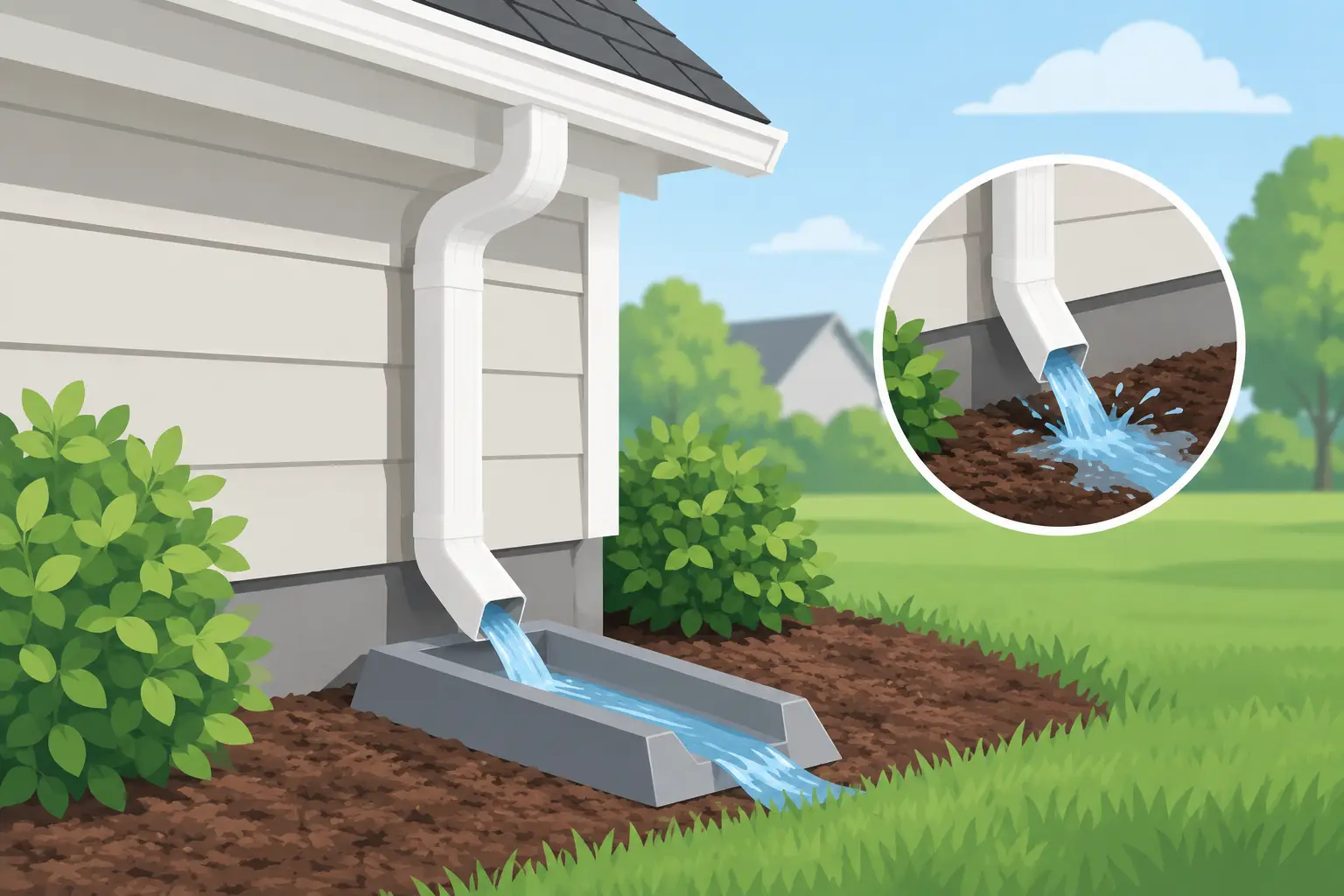
A downspout should extend far enough from the foundation that water does not soak the soil immediately beside the home. Four to six feet is a common starting point, but the right distance depends on grade, soil type, basement conditions, and how quickly the area drains. Flat lots, clay-heavy soil, and homes with a history of damp basements may need longer extensions or underground drainage.
Watch what happens during a real rainstorm. If water from an extension turns and flows back toward the home, the extension is not solving the problem. The discharge point needs a positive slope away from the foundation so water keeps moving after it leaves the downspout.
Use the corners strategically
House corners are often practical downspout locations because they are less noticeable and allow a gutter run to drain naturally toward an end. They are not automatically the best choice, though. A corner next to a front walk, patio, driveway, or low spot may send water exactly where it should not go.
When a corner creates a drainage conflict, a professional can route the downspout along the wall to a better outlet location. The goal is a clean installation that protects the home, not simply the shortest possible route from gutter to ground.
Avoid doors, walkways, and high-traffic areas
Water near an entry door can create muddy splashing, slippery concrete, and ice hazards during Ohio and Indiana winters. Downspouts should generally discharge away from front steps, porches, garages, sidewalks, and frequently used paths.
This is especially relevant when planning new gutters on a home with limited lot space. A discharge area that looks harmless in July can become a safety issue after a January thaw and overnight freeze. If there is no good surface route, an underground drain may be worth considering.
Follow the Natural Grade of the Property
Your yard already tells you where water wants to go. The best placement works with the landscape’s natural slope instead of fighting it. Look for areas that consistently stay wet, low points where grass struggles, erosion marks after storms, and places where mulch or gravel has washed away.
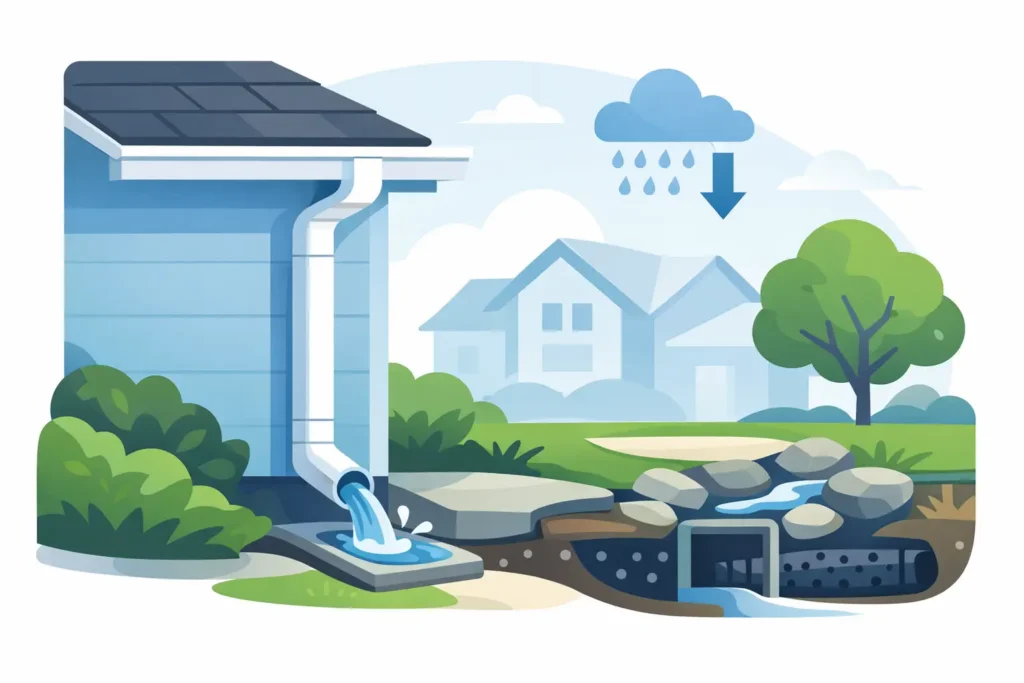
Downspouts should release water toward a stable, well-drained area that slopes away from the house. That may be a side yard, a rear drainage swale, a landscaped drainage path, or a properly designed underground outlet. It depends on the property.
Do not send concentrated runoff toward a retaining wall without confirming it can handle the water. Pressure behind a retaining wall can lead to shifting, cracking, and drainage failure. Likewise, avoid directing water over a steep unprotected slope, where it can cut channels into soil and damage plantings.
If the property has a storm drain connection, drainage ditch, or easement, local rules may govern how water can be routed. A contractor should assess those details before recommending buried pipe or a new discharge point.
Plan for Extensions and Underground Drains
A downspout that ends at ground level is rarely enough. Extensions are often the simplest, most cost-effective way to move runoff beyond the foundation area. Above-ground extensions are easy to inspect and adjust, while buried drain lines keep the yard and walkways clearer.
Above-ground extensions work well when there is open space and a consistent slope away from the home. They need to be secured so mowing, foot traffic, or wind does not knock them out of position. Flexible accordion-style extensions can be convenient, but they may collect debris, crack over time, or restrict flow if sharply bent. Smooth, properly sloped extensions tend to move water more reliably.
Underground drainage can be a better fit around patios, narrow side yards, and high-traffic areas. However, it must be installed with enough slope, an accessible cleanout where appropriate, and a legal discharge location. A buried pipe that has no outlet, poor slope, or frequent clogging will hold water and can create an even harder problem to diagnose.
Account for Gutters, Guards, and Maintenance
Downspout placement only works when water can reach the downspout. Leaves, shingle grit, twigs, and roof debris can clog outlets and elbows, causing water to spill over the gutter edge. Overflow near a foundation can look like a placement issue when the actual problem is restricted flow.
Scheduled gutter cleaning helps keep outlets clear, particularly on homes surrounded by mature trees. Premium gutter protection can also reduce the amount of debris entering the system. A continuous-hanger guard system such as Double Pro by Alurex can support the gutter while helping keep larger debris out, but it should still be inspected periodically. No drainage system should be treated as completely maintenance-free.
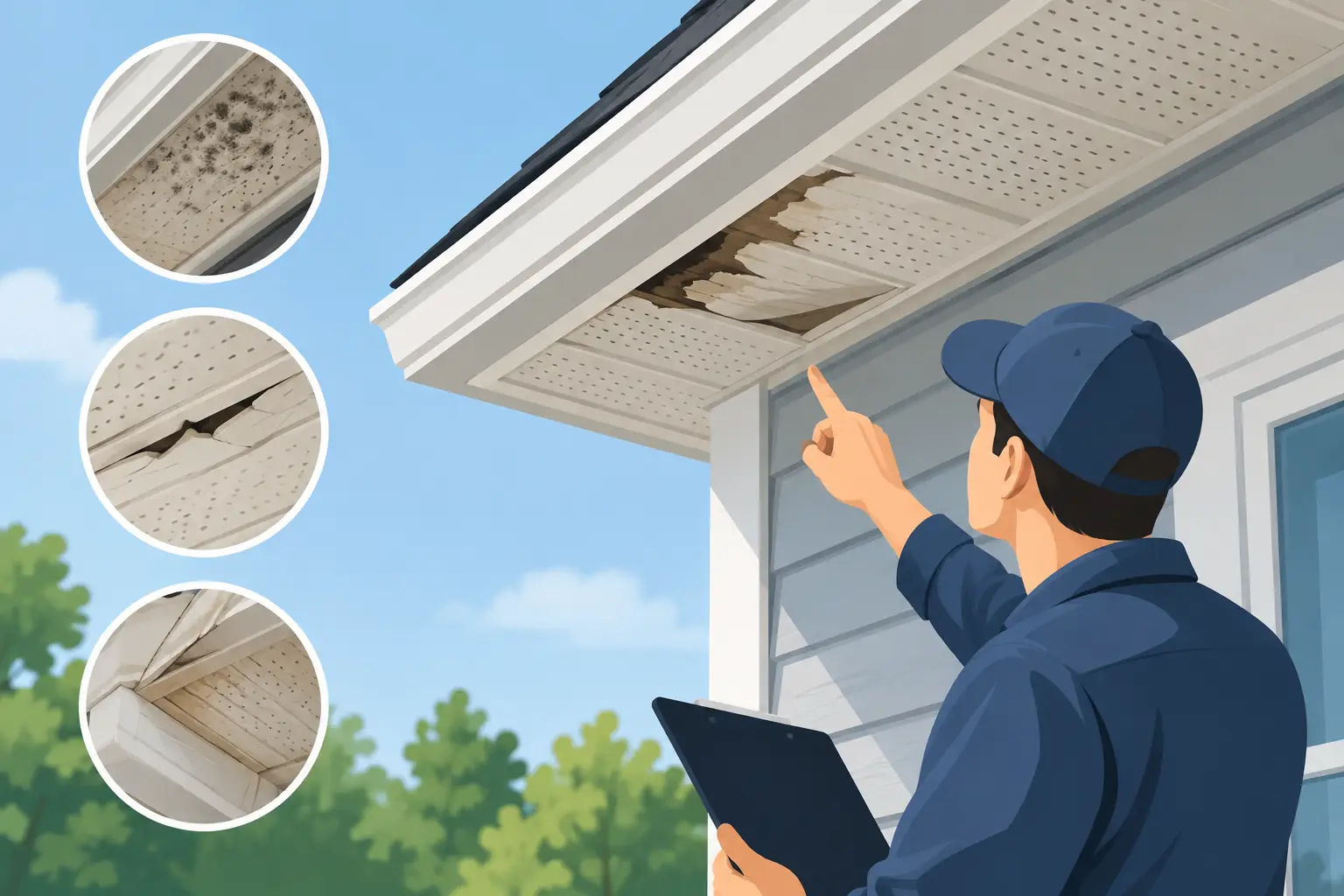
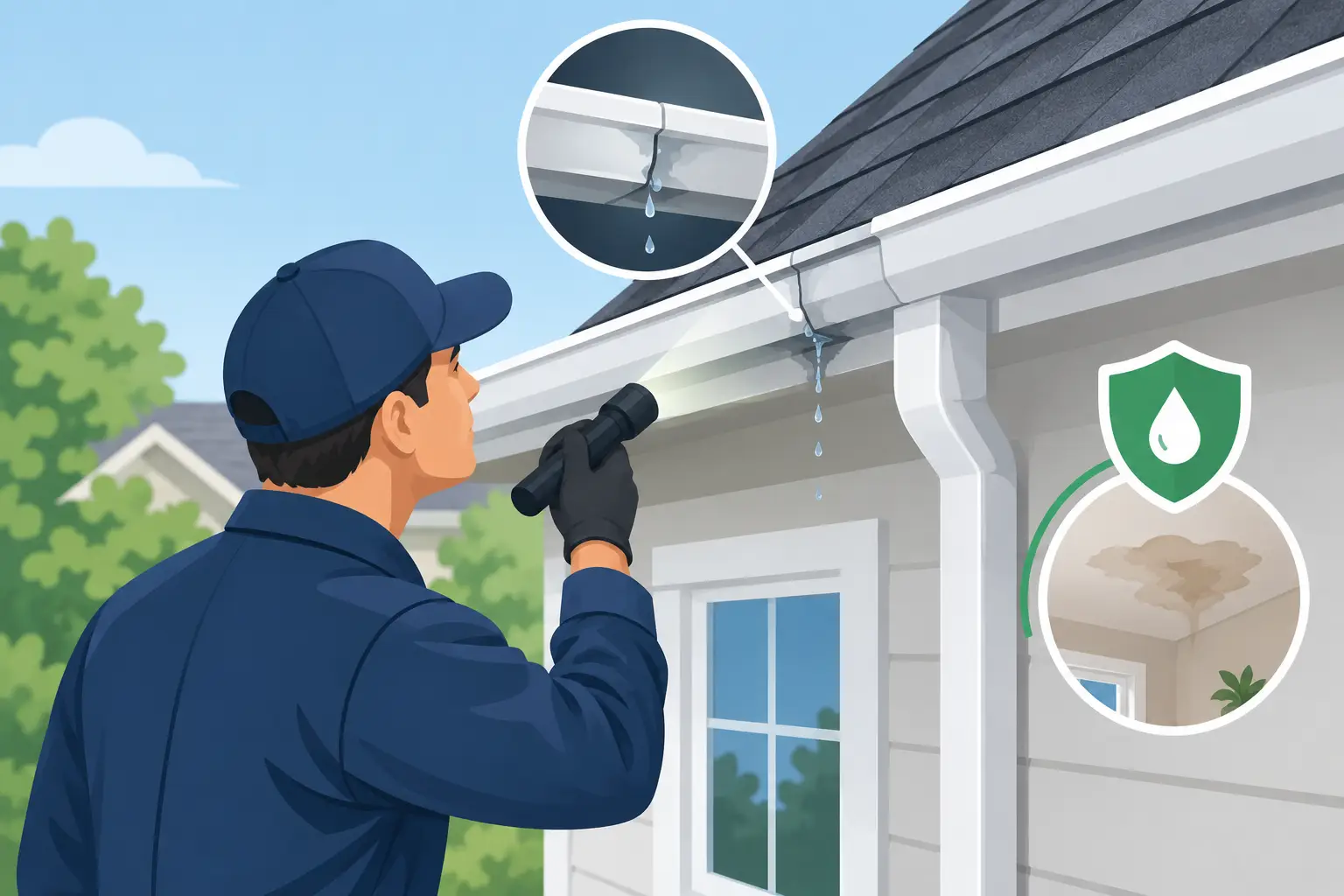
During an inspection, look for water marks behind the gutter, loose fasteners, leaking seams, crushed elbows, and extensions that have shifted. These small issues can change where water lands and how well the system performs.
Common Placement Mistakes to Avoid
Several mistakes show up repeatedly on homes with drainage damage. One is placing too few downspouts on a long gutter run. Another is directing a downspout into a flower bed with no defined drainage path, which can erode mulch and oversaturate plants.
Connecting two downspouts into one undersized underground pipe can also create backups during heavy rain. So can routing water toward a driveway, where runoff may refreeze. Finally, do not assume a splash block alone will protect a foundation. It can help disperse water at the outlet, but it does not move the discharge far enough on many properties.
When a Professional Layout Is Worth It
A professional assessment is especially helpful if you notice basement moisture, recurring gutter overflow, soil erosion, standing water, peeling exterior paint, or water entering a crawl space. It is also worthwhile when replacing old sectional gutters with seamless gutters, because the new system can be designed around actual drainage needs rather than copying an old layout that may have been flawed.
Seamless Gutter Solutions LLC provides free inspections and estimates so homeowners can understand where water is going, what needs to change, and what the work will cost before moving forward. A detailed, itemized quote helps separate necessary drainage improvements from optional upgrades, with no hidden fees.
The right downspout placement is not always the most obvious location on the wall. After the next hard rain, take a walk around your home and follow the water. The path it takes is one of the clearest signs of whether your drainage system is protecting your property or quietly working against it.