

A gutter problem often starts quietly: a strip of wet mulch under the roofline, a drip behind a downspout, or water that suddenly spills over during a hard rain. This checklist for gutter inspection helps homeowners catch those warning signs before runoff reaches the foundation, siding, landscaping, or roof structure.
For homes across Eastern Indiana and Western Ohio, spring storms, summer downpours, falling leaves, and winter freeze-thaw cycles can all put pressure on a gutter system. A quick visual check twice a year is useful, but a more careful inspection after a major storm or before winter can prevent a small repair from becoming a costly water-damage issue.
When to Inspect Your Gutters
Plan a full inspection at least twice each year. Late spring is a practical time to check for damage from winter weather, seed pods, and early storms. Late fall is equally important once most leaves have fallen. If your property has mature trees, pine needles, or frequent storm debris, you may need to inspect more often.
Do not inspect from a ladder during rain, high wind, icy conditions, or when the ground is soft. Many gutter issues can be identified safely from the ground. If you see obvious sagging, overflowing water, loose sections, or a downspout that has pulled away from the house, schedule a professional inspection rather than trying to reach or repair it yourself.
Checklist for Gutter Inspection: Start From the Ground
Walk the full perimeter of your home before getting close to the gutters. This gives you a clearer picture of where water is going when it leaves the roof.
Look for these conditions:
- Water stains, peeling paint, or discoloration on siding near the gutter line
- Eroded mulch, bare soil, or trenches beneath downspout outlets
- Standing water near the foundation or in planting beds
- Mildew, algae, or damp areas on exterior walls
- Overflow marks on the outside face of the gutter
- Soil or concrete that slopes toward the house instead of away from it
Overflow marks are especially useful clues. They may mean the gutter is clogged, but not always. Water can also overshoot a gutter that is undersized, improperly pitched, or installed too far from the roof edge. In a heavy storm, a clean gutter may still struggle if the roof collects a large volume of water into one valley. That is why the cause matters as much as the symptom.
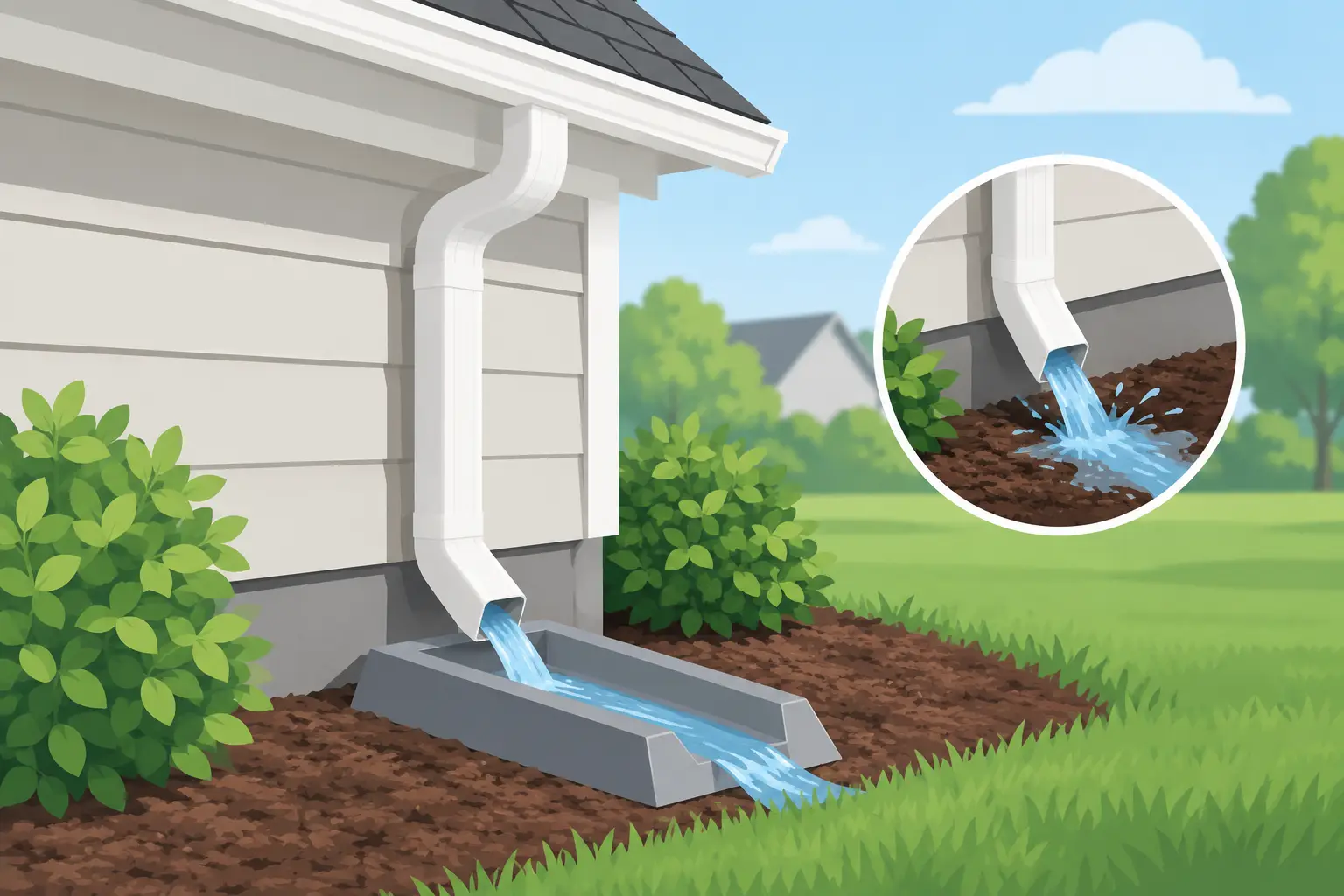
Also check the area around every downspout. Water should discharge far enough from the foundation to avoid saturating the soil beside the home. A short extension, crushed splash block, or disconnected drain line can send water directly back toward the basement or crawl space.
Check for Debris, Clogs, and Plant Growth
Leaves are the obvious culprit, but they are not the only one. Roof granules, twigs, seed pods, shingle debris, bird nests, and tennis balls can all restrict water flow. Pine needles deserve special attention because they can form dense mats that hold moisture and settle into downspout openings.
If it is safe to look into the gutter from a stable position, check for debris buildup and standing water. A gutter should drain after rainfall. Persistent puddles inside the trough can point to a clog, a low spot, or incorrect slope.
Do not overlook small weeds or seedlings growing from the gutter. They indicate that organic debris has been sitting long enough to create soil-like material. Beyond blocking water, wet debris adds weight to the system and can contribute to sagging or pulled fasteners.
Gutter guards can reduce routine debris buildup, but they are not all built the same. Surface debris still needs occasional checking, and the gutter system underneath still needs to be securely attached and properly pitched. A continuous-hanger guard system, such as Double Pro by Alurex, can provide both leaf protection and added structural support when professionally installed.
Inspect the Gutter Sections and Fasteners
From the ground, look along the length of each gutter. It should appear straight and consistently aligned with the roofline. A section that dips, bows outward, or pulls away from the fascia can hold water and place extra stress on the surrounding materials.
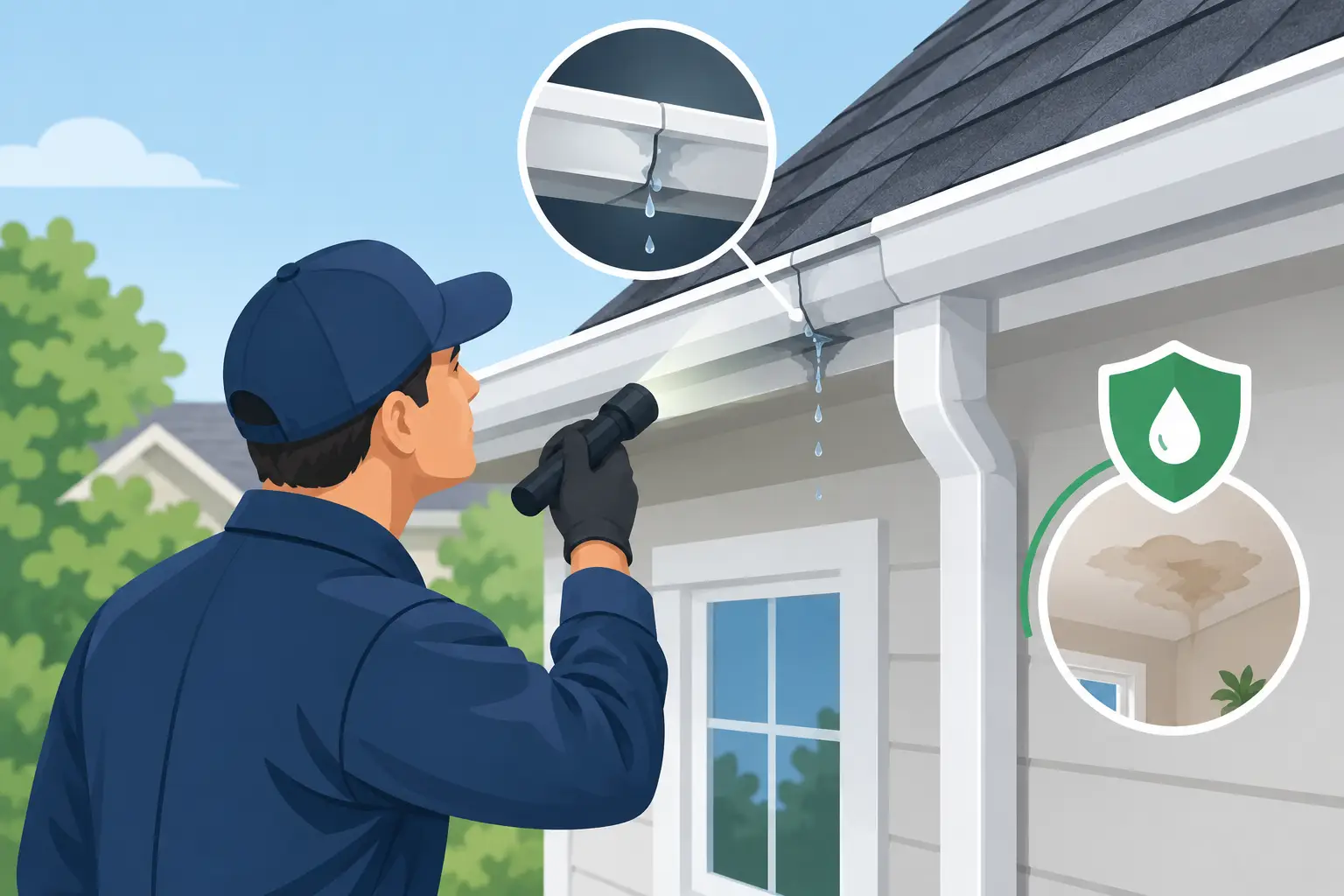
Pay attention to seams, corners, end caps, and outlets where downspouts connect. These are common leak points on sectional systems. Small drips may not look urgent, but repeated water exposure can stain siding, rot fascia boards, and undermine landscaping below.
Look for visible screws, spikes, or hangers that are loose or missing. Older spike-and-ferrule gutters often begin to pull away as the wood behind them weakens. Simply driving a loose spike back into place is not always a lasting repair. If the fascia has moisture damage or the fastening method is failing, the underlying problem needs to be addressed.
Seamless gutters have fewer joints along their runs, which reduces the number of places where leaks commonly develop. They still require sound installation, secure hangers, and regular care. No gutter system can perform well if water cannot reach the downspouts or if those downspouts are blocked.
Test Downspouts and Water Flow
A downspout can look fine from the outside while being clogged inside. During a light rain, watch whether water exits freely at the bottom. If the gutter overflows near the downspout but little or no water comes out below, there is likely a blockage in the outlet or downspout.
If conditions are dry and you can do so safely, a controlled hose test can help. Run water gently into the gutter near the far end of the downspout. Water should travel toward the outlet without pooling and should exit at the bottom without backing up. Avoid blasting water at high pressure, which can force debris deeper into a clog or create a mess around the foundation.
Check that downspout elbows are firmly connected and that extensions are intact. If your downspout drains into an underground line, watch for backup at the outlet during the test. That may indicate the buried drain is blocked, crushed, or unable to handle the volume of water.
Look Above the Gutters, Too
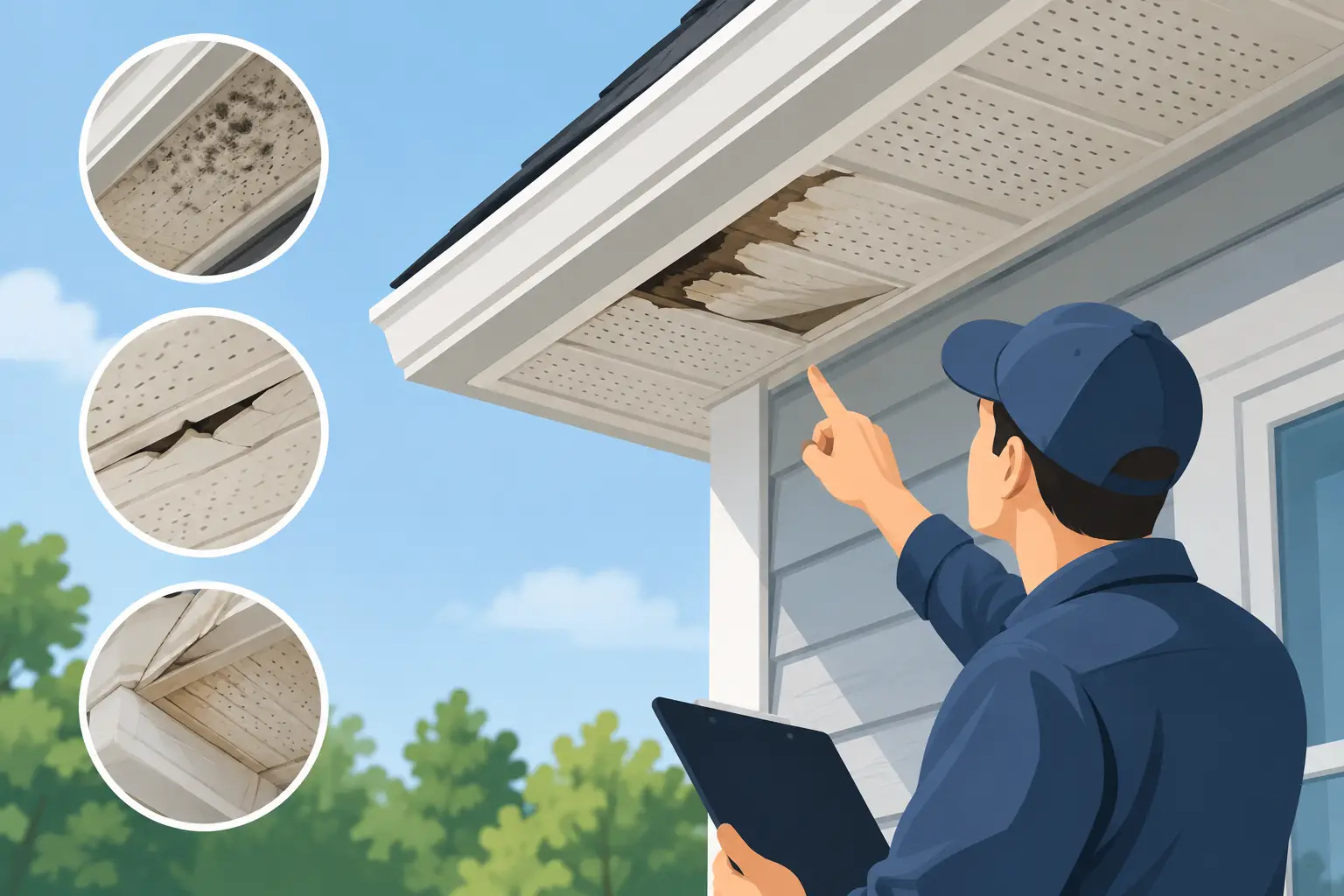
Gutter performance starts on the roof. From the ground, look for shingles that curl, crack, lift, or shed excessive granules. A damaged roof edge can direct water behind the gutter instead of into it. You may also see stained fascia, rotted soffit, or water marks beneath the eaves.
Roof valleys deserve extra attention because they concentrate runoff. If one area of the gutter repeatedly overflows during storms, the answer may be a larger gutter, an additional downspout, or a targeted adjustment at the valley. Cleaning alone may not solve a capacity or design issue.
In winter, watch for recurring ice buildup at the eaves. Gutters can be damaged by the weight of ice, but ice dams usually involve heat loss and roof conditions as well. A gutter repair may be part of the solution, though it is not always the entire solution.
Know When a Professional Inspection Makes Sense
Homeowners can spot many warning signs, but some decisions are better made with a trained eye. Request a professional inspection if gutters are sagging, pulling away from the home, leaking at multiple areas, overflowing after cleaning, or sending water toward the foundation. It is also a smart step if you are buying a home, planning roof work, or noticing repeated moisture in a basement or crawl space.
A professional can determine whether you need cleaning, a minor repair, replacement sections, better drainage extensions, or a complete gutter upgrade. The right answer depends on the age of the system, the condition of the fascia, roof runoff volume, tree coverage, and how water moves across your property.
Seamless Gutter Solutions LLC offers free inspections and estimates with detailed, itemized pricing and no hidden fees. That gives homeowners a clear starting point when the problem is visible but the cause is not.
A few minutes spent walking your property after the next rainfall can tell you more than a dry-day glance ever will. Follow the path of the water, notice where it collects, and address small changes before they become damage you can no longer ignore.